
Here’s the rule that separates this dish from every other fish supper: the moment cream and wine go into the pan, you stop pairing the fish and start pairing the sauce. A white wine sauce for fish with cream is the dish most people get half right — plenty of cream, a splash of whatever bottle’s open, and no thought at all for what goes in the glass once the sauce is done. The fish chooses the sauce; the sauce chooses the wine — that’s the whole chain of command. By the end of this you’ll know how to build that sauce so it doesn’t split, what to actually call it when someone asks, and which wine earns its place at the table alongside it. A cream sauce for fish is, at its simplest, a reduction of stock and white wine finished with cream — and it flatters far more white wines than red ones, though not none at all.
Can you mix white wine and cream in a sauce?
Yes, and it’s one of the oldest tricks going. Reduce a dry white wine with shallots and a splash of fish stock until it’s syrupy, then take the pan off the heat before stirring in cream or crème fraîche. The acid in the wine is doing real work — cut it out and the sauce goes flat and cloying, all richness and no lift.
I split more sauces in my twenties rushing this step than I’d like to admit — cream added while the pan was still roaring, curdling into something that looked more like scrambled eggs than a sauce. Off the heat, patience, a wooden spoon. That’s the whole secret.
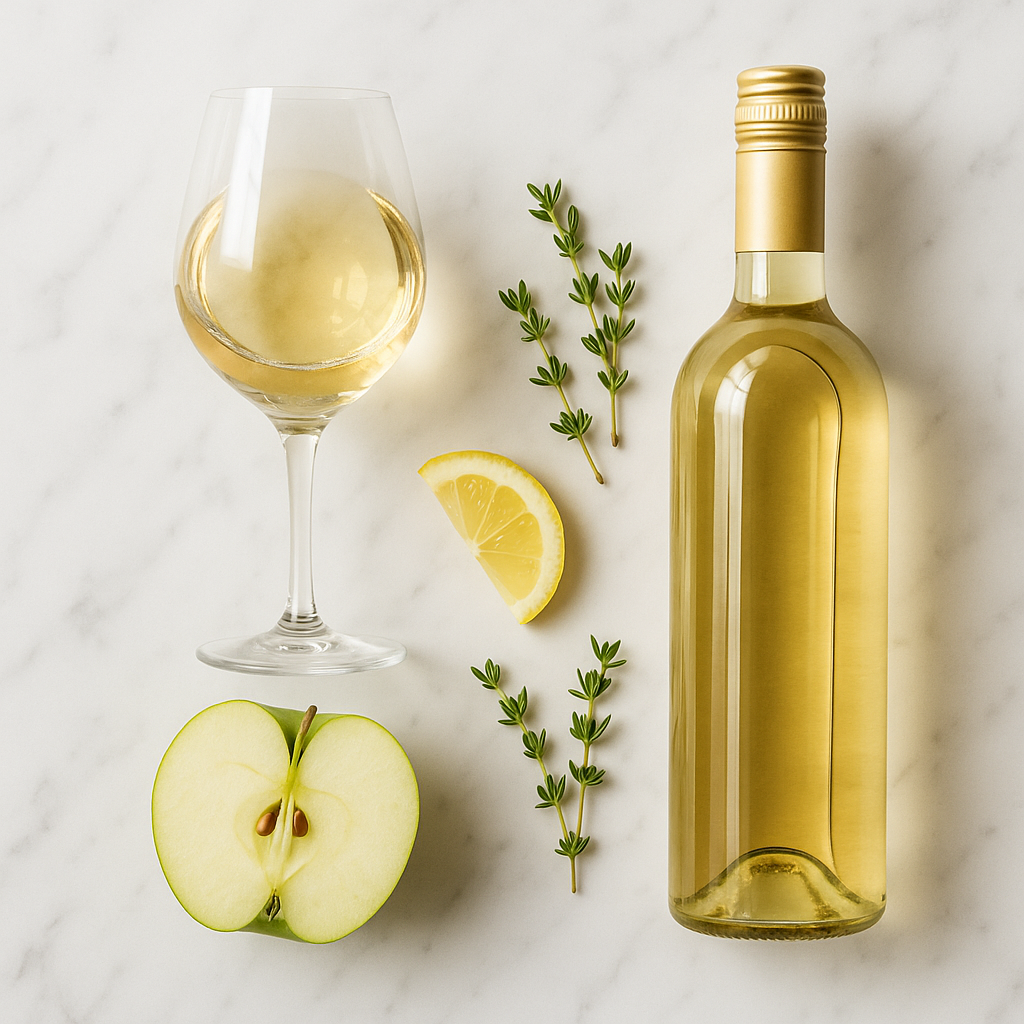
For cooking, reach for something unoaked or only lightly oaked — a plain Chardonnay, a dry Chenin Blanc, a Pinot Blanc from Alsace. Anything heavily oaked will fight the cream rather than support it. And don’t cook with anything you wouldn’t happily drink a glass of; the sauce takes on more of the wine’s character than most people expect.
What is a good creamy sauce for fish?
A good creamy sauce matches its weight to the fish it’s sitting on. For something lean and delicate — sole, plaice — a light wine-and-cream reduction is right. For a meatier fish like cod or halibut, a fuller sauce with more body, maybe built from a béchamel base, holds its own without drowning the fish.
Trade opinion on this is fairly consistent: delicate fish wants a delicate sauce, and the same logic runs right through to the wine you pour. Sole with cream, historically, gets a lighter-bodied Chardonnay or a Sauvignon Blanc rather than anything broader-shouldered. Halibut, by contrast, is often served with a properly creamy sauce precisely because the fish itself can take it — and a Sancerre or a Sauvignon Blanc with a bit more grip stands up rather than getting lost.
Seafood in cream — scallops, prawns, crab folded through — tends to want a slightly richer build again, closer to a Mornay, and a slightly richer wine to match: a New World Chardonnay with real weight, or Champagne if you’re pushing the boat out.
What is the name of the creamy white sauce for fish?
There isn’t one single name — it depends entirely on how the sauce is built, and that’s worth knowing before you order or cook. Béchamel with cheese folded through is a Mornay (seafood Mornay is the classic gratin version). A butter emulsion, barely touched with cream, edges toward a beurre blanc — the sauce Dover sole is traditionally served with. A straightforward stock-and-wine reduction finished with cream, with no flour involved, is usually just called a cream sauce, or a velouté once it’s thickened properly.
None of this matters hugely at the stove. It matters a lot at the table, because a Mornay and a beurre blanc are genuinely different weights of dish — and since it’s the sauce you’re really pairing, the wine that flatters one won’t necessarily flatter the other.
Choosing the wine that goes in the glass, not just the pan
This is where most people stall — they’ve got the sauce sorted, then forget it’s the sauce that should pick the bottle, and just grab whatever’s cold. Worth doing better than that. Fish falls roughly into four camps, and the sauce shifts the pairing as much as the fish itself does.
| Fish type | Typical dish | Wine styles that work |
|---|---|---|
| Lean & flaky (sole, plaice) | Light cream or beurre blanc | Chablis, unoaked Chardonnay, Sancerre, Pinot Blanc |
| Medium-textured (cod, haddock, trout) | Mornay, cream sauce | Chardonnay, Pinot Gris, Soave, Sauvignon Blanc |
| Meaty (halibut, salmon, monkfish) | Fuller cream sauce | Buttery Chardonnay, Viognier, dry Riesling, white Burgundy |
| Shellfish (lobster, scallops, crab) | Newburg, Mornay | Grand Cru Chablis, Champagne, buttery Chardonnay |
Chablis earns its place at the top of that table for good reason — it’s unoaked, high in acid, and cuts through cream without ever getting heavy. If you want the fuller story on why it behaves so differently from an oaked Chardonnay from warmer climates, we’ve written it up properly in Chablis: the purest Chardonnay?
One rule that trips people up: an oaked white with a plain grilled fish and no sauce is usually a mismatch — the oak has nothing to grip onto. Add butter or cream, though, and suddenly that same oaky Chardonnay makes sense. The sauce is doing the introducing.
If the whole business of matching sauce to grape still feels like guesswork, our Food and wine pairing: a merchant’s complete guide to getting it right walks through the broader logic behind all of this, not just the fish course.
Serving it right
Get the wine a touch too cold and a rich, creamy sauce will mute it entirely — you’ll taste nothing but chill. For anything with real body (a buttery Chardonnay, a fuller white Burgundy), 10–12°C is closer to right than fridge-cold, and a decent-sized glass lets the aromatics open up rather than staying trapped.
Portion-wise, this is a dish where one generous glass alongside the plate does the job — the sauce is rich enough that you don’t need much wine to feel like the pairing’s working. The glass, not the bottle, is doing the flavour work here.
Red wine with fish — when it actually works
The old advice — never red with fish — holds up more often than not, mostly because tannin and delicate fish flesh genuinely clash; the tannin reads as bitter and metallic against the fish. But a rich cream sauce changes the maths, because you’re no longer really pairing with the fish, you’re pairing with butter and cream.
Meatier fish — tuna, salmon, monkfish — can take a light, low-tannin red without a fight, particularly something like a cooler-climate Pinot Noir, and trade guidance on halibut specifically lists American Pinot Noir as a legitimate option alongside the usual whites. It’s not the obvious choice, but it isn’t a mistake either.
If you’re doing something rawer instead — oysters, a ceviche, ungarnished shellfish — that’s a different conversation entirely, built on salinity rather than richness, and we’ve covered that ground properly in Manzanilla vs Fino: what the sea does to Sherry
Questions customers ask us
What is the best white sauce for fish? There’s no single best — a beurre blanc suits Dover sole beautifully, while a Mornay suits a baked cod or seafood gratin far better. Both are “white sauce,” built completely differently, so the fish should decide which one you reach for.
Can I use red wine instead of white in the sauce itself? You can, though it changes the dish considerably — the sauce goes from pale and delicate to something closer to a fish stew base. For a classic cream sauce, stick with white; the acidity and pale colour are doing real work.
The merchant’s last word
I’ve sold plenty of Chardonnay to people making exactly this sauce, and most of them never thought to ask what to pour alongside it once it was on the plate. That’s the bit I actually enjoy — matching the glass to the pan, not just the label to the fish. Come in, tell me what you’re cooking, and I’ll point you at something that won’t fight the cream. Or browse the white wine cellar and have a poke around yourself.



