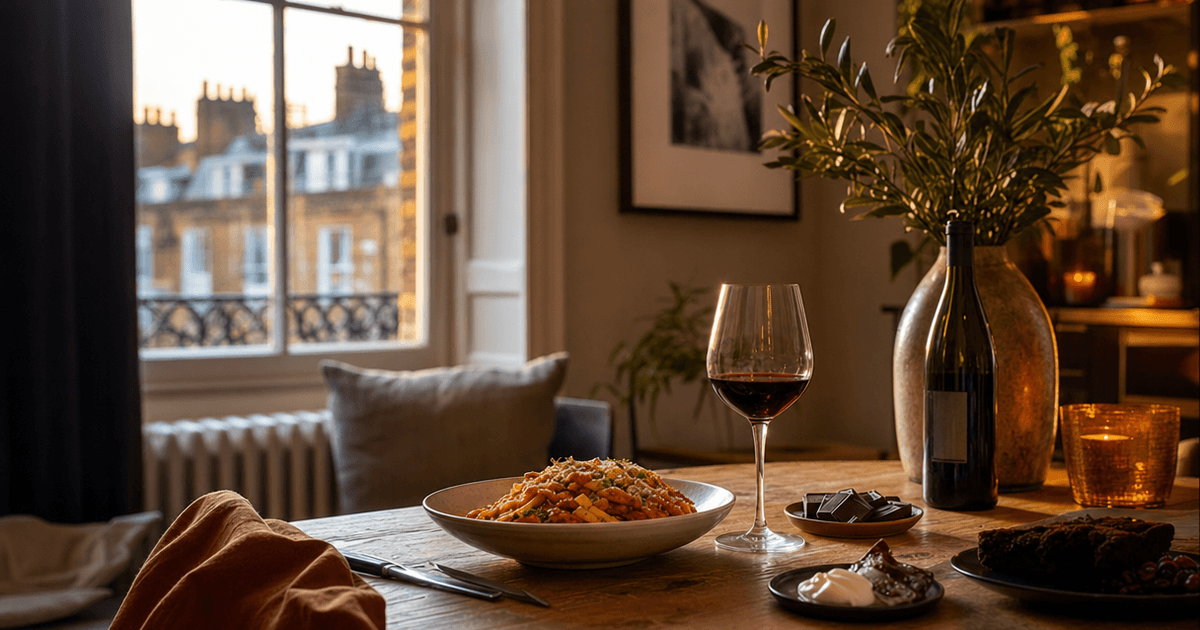
Wine with chocolate is the one pairing where the obvious bottle — a big dry red — is usually the wrong one, and where the right answer tends to come in a half bottle rather than a full one. Everything here flows from a single rule: the wine has to meet the bar’s sweetness rather than fight it, matching its own sugar, weight and acidity to the fat and cocoa intensity sitting in front of it. Get that right and both taste better; get it wrong and the wine goes thin and sour. By the end of this you’ll know which style to reach for by the bar in your hand, why the best chocolate wines are sold small and poured small, and the one occasion a bone-dry red actually is the smarter call.
Are wine and chocolate good together?
Yes — but only with the right wine, and that’s the bit people skip. A dry table wine set against 70% dark chocolate will usually make both taste worse, not better; the chocolate’s sugar and cocoa tannin flatten the wine’s fruit and leave it tasting stripped and acidic. The wine needs its own sweetness, or at least serious weight and ripe fruit, to hold the line. Trade opinion on this is fairly settled.
What shifts the answer bar to bar is texture and intensity, not just sugar content. A wine that sits nicely with a delicate white chocolate can taste cloying next to a dark, high-cocoa bar — and vice versa, a wine built for richness can vanish against something light. Added ingredients matter too: ginger, orange, sea salt and dried fruit all pull the pairing in different directions, and the way the chocolate itself is made — the roast, the conching, the cocoa origin — changes how it sits on the tongue before wine even comes into it. If you want the full logic behind matching any dish to a glass, not just chocolate, the Food and wine pairing: a merchant’s complete guide to getting it right is worth ten minutes.
What wine goes well with chocolate?
For most chocolate, reach for something with its own sweetness and enough weight to match the bar: fortified sweet reds for dark chocolate, fortified sweet whites for caramel and nut versions, and light sparkling sweet wines for milk and white chocolate. The darker and more bitter the chocolate, the richer and more intense the wine needs to be behind it.
| Chocolate | Wine style that works | Why |
|---|---|---|
| Dark / bittersweet (70%+) | Vintage or tawny Port, Banyuls, Maury | Matches cocoa intensity; sweetness tames bitterness |
| Milk chocolate | Ruby Port, Brachetto d’Acqui, Asti | Lighter, fruitier, less tannin to clash with |
| White chocolate | Moscato d’Asti, demi-sec Champagne | Gentle sweetness, no tannin needed |
| Caramel or nut-filled | Tawny Port, Malmsey Madeira, PX sherry | Caramel and nut notes echo the filling |
| Bittersweet, drunk with a dry red | Cabernet Sauvignon, dry | The classic exception — see below |
A lot of the best-known chocolate wines come from the same handful of places. Banyuls and Maury, both fortified sweet reds made largely from Grenache, come from the Roussillon in southern France and were built with this pairing almost in mind. Recioto, Italy’s dried-grape sweet red from the Veneto, does the same job with a slightly drier finish. Port from the Douro is the obvious workhorse — tawny brings caramel and nut notes that suit filled chocolates, while vintage-style richness suits plain dark; there’s more on the difference in Tawny vs Ruby Port: two philosophies of time. Sweet Madeira, especially Malmsey, does something similar with caramel desserts — covered properly in Sercial to Malmsey: choosing Madeira by grape and sweetness. And if you’ve only ever met sweet Tokaji with chocolate desserts, its dry cousin from the same region is a different, savoury animal worth knowing — see What is dry Tokaj? Hungary’s sweet-wine capital goes savoury.

Red wine with chocolate: the one exception worth knowing
Red wine with chocolate does have a genuine exception to the “match the sweetness” rule: dry Cabernet Sauvignon with bittersweet dark chocolate. It works because both are structured around tannin and bitterness rather than sugar, so instead of clashing they sit on the same register. It’s not a fit for milk or white chocolate, and it’s not forgiving of a bar with caramel or fruit added.
I heard about a chef at a Bordeaux estate who spent two weeks getting the recipe right before he’d serve chocolate at the start of a meal rather than the end — he wanted a young vintage with bright cherry fruit, or an older one with more give, and built a 62% dark chocolate with caramel, salt and pine nuts specifically to bridge the tannin. That’s more work than most of us want to do on a Tuesday, but it shows the principle: the chocolate can be engineered to meet the wine, not just the other way round.
There’s a second version of this exception that’s easier to pull off at home. A sommelier working on a wine-and-praline pairing found that dry wines suited chocolates lower in cocoa-tannin intensity and higher in savoury, herbal or salty character than a classic sweet praline — sea salt caramel over cream ganache, say. Treat each chocolate like a small composed dish, work out what’s actually driving its flavour, and a dry red or even a dry white stops being off-limits.
Serving wine with chocolate without wrecking either
Chill sweet fortified wines properly — Port, Madeira, PX sherry all show better slightly cool than at room temperature, which softens the sweetness rather than letting it sit heavy. Pour smaller measures than you would for a dinner wine; these are intense, and a small glass alongside two or three squares does more good than a full glass with a whole bar. That’s the shape this pairing wants: a glass, not a bottle, savoured slowly rather than worked through.
Let a square of chocolate warm slightly in your fingers and melt a little before you sip — cold, hard chocolate straight from the fridge fights the wine more than it needs to. Taste the chocolate first, then the wine, then the chocolate again; you’ll notice the wine changes what you taste in the chocolate on the second pass, which is half the fun of doing this properly rather than just eating both in the same room.
Why the good chocolate-pairing wines come in small bottles
Most of the wines on that table above turn up in 50cl or half bottles more often than standard 75cl, and that’s not an accident — they’re rich enough that a full bottle is more than most evenings need. It also suits how they keep: a Pedro Ximénez sherry, for instance, has enough sugar that it stays good for months after opening, so a half bottle bought for one pudding can quietly reappear over several weeks rather than needing to be finished the same night.
That’s worth knowing if you’re buying to try rather than buying for a party. Get the half bottle, taste it against two or three different chocolates over a fortnight, and you’ll learn more about your own preference than one big pairing dinner would teach you.
Questions customers ask us
Can leukaemia patients eat chocolate? That’s a medical question, not a wine one, and it needs your doctor or dietitian, who knows your treatment and diet. I can only speak to which wine suits which chocolate once that guidance is settled.
What wine is best for GERD? I’m not able to advise on wine for a medical condition — please put that to your GP or dietitian. Happy to help with the pairing side once you know what works for you generally.
What’s the best chocolate to pair with wine if I’m buying a gift box? Go for a mixed box with one dark, one milk and one filled piece, and pair it with tawny Port or Malmsey Madeira — both flex across all three without one piece being left stranded.
Does white wine ever work with chocolate? Rarely with dark chocolate, but demi-sec Champagne or Moscato d’Asti sits nicely with white chocolate or a light mousse, where a red would be far too heavy.
The merchant’s last word
I got this wrong for years — kept reaching for a big red because chocolate felt like a “big red” occasion, and wondered why it tasted thin every time. It’s the sweetness in the wine doing the work, not the weight of the tannin. Once you match that, the rest sorts itself out fast. If you want to start trying it properly rather than guessing, browse the Italy cellar and pick one bottle against whatever chocolate’s already in your cupboard.



