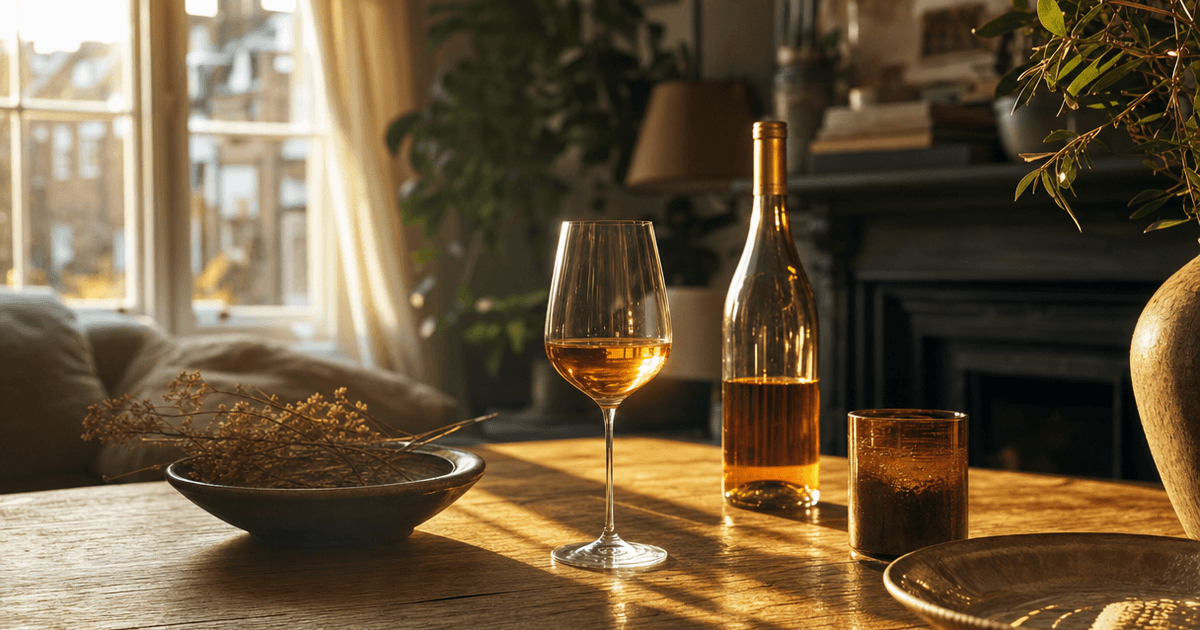
Dry Furmint wine is the savoury side of a region the world mostly talks about in dessert-wine terms. Furmint is the grape — thick-skinned, late-ripening, native to Tokaj in northeastern Hungary — and dry Furmint wine is what you get when the vineyard is picked for freshness rather than botrytis, and the winemaker ferments it right out instead of leaving sugar behind. By the end of this you’ll know what’s actually in the glass, how it sits next to Riesling, and how to pick a bottle for a Tuesday supper rather than a special-occasion pudding.
What does Furmint wine taste like?
Young dry Furmint tastes of lemon, green apple and pear, with a stony, almost saline edge and a line of acidity that makes your jaw tighten a little. Give it a few years and honey and toasted nut notes creep in around the citrus. Grapes touched by botrytis (deliberately avoided in most dry Tokaj) swing the flavour toward dried apricot and mango instead — which is why the sweet and dry wines from the same hillside can taste like different grapes entirely.
There are, broadly, two schools of dry Furmint winemaking, and they taste nothing alike. The first generation of serious dry Tokaj, made from very ripe fruit, often went through full malolactic fermentation and long stints in new oak — big, buttery, high-alcohol wines built to impress rather than refresh. Plenty of producers have since pulled back: less ripe fruit, stainless steel, a lighter touch, wines that let the grape’s own character (and the volcanic ground it grows in) do the talking. It’s this second style that’s winning over sommeliers.
Furmint is often blended with its own offspring, Hárslevelű, which brings a spicy, linden-blossom perfume and a softer texture to Furmint’s fire. Single-vineyard bottlings — labelled Dűlő on the front — are increasingly common too, and worth seeking out if you want to taste one hillside against another rather than a house blend.
Is Furmint a dry wine?
Furmint isn’t dry by nature — it’s closer to a blank canvas that swings from bone dry to intensely sweet depending on picking date and cellar decisions. What’s changed is the balance in Tokaj itself: dry Furmint has gone from historical afterthought to a genuine category, with trade estimates suggesting production has roughly tripled over the past five years.
Under Tokaj’s PDO rules, a wine labelled as a single variety must be at least 85% that grape, so a bottle marked “Furmint” on the front is Furmint through and through, near enough. Dry Tokaj comes in more than one shape. There’s straightforward dry wine, fermented in stainless steel and meant to be drunk within three to five years. There’s matured dry wine, aged in wood, built for the cellar, and typically grown on higher, windier vineyard sites (around 250 metres up) specifically chosen to keep botrytis away. And there’s dry Szamorodni — made from a natural mix of botrytised and clean berries but fermented fully dry, then aged for years under a thin film of yeast that gives it a nutty, green-apple character not unlike a fino Sherry or the Jura’s vin jaune.
None of this is new, either. Long before “dry Tokaj” was a marketing phrase, there was vinum ordinárium — ordinary wine, in the sense of everyday rather than lesser — which by some accounts made up a large share of the region’s exports in the early 1800s, before communist-era cooperatives flattened Hungarian wine into something far less interesting.
Is Furmint similar to Riesling?
Furmint and Riesling get compared a lot, and the shorthand holds up better than most grape comparisons do. Both carry ferocious acidity that lets them age for years and both are unusually good at showing you exactly where they’re from — a Riesling from the Mosel and one from Clare Valley taste like different countries, and Furmint from Tokaj versus Somló does much the same trick. Where they part ways is texture and aroma: Furmint tends to be broader and fuller in the mouth, with citrus pith and a mineral, stony quality, while Riesling leans more floral and, with age, famously petrol-scented.
| Furmint | Riesling | |
|---|---|---|
| Acidity | High | High |
| Typical body | Full, broad | Lean to medium |
| Young aromatics | Citrus, orchard fruit, stone | Blossom, citrus, sometimes floral |
| Aged aromatics | Honey, toasted nuts | Petrol, honey |
| Home ground | Tokaj, Somló, Styria (Slovenia), Rust (Austria) | Mosel, Rheingau, Alsace, Clare Valley |
Furmint also travels a bit under the radar outside Hungary — grown in Croatia under the name Pušipel, in Romania, and revived in Austria’s Rust, where it was the dominant grape before the early 20th century. If that kind of geography interests you, it’s worth a browse through Beyond the classics: the wine map’s best-kept secrets, which covers a fair few grapes in Furmint’s situation — brilliant, but overshadowed by one famous cousin.
How to choose a bottle — and how to serve it
Three styles, three different Tuesday nights:
- Young, steel-fermented dry Furmint — chill it properly, treat it like a serious Chablis substitute, and drink it within three or four years. Good with white fish, or on its own before dinner.
- Oaked, riper dry Tokaj — has the weight for roast chicken, mushroom risotto, anything with a bit of butter in the pan. Give it a slightly higher serving temperature than you would the steel-aged style.
- Dry Szamorodni — the nutty, oxidative one. Treat it like you’d treat a fino Sherry: with almonds, hard cheese, or just on its own as something to think about.
None of these need decanting theatrics. A decent glass, a cool cellar or fridge, poured a touch warmer than you’d serve Prosecco — that’s the whole trick.
What dry Tokaj costs you in shape
Because dry Tokaj doesn’t carry the fame (or the labour costs) of botrytised Aszú, it’s often priced well below what the region’s reputation might suggest — you’re getting serious winemaking without paying for the rarity of noble rot. Single-vineyard Dűlő wines, grown on those cooler, wind-exposed high sites specifically to avoid botrytis, sit at the pricier end, much the way a top vineyard parcel commands more than a village blend anywhere else in the world. If you like the idea of drinking near the top of a region’s quality pyramid without chasing its most expensive bottling, it’s a similar logic to the one we talk through in Second wines: how to drink a great château without the grand vin price.
Questions customers ask us
Is Furmint wine sweet? It can be — Tokaj’s famous Aszú and some styles of Szamorodni are genuinely luscious. But a growing share of Furmint today is fermented properly dry, so the grape name alone won’t tell you which you’ve got; check the label for “száraz” (dry) or “édes” (sweet). If it’s the sweet side you’re after, especially around pudding, have a look at Wine with chocolate and dessert: sweeter than the plate.
What’s dry Szamorodni, exactly? It’s an old Tokaj style made from whatever mix of clean and botrytised grapes the vineyard delivers that year, pressed together rather than sorted. Fermented fully dry and aged for years under a thin yeast film, it lands somewhere between a Chablis and a fino Sherry — an old style having a proper comeback.
The merchant’s last word
I used to only stock Tokaj’s sweet wines, because that’s what people asked for, and I’ll admit it took me a while to take the dry stuff seriously myself. Once I tasted a wind-exposed, high-vineyard Furmint against a warm-site Chablis, I understood what the fuss was about. If any of this has you curious, browse the France cellar and start with a bottle rather than a lecture.



