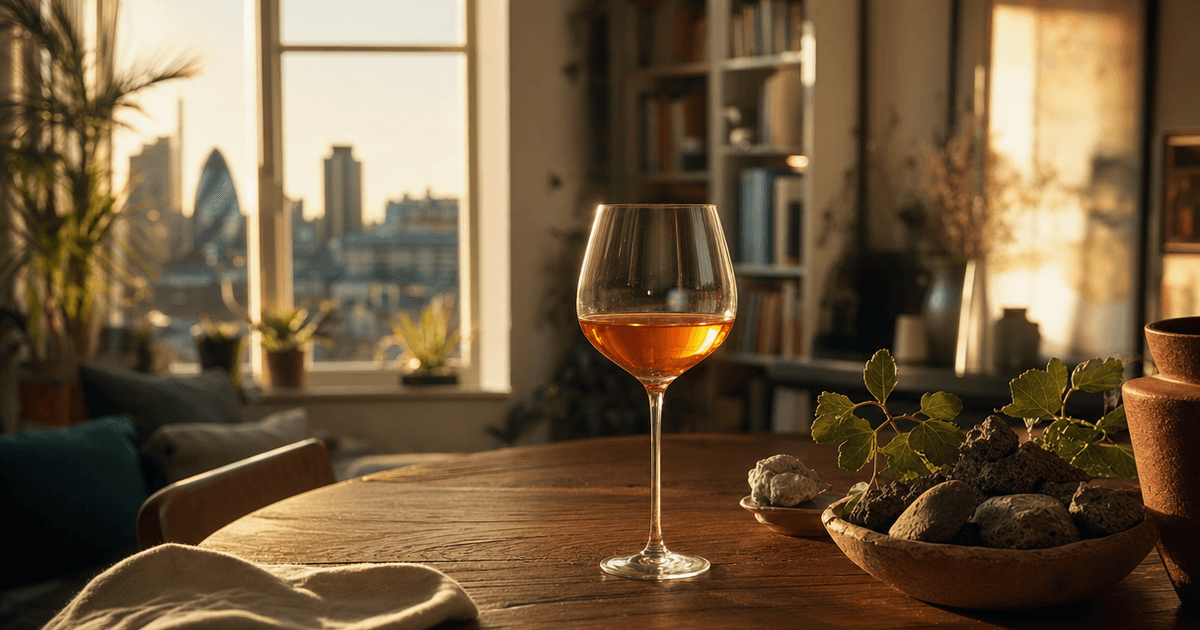
Canary Islands wine turns up on a table tasting of nothing else you own — salty, smoky, sometimes faintly resinous — and the honest first question is: is this actually good, or just odd? Here’s the fact that reframes everything else in this piece: these volcanic islands off Morocco are home to some of the last vineyards in Europe still growing on their own roots, because phylloxera — the aphid that forced almost every European vine onto grafted American rootstock from the 1870s onward — never made it across the Atlantic swell. That’s not a marketing line; it’s why the grapes here exist nowhere else on earth. By the end of this you’ll know which island and grape to reach for, how to serve it so it shows properly, and roughly what it should cost — so you can pick with some confidence rather than a shrug.
Do the Canary Islands have good wine?
Yes, and increasingly so. What was, for much of the 20th century, unremarkable wine made mostly for tourists has turned into one of the more talked-about corners of Spanish wine, thanks to volcanic soils, genuinely old vines, and a clutch of grapes you can’t buy anywhere else.
Here’s the twist worth knowing: this isn’t new. Shakespeare’s characters drank “canary” — a sweet, fortified-adjacent style shipped to Elizabethan England and prized much like Madeira or sherry. That reputation faded for the best part of two centuries. Then, from the 1990s on, growers started taking the old vines seriously again instead of just farming for volume, helped along by EU and government support. The result is a modern Canary Islands wine region built on very old bones — some vines are reckoned among the oldest working vineyards in Europe, because phylloxera, which flattened almost every other European vineyard from the 1870s, never reached these islands. Everything ungrafted, on original roots: a living archive the mainland lost a century and a half ago. If old vines and value are your thing generally, it’s worth reading Old vines, old ways: why Spain is Europe’s best value alongside this — and if that archive idea appeals, a single bottle of Listán Blanco is the cheapest ticket into it you’ll find.
What makes this volcanic wine region unlike anywhere else
Two things, mainly: the soil, and the sheer bloody-mindedness of the viticulture.
The soil first. These islands are volcanic through and through — dark ash, pumice, basalt — and it shows in the glass as a stony, saline edge that trade writers keep reaching for Chablis or sherry to describe. It isn’t a flavour you can fake with technique. It comes from the ground.
Then there’s how the vines are grown, which varies wildly island to island:
- Lanzarote — flat, black picón ash, almost no rainfall. Growers dig individual pits (hoyos) and ring each vine with a low stone wall to catch wind-blown moisture and block the Atlantic gusts. Planting density is very low; yields are tiny.
- Tenerife’s Valle de Orotava — vines are braided together into long ropes (cordon trenzado) and trained low along wires, snaking up and down the hillside rather than standing in tidy rows.
- Abona, southern Tenerife — semi-desert slopes running up to Europe’s highest vineyard, over 1,700 metres, on sandy soils lower down and volcanic clay higher up.
None of that is decoration. It’s a direct answer to wind, drought and altitude that mainland viticulture rarely has to think about — and remember, all of it done on ungrafted vines that would be museum pieces anywhere else. If unusual growing places are your kind of rabbit hole, Beyond the classics: the wine map’s best-kept secrets goes further into regions built around exactly this kind of awkward, brilliant terrain. And when a wine costs this much effort to grow, the bottle tends to repay a little effort in choosing it — which is the next job.
What is the best wine from the Canary Islands?
There isn’t one “best” — it genuinely depends what you’re after. My steer, matched to what you already drink: if Chablis or dry sherry is your usual, pick a dry Malvasía Volcánica from Lanzarote — mineral, textured, saline. If you drink Beaujolais or lighter Pinot Noir, go for Listán Negro from Tenerife’s Tacoronte-Acentejo — light, perfumed, often part-carbonic. And if you want the bottle nobody else at the table has met, La Palma’s vino de tea is the one — resinous, from ageing in Canary pine barrels, and properly like nowhere else.
A quick map of what’s grown where:
| Island / DO | Signature grape | What it tastes like |
|---|---|---|
| Lanzarote | Malvasía Volcánica | Dry, saline, waxy-textured white |
| Tacoronte-Acentejo (Tenerife) | Listán Negro | Light, perfumed red, often carbonic |
| La Palma | Negramoll / Listán Blanco | Vino de tea (resinous) or old-style sweet malvasía |
| One of the other island DOs | Listán Blanco, Marmajuelo | Crisp, high-acid white |
| Ycoden-Daute-Isora (Tenerife) | Vijariego, Marmajuelo | Textured dry white from high, cooler slopes |
Listán Blanco, incidentally, is Palomino Fino under another name — the same grape that makes fino sherry. On the mainland it’s fairly ordinary. On these volcanic slopes, on its own ungrafted roots, it makes something with far more tension and grip — which tells you the soil is doing most of the work here, not the grape alone. A rule of thumb worth keeping: Lanzarote on the label promises salt; Tacoronte promises perfume; La Palma promises the unexpected. Pick by which of those three words sounds like dinner tonight.
How to serve Canary Islands wine so it earns its keep
This is where a decent bottle gets ruined more often than not: served too warm, in the wrong glass, or poured to match a dish that fights it.
The whites — Malvasía Volcánica, Listán Blanco, Marmajuelo — want a proper chill, closer to a Chablis than a supermarket Pinot Grigio, and a decent-sized glass so that salty, stony character has room to open. They’re built for seafood: grilled fish, octopus, anything with a squeeze of lemon and a bit of chilli. The reds from Listán Negro are lighter than their colour suggests — serve them a touch cooler than a Rioja, closer to cellar temperature, and they’ll show more fruit and less weight than you expect.
Vino de tea is the one to treat carefully. Worth quoting to anyone who wrinkles their nose at it: vino de tea is red wine aged in barrels of Canary Island pine, and the resinous edge is the point of the style, not a fault in the bottle. Pour it for someone who’s curious rather than someone who wants “a nice glass of red.” One glass properly enjoyed beats a bottle rushed, always — and if you’re planning a fish supper this week, that’s the natural excuse to open your first Malvasía.
What it costs, and why
Canary Islands wine sits, fairly reliably, above the price of equivalent mainland Spanish bottles, and there’s a straightforward reason: yields are small and the labour is relentless. Vines dug into individual ash pits on Lanzarote, or braided by hand across Orotava’s hillsides, can’t be machine-harvested or farmed at scale. Add in some of the highest vineyards in Europe, worked by hand on steep, awkward ground, and the cost is baked in before the wine’s even fermented. My honest advice at the shelf: pay the premium once for a proper Lanzarote Malvasía rather than twice for something cheaper that could have come from anywhere.
A tighter budget doesn’t have to mean a duller pour — it’s really about knowing where the good stuff hides. That’s exactly the territory covered in Second wines: how to drink a great château without the grand vin price, which shows how a château’s second label can carry serious craftsmanship at a much gentler price. Different corner of the wine world, same knack for finding quality that doesn’t shout about itself.
Questions customers ask us
Is Canarian wine good? Genuinely, yes — trade opinion has swung hard in its favour over the last decade, particularly for the salty, mineral whites. It’s still a small, specialist region rather than a household name, which is part of its charm.
Which wine is best for diabetics? That’s a question for a GP or dietitian, not a wine merchant — we won’t make health claims either way. What we can point you to are the driest styles with the least residual sugar, if that’s the underlying question.
Do all Canary Islands wines taste of smoke or ash? No — that reputation comes mostly from the reds and from vino de tea specifically. Most of the whites read as clean, salty and citrus-driven rather than smoky.
Are Canary Islands wines organic? Not automatically, though low chemical intervention is common — dry conditions and isolation from many mainland vine diseases mean less spraying is needed in the first place.
The merchant’s last word
I’ll be honest, I ignored this region for years — filed it under “curiosity” rather than “worth stocking properly.” That was a mistake I’ve since put right. If you want a wine that genuinely tastes of somewhere specific — grown on roots Europe’s mainland hasn’t seen since the 1870s — this is one of the shortest, most interesting routes there. Go carefully, one bottle at a time: a Lanzarote white for the fish, a Tacoronte red for the curious, and browse the France cellar when you’re ready to pick one. I’ll happily point you to whichever island suits your table.



