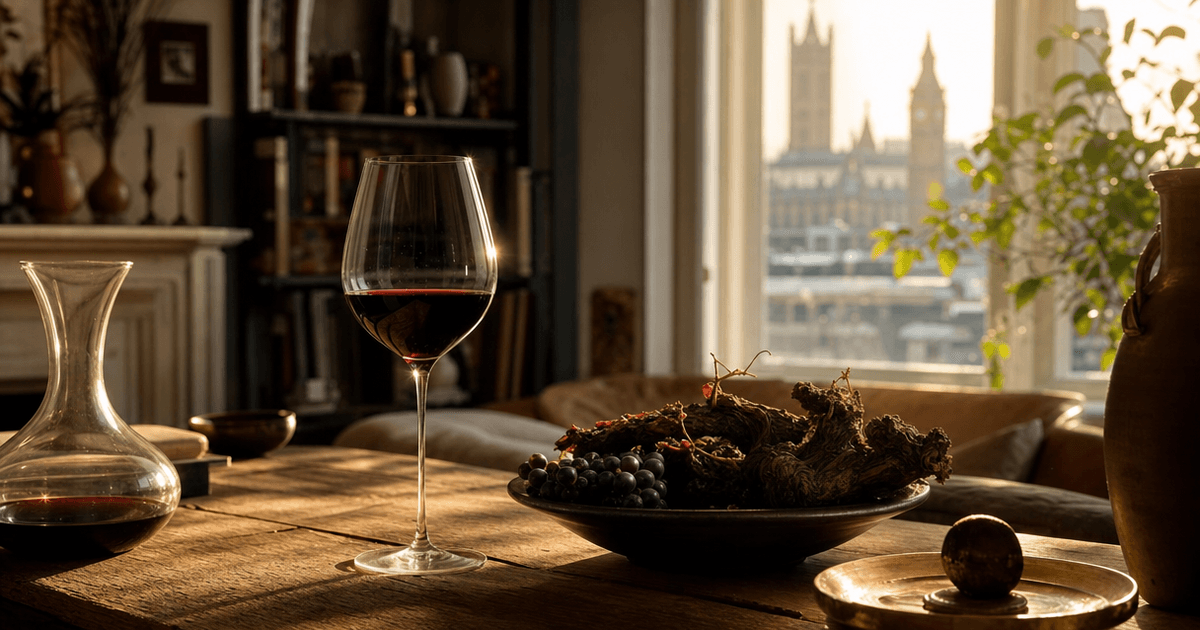
Old vine Zinfandel is the American shorthand for what age does to a vineyard: smaller crops, thicker skins, fruit with more depth to it. In the glass, that means Zinfandel’s ripe cherry and dark-berry character with real concentration behind it — the difference between a wine that’s pleasant and one that’s got something to say. Old vine wine, put plainly, is wine made from vines old enough to have stopped cropping big and started cropping interesting. There’s no legal age minimum anywhere in the world for the term — it’s a badge of pride, not a rule. By the end of this you’ll know what separates ordinary Zinfandel from the old vine kind, why Spain plays much the same game for less money, and how to tell a genuine old-vine bottle from one just borrowing the phrase.
What is the difference between Zinfandel and old vine Zinfandel?
Zinfandel is a grape variety, full stop — it makes medium to full-bodied reds with ripe cherry and dark berry fruit and generous, friendly tannins. Old vine Zinfandel comes from vineyards typically decades old, often self-rooted rather than grafted onto resistant rootstock, cropping low and giving fruit with more stuffing to work with. (The “old vine” tag describes the vineyard’s age and yield, not a different grape or a stricter legal category.)
California’s Lodi is the region trade opinion returns to most for this style. Its sandy soils meant phylloxera never got a proper foothold there, so a fair number of vines are still growing on their own roots, some pushing past a century old. The same Lodi fruit can end up in a large, everyday blend or a single-vineyard bottling — the vine’s age doesn’t decide the price tag, the winemaking and the label do.
So what does the difference actually taste like? Ordinary Zinfandel is a friendly, medium-to-full red made for pizza-and-Tuesday duty, and there’s no shame in that. The old vine kind carries the same fruit with more weight behind it — denser, longer, tannins that feel woven in rather than bolted on — and it repays slower cooking and slower drinking. If the back label names a vineyard and a vine age, take it seriously; if the front label just shouts “old vine” with nothing behind it, read on before you pay the premium.
Spain’s old vines tell the same story, for less money
Spain never went in for the tidy, trellised, one-variety-per-row look that much of the New World favours. Low, gnarled bush vines, spaced wide apart, are still how a lot of the country farms — and a good number of those vines are genuinely old.
In Bierzo, where Mencía is king, a large share of the region’s vines are reckoned to be well past sixty years old. Steep slopes and poor soil keep yields low and costs high, but the pay-off shows in the glass: wines from the higher ground carry more concentration, ripe red cherry and plum fruit, and a floral or herbal lift — oak has to be handled with a light touch here, or it buries Mencía’s more delicate side.
In Toro, sandy soils kept phylloxera out altogether, so many vines are ungrafted and growing on their own roots, with a fair few past fifty years old and some well beyond a century. Toro isn’t only about reds either — rosé from Tinta de Toro or Garnacha, and whites from Malvasía or Verdejo, come off the same old, low-density plantings (irrigation is banned there from June until harvest, so the vines have to dig for what they need).
Rioja has its own rescue story worth knowing. The EU once paid growers to grub up old bush vines, and plenty took the money and planted almonds instead. Some of that old Garnacha land is now being bought back and replanted, undoing a decision made a generation ago. Further south, Jumilla — once known mainly for bulk wine — is building a reputation around very old, dry-farmed vines and the Monastrell grape, hardy and heat-resistant, farmed across a cluster of neighbouring appellations in the same dry corner of the country.
The practical upshot for your basket: if you like what old vines do to Zinfandel, Toro and Bierzo let you taste the same low-yield idea for less — same patient arithmetic, different grape, friendlier bill.
How do you choose a good old vine wine?
Since “old vine” isn’t policed by law anywhere, judge the bottle on where it’s from and what it costs, not the phrase alone. Regions with a genuine old-vine identity — Lodi, Toro, Bierzo among them — tend to say so plainly on the back label, and the price usually sits a notch above the region’s everyday wine.
Look for a stated vine age or a named vineyard rather than “old vine” floating alone on the front label with nothing behind it. A grower proud of sixty or eighty-year-old vines will usually tell you, because keeping those vines in the ground rather than replanting for bigger yields cost them something real. If the price matches the cheapest wine on the shelf from that same region, the claim is doing more marketing than farming.
That’s the rule I give everyone at the counter, and it travels to any region: treat “old vine” as a claim to check, not a promise — a stated age, a named vineyard, and a price that respects the farming.
Should old vine Zinfandel be served cold?
No — treat it like most medium to full-bodied reds and serve it around 16–18°C, ten minutes or so out of a cool spot rather than straight from the fridge. Old vine Zinfandel’s ripe fruit and higher alcohol need a bit of warmth to open up properly; serve it too cold and the fruit shuts down while the tannins turn hard and grippy.
Glass shape does more work than people expect — a wider bowl gives that fruit room to breathe. If the kitchen’s warm and the oven’s been on an hour, fifteen minutes in an ice bucket brings a big red back into range faster than leaving it on the side. Spain’s oak-aged reds — a Ribera del Duero, a Rioja Reserva — follow the same logic but need a touch longer once poured, since the oak mutes the fruit early on.
On the plate, old vine Zinfandel wants the barbecue: ribs, brisket, anything char-edged and generous, where the ripe fruit stands up to smoke that would flatten a lighter red. Get the temperature and the plate right and you’ll taste exactly what the extra few pounds paid for.
What old vine actually costs you, and why
Old bush vines across central and southern Spain are planted far more sparingly than the trellised rows common in Bordeaux or Burgundy, and they crop small on top of that. Fewer vines doing less work per hectare means each bottle carries the cost of a lot of empty ground — which is exactly why old vine wine tends to sit above everyday wine from the same region.
| Vines per hectare (roughly) | Typical yield | |
|---|---|---|
| Spanish old bush vine | 900–1,600 | often under 20 hl/ha |
| Dense trellised row (Bordeaux, Burgundy) | 8,000–10,000+ | generally higher |
Most Spanish vineyard plots are small too, worked largely by hand rather than machine, so there’s no scale to lean on when costs climb. It’s exactly why old vine Zinfandel from Lodi sits above everyday Zinfandel on the shelf, and why Spain’s old-vine bottlings, working the same low-yield arithmetic with cheaper land and labour, land at a noticeably lower price than their Californian equivalents. If you want the fuller picture of where your money goes in a bottle generally, Why does wine cost what it costs? covers the rest of it.
Questions customers ask us
Is Zinfandel a sweet wine or dry wine? Table Zinfandel, old vine or otherwise, is fermented dry. The ripe fruit and higher alcohol can taste sweet-ish on first impression, but there’s no residual sugar in a standard bottling — that’s a different product, White Zinfandel, entirely.
How old does a vine have to be before it counts as “old vine”? No legal minimum exists anywhere. Trade convention leans toward several decades at least, and regions like Toro and Lodi both have plenty of vines well past the century mark.
Does old vine wine cost more to farm? Generally yes — low yields and wide, hand-worked spacing mean more labour and less fruit per hectare, so the cost climbs before a single grape is picked.
The merchant’s last word
I used to think “old vine” on a label was mostly marketing dust — a bit like “artisan” on a jar of chutney. Then I stood in a Toro vineyard on sandy soil that had never seen phylloxera and understood the fuss. It’s not a trick; it’s a slower, harder way of farming that happens to taste better. Have a look through our Spanish shelf and see what that slowness gets you for your money — and if it’s the Californian side you’re curious about, ask me. I’ll happily talk Zinfandel until you regret raising it.



