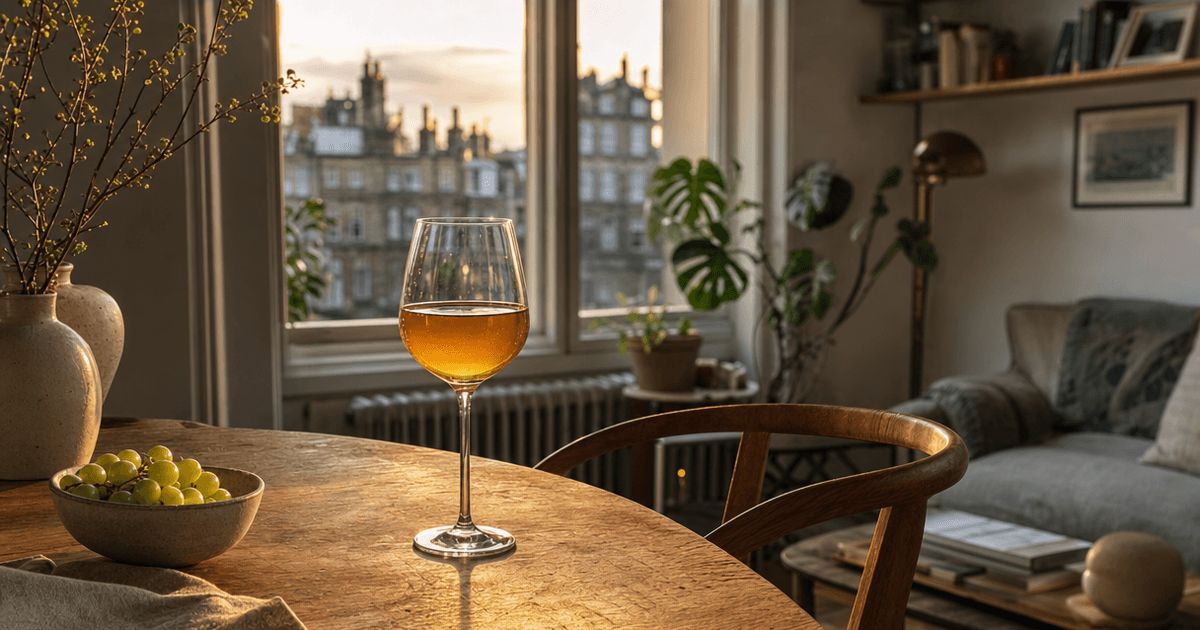
Chasselas is the Swiss white most of Britain’s drinks aisles have never met, and there’s a plain reason for that: by most reckonings, only a small slice of what’s grown ever leaves Switzerland, and the rest gets drunk within sight of the vines that grew it. Chasselas is a white grape, thin-skinned and famously quiet on its own, that turns steely and precise once it lands on the right slope above a lake. It’s usually bone dry, light in alcohol, built for drinking young and cold rather than for the cellar. By the end you’ll know what’s actually in the glass, which Swiss regions are worth asking for by name, and whether it’s worth the hunt at all.
What kind of wine is Chasselas?
Chasselas makes soft, light, low-alcohol dry wine, and most of it never leaves Switzerland. It’s the country’s most planted white grape, sold under its own name almost everywhere except the Valais, where it’s called Fendant instead. On its own the grape is fairly plain — the ground underneath it does most of the talking, which is exactly why the same variety can taste so different from one canton to the next.
For years growers argued about where it came from. One old theory placed its ancestry in Egypt, another guessed at wild Swiss vines. DNA work has since settled the matter: the trail runs back to French-speaking Switzerland, not the Nile and not the Rhône.
Cross into France and Chasselas mostly turns up as a table grape, sold by the bowl rather than the bottle, and plantings there have shrunk a long way. Slip over the border into Baden, Alsace or the nearby Swiss cantons and it reappears as Gutedel — well-liked enough locally that people still call that stretch of borderland the Gutedel Triangle. I used to tell customers Chasselas was a blank canvas everywhere except one corner of the Alps. That’s roughly true — I just didn’t used to say it with enough respect. It’s a bit like Blanc de Noirs, where the label hides more than it tells you: Fendant hides Chasselas behind a place name, and most drinkers never clock they’re the same grape.
Which Swiss region makes the best Chasselas?
There isn’t one best Chasselas — that’s rather the point of it. Vaud makes the lion’s share of its wine from the grape, everything from easy lakeside drinking to genuinely serious bottles grown on the Lavaux terraces. The Valais calls it Fendant and grows it fuller and riper on some of Europe’s highest vineyard slopes. Neuchâtel does its own quiet thing: an unfiltered version, bottled and released once a year.
| Region | Character | Look for |
|---|---|---|
| Vaud – Lavaux & La Côte | Ranges from easy lakeside white to steely and ageworthy | Dézaley, Calamin (Vaud’s two grand cru terraces) |
| Valais | Fuller, riper, grown on dry-stone terraces called tablars | Labelled Fendant, not Chasselas |
| Geneva | Softer, flatter-land style, though other grapes are creeping in | Lakeside styles from newer plantings |
| Neuchâtel | Mineral, calcareous, grown near Pinot Noir | Chasselas non filtré, released once a year |
Dézaley and Calamin sit on slopes first terraced by hand centuries ago into the hillside above the lake — that’s where Vaud earns its steeliest, most ageworthy Chasselas. La Côte, further round the shore, leans on the grape’s own floral, almost linden-blossom side instead. Neither is wrong. They’re just answering different questions with the same grape. If you only ever land one bottle of each, make it a Dézaley for the cellar conversation and a Fendant for the sunny lunch — that split will teach you more about Chasselas than any tasting note, and either makes a fine first buy.
Is Chasselas sweet or dry, and how should you drink it?
Dry, nearly always. Modern Swiss Chasselas is fermented out fully, low in alcohol — often close to 12% — and made for drinking young rather than laying down. Where it can taste soft, even faintly sweet on the mid-palate, that’s usually down to a winemaking choice, not sugar left in the glass.
Two habits explain that softness: chaptalization, once routine to add a bit of body, and a Swiss instinct that’s tended to treat high acidity as a fault rather than a feature. That instinct isn’t universal — Vaud leans into malolactic conversion more than most, while native grapes like Rèze and Completer are left with their acidity intact, because acidity is the whole point of them. Plenty of the better small growers skip chaptalization altogether now, and Swiss drinkers themselves have been drifting toward lighter, drier styles anyway.
Serve it properly cold and it stops feeling neutral fast — almond, hay, sometimes a faint mineral snap depending which bank of the lake it’s from. Cheese is its oldest, most reliable match, and a few sommeliers have started reaching for it alongside sushi instead of raclette, on the strength of that same gentle acidity and low alcohol. If you’re hosting a cheese and wine night, it earns a seat at that table without needing to be the star of it. Buy the youngest vintage you can find for that job — this is a wine for the next month, not the next decade.
Why is Chasselas so hard to find outside Switzerland?
Because the Swiss drink nearly all of it themselves. By most reckonings only a small fraction of what’s grown ever gets exported — this is a wine made for a Tuesday night in Lausanne, not a shipping container. What little does travel tends to head to Germany, with a growing amount finding its way to Japan.
Switzerland’s whole wine industry is small by world standards — a rounding error next to France, Italy or Spain — and Chasselas is the grape most tied to home drinking within it. Every couple of decades the town of Vevey throws a festival, the Fête des Vignerons, honouring the people who tend the vines rather than any particular wine or vintage. That’s not a marketing budget. That’s a culture that’s been doing this long before anyone thought to export it. The practical upshot for a UK buyer: when a Vaud bottle or a Valais Fendant does surface over here, treat it as a buy-it-now wine — scarcity is the rule, not the promotion. If corners of the map like this appeal to you, the wine map’s best-kept secrets go a lot further than this one grape.
What is so special about Chablis?
Nothing to do with Chasselas, if we’re honest — it’s a fair question to land here because both are cool, mineral, food-friendly whites people reach for without quite knowing why. Chablis is 100% Chardonnay grown on limestone in northern Burgundy, usually made without oak, and prized for a leanness Chasselas rarely aims for.
Where the two meet is in the glass: pour a young, steely Dézaley next to a village Chablis and a distracted taster could mix them up. Which hands you a fallback steer: on a shelf with no Chasselas in sight, a village Chablis is the nearest job-alike for the same cold, mineral, food-friendly slot. Where they part ways is fame. Chablis built an export reputation on that leanness; Chasselas mostly stayed home and let the Swiss drink it themselves — a bit like the logic behind second wines from a great château, where the flagship gets the reputation and the honest bottle next door gets drunk quietly at the table.
Questions customers ask us
Is Fendant the same as Chasselas? Yes. Fendant is simply the Valais name for wine made from the Chasselas grape — same variety, different label, sunnier growing conditions.
Is Chasselas the same as Gutedel? Also yes. Cross into Baden or Alsace and the grape is called Gutedel, part of what locals call the Gutedel Triangle with Switzerland.
What food goes with Chasselas? Cheese is the traditional match, and it’s increasingly turning up alongside sushi thanks to its low acidity and gentle alcohol.
Does the Vaud make anything besides Chasselas? Some Pinot Noir and Gamaret too, but Chasselas still accounts for most of the canton’s output.
The merchant’s last word
I’ve poured Chasselas for people expecting nothing much and watched their face change on the second sip — that’s the whole trick of it. It’s not a showy wine, it’s an honest one, and honest wines from small places rarely get the shelf space they deserve. If that sounds like your kind of bottle, come and browse the France cellar — the quiet corners of the map are exactly where I most enjoy pointing people, and this one’s worth the detour.



