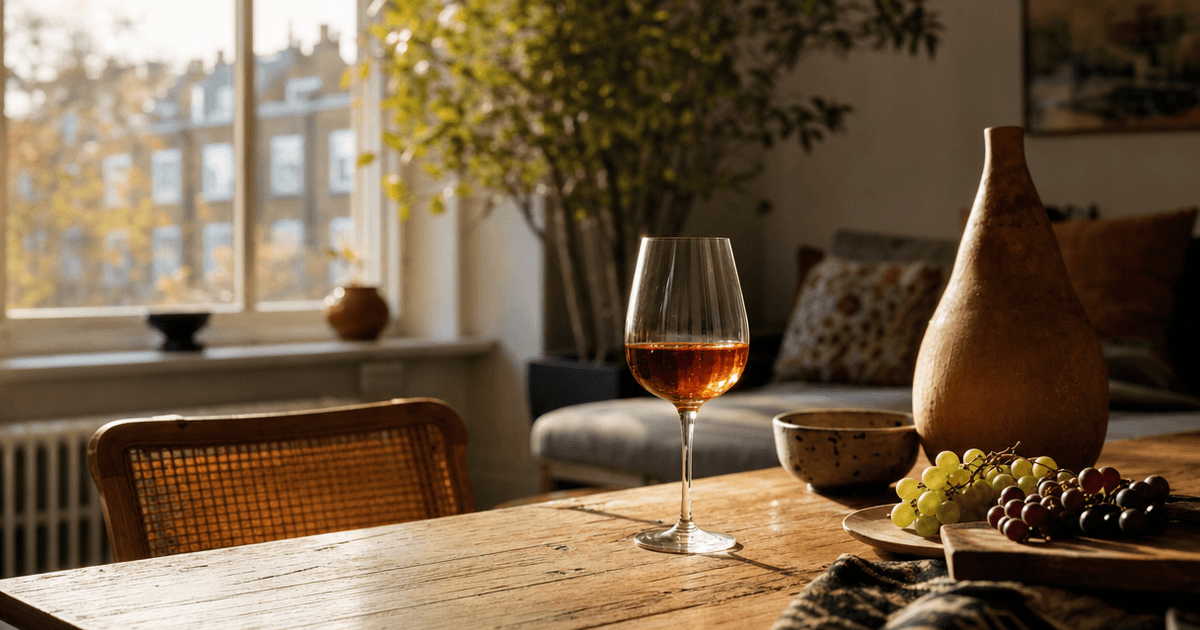
Here’s the shortest honest way I can put the choice: Moldova sells you the grape; Georgia sells you the vessel. Moldovan wine gives you clean fruit, fresh acidity and blends that make sense to anyone who’s drunk a Bordeaux — grapes you’ve never heard of behaving in ways you already understand. Georgian wine gives you familiar-sounding fruit put through a method older than the barrel itself: months in buried clay, textures no stainless-steel tank has ever produced. The two countries sit a few hundred miles apart and even faced the same catastrophe — Russia banned both from its market in 2006 — but they answered it in opposite directions, and that answer is exactly what you taste in the glass. Moldova modernised westward; Georgia doubled down on ancient. By the end of this you’ll know which door suits you first, and which bottle to ask for once you’re through it.
Is Moldovan wine any good?
Yes — and it’s improved fast, for the least romantic reason in wine: it had no other choice. Before 2006, quality was often poor — old Soviet kit, casual attitudes to hygiene, plenty of oxidised wine that never left the region. Then Russia banned Moldovan wine outright, twice — first in 2006, again in 2013 — removing the country’s biggest customer overnight. Producers had nowhere left to send the wine except west, so they modernised or went under.
What’s left is a mix of state-owned giants and small, newly unshackled boutique producers — a couple of hundred registered wineries at the last trade count, plenty with proper tourism set-ups attached. The vines had a head start regardless: Moldova has more grapevines per person than any other country on earth, rooted in humus-rich black soil that forces them down into the limestone bedrock below. The climate does the rest — warm summers, hard winters the vines shrug off, a temperate continental pattern that delivers fresh acidity and moderate alcohol pretty much as standard.
The result, by recent trade coverage, is a country that now ranks among the world’s larger producers and exporters, selling the overwhelming majority of what it makes abroad. Not bad for a place most wine drinkers couldn’t find on a map — and a quiet argument for getting there before everyone else does.
There’s a useful parallel here with how we talk about second wines: how to drink a great château without the grand vin price — Moldova’s better PGI reds offer that same sense of drinking into a serious wine region without gambling on the unknown.
What wine is Moldova famous for?
Moldova is best known for Negru de Purcari-style reds — a blend of Cabernet Sauvignon, Saperavi and the indigenous Rara Neagră, historically the only Moldovan wine exported with an English label in Soviet times. That blend is the country’s whole pitch in one glass: one grape you know, one grape its neighbour knows, one grape nobody outside the region knows — assembled into something a claret drinker would recognise at first sniff. Beyond the flagship, look for Fetească Neagră and Rara Neagră for structured reds, and Fetească Albă or Fetească Regală for fresh, floral whites.
White actually leads Moldovan production overall — comfortably ahead of red in recent harvests — mostly built on those indigenous Fetească grapes doing fresh, aromatic, food-friendly things rather than anything oaky or heavy.
Geography does a lot of the sorting for you, and it’s worth using at the shelf. Codru, in the centre, sits on forested hills that moderate the winters, with the great majority of its vineyards planted on slopes — that’s the name to look for on floral whites and reds structured enough to age. Valul lui Traian, in the south-west, is the country’s largest wine region and the broadest in style. There’s also a small tradition of fortified wine (Pastoral, made from heat-treated must) and a handful of decent ice wines from Riesling and Traminer left on the vine into the cold. It’s a far wider range than the “one famous red blend” reputation suggests — which means one bottle won’t tell you the whole story, and a second is entirely justified.
Georgia’s case: 8,000 years and the qvevri
Georgia plays an entirely different game — and it’s the vessel, not the grape, that defines it. Wine culture here runs back roughly 8,000 years, and it isn’t treated as an industry so much as an identity: the supra feast, presided over by a toastmaster called the tamada, is built around jugfuls of wine and round after round of toasts.
That reverence shows in the vineyard. Around 500 identifiable indigenous grape varieties still exist, and nearly all Georgian wine is made from them, led by Rkatsiteli for whites and Saperavi for reds — a grape Georgia and Moldova actually share, which makes it the single best side-by-side comparison you can run between the two countries. Kakheti, in the east, does the heavy lifting: home to the lion’s share of Georgia’s vines and most of its wine, spread across named appellations including Tsinandali, Mukuzani and Kindzmarauli.
Many producers still ferment in qvevri — egg-shaped clay vessels buried in the ground, a technique unchanged for centuries and the reason Georgian wine became a natural favourite with the amber-and-orange-wine crowd. And when the same 2006 Russian ban that hit Moldova took away the bulk of Georgia’s export market overnight, Georgia rebuilt through storytelling rather than scale; it now sells into dozens of countries, though home winemaking still soaks up a good share of each harvest. There’s a lot more on this in Georgia and the amphora: 8,000 years of winemaking if the clay-vessel side grabs you — and if it does, an amber Rkatsiteli is the bottle to start with.
What is the most famous winery in Moldova?
Strip away individual brand names (not our department here) and the real celebrity of Moldovan wine is geological, not commercial. Two state-owned complexes stand apart from an otherwise fully privatised industry: one built around roughly 200km of underground galleries — the largest network of wine cellars anywhere in the world — the other home to the largest collection of bottled wine on the planet.
Both are carved from the same limestone Moldova’s vines root down into, and both do double duty as working cellars and wine-tourism sites — parts of the tunnels function almost like small underground towns, some of it storage, some laid out for visitors to walk through. If you ever get the chance to go down there, take it. It tells you more about Moldova’s wine ambition than any tasting note could, and it’s the closest thing the country has to a single famous wine landmark. Notice what it says about the national character, too: Moldova’s proudest wine monument is infrastructure — scale, storage, seriousness — where Georgia’s is a clay pot and a feast. Two countries, two ideas of what wine is for.
Moldova vs Georgia: which should you try first?
Back to the counter rule, now with the evidence behind it: if you want a wine that tastes like the wines you already know, start with Moldova; if you want a wine that redraws the map, start with Georgia.
| Moldova | Georgia | |
|---|---|---|
| Claim to fame | Highest vines-per-person on earth | Wine’s likely birthplace, ~8,000 years of history |
| Signature red | Cabernet Sauvignon/Saperavi/Rara Neagră blend | Saperavi, often qvevri-aged |
| Signature white | Fetească Albă, Fetească Regală | Rkatsiteli, sometimes amber/skin-contact |
| Indigenous variety count | A handful of Fetească varieties plus Rara Neagră | Around 500 identifiable varieties |
| What’s in the glass | Fresh acidity, moderate alcohol, food-friendly | Structured, tannic reds; textured amber whites |
| A sensible first bottle | A moldovan red wine blend, or a Fetească Albă | A Kakhetian Saperavi, or an amber Rkatsiteli |
If clean fruit, sensible acid and a red blend that wouldn’t look out of place near a Bordeaux is your idea of a good Tuesday, start with Moldovan wine — specifically a Moldovan red built for the table rather than the cellar. It’s the gentler door into Eastern Europe’s overlooked shelf, and the one I’d hand most customers first.
If you want the stranger, more textured end — amber whites with real grip from skin contact, reds fermented in buried clay for months — Georgia is your door, and you should walk through it knowing the wine will taste like nothing in your fridge. Neither choice is a downgrade on the other; they’re two entrances to the same neglected corridor of the wine map, one we cover more broadly in Beyond the classics: the wine map’s best-kept secrets. And if you want a general steer on reading labels and backing your own judgement before you buy either, how to buy wine like a merchant: labels, ratings and value is worth five minutes too.
Questions customers ask us
What is the best Moldovan wine?
There isn’t one single “best” — quality and style vary bottle to bottle, same as anywhere. Buy by region instead: Codru for structured reds and floral whites, Valul lui Traian for the broadest range going.
Is Moldovan wine related to Romanian wine?
They share a border, a history (Moldova was once part of the old Principality of Moldavia, which also covered eastern Romania), and grape varieties like Fetească. Stylistically, modern Moldovan wine tends to run fresher, while Romania’s historically prized wines from Cotnari lean sweet and botrytis-affected.
Does Moldova make sweet wine?
Yes, though it’s a sliver of total output — and within that sliver are a few genuinely good ice wines made from Riesling and Traminer.
Is Moldovan wine easy to find in the UK?
Stock of Moldovan wine in the UK is still thin on the ground compared with France, Italy or Spain, which is exactly why it’s worth seeking out if you like trying things your mates haven’t.
The merchant’s last word
I’ll be honest — I sold Moldovan wine wrong for years, tucking it away as a curiosity instead of shelving it next to wines I actually rate. The grape or the vessel: that’s the real question here, and there’s no wrong answer, only a first one. Whichever you pick — Moldova’s fresh, familiar-shaped reds and whites or Georgia’s ancient qvevri styles — you’re drinking something with genuine history behind it, not a gimmick. Come and have a look at what we’ve got in from both: browse the France cellar and see where the glass takes you.



