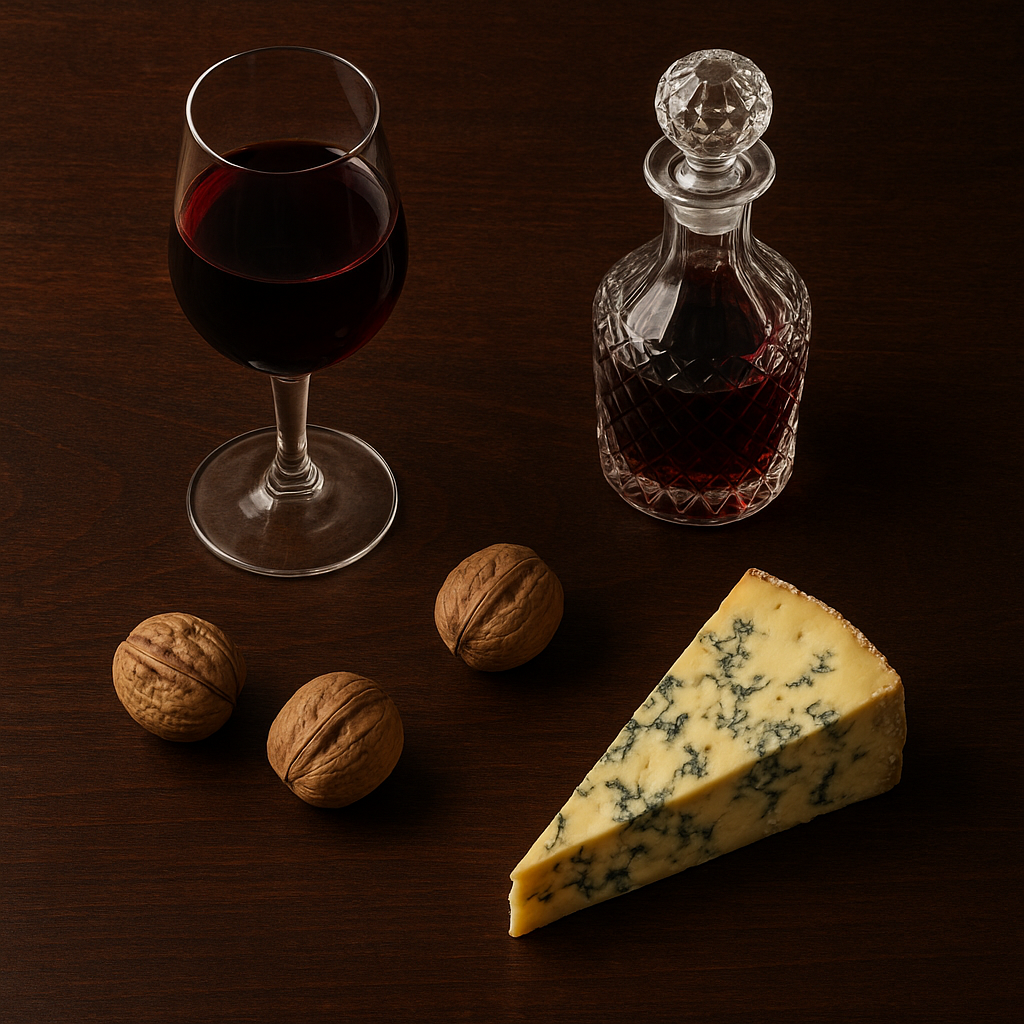
Madeira wine styles trip people up before they’ve even got the cork out — four grape names, five sweetness bands, all crowded onto one small island. Here’s the key that makes the whole system click, and it’s the one you won’t get from a back label: the island is a mountain, and sweetness runs downhill. Madeira is a fortified wine from the Portuguese island of the same name, deliberately heat-aged, and its four classic grapes are really four altitudes — highest and coolest gives the driest wine, lowest and hottest the sweetest. Hold that picture and everything else in this piece is just detail. By the end, you’ll read a Madeira label in about two minutes flat, and know if you’re holding something for a walnut and blue cheese board, or something rich enough to sit next to dark chocolate.
What are the 4 types of Madeira wine?
The four classic styles are named after their grape: Sercial (driest), Verdelho (medium dry), Bual or Boal (medium sweet), and Malvasia or Malmsey (sweetest). Each grows at a different spot on the island, and by law a wine can only carry that grape’s name if it’s made from at least 85% of it — everything else gets labelled by sweetness alone.
Sercial lives at the top of the mountain — high, cool, often the last grape picked on the whole island, sometimes barely scraping enough ripeness to hit the minimum alcohol. That’s exactly why it stays racy and bone dry. Malvasia lives at the bottom — it wants heat — and the best of it comes off low, south-facing slopes around Câmara de Lobos, where Malvasia Cândida, the most prized of the family, ripens into the richest wine Madeira makes.
In between, at their own heights on the slope, sit Verdelho (rounder, a step sweeter, all candied fruit) and Bual (fuller, darker in the glass, tasting of caramel, chocolate and toasted nuts). Walk down the mountain and the sweetness climbs — dry to sweet, that’s the order: Sercial, Verdelho, Bual, Malmsey.
Behind these four sit rarer bottlings worth knowing even if you never buy one — Terrantez (medium dry to medium sweet, oddly delicate despite decent sugar), near-extinct Bastardo, and small amounts of Moscatel occasionally bottled alone. You’ll also spot “Rainwater” — pale, off-dry to medium-dry, bottled young, named after a shipping mishap rather than any winemaking trick.
And there’s Tinta Negra, the one grape with no single address on the mountain — and the grape behind most of what actually sits on supermarket shelves. More on that below. For a first bottle, though, the practical steer is simple: pick your altitude before your producer — dry drinkers start at the top with Sercial, sweet tooths at the bottom with Malmsey, everyone else in the middle with Bual.
Which is the sweetest style of Madeira?
Malmsey is the sweetest style, typically carrying more than 100g/l residual sugar — noticeably richer than Bual, Verdelho or Sercial, and grown on the lowest, warmest slopes the island has. Taste it blind, though, and it rarely comes across as cloying. Madeira’s acidity runs high across every style, so even the sweetest bottlings finish with a snap of freshness rather than sitting heavy on the tongue.
The industry sorts sweetness into five labelled bands, and there’s genuine overlap between them — a wine one producer calls “dry” might get called “medium dry” by the house next door:
| Label | Residual sugar | °Baumé |
|---|---|---|
| Extra dry | 0–15 g/l | 0–1° |
| Dry | 20–50 g/l | 1–1.5° |
| Medium dry | 50–75 g/l | 1.5–2.5° |
| Medium sweet / medium rich | 75–100 g/l | 2.5–3.5° |
| Sweet / rich | 100+ g/l | 3.5°+ |
The finest Malvasia Cândida bottlings actually run higher still — trade readings put them at 3.5 to 6.5°Baumé, gaining richness the longer they sit in cask. Expect raisin and caramel flavours, sometimes thick-cut marmalade, with that characteristic acid spine keeping it honest. If sweet wine has ever put you off before, a Malmsey with that spine is one of the better bottles to change your mind with — it’s worth reading how sweet wines for people who think they hate sweet wines makes the same case for a glass of properly balanced Sauternes or PX.
What is the most popular Madeira wine?
By volume, most Madeira drunk anywhere isn’t Sercial, Verdelho, Bual or Malmsey at all — it’s Tinta Negra, a red-skinned grape that accounts for the bulk of the island’s vineyard and nearly all entry-level, three-year-old blends. These bottles are labelled by sweetness (Dry, Medium Dry, Medium Sweet, Rich) because Tinta Negra can’t legally wear a noble grape’s name on the front.
Above the basic three-year category sit the age statements: Five Year (often called Reserva or Reserve) and Ten Year (Special Reserve, Reserva Velha), where you’ll start seeing genuine Sercial, Verdelho, Bual and Malvasia alongside Tinta Negra blends. Go further up and you hit Colheita (a single-harvest wine, minimum five years in cask) and Frasqueira — what most of us would instinctively call “vintage,” except the word vintage is legally reserved for Port, so Madeira houses use Garrafeira instead. If you’re spending proper money for the first time, a Ten Year from one of the four noble grapes is where the mountain really starts to speak — it’s the rung where grape, altitude and age all show up in the same glass.
One of the reasons Madeira wine styles feel harder to shop than Port or Sherry is exactly this — sweetness labels, grape labels and age labels all sitting on the same shelf, occasionally on the same bottle. When in doubt, come back to the mountain: find the grape name and you’ve got the altitude and the sweetness in one move. Trade voices on the island have said as much themselves, arguing the category needs a simpler story to tell newcomers. I’d agree. It took me years of selling this stuff to work out the right question wasn’t “dry or sweet?” but “what’s on the table with it?”
How to actually serve each style
Here’s a serving rule you can keep: pour your way down the mountain — the higher the grape grew, the earlier in the evening it belongs. Sercial wants a small glass, a slight chill, and salted almonds or olives alongside — treat it like a good fino sherry, before dinner. Verdelho sits nicely with grilled fish or a mild hard cheese, its bit of extra roundness giving it more give at the table. Bual leans into matured cheddar or a plain dark chocolate square — caramel meeting caramel. Malmsey, from the warm foot of the island, closes the night: a small pour by itself, at room temperature, needs nothing at all. Across all four: small glass, small pour. This is a sipping wine, not a session one.
If Madeira is new territory for you generally, our broader Port, Sherry, Madeira: the wines time forgot piece sets out how the three fortified giants differ before you even get to grape and sweetness.
What it costs in shape
Price climbs in fairly predictable steps. Entry-level three-year Tinta Negra blends sit at the cheap end. Move up to Colheita and Reserva Especial and you’re paying for both age and scarcity — recent trade pricing on single-harvest bottlings has sat around £66 to £78, with a rare twenty-year-plus Frasqueira running closer to £170. That’s not a small jump, but it mirrors what you’d pay for an aged vintage Port or an old oloroso — age in cask costs the producer real years, and the price reflects that, not marketing.
You don’t always need the flagship to get the substance behind it. We’ve written before about second wines: how to drink a great château without the grand vin price — those less celebrated bottles from the same estate, made from the same vines, cellared by the same hands, but priced without the premium that comes purely from a famous name on the label. So before the flagship price tag puts you off altogether, it’s worth checking whether the estate makes a second wine first. The same instinct applies here: a Five Year Reserva from a good house buys you most of the pleasure at a fraction of the Frasqueira bill.
Questions customers ask us
Which wine is best for diabetics? We’re a wine shop, not a clinic, so that call belongs with a doctor, not a merchant. What we can say factually: Sercial and dry-labelled Madeira carry the least residual sugar of any style, Malmsey the most — that’s the shape of it if sugar level is the variable you’re weighing.
What does “Rainwater” mean on a label? It’s a pale, off-dry to medium-dry style bottled before it’s ten years old, named — the story goes — after a shipment supposedly diluted by rain on its way to America. Still made in small amounts today.
Is Madeira the same as Sherry or Port? No — all three are fortified, but Madeira’s deliberate heat-ageing (estufagem, or slow cask ageing for the best examples) gives it a singed, caramelised character neither Sherry nor Port shares.
The merchant’s last word
I’ve sold Madeira for years to people who assume it’s all one sticky, old-fashioned thing. It isn’t. Bone-dry Sercial and syrupy Malmsey share one small island — they just live at opposite ends of the mountain. Pick the sweetness first, the occasion second, and you won’t go far wrong. Fancy trying a few side by side? Browse the fortified wine cellar and I’ll point you to a fair starting pour — top of the mountain if you like them dry, bottom if you don’t.