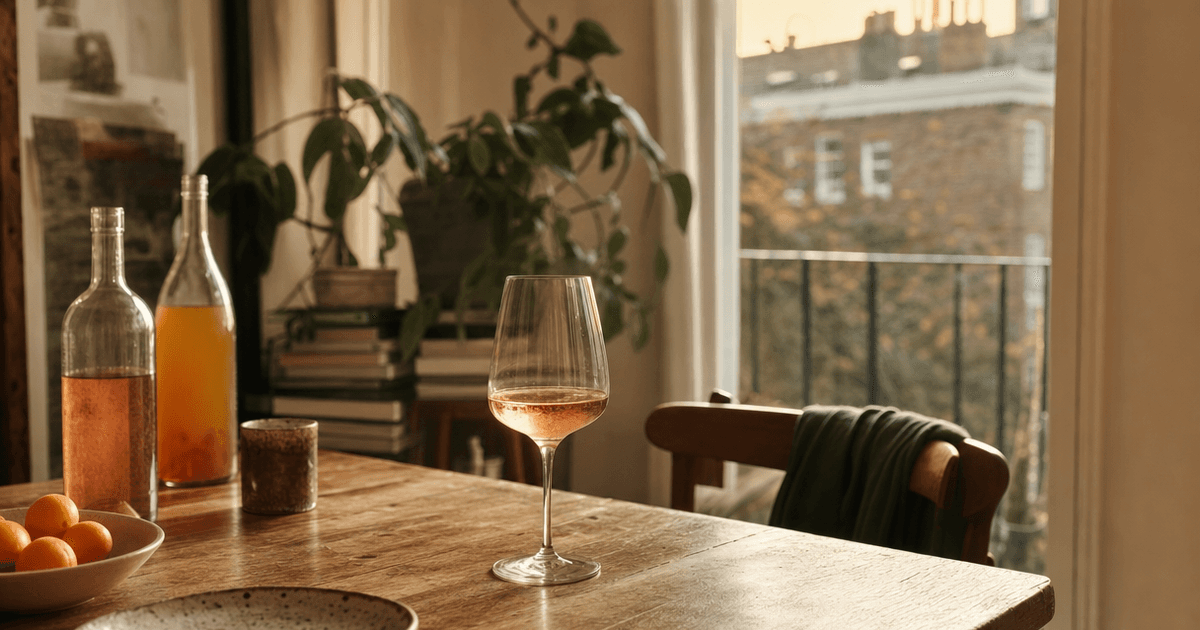
Orange wine vs rosé is the wine world’s neatest mirror trick: one takes a black grape and treats it like a white, the other takes a white grape and treats it like a red. They pass each other travelling in opposite directions — which is exactly why two bottles that can look near-identical in the glass behave so differently at the table. Rosé is a red-grape wine given a brief brush with its skins; orange wine is a white-grape wine left on its skins for days or months, the way a red would be. By the end of this you’ll know which one to reach for on a Tuesday night, and why they’re built for entirely different jobs at the table.
Is orange wine the same as rosé?
No — they start from different grapes and different intentions. Rosé is made from black (red-skinned) grapes given a short soak, often just hours, so the juice picks up colour but not much tannin. Orange wine is made from white grapes given the long soak red wine gets, sometimes a week, sometimes the better part of a year, which pulls colour, tannin and texture the winemaker would normally avoid in a white.
The mirror shows up in the cellar clock, too. A rosé maker counts skin contact in hours and pulls the juice away before structure can build; an orange-wine maker counts in weeks or months and wants that structure to arrive.
I used to explain this badly, by the way. For years I’d just say “it’s the maceration time” and leave customers none the wiser. What actually matters is the intent: rosé wants to avoid tannin, orange wine wants to build it. Once that clicks, the rest of the category makes sense.
Duration tells the story on the shelf too. A pale Provençal rosé might see its skins for an afternoon. A skin-contact wine from Friuli’s Collio hills, or its Oslavia corner specifically, can sit on skins for six to eight months before even going into large oak or amphora to age further. Same word — maceration — wildly different scale.
Is orange wine just white wine?
Not once the skins get involved. Orange wine starts as a white grape but ends up behaving like something between a white and a light red — savoury, textured, occasionally quite grippy on the finish. Standard white wine is pressed off its skins within hours specifically to avoid that.
The colour shift gives it away. Ordinary white wine sits in the pale straw-to-gold range because the skins are gone before fermentation starts. Leave the skins in the tank and you start pulling phenolic compounds — the same family responsible for tannin in red wine — plus deeper colour that shifts toward amber, copper, sometimes a proper burnt-orange. Clay vessels are fashionable for this style now, though plenty of excellent orange wine ferments in plain old steel or wood; the vessel shapes the wine, it doesn’t define the category.
Flavour-wise, expect dried fruit, dried herbs, hay, sometimes a nutty, sherry-adjacent edge — a world away from the citrus-and-orchard-fruit register most white wines live in. Some producers also let a touch of oxidation happen deliberately, which nudges the colour further toward orange and adds that slightly nutty complexity.
Here’s the shape of the whole family side by side — read the rosé and orange rows against each other and you can see the mirror at work:
| Style | Grape colour used | Typical skin contact | Resulting colour | Tannin |
|---|---|---|---|---|
| White | White | None (pressed off immediately) | Pale straw to gold | Very low |
| Rosé | Black | Hours | Pale salmon to deep pink | Low |
| Orange | White | Days to several months | Amber, copper, gold-orange | Medium to noticeable |
| Red | Black | Days to weeks | Ruby to deep purple | Medium to high |

What is orange wine most similar to?
Honestly, nothing tastes quite like it, which is half the point — but if you need a reference, think somewhere between an oxidative sherry and a textured, savoury white. Trade writers reach for the Jura’s skin-influenced whites too, though even that comparison only half-lands. It sits in its own lane: too much grip to be a normal white, too pale and too dry, usually, to pass for a red.
At the table this is where orange wine earns its keep. Rosé wants a garden lunch — cold cuts, a salad, something you’re not thinking too hard about. Orange wine wants a bit more of a meal behind it: mushroom risotto, roast chicken with the skin left on, hard cheese, cured meats, even a stew, since the tannin and savoury character give it the backbone to sit alongside heartier food rather than get flattened by it. Serve it cool, not fridge-cold — a proper white-wine chill mutes everything interesting about it.
If you’re the sort who reaches for something unusual with raw fish, it’s also worth a look at what wine goes with sushi — orange wine’s texture can do surprising things there. And if you like the idea of skin contact but want something a little more floral and forgiving, Gewürztraminer sits in interesting territory nearby, aromatic enough to bridge the gap for a rosé drinker curious about orange.
Buying orange wine vs rosé: what to expect on the shelf
Geography splits the two styles cleanly enough to be useful when you’re browsing.
Rosé’s spiritual home is Provence — pale, dry, built for early drinking, often made by the gentle vin gris method or as a by-product of red winemaking (saignée). Head south-east into Abruzzo and you’ll find Cerasuolo d’Abruzzo, a Montepulciano-based rosé with noticeably more colour and body than its French cousins — historically a deep pink, though plenty are made lighter now to chase the fashion.
Orange wine’s spiritual home is further east again: Friuli and its Collio and Oslavia pockets, Slovenia’s neighbouring Brda hills, and further back still, Georgia, where the technique of fermenting white grapes on their skins in buried clay vessels goes back millennia and inspired the whole modern revival. Ribolla Gialla is the grape most associated with the serious end of the style, though Pinot Grigio — yes, that Pinot Grigio — makes a surprisingly different, tannic, amber wine when treated this way.
Expect to pay a bit more for the real thing. Trade opinion generally puts long-macerated orange wines at a premium compared with standard whites from the same grape, partly down to the extra ageing (some spend two to six years in large-format barrels before release) and partly because demand from sommeliers and natural-wine drinkers has pushed prices up over the past decade.
Why is orange wine better?
It isn’t — and I’d be doing you a disservice pretending otherwise. “Better” depends entirely on what’s on the table and what mood you’re in. Rosé is not a lesser wine; it’s been unfairly written off in the past as something not worth taking seriously, which is nonsense once you’ve had a well-made one with a proper backbone of acidity.
What orange wine offers that rosé doesn’t is structure — real tannin, more texture, a savoury pull that stands up to food rosé would simply get lost next to. What rosé offers that orange wine doesn’t is pure refreshment: chilled, low-fuss, gone-in-a-glass drinking that suits a hot afternoon far better than a tannic amber wine ever will.
If you’re choosing between the two for a specific dinner rather than a specific mood, that’s your answer: lighter food and warmer weather, rosé; richer, more savoury cooking, orange. The mirror holds all the way to the table.
Questions customers ask us
Is orange wine sweet? Almost never. The vast majority are dry, with the tannin from skin contact actually reading as more savoury and grippy than sweet.
Does orange wine age well? Some of the serious examples do — certain producers age their wines for two to six years in large oak before release, and the wines can hold up well after that too. It’s not a rule across the whole category, though; plenty are made for drinking young.
Can rosé and orange wine be made from the same grape? Technically yes, if that grape has coloured skin — Pinot Grigio, for instance, has a pinkish-grey skin and turns up in both an orange-wine style and, less commonly, a rosé-leaning style, depending on how long it sits on its skins.
Which one should a rosé-only drinker try first? Look for an orange wine with lighter, shorter skin contact rather than the deep six-month Friulian style — it eases you in without the full tannic shock.
The merchant’s last word
I still think most people are better served starting where they’re comfortable and drifting sideways, not jumping straight to the deep end. If you already love rosé, that instinct is a good one — trust it, then let it wander toward orange when the food gets heartier. For the full story on the pink side of that decision, have a read of Rosé, seriously: a merchant’s guide beyond the pink, or if the amber stuff has properly caught your eye, Orange wine explained: the fourth colour goes further into that world than I’ve room for here. Either way, come and browse the rosé wine cellar — I’ll have a bottle in mind before you’ve finished asking.



