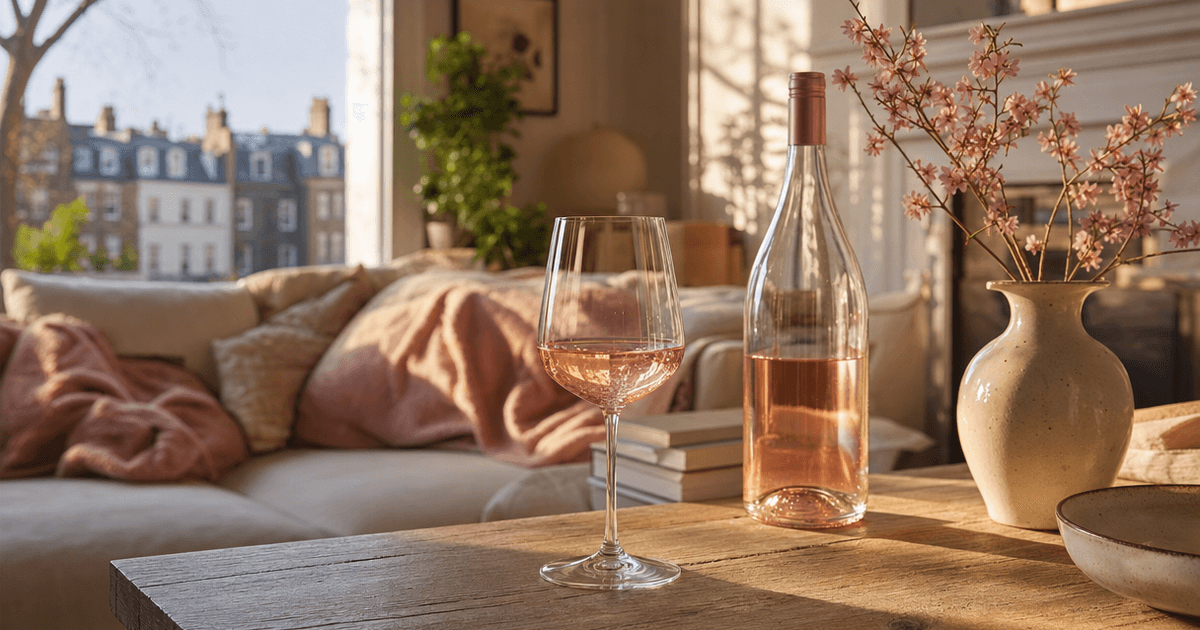
Any proper rosé wine guide has to start by admitting the category’s a mess of assumptions — ask ten people for a good bottle and you’ll get ten different answers, from pale bone-dry Provence to something with a proper red-fruit punch from Tavel. Rosé is pink wine, usually made from black grapes with only brief contact between juice and skin; colour and sweetness both sit on a sliding scale the winemaker controls on purpose, not by accident. My job here is simple: by the end, you’ll know which of the five classic styles actually suits your Tuesday supper, what separates a serious pink wine from a supermarket blush, and when it’s worth paying more for one — and when it truly isn’t.
What are the top 5 rosé wines?
I’d steer you toward five distinct styles rather than five specific bottles: pale Provençal rosé, deep-coloured Tavel, structured Bandol, Italy’s Cerasuolo d’Abruzzo, and Spain’s traditionally darker rosado from Rioja and Navarra. Each does a different job at the table, and we keep all five in stock precisely because none of them is “better” — they’re built for different Tuesdays.
-
Côtes de Provence and its neighbours — pale salmon to almost onion-skin, dry, made mostly from Grenache, Cinsaut and the local Tibouren grape by direct pressing. Local rules allow up to a fifth of the blend to be white grapes, which helps keep colour pale and alcohol in check. This is the style that built the modern rosé boom, and it’s the one most shoppers reach for first — browse our Provence rosé selection if that’s your starting point.
-
Tavel, southern Rhône — deep pink, dry, built mainly on Grenache with real weight behind it. It’s one of the few rosés that committed red-wine drinkers take seriously, meant to be poured alongside food rather than sipped alone by a pool. Our Tavel range is worth a look if you want something with backbone.
-
Bandol, coastal Provence — Mourvèdre-led, and it shows: more structure, a savoury edge, wines that can sit for a couple of years rather than needing drinking within the season. See our Bandol rosé shelf.
-
Cerasuolo d’Abruzzo, Italy — a minimum 85% Montepulciano, short maceration of a few hours up to around half a day, medium to medium-plus body. Historically a proper deep pink; more producers now aim paler, though the grape’s natural pigment means it rarely goes truly pale. Have a look at our Cerasuolo d’Abruzzo picks.
-
Rosado from Rioja and Navarra, Spain — classically the deepest-coloured of the five, made from Garnacha with longer skin contact than Provence ever allows. A small handful of traditional producers even ferment black and white grapes together and age the result in oak — a world away from the clear-glass, pale-pink template most shops push at you. Our Rioja and Navarra rosado section has a few of those oak-aged examples.
What to look for in a good rosé wine?
Colour tells you less than the label wants you to think — pale doesn’t automatically mean dry, and deep doesn’t automatically mean sweet, whatever the marketing implies. Look instead for genuine acidity (rosé should feel bright, never flabby), a clear statement of dryness if that matters to you, and, above supermarket price, some sign of lees ageing or barrel time, which adds texture without dulling the fruit.
Most rosé is sold in clear glass so you can judge the colour before you’ve even read the label, and plenty of shoppers buy on colour alone. That’s a shame, because pale colours are often — not always — linked to dry styles, while deeper pink is often — not always — linked to off-dry or medium-dry wines. The correlation exists; it just isn’t a rule, and I’ve been caught out by a pale one with sneaky sweetness more than once.
What actually matters more: the grapes were usually grown somewhere cool — a hillside facing away from the sun, a vineyard near the coast, up at altitude — because rosé wants medium-to-high acidity and modest alcohol, not the ripeness a big red chases. Malolactic conversion is almost always avoided too; nobody wants a buttery rosé masking the fresh fruit that’s the whole point.
On sweetness, trade opinion increasingly favours bone-dry as the gold standard, with a touch of residual sugar reserved for the cheaper end of the market, where young vines and early-picked fruit can use a little roundness to fill out the wine. If you want richer texture without sweetness, look for time on the lees; it builds body without weighing the wine down — and it’s usually the first thing that separates a £9 rosé from a £16 one.

How rosé actually gets its colour
Every pink wine you’ve drunk got there by one of three routes, and knowing which explains an awful lot about what’s in your glass.
Direct pressing. Black grapes are pressed gently, almost as if they were white grapes, and the faintly tinted juice runs off before it’s had much chance to pick up colour from the skins. Ferment that juice like a white wine and you get the palest rosés going, sometimes called vin gris. Provence leans on this method heavily, and some producers even co-press a splash of a white grape such as Rolle (better known elsewhere as Vermentino) alongside the black grapes, both for acidity and to keep the colour honestly pale. Night harvesting, when the fruit comes in cool, is another trick used to protect freshness before it even reaches the press.
Short maceration. The juice sits with the skins for anywhere from a couple of hours to a few days before pressing, picking up more colour and flavour the longer it goes. This is the traditional route for deeper Spanish rosados and for Cerasuolo d’Abruzzo, and it demands nerve from the winemaker — colour actually drops once fermentation gets going, so the maceration has to be judged by how the wine will look when it’s finished, not how it looks the moment it’s drained off.
Blending and saignée. Some everyday and sparkling rosés are simply a finished white wine and a finished red wine blended together — the easiest method to control precisely, since you’re mixing two known quantities rather than guessing at a maceration. Saignée, literally “bleeding,” is different again: winemakers draw off some pink juice early during red winemaking, mostly to concentrate what’s left for the red, with the rosé as a useful by-product. It’s cost-effective, but the grapes were grown and picked with the red wine in mind, not the pink, which is one reason saignée rosé doesn’t always carry quite the same polish as rosé made on purpose.
Sparkling rosé follows similar logic, whether it’s English fizz or Champagne itself — colour usually comes from a touch of red wine blended in, or brief skin contact on Pinot Noir. If proper fizz is more your territory than pink, Champagne, explained by a merchant: styles, houses and how to choose covers that ground properly. Even Port has joined the pink party: a pale rosé Port, fermented cool from grapes grown on high, cool sites, built for cocktails rather than the cheeseboard — the same brief-maceration thinking, just fortified afterwards.
Serving it well: temperature, glass and food
Rosé earns its reputation as the easiest wine at the table — one bottle covers a startling range of a summer menu, from grilled fish and charcuterie to paella and roast chicken. Structured styles like Tavel or Bandol have enough backbone for a proper barbecue, pork done on the coals, or even a mild curry; paler Provençal styles are happier as an aperitif with olives and cured ham, or alongside a simple salad of tomatoes and anchovy.
That’s the practical reason to keep more than one style in the rack rather than a single “safe” bottle — the Tavel does the barbecue, the pale Provence does the picnic, and neither one covers for the other properly.
A couple of pairings I’d steer you away from, for what it’s worth: raw oysters and anything built on a heavy cream sauce tend to fight rosé rather than flatter it, the wine’s fruit clashing rather than complementing. Save the oysters for a crisp white and keep the rosé for the picnic, the barbecue, the Tuesday roast chicken.
If you’re building this into how you drink at home generally, rather than just picking one bottle, Bringing the vineyard home: drinking well in the city covers glassware and the rest of the everyday setup worth having.
What good rosé costs — and why
Price in rosé tracks production choices more honestly than in almost any other category, once you know what to look for — and it’s the single most useful thing to check before you spend more than supermarket money on a bottle.
At the cheap end, you’ll usually find wines made either by simple direct pressing or as a by-product of red wine production (saignée) — both efficient, both perfectly enjoyable, but rarely wines built with rosé as the main event. Many of the world’s highest-volume rosé brands are medium-dry, low in alcohol, often around 10.5–11%, with fermentation stopped early and straightforward strawberry, fruit-candy flavours. There’s nothing wrong with that — it’s honest, inexpensive wine doing exactly what it says on the label, and a fine choice for a casual weeknight.
Step up and you find rosé made with genuine intent: a careful short maceration judged by eye and experience, a stint on the lees or even in oak for texture, priced higher because barrel space and cellar time cost the winery money whichever wine sits in them. Spain’s small handful of oak-aged traditional rosados sit at this end, as do the more serious examples of Bandol and Tavel — worth the extra few pounds if you’re pairing with a proper meal rather than drinking it on its own in the garden.
If you want the fuller version of how to read a label for these clues before you buy — vintage, region, how a producer talks about their own wine — How to buy wine like a merchant: labels, ratings and value walks through it properly.
Questions customers ask us
Which wine is best for diabetics? I’m a wine merchant, not a doctor, so that’s a question for your GP or pharmacist. What I can say factually is that rosé sweetness varies enormously — bone-dry Provence and Tavel at one end, off-dry blush styles at the other — so a clear dryness statement is worth checking regardless of why you’re asking.
Can rosé wine age? Most is built for drinking young, within a year or two, since the fresh fruit character that makes rosé appealing fades quickly once bottled. Structured exceptions — Bandol, Tavel, some oak-aged Spanish rosado — hold up for a few years thanks to more tannin and skin contact.
Is white zinfandel the same thing as rosé? Broadly yes, though the labelling history is odd: in 1980s California, pale pink wines made from dark-skinned grapes were often marketed as “white” because white wine was what sold. White zinfandel sits at the sweeter, lighter end of the rosé family rather than being a separate category.
Is rosé only a summer wine? That reputation is fading, and rightly so. Rosé has grown into a genuinely broad category — bone-dry to sweet, simple to age-worthy — with plenty of styles built for a Sunday roast in January as much as a picnic in June.
What’s the difference between rosé, rosato and rosado? Nothing beyond language — rosato is Italian, rosado is Spanish, rosé is French, and all three describe the same pink-wine idea. What differs is regional style: Italy and Spain have historically leaned deeper in colour than the pale Provençal template most shops now default to.
The merchant’s last word
I used to point every customer who walked in mid-July straight at the palest Provence rosé on the shelf, because that’s what everyone was asking for, and I’ll own that — it did some of them a disservice. There’s a whole shelf of pink wine with more to say for itself: Tavel with a proper steak, Cerasuolo d’Abruzzo with a Sunday roast chicken, an oak-aged Rioja rosado that’ll happily see out a whole dinner. Come and browse the full rosé cellar, or go straight to the Provence, Tavel, Bandol, Cerasuolo d’Abruzzo or Rioja and Navarra rosado shelves directly, and let’s find the one that suits your week, not last summer’s headlines.



