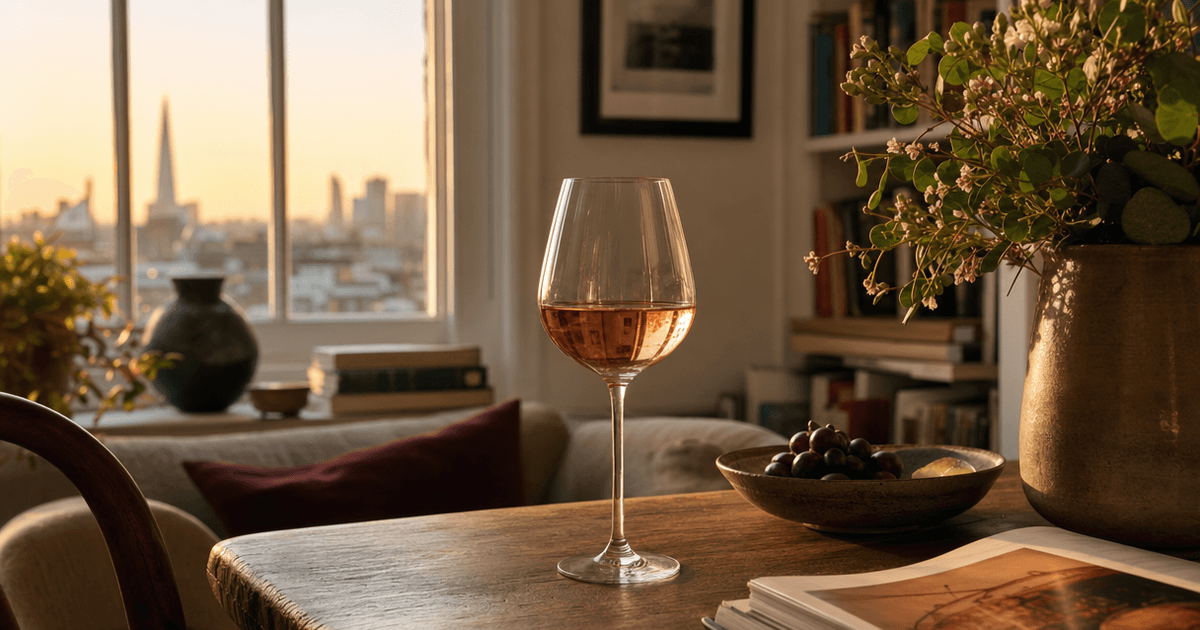
Tavel rosé is the pink wine that refuses to apologise for its colour. Ask any merchant who’s sold it for a while and they’ll tell you the same thing: people walk past it on the shelf because it looks more like a light red than what they’ve been trained to expect from rosé. Tavel is one of the few French appellations that makes rosé and nothing else — it’s been doing so since 1936, one of the original six AOCs in the country. By the end of this you’ll know what’s actually in the glass, whether that colour means anything about sweetness, roughly what it costs, and whether it’s worth putting a bottle away rather than drinking it this Friday.
What is a Tavel rosé?
Tavel rosé is a dry pink wine made exclusively in the Tavel appellation, on the west bank of the Rhône just south of Lirac and north of Avignon. It’s built around Grenache, with Cinsaut playing a proper supporting role (close to a fifth of what’s planted), alongside a handful of other permitted varieties — no single one is allowed to dominate past 60%. The depth of colour isn’t an accident of a bad vintage. It’s written into the rules.
The soils split the appellation in two. Nearer the river, to the east, you get sand and beds of round stones called galets roulés — the same stones you’ll know from Châteauneuf-du-Pape. Further west, in the Malaven valley, it’s white limestone scree, known locally as lauses. Two soils, one appellation, and producers blend across both.
The method matters more than people think. Grapes are cold-macerated on their skins for 12 to 48 hours before pressing — much longer than the quick, cool press used for a pale Provence style — then fermented like a white wine. That maceration window is where the colour, the flavour and a touch of soft tannin all come from. If you want the fuller picture of how rosé styles diverge from there, our Rosé, seriously: a merchant’s guide beyond the pink covers the whole spectrum, not just this one corner of it.
Tavel spent two centuries with a reputation as France’s finest rosé, a wine serious enough for a proper dinner rather than a poolside afternoon. That reputation took a knock once the paler, chilled-to-death Provence style became the default — we go into why in Provence rosé: why pale became the standard, and it’s worth reading if you’ve only ever bought the pale stuff.
Is Tavel rosé sweet or dry?
Tavel rosé is always dry — no exceptions, no sweeter cuvées hiding on a back shelf. The colour comes from time on the skins, not sugar left in the bottle. It’s a mistake worth naming plainly, because it costs producers sales every summer.
There’s a persistent bit of shelf-talk that darker rosé equals sweeter rosé — the idea took hold when pale, sweet blush wines became hugely fashionable in the US during the 1980s, and it’s stuck around since, repeated in more than one lifestyle magazine as gospel. It isn’t true, in Tavel or anywhere else. Colour tells you about maceration time and grape variety; it tells you nothing reliable about residual sugar.
What the darker colour does deliver is more fruit intensity and a touch more structure. Trade tasting notes describe Tavel as showing medium-to-full raspberry and strawberry character with a body that runs medium-plus to full, and alcohol that tends to sit at the top of the medium band — often around 13.5%. That’s a fuller mouthful than a delicate Provence rosé, dry from first sip to last, but nowhere near a sweet wine in any sense.

Choosing and serving a Tavel
Not every bottle labelled Tavel tastes the same, and it’s worth knowing where the variation sits before you buy. Some producers have leaned paler in recent years, chasing the market Provence built — the appellation rules allow it, even if the classic style stays deep pink-orange. If you want the archetype, look for the darker end of the shelf, not the palest bottle in the row.
Serve it a little less cold than you’d serve a pale rosé — straight from the fridge door is too cold for the fruit to show. A quick ten minutes out of the fridge before pouring does the job. This is a rosé built to sit alongside proper food: roast chicken, something off the grill, firmer cheeses. Save the delicate raw oysters and cream-based dishes for a paler style; Tavel has the weight to stand up to heartier plates instead.
| Tavel rosé | Classic Provence rosé | |
|---|---|---|
| Colour | medium pink-orange, deep | pale, almost onion-skin |
| Method | cold maceration, 12–48 hours | direct press, minimal skin contact |
| Body | medium-plus to full | light |
| Serving temp | cool, not fridge-cold | well chilled |
| Best with | roast chicken, grilled meats, firm cheese | salads, light seafood |
Grenache does most of the heavy lifting in that fuller body and fruit — if the grape itself interests you more than the appellation, our Garnacha: the comeback grape piece is worth a read, since Garnacha and Grenache are the same vine wearing different national costumes.
How much is Tavel rosé wine?
Trade opinion places Tavel generally in the mid- to premium-priced band — above an everyday poolside blush, closer to what you’d pay for a decent village white Burgundy or a proper Rhône red. It’s not the cheapest pink on the shelf, and there’s a reason for that beyond marketing.
The appellation caps yields at 46 hectolitres per hectare, tighter than a lot of bulk rosé production allows. Add the labour of cold maceration and careful pressing rather than a quick, mechanised direct press, and you’ve got a wine that costs more to make properly. There’s also simply less of it about — Tavel is a small appellation making one style of wine, not a red-wine region with rosé as an afterthought.
If you’ve only ever bought rosé by the case for a barbecue, the price jump on a first bottle of Tavel can feel steep. Think of it less as “an expensive rosé” and more as a serious dry wine that happens to be pink — because that’s closer to how it’s priced and how it drinks.
Can Tavel rosé age?
Yes — and that alone sets it apart from most rosé you’ll find. Trade sources are consistent that Tavel is a dry wine built with the structure to develop, unlike the paler styles that are generally best drunk within the year or two after bottling, before their fruit fades.
Vintage variation matters here in a way it rarely does for rosé. Trade notes on the Rhône describe 2005 as the best vintage since 1990 in both the northern and southern zones, giving wines with real concentration and longevity — the sort worth tucking away rather than drinking immediately. Warmer, drier years with a rescue-note September (2006, 2007) tend to produce wines with more finesse; wetter years cut down what top producers even bother to bottle at all.
That ageing capacity is tied directly back to the method — the tannin and structure pulled from those 12 to 48 hours of skin contact give the wine something to hold onto that a quickly-pressed pale rosé simply doesn’t have. It’s also the backbone of that old reputation as a rosé serious enough for a proper dinner table rather than a garden chair.
Questions customers ask us
Is Tavel the same as Provence rosé?
No. They’re both dry French rosé, but Tavel is deliberately darker and fuller-bodied, made by longer maceration, while Provence built its identity on paleness and a lighter, direct-press style.
What grapes go into Tavel rosé?
Grenache is the constant, required in every blend, with Cinsaut as the notable supporting variety. The appellation permits a wider list of varieties, but no single one may dominate past 60%.
Does Tavel rosé need decanting?
Not usually — it isn’t a wine you’ll need to fuss over. A short ten minutes out of the fridge to lose the chill is generally all it wants.
The merchant’s last word
I sold rosé for years assuming darker meant sweeter, same as half my customers did — it took me longer than I’d like to admit to actually ask why the colour was there at all. Turns out it’s just time on the skins, nothing more sinister. If you’ve only ever known pale rosé, this is the one to change your mind — go and browse the rose wine cellar and see for yourself.



