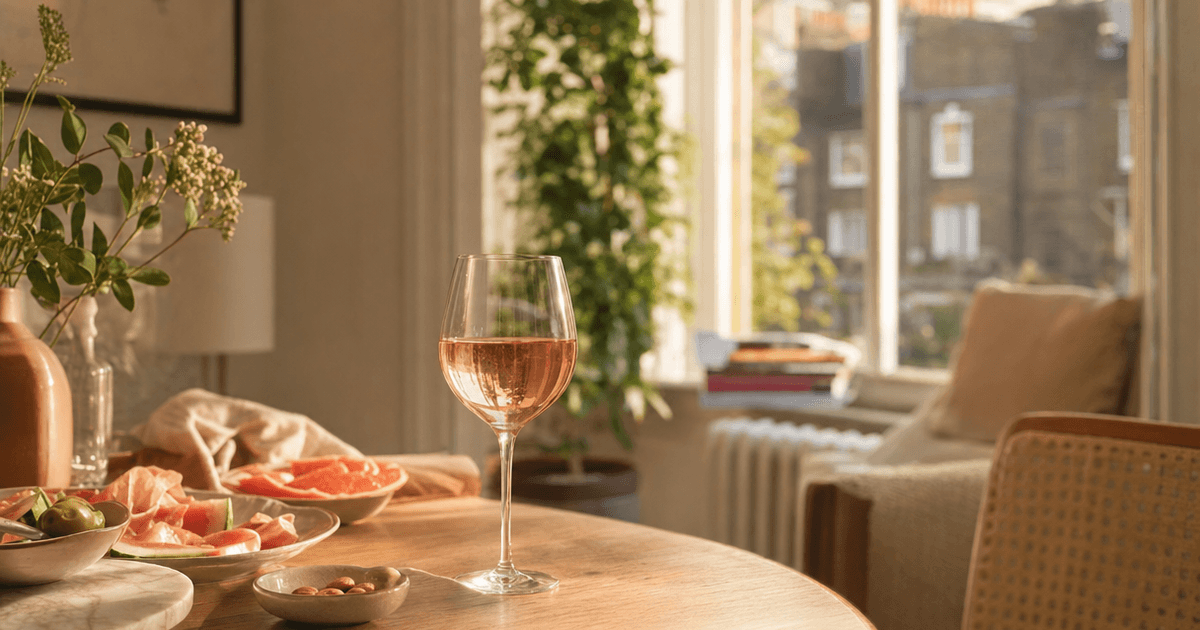
Rosé earns its seat at the table by doing a red wine’s job with a white wine’s manners. That’s the whole engine behind food pairing with rosé wine, and it’s worth saying plainly because the category keeps getting filed under sunshine when it belongs under supper. Red-grape fruit gives it the presence to keep up with proper cooking; white-wine acidity and barely a scrap of tannin mean it cuts through fat without ever picking a fight with the plate. Rosé isn’t a separate grape, remember — it’s a technique, red grapes pressed off their skins early — and the technique leaves its clue right there in the glass. The colour is a menu: pale means light plates, deep means the wine can carry real cooking. The darker styles of southern France — what some in the trade call rosé d’assiette, plate rosé — simply sit on their skins a little longer, and the name tells you exactly what they’re for. By the end of this you’ll read that colour scale for yourself, match the bottle to what’s actually in the pan tonight, and know the two pairings to leave well alone.
What foods go well with rosé wine?
Grilled or fried fish, roast or barbecued pork, chicken, charcuterie, mild cheeses, and Mediterranean vegetable dishes — hummus, olives, roasted red peppers. Rosé also handles spice better than most whites, so Mexican food, mild Indian curries and chile-rubbed barbecue all sit comfortably beside a glass. Two matches I’d talk you out of: cream sauces and raw oysters.
Run down that list again and you’ll see the red-job, white-manners engine turning in every line. The fatty things — pork, charcuterie, fried fish — want acidity to cut them, which rosé has. The savoury, sun-soaked things — olives, peppers, garlic — want fruit that won’t wilt, which rosé also has. And none of them want tannin dragging across the palate, which rosé conveniently lacks. That’s why it keeps appearing at crab and lobster boils, in a paella pan, next to a quiche, and as the third element in the old bistro trick of prosciutto and melon. It’s also why it’s the least contentious bottle you can lay on a picnic blanket: pizza, hamburgers, cold cuts — nobody at that table argues with pink.
The two refusals deserve their reasons rather than a bare listing. Cream sauces smother rosé’s fruit; you end up tasting butter and not much else, and a fuller white would do that table more good. Raw oysters want something leaner and saltier-edged — against their brine, rosé’s soft fruit reads faintly sweet, which flatters neither wine nor shellfish. Everything else on an ordinary table is fair game. The only decision left is which pink, and that’s the colour’s job.
Reading the colour: how to choose the right rosé for the plate
Colour in rosé isn’t decoration — it’s a rough guide to weight, and once you clock that, choosing gets a lot easier. The rule I give across the counter: the paler the pink, the lighter the plate; the deeper the colour, the more the wine can carry.
| Style | Colour & body | Good match |
|---|---|---|
| Pale, bone-dry (Côtes de Provence and similar) | Palest pink, lightest body | crudités, grilled fish, goat’s cheese, plain aperitif drinking |
| Deeper, structured (Tavel, Bandol, Spanish rosado) | Salmon to coral, fuller weight | grilled pork, paella, niçoise salad, cured meats |
| Off-dry, fruit-forward (Rosé d’Anjou and similar) | Pink, gentle sweetness | Mexican food, mild Indian spice, peanut-sauce dishes |
| Sparkling rosé (Cava, Prosecco rosé, Champagne rosé) | Varies, always lifted by bubbles | canapés, crudités, chile-rubbed dishes, “when in doubt” pours |
Trade opinion generally holds that bone-dry rosé is the most food-flexible version of the style — though a touch of residual sugar can add welcome roundness in cheaper bottlings from young vines, and extended lees contact is what gives the pricier, more serious examples their real weight and texture. Neither is wrong. They’re built for different plates, and the colour usually confesses which one you’re holding.
Three buying steers straight from that table. One bottle for a mixed table where you don’t know the menu: go deeper — a Tavel or a Spanish rosado has the shoulders to cope with whatever lands. Drinks before dinner rather than dinner itself: palest Provence, no hesitation. And if Friday night is a spicy takeaway, an off-dry Anjou style flatters the heat where a bone-dry bottle would fight it.

What food does France eat with rosé?
Watch a lunch table in Provence and you get the answer without a word spoken: a small carafe of pink, well chilled, next to niçoise salad, bouillabaisse, olives, tapenade or a wedge of socca — anything sunny, garlicky, herby. Further west into Languedoc-Roussillon the same carafe partners the region’s own charcuterie and grilled lamb. France treats rosé as proper food wine, poured for the plate rather than the view, and it has done for decades.
I’ll admit I came to that lesson late. I sold rosé as a summer-only wine for years before I believed what those café tables had been demonstrating all along — and what has shifted since isn’t the habit but the ambition of the wine itself. Recent trade coverage points to a growing category of so-called gastronomic rosé, made with more structure specifically to hold its own through a full meal rather than bowing out after the starter. One well-known wine writer put it plainly in the trade press a few years back: a well-made rosé can be one of the best partners for a genuinely wide range of dishes, not a one-trick aperitif.
Brandade — the salt-cod and potato purée you find in Languedoc bistros — and couscous both lean on the same logic: herbs, olive oil, a bit of garlic, nothing rosé can’t meet. If you cook that way at home even occasionally, a deeper-coloured bottle in the rack earns its place fast. That’s the French vote, cast daily at a hundred thousand lunch tables, and I’d trust it over any pairing chart.
What food pairs well with rosé alcohol?
It depends on the style in your glass far more than the word “rosé” on the label — so answer the style question first and the food question answers itself. Bone-dry rosé suits grilled or steamed seafood, roast chicken, quiche and mild cheeses. Off-dry rosé handles spicier plates better — Mexican food, mild Indian curry, peanut sauce. Sparkling rosé is the most adaptable of the lot, comfortable with canapés, crudités and smoked dishes alike.
A few specific matches worth carrying to the shelf. Smoked food — fish, meat, cheese — generally wants a dry rosé rather than anything sweeter, because smoke plus sugar can turn cloying by the second bite. A chile-rubbed dish does its best work against sparkling rosé or Champagne rosé; the bubbles reset your palate between mouthfuls in a way no still wine manages. Pacific Rim and wider Asian cooking follows the same thread — sparkling wine, rosé included, tends to outperform a still bottle there, with the spicier dishes leaning towards styles that carry a touch more fruit.
And one match with its own name on the door: romesco, the roasted-pepper-and-almond sauce out of Catalonia, against Spanish rosado. If you’re building a tapas spread, that’s the pink to open — there’s more on that pairing logic in Spanish wine with tapas: pairing the Spanish way.
Serving it so it earns its place at the table
Here’s the serving rule, and it’s just the colour rule applied to the fridge: the deeper the pink, the less chill it wants. Pale, bone-dry styles need a proper fridge-cold start — served too warm they go flabby, and the freshness doing all the work at the table simply switches off. The deeper, coral-toned styles can take a little more warmth, closer to a light red served cool; over-chill those and they shut down, hiding exactly the fruit you paid the extra for.
Beyond temperature, treat rosé like any wine you actually intend to taste. Pour it into a decent glass rather than drinking it as scenery, and if it’s come straight from the fridge, let it sit a minute — the second sip of a slightly warmed glass is nearly always better than the first sip of an icy one. Nobody’s palate ever improved by rushing a cold glass, and no bottle was ever flattered by being treated as a prop for the weather.
Questions customers ask us
What food does rosé compliment? Rosé complements anything with a bit of fat or char to it — grilled meat, cured ham, oily fish — because its acidity cuts through richness without a red’s tannin getting in the way. It flatters simple, sunny cooking rather than heavy cream sauces.
Is there a good cheese pairing with rosé wine? Mild cheeses do best — young goat’s cheese, mozzarella, Parmesan shaved thin. Heavily aged or very pungent cheeses tend to overpower rosé’s fruit rather than meet it halfway.
Does rosé work with barbecue? Yes, and it’s an underused match — barbecue sauce, grilled pork and hamburgers all sit comfortably alongside a fuller, deeper-coloured rosé rather than the palest Provençal styles.
What about dessert? Rosé isn’t built for dessert as a rule — stick to melon, raspberries, or fruit-based dishes rather than anything heavily sweet or chocolate-led.
If you want the fuller picture on styles and regions before you start matching plates, Rosé, seriously: a merchant’s guide beyond the pink is the place to go next — and if red wine with food is more your evening, Pairing Italian reds with what you actually cook covers that ground properly.
The merchant’s last word
I kept rosé on the “summer only, don’t overthink it” shelf for longer than I should have, and the customers who ignored me ate better than the ones who listened. A red’s job with a white’s manners — that’s what you’re buying, and the colour in the bottle tells you how much of the job it can take on. Have a think about what’s actually going in the pan tonight, read the pink like the menu it is, then come and browse the rose wine cellar — tell me the dish and I’ll hand you the right depth of colour to meet it.



