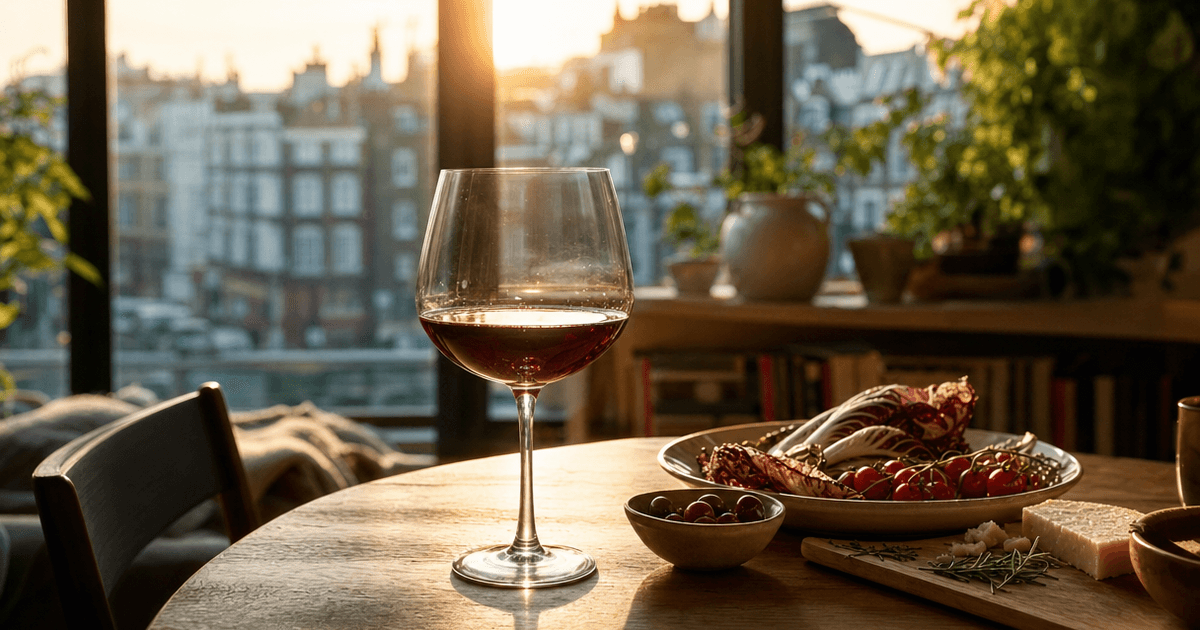
Pairing wine with Italian food comes down to one habit: match the sauce, not the region. Red is the answer more often than not — Italy’s reds were shaped alongside its food, high in acidity, food-friendly in tannin, built for the same tomatoes and cured meat that turn up on an Italian table night after night — but white genuinely earns its place with seafood, risotto and antipasti. That’s not romance, it’s viticulture: centuries of grapes grown next to the kitchens they’d end up feeding. By the end of this you’ll know when to reach red, when white deserves the spot instead, and how a full Italian menu strings its wines together course by course.
What goes better with Italian food, red or white wine?
Red, most of the time. Italian food and wine pairing tends to favour red because so much Italian cooking runs on tomato, olive oil and cured meat, and Italian reds carry more acidity than almost any other red style going — they don’t get flattened by a sauce that would knock out something softer. White hasn’t left the room, though: it earns its keep with seafood, a simple risotto, or the plate of antipasti before the pasta lands.
There’s a reason big reds and food go together so naturally. Tannin — the stuff that dries your mouth out in a young Barolo or a Super Tuscan — needs something to push against, and a plate of food does exactly that. Pour the same wine on its own and it can feel hard work; pour it beside a ragù and it softens right up. Light, crisp whites don’t have that problem, which is partly why they’re happier as a glass on their own before dinner starts.
Worth knowing too: tomato sauce isn’t a red-only zone. Pinot Grigio, a New World Sauvignon Blanc, or Verdicchio from the Marche will all sit next to a tomato-based dish without a fight. So treat “red with Italian food” as the sensible default, not a rule carved into the cellar wall. The rule I’d actually have you carve: tomato wants acid, slow-cooked meat wants tannin, cream wants neither.
How to match red wine pairing with Italian food to what’s actually in the pan
This is the bit I get asked on a Tuesday evening more than anything else — someone’s got mince on the hob and wants to know what to open. Match the sauce before you match the country.
| What’s in the pan | Reach for |
|---|---|
| Simple tomato and basil sugo | Chianti, Barbera, Montepulciano d’Abruzzo |
| Meatballs or a slow ragù | Sangiovese, Dolcetto d’Alba, Nebbiolo, Valpolicella |
| Bolognese | Chianti, Sangiovese, a New World Merlot or Cabernet |
| Baked pasta with ricotta — lasagna, manicotti | Chianti Classico or Riserva, Montepulciano, Zinfandel |
| Osso buco, braises, stews | Barolo, Barbaresco, Brunello di Montalcino, a Super Tuscan blend |
| Grilled steak or sausage | Primitivo, Aglianico, Montepulciano d’Abruzzo |
| Pizza | Chianti Classico generally, Barbera especially with pepperoni, Montepulciano with mushroom |
If you genuinely don’t know what sauce is coming — someone else is cooking, or you’re guessing what a friend’s making — Barbera, Chianti or Sangiovese are the safe carry-a-bottle answers. They cover more Italian dinners than any other choice in the shop, and I’ve never once had one sent back for being wrong. Save the Barolo money for the nights the table has earned it: braises, osso buco, anything that’s been in the oven since mid-afternoon. Bring me the sauce, in other words, and the bottle largely chooses itself.

What wine do Italians drink with dinner?
Whatever’s grown down the road, mostly. Tuscany drinks Sangiovese and Chianti, Piedmont pours Barbera, Dolcetto and Nebbiolo, Abruzzo drinks Montepulciano because it’s named after the place, and further south you’ll find Aglianico, Primitivo and Nero d’Avola on the table rather than anything shipped in. It’s regional habit more than brand loyalty.
The logic isn’t sentimental, either — those grapes evolved doing a specific job. Sangiovese’s high acidity was never an accident; it’s exactly what a tomato-heavy Tuscan kitchen needed from its house red. Down in Basilicata, Aglianico grown on the old volcanic slopes around Vulture picks up an earthy, mushroom-and-forest-floor character with a spiced, dark-berry core and a liquorice finish, often made without much oak so the fruit stays pure — a wine that reads like the ground it came from. Rosso di Montepulciano, Chianti’s lighter Tuscan cousin, pours a translucent red that’s basically a visible sign of its acidity, with sour cherry, dried leaves and a whisper of pencil shavings on the nose. None of this is decoration — it’s why the wine works with what’s on the plate.
For the full detail on how those Tuscan and Piedmontese styles differ, our guide to Italy’s great reds: Barolo, Brunello and Chianti, explained goes properly into the grapes and regions behind this table — and knowing them turns “a bottle of Italian red” into an actual choice.
What drink pairs well with Italian food?
Pick by course, not by country. Antipasti and cured meat want something with real cut — Barbera handles anchovies, salami and aïoli without blinking. Tomato pasta wants Sangiovese or Chianti. A rich secondo like osso buco or a wild boar ragù wants a fuller-bodied red — Barolo, Aglianico or a Super Tuscan blend. Cheese, in an Italian kitchen, mostly just wants whatever red is already open on the table.
Line all that up and you’ve built a seven-course Italian evening with the wines already chosen: antipasto with Barbera, a pasta primo matched to its sauce, a secondo of meat with a fuller red, a contorno of roasted vegetables that Sangiovese handles fine, a cheese course that leans on whatever’s left in the glass, then dolce and coffee — which is a different conversation entirely, and not one I’ll pretend these food-pairing reds are built for. Dessert wine is its own shop, and its own visit.
If your table’s veering away from Italy altogether some week, the same food-first thinking carries over — our piece on Spanish wine with tapas: pairing the Spanish way works through the same logic for a different country’s plate.
Serving it right — the small stuff that actually matters
Big tannic reds like Barolo, Aglianico or a Super Tuscan benefit from a bit of air before they meet the osso buco — decant them, or just open the bottle early and let it breathe on the side. Lighter reds like Barbera or Dolcetto are happier served a touch cooler than the big ones; nobody wants a warm glass of Dolcetto in August.
If you’re running several courses and several wines, go light to full across the table the same way you’d go light to rich across the food — a Barbera before a Barolo, never the other way round. And if a bottle’s still got a glass or two left after the meal winds down, don’t tip it away; our notes on cooking with leftover wine: never pour it away will put it straight into tomorrow’s sauce instead.
Questions customers ask us
Does Chianti really work with pizza? Yes — Chianti Classico in particular is one of the standard partners for pizza in Tuscany, alongside grilled meat and roast chicken. It’s an easy bottle to keep on hand for a Friday night takeaway too.
Is Barolo too much wine for a weeknight? Not too much, just built for a bigger dish. Save it for osso buco, a proper stew, or anything with real weight behind it rather than a quick bowl of spaghetti.
Can white wine ever beat red with Italian food? With seafood, a simple risotto, or antipasti before the pasta course, yes — a Pinot Grigio or Verdicchio will do a better job than most reds. It’s the exception that proves the tomato-and-red rule, not a contradiction of it.
What if I only cook Italian food occasionally and don’t want to overthink it? Keep one bottle of Chianti or Sangiovese and one of Barbera in the rack. Between them they cover most weeknight Italian cooking without you needing to think about the sauce at all.
The merchant’s last word
I used to over-explain this to people — grape this, acidity that — when really it comes down to one habit: taste your sauce before you pick your bottle, not after. Tomato and cured meat want an Italian red with some grip; anything lighter or richer just needs a slightly different one from the same shelf. Come and browse the italy cellar and I’ll point you at the right one for what’s actually on the hob tonight.



