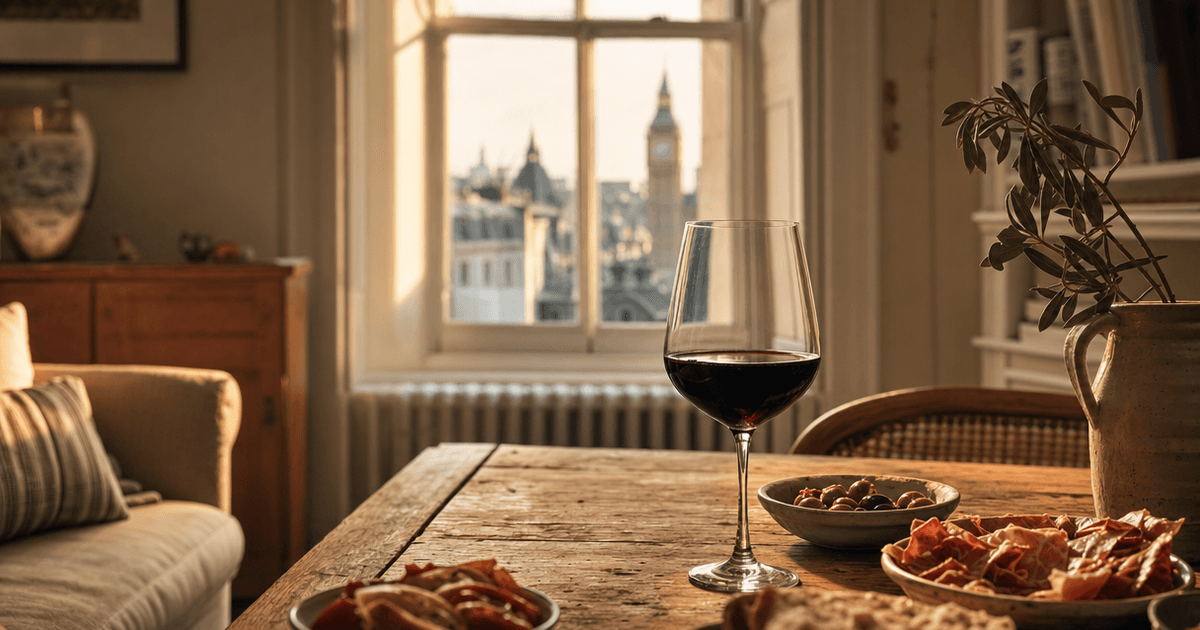
Tapas with wine breaks the first rule of pairing: you choose the wine before you know what you’re eating. At a bar in Seville the glass lands first, and the plates — olives, a curl of jamón, a dish of patatas bravas — turn up whenever the kitchen feels ready, in no order anyone promised you. So you’re not really pairing a dish at all; you’re pairing an evening, and the wine has to keep pace with all of it. That’s why the bottles that keep reappearing on a Spanish bar counter are dry, sharp or fizzy: sherry, cava, albariño. By the end of this you’ll know what to reach for before the first plate even lands, and why.
What wine goes well with tapas?
For most tapas spreads — olives, anchovies, jamón, a bit of Manchego — dry sherry (fino or manzanilla) is the classic answer, with cava close behind. Both have the acid and salinity to survive a table crowded with oil, vinegar and cured meat. Dry rosé, albariño and an unoaked white Rioja are your reliable backups when sherry isn’t to hand.
Here’s the bit that took me a while to understand properly: fino and manzanilla aren’t just “dry white wine with extra alcohol.” They’re aged under a layer of yeast called flor, which strips out fruitiness and leaves behind that saline, almost bread-doughy tang — which is precisely what makes them shrug off olives and anchovies rather than clash with them. Cava does something different: the malolactic character it often picks up softens the acidity of tomato-heavy or oily tapas, which is why it’s the fizz reached for with jamón and chorizo in Barcelona rather than a red.
That old rule you’ll hear — no red wine with tapas — is really a rule about salt and tannin fighting each other, not a law carved in stone. Get to chorizo or a plate of grilled meat and a young, unoaked Tempranillo earns its place back at the table (more on that below). If you want the fuller map of Spanish wine styles before you shop, our guide to Rioja and beyond: Spain for people who love flavour is the place to start.
Matching wine to tapas, dish by dish
Best wine with tapas isn’t one answer — the table keeps changing underneath you, so here’s the shape of it, dish by dish:
| Tapas dish | Reach for |
|---|---|
| Jamón ibérico or serrano | Manzanilla sherry, cava, or unoaked white Rioja |
| Chorizo | Fino or manzanilla sherry, young Rioja, or albariño |
| Patatas bravas / pan con tomate | Dry rosé or a young, light red |
| Gazpacho | Albariño, cava, txakoli, or white Rioja |
| Tortilla española | Amontillado sherry or cava |
| Paella (seafood) | Albariño, white Rioja, or Spanish Viognier |
| Paella (meat) | Rioja or Ribera del Duero |
Notice sherry does double duty across nearly the whole table — it’s the one bottle that can carry a mixed tapas order from olives to tortilla without you needing to swap glasses.
What alcohol goes well with tapas?
Wine isn’t the only right answer here. A cold lager is the everyday Spanish order — a caña arrives with the olives before anyone’s even thought about wine. Sherry across its full range, from bone-dry fino through nutty amontillado to sweeter oloroso, will see you through most of a tapas menu on its own, and it’s worth treating as a food wine rather than just an aperitif.
A few serving details make a real difference. Sherry should be poured chilled, not at room temperature, and drunk soon after opening — it fades fast once the bottle’s been open a few days, which is part of why bars pour it by the small glass rather than the bottle. That’s the shape to copy at home: small pours, several styles on the go rather than one large glass of one thing. It’s also how the Spanish habit of eating differs from an Italian aperitivo hour or a French apéro — worth a look if you’re curious how these drinking cultures compare, in How wine cultures eat: Italy, Spain and France at the table.
How much wine do you actually need for a tapas night?
Tapas rewards buying a spread of half-bottles rather than committing to one big bottle of one thing — you’re stocking for an evening whose menu you can’t predict, same as the bar in Seville does. A fino or manzanilla for the olives-and-jamón stretch, a cava for anything fried, a young Tempranillo once the chorizo and grilled dishes turn up: three smaller commitments beat one large one, and nobody’s stuck drinking red with anchovies by accident.
Sherry in particular tends to offer more flavour per glass than its price suggests — it’s spent years ageing in the solera system before it ever reaches you, work that’s baked into the bottle rather than the label. That’s a large part of why it’s the wine Spanish bars build their whole tapas culture around, rather than treating it as a special-occasion pour.
Questions customers ask us
What wine goes with tapas if I only want to buy one bottle? Cava. It’s dry, it’s fizzy enough to reset your palate between plates, and it doesn’t fight with fried food, cured meat or vegetables the way a still white sometimes can.
Is there a “correct” order to drink through a tapas spread? Roughly: sherry or cava with the cold, salty starters, then move to something with a touch more weight — a rosé or light red — once the fried and grilled dishes turn up.
What should I drink on a day trip to Montserrat with tapas? Whatever the local bar’s pouring by the glass is usually your best bet — cava, albariño or a young Rioja all travel well and suit a small-plate lunch away from the coast.
Does chorizo really need red wine? Not necessarily — fino sherry, cava and albariño all handle chorizo’s spice and fat well; a young Tempranillo is a fine choice too, just not a requirement.
Which wine is best for diabetics? That’s a question for you and your GP, not a wine shop — we can’t advise on it responsibly. What we can tell you factually is that dry styles like fino sit at the driest end of the shelf, with sweeter styles like PX at the other.
If you’re curious how this compares to pairing outside Spain, Pairing Italian reds with what you actually cook covers similar ground from the other side of the Mediterranean.
The merchant’s last word
I used to reach for a big red whenever anyone said “Spanish food” and wonder why it fought with the olives. It took me longer than I’d like to admit to work out that tapas wants acid and salt on its side, not tannin. Get the sherry or cava in first, and the rest of the table falls into place behind it. Go and browse the spain cellar and I’ll talk you through what’s opening well this week.



