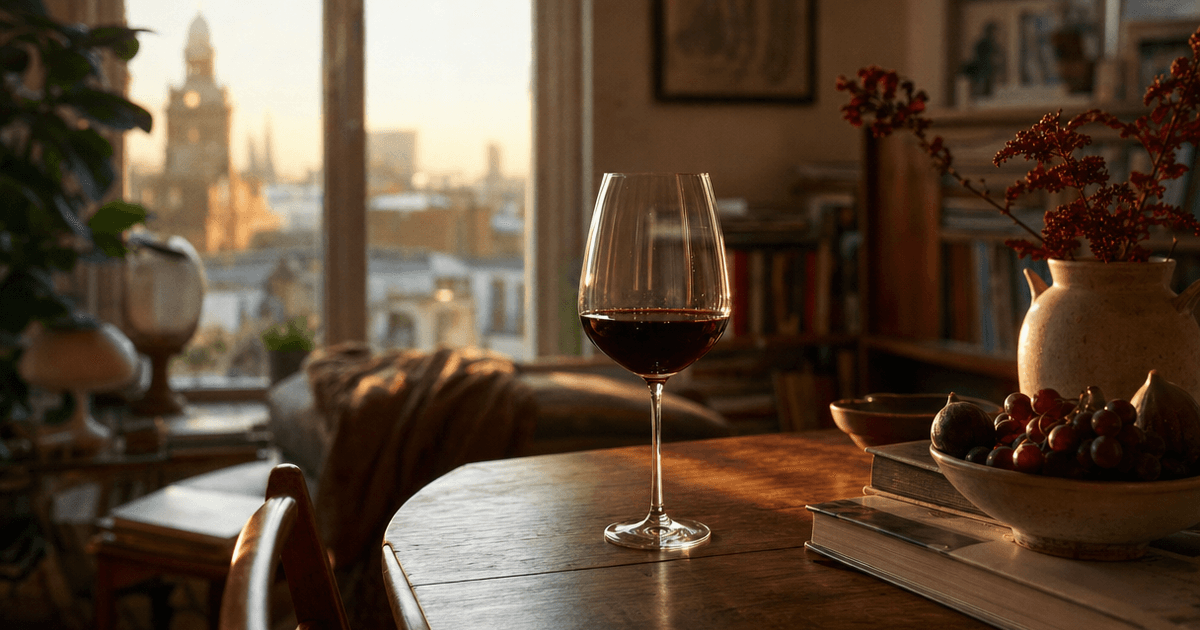
Spanish wine has a branding problem: ask most people to name one, and they’ll say Rioja, then stop talking. Fair enough — it’s earned that spot. Spain organises its wine through a Denominación de Origen system, a legal framework covering seventeen very different autonomous regions that dictates where a grape grew and, in Rioja’s case, often how long the wine rested before it left the bodega. That’s the two-sentence version, worth holding onto before anyone throws jargon at you across a counter. By the end of this you’ll know why Rioja became the calling card, when it’s worth stepping sideways into Ribera del Duero or a cooler Basque white, and how to order any of it without fumbling the menu.
What is wine called in Spain?
The word is vino. Simple as that — the Spanish for wine is one syllable, and it’s masculine, which produces a lovely quirk: the province is La Rioja (feminine), but the wine itself is el vino Rioja. Locals will correct you gently on this, the way you’d correct someone who said “an Rioja.”
Beneath that single word sits the structure worth actually learning: Denominación de Origen, or DO, and above it DOCa — Denominación de Origen Calificada — a top tier that Rioja holds almost alone among Spain’s regions. Below DO sits a looser category with fewer rules, and it’s worth knowing that so you don’t assume every unclassified bottle is somehow lesser — plenty of interesting, small-production wine sits there on purpose, outside the rulebook rather than beneath it. The system is a legal promise about origin and, often, about how long a wine was aged before it reached a shelf. Not a guarantee of greatness, but a decent filter when you’re stood in front of an unfamiliar label at nine on a Friday evening with three near-identical reds staring back at you.
Buying takeaway: look for DOCa Rioja specifically if you want the region’s top legal tier — it’s your first, fastest filter on a crowded shelf, and a fair place to start if you’re still finding your feet with our Spanish wine selection.
How do you say red wine in Spain?
Vino tinto. Not “rojo” — tinto, meaning stained or dyed, and it’s the phrase on every wine list from a village bar to a smart Madrid restaurant. In Rioja specifically, vino tinto almost always means Tempranillo, sometimes alone, more often blended with Garnacha, Graciano or Mazuelo.
Here’s where it gets interesting, and where I sold Rioja wrong for years without quite noticing: there isn’t one “Rioja style.” By the late 1970s, the region had built its reputation on well-aged, vanilla-scented reds — long stints in oak, softness, a savoury finish that felt almost antique, all leather and dried fig and a faint whiff of cedar box. Then, from the late ’90s, Ribera del Duero started making darker, richer reds and releasing them younger, and it rattled Rioja producers into two camps. Some pushed toward riper fruit and less time in wood; others held the traditional line, ageing patiently and refusing to chase trend. More recently a third group has leaned into single vineyards and less oak altogether, alongside a small but growing band bottling 100% Garnacha for pure perfume over power.
Ask me what to put next to a Rioja Reserva and I’ll say roast lamb, garlic, a bit of rosemary — that gentle savoury edge in the glass matches the char on the meat rather than fighting it. A young Joven, or that single-varietal Garnacha, wants nothing more complicated than a plate of jamón and manchego and a warm evening outside.
Buying takeaway: if you loved an old-style, vanilla-and-leather Rioja, hunt for the word Reserva or Gran Reserva on the label. If you want the fresher, fruit-forward end of a Spanish red wine, look for Joven or a single-varietal Garnacha instead — same region, genuinely different wine.
Rioja, understood properly
Rioja takes its name from the Río Oja, a modest tributary that feeds the much grander Ebro, which actually shapes the whole region’s geography. The zone splits into three: Rioja Alta to the west, cooler and traditionally the most prized; Rioja Alavesa, north of the Ebro and technically in Basque country; and Rioja Oriental, the warmer, flatter stretch to the south and east where yields run higher and prices run lower.
Historically, Rioja was built on blending, not single sites — a lot of producers never owned much vineyard at all, buying instead from growers scattered across all three zones. That’s worth knowing before you sneer at a big blended bottle: the blend is the tradition, not a shortcut. The move toward single-vineyard bottlings is genuinely recent, and it’s still being argued over inside the region itself, sometimes over a glass at closing time rather than in any tidy trade report.
There’s real history behind the place too — vines were ordered planted here as far back as 1164, and by 1504 Queen Isabella la Católica was taxing Alavesa wines more lightly than their neighbours, which tells you the reputation isn’t a modern marketing invention. It’s centuries deep, and it shows in how seriously the region still treats its own internal disagreements about style.
Buying takeaway: decide which camp suits your table before you buy — old-school blended Reserva for slow Sunday dinners, or a fresher, site-specific bottle if you want something that drinks well on a Tuesday without four hours of decanting.
How do I order a glass of wine in Spanish?
Say “una copa de vino tinto, por favor” for red, swap tinto for blanco (white) or rosado (rosé) as needed. If you want the full list rather than the house pour, ask for “la carta de vinos” — and if you want something local rather than a big commercial brand, add “de la zona.”
A little wine Spanish goes further than you’d think in a small bodega bar. Ask what’s “de la casa” (house wine) if you’re not fussy, or look for Crianza and Reserva printed on a chalkboard — these words tell you roughly how much oak and bottle age you’re paying for, even before you check the price. If you’re genuinely stuck, “¿qué me recomienda?” — what would you recommend — works everywhere and tends to get you the bottle the owner is quietly proud of. In the Basque part of Rioja Alavesa, don’t be surprised to find txakolina on the same list — a coastal, Atlantic-style white that has nothing to do with Tempranillo at all.
Buying takeaway: if in doubt, order “vino tinto de la casa” for something safe and cheap, or point at Reserva or Gran Reserva by the glass — it’s usually the good stuff, and worth the extra euro or two.
Spain beyond Rioja: where flavour hunters go next
If Rioja is Spain’s front door, here’s a shortcut through the rest of the house.
| Region | Signature grape(s) | Style | Best for |
|---|---|---|---|
| Rioja | Tempranillo, Garnacha | Vanilla-oaked to fresh and modern | Classic dinners, structured food |
| Ribera del Duero | Tinto Fino (Tempranillo) | Darker, richer, more concentrated | Fans of bold Bordeaux or Barolo |
| Rioja Oriental | Garnacha, Malvasía, Viura | Raspberry-plum reds, unoaked whites | Value bottles, aperitif whites |
| Somontano | Cabernet Sauvignon, Chardonnay | Cool, Pyrenees-altitude, unusual for Spain | Curious drinkers, food-matching |
| Basque Txakolina | Hondarrabi Zuri | Sharp, coastal, low-alcohol white | Seafood, aperitif hour |
Ribera del Duero uses the same grape as Rioja under a different local name, Tinto Fino, but the darker, richer style shows how much site and climate matter more than the grape’s passport. Higher altitude, bigger swings between day and night temperature, and generally less rain during ripening all push the fruit toward concentration rather than delicacy. If you already reach for claret when you want structure, our Bordeaux without the intimidation piece maps a similar weight of wine, and Ribera del Duero sits comfortably alongside it on a dinner table.
Somontano, tucked at the foot of the Pyrenees, is the odd one out — cooler nights, a wide daily temperature swing, and a taste for Cabernet Sauvignon and Chardonnay that you wouldn’t expect from a Spanish DO. It’s a region that rewards curiosity rather than nostalgia; nobody’s grandmother built her Sunday roast around it, which is half the fun. Rioja Oriental’s whites, often Viura blended with Verdejo or Sauvignon Blanc, make an unfussy, unoaked aperitif that most people never think to ask for, and Txakolina — sharp, faintly saline, best served properly cold — was built for a plate of grilled sardines rather than a fireside armchair.
Buying takeaway: reach for Ribera del Duero when you want more power than Rioja gives you; reach for Somontano or a Rioja Oriental white when you want something lighter that still says Spain on the label.
What it costs, and where the value sits
Crianza is what Spaniards actually drink most at home; Reserva and Gran Reserva lean more toward export markets, which tells you something about who’s paying for the extra ageing. On average, Rioja sits above the general Spanish DO price level, but comfortably below the prestige tiers of Burgundy or Bordeaux — there’s a lot of genuinely good, inexpensive Rioja coming from the warmer, flatter plots where land and grapes cost less.
Recent trade coverage has flagged a shift worth knowing about: a respected drinks publication’s 2024 awards highlighted Rioja and Ribera del Duero doing serious business in the £100-plus bracket, with judges pointing to the structured tannins and balanced acidity that Tempranillo and Garnacha bring — the kind of backbone that lets a wine develop rather than simply survive in a cellar. It’s not a huge investment category yet, but it’s growing, and it’s not hype dressed up as fact — it’s showing up in blind-tasting results rather than press releases.
If long ageing and quiet development is what draws you in, it’s worth a look at how Port, Sherry and Madeira handle the same idea over decades rather than years — a different game, but the same instinct behind it.
Buying takeaway: buy Crianza-level Rioja from the Oriental zone for honest weeknight value; save Reserva, Gran Reserva or Ribera del Duero for the bottles you actually want to watch change over a few years.
Questions customers ask us
Is Rioja always red? No — there are whites, mostly Viura-based, and a growing run of pale, Provençal-style rosados appearing at higher prices than you’d expect from Spain traditionally.
What’s actually different between Rioja and Ribera del Duero? Same core grape under different local names — Tempranillo versus Tinto Fino — but Ribera’s climate and soils tend to push toward darker fruit and firmer structure, released younger than classic Rioja.
Do I need to age Rioja myself? Mostly no. Reserva and Gran Reserva have already had their oak and bottle time done at the bodega before release — you’re buying a wine that’s ready, not a project.
If I like Chianti or Barolo, will I like Spanish red wine? Very likely — Tempranillo sits in similar territory to Sangiovese and Nebbiolo, with grip and savoury edges rather than pure fruit. Our Italian red wine guide is a useful companion read if that’s your usual lane.
The merchant’s last word
I’ve watched people buy the same bottle of Rioja for fifteen years because nobody ever pointed them sideways, and there’s no shame in a favourite — I’ve got mine too, and it took me longer than I’d like to admit to start asking customers the better question: what do you actually want tonight, not just what do you always buy? Spain has more shapes of flavour than one label can hold, from Pyrenees-cool whites to Ribera’s dark power. Come and have a proper look — browse the Spanish wine selection and let’s find your next one.



