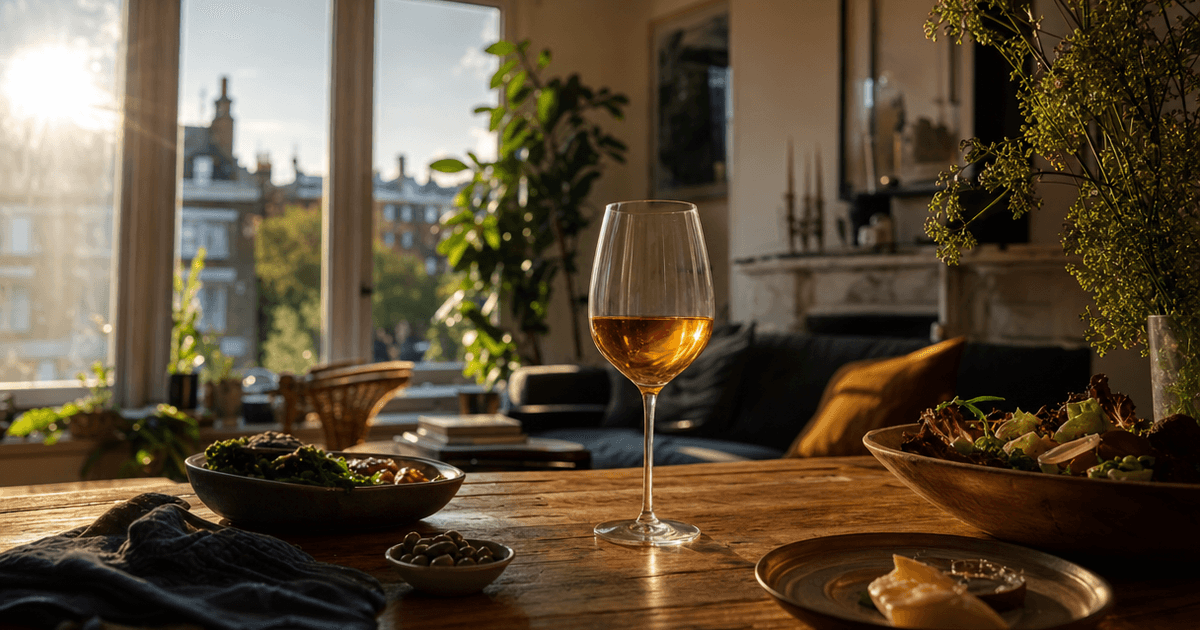
A customer came in last summer asking for “the wine we had in Italy” — no producer, no grape, just a photograph of a carafe on a checked tablecloth. I couldn’t sell her that bottle, because the bottle was barely the point: what she’d fallen for was the habit around it. That’s all wine culture actually is — the habits a country builds around drinking wine with food: what gets ordered first, which glass gets picked up, whether the bottle even carries a label. And one small question splits the three countries who do it best: who decides the pour? Italy answers, the course. Spain answers, the region. France answers, nobody in particular — and that shrug is a philosophy of its own. Hold that one line — Italy chooses wine by the course, Spain by the region, France barely chooses at all — and you’re carrying the whole comparison in your pocket. By the end of this you’ll know why each country answers the way it does, and which habit is worth stealing for your own table this week.
What is culture wine?
Most people typing that phrase mean the broader habit — wine as part of eating, rather than any specific grape or style — and the habit is genuinely ancient. The Greeks called much of southern Italy Oenotria, “land of trained vines”, because wine was already woven into daily meals there, and historians trace those table habits crossing into what’s now France as early as the sixth century BCE. Two and a half thousand years on, the descendants of those habits are what this piece is comparing.
Here’s my working definition, for the record: wine culture is the habit of putting wine next to food until neither one seems like an occasion — and it’s working precisely when nobody at the table is performing.
There is a genuine argument in the trade about whether food and wine even belong together — some drinkers treat a plate as an obstacle between palate and glass. Most of us treat the two as inseparable, and the chemistry backs the majority: specific flavours really do change how a wine tastes, which is why a decent waiter will quietly steer you away from a delicate white next to a chilli-heavy plate.
What this means for your shelf: build the habit before the collection. Start with bottles made to sit next to food rather than perform without it — a high-acid Italian white, a young Rioja Crianza — and neither needs to cost past low-teens money to do the job well.
How does Italy actually eat with wine?
Contrary to what a lot of shops — mine included, for years — will tell you, an ordinary Italian meal is not five wines matched to five courses. That’s for weddings, and for producers entertaining visiting journalists. A normal Italian lunch is one course and one bottle doing double duty — the course still decides the pour; there’s simply only one course doing the deciding.
Where you eat shapes what lands on the table. A trattoria runs no printed menu, just the day’s dishes and wine by the glass — quick, unfussy, tables turning fast. An osteria offers a smaller, sharper list built for a lazy two-hour lunch. A proper ristorante is where the full formal meal happens, several courses, taken slowly. Same country, three speeds, and the wine list keeps pace with the room every time.
Italy’s own export figures tell a quieter story of pride: roughly four in five bottles now leave the country finished and labelled, rather than as bulk wine bound for someone else’s blending tank abroad — a real shift from a few decades back.
What this means for your shelf: buy one adaptable Italian red — a Sangiovese from Tuscany, a Barbera from Piedmont, a Nero d’Avola from Sicily — and let it run from antipasto to secondo the way Italians actually drink at home. Save the five-glass flight for the guidebooks. For the specifics of what to put it next to, Pairing Italian reds with what you actually cook does that job properly.
Why do Spain and France drink so differently?
Spain hands the decision to the map. Galicia pours light, dry whites — Albariño above all — the Levante and the south lean into heavier reds, and Andalucía built its whole reputation on sherry. Where Italy organises wine around the meal’s courses, Spain organises it around place: the region decides the pour before the menu gets a say. And the region takes the job seriously — amontillado and oloroso are made for roasted and stewed dishes specifically, not just poured as an aperitif, and a big, structured Priorat red from the steep slate slopes inland of Tarragona suits braised beef, lamb and game rather than anything delicate.
Britain, incidentally, has been drifting Spain’s way for years without quite noticing. Trade research found around a quarter of British diners had drunk Rioja with a meal in a recent six-month stretch, against roughly one in eight for Bordeaux — a genuine reversal of the old fine-dining order, and one I watch happen weekly at my own till.
France’s everyday habit sits at the other end of the scale entirely. Order a simple vin de pays — from the Languedoc, the Ardèche, wherever — in a French bistro and it arrives in a jug (a pichet, if you want the proper word), red or white or rosé depending on mood, no label in sight. It’s less a wine list than a shrug, and the shrug is the whole point: nobody decides the pour, because wine is just what’s on the table, not an event.
| Country | How it’s ordered | What it’s built for |
|---|---|---|
| Italy | By the course, often one bottle for the whole meal | Sangiovese, Barbera, Nero d’Avola — food-first reds |
| Spain | By region and by dish | Sherry with tapas, Rioja or Priorat with roasts and stews |
| France | Barely ordered — house wine by the jug | Simple vin de pays, no ceremony |
What this means for your shelf: steal the French habit for a nerve-free dinner party — pour something simple into a jug and watch people relax the moment the label disappears. Steal the Spanish habit for anything roasted or stewed — a chilled fino before the food lands, then Rioja or Priorat once the mains arrive. There’s more on the pairing side in Spanish wine with tapas: pairing the Spanish way, and a wider tour of the regions behind these habits in Beyond the classics: the wine map’s best-kept secrets.
Building your own wine culture at home
At home, the answer to “who decides the pour?” is finally: you. And the honest news from this side of the counter is that the tools cost less than people fear.
Glassware first, because it does more work than it’s given credit for — and less than the catalogue implies. One plain, thin-rimmed all-purpose glass per person, filled to a third, beats a cupboard of six specialist shapes you’ll never wash all at once. Light bowl, light rim, built so the wine is the interesting part rather than the glass.
Then temperature and patience, the two habits that separate a wine performing at the table from one just sitting there. Chill your whites properly. Let a young red breathe before pouring. Neither is a faff; together they’re the whole trick, and that’s really the argument behind A good glass, not a fast bottle: drinking better by drinking well.
What this means for your shelf: buy less glass, more wine — and put the saving toward a bottle one notch better than you’d normally reach for. It’s the cheapest upgrade in this whole piece, and the one customers thank me for months later.
Questions customers ask us
Do I need different glasses for Italian, Spanish and French wine? No — one decent all-purpose glass handles most still wines from all three countries. The exception is proper sparkling wine, where a tulip-shaped glass keeps the bubbles and the aroma together rather than letting them escape.
Is French wine always drunk formally? Quite the opposite — the jug on the bistro table is the national default. The formal end of French wine certainly exists, but it’s the exception reserved for occasions, not the daily habit.
What’s the story with wine bars that put “culture” in the name? We’ve no sourced ownership details for any specific venue trading on that word, in Cape Town or anywhere else — not something a merchant can verify from a shop three thousand miles away. What the name usually signals is a room built around wine as everyday habit rather than ceremony, which is the whole subject of this piece — judge it by what’s poured, not by who signed the lease.
What goes on at London’s private members’ wine clubs? Clubs like the well-known one on Pall Mall charge a membership fee for the room and the list rather than any one bottle, and we’ve no inside knowledge of any specific cellar. What we can say is the categories behind famous club lists — village Burgundy, Gran Reserva Rioja, aged Brunello — sit on ordinary shelves you can walk up to on a Tuesday.
What is the 20/20 rule for wine? There’s no single agreed version — you’ll see it used for scoring, serving temperature and decanting time depending on who’s talking. Treat it as a mnemonic rather than a rule; the temperature-and-patience habits above already cover everything it’s trying to teach.
The merchant’s last word
That customer with the photograph left with a Barbera, a jug from the shelf by the till, and instructions to stop worrying — and she came back for the Barbera, not the jug. I’ve watched people get anxious for years about “doing wine culture properly”: the right course, the right glass, the right club membership. Most of it’s simpler than that. Pour something decent, put it next to food, and decide the pour however you like — by the course, by the region, or with a proper French shrug. If you want to build your own version of Italy, Spain or France on your kitchen table, come and browse the France cellar — I’ll help you pick the first bottle.



