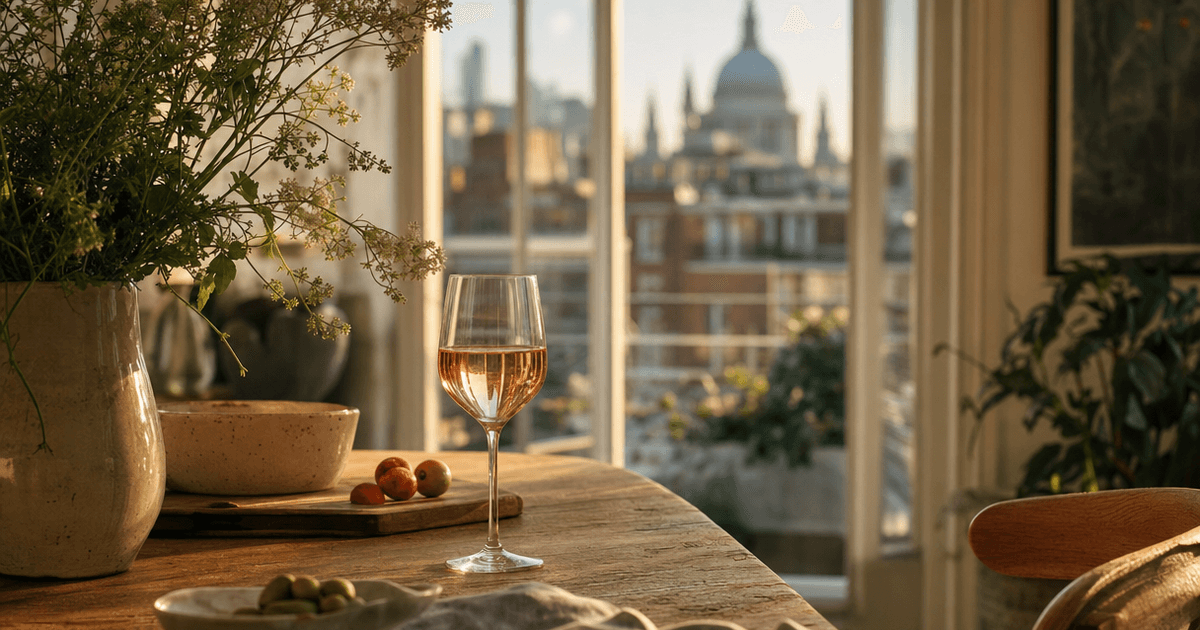
English rosé wine has swapped its old spot as a cellar-door curiosity for a proper place in trade tastings and summer wine lists. In short: it’s pale pink wine, still or sparkling, made mostly from Pinot Noir grown on chalk and greensand across Kent, Sussex, Hampshire, Surrey and Essex, pressed gently off the skins and fermented like a white wine rather than blended from finished red and white. By the end of this you’ll know what actually separates it from a Provence blush, whether still or sparkling suits your evening, and roughly what a good bottle should cost — enough to choose with confidence next time you’re stood in front of the shelf.
What sets English rosé apart from a Provence pink
Trade opinion has been circling one idea for a while. In his 2020 book on English wine, Oz Clarke reckoned rosé could become one of the most important styles Britain makes over the next ten to twenty years — a bold claim for a country better known for sparkling white. But the climate argument holds up: cool, marginal growing conditions across southern England push grapes toward higher acidity and lower sugar, which is exactly the shape you want in a good rosé rather than a red.
It comes at a cost, though. The average British vineyard runs to around two hectares, well below the planting density and scale of Provence or the Languedoc, and yields sit at roughly three to five tonnes per hectare against something like twelve tonnes in Champagne. A sudden cold snap, as growers found in spring 2021, can strip a vintage’s yield in a single night. None of that is a complaint — it’s just why the wine in the glass isn’t priced like a supermarket Provence rosé, and why quality here tracks closely with how much care went into the vineyard.
If you want the fuller shape of rosé styles from Tavel to Provence to Rioja, Rosé, seriously: a merchant’s guide beyond the pink covers that ground properly.
Is English rosé wine good quality?
Quality varies bottle to bottle just as it does anywhere else, but as a category English rosé is now taken seriously at trade level. Decanter runs an annual round-up of the best English pinks, sparkling and still, which tells you the trade judges it on its own merits rather than humouring it as a novelty. Look for pale salmon colour, a basket-of-berries fruit character and the mouth-watering acidity English conditions naturally give.
In sparkling examples made by the traditional method, expect a raspberry-ripple creaminess layered over the fruit — the best are said to be capable of ageing for decades, developing toast and biscuit character the way good vintage Champagne does. Still versions lean more toward blossom, wild strawberry and stone fruit, with a crunchy apple acidity and sometimes a touch of oak for texture. Neither style is trying to copy Provence, and judging it that way sells the English version short.

Do supermarkets sell English rosé wine?
Ranges shift by store and season, so no merchant can give you a definitive shelf check — the honest answer is to look before you drive over. What’s true generally is that English rosé has moved from minor curiosity to thriving niche over the past several years, and supermarket listings tend to go to the handful of larger, established producers who can supply consistent volume year-round.
Getting onto a major retailer’s shelf needs reliability at scale, and with the average English vineyard sitting around two hectares and yields running low by European standards, only a small number of bigger estates can meet that demand consistently. That’s the real reason certain English names turn up on supermarket shelves while plenty of smaller, excellent growers stay at the cellar door or with independent merchants. Scale decides the supermarket slot far more often than quality does — worth remembering next time a lesser-known bottle surprises you more than a familiar one.
How much does a bottle of English rosé wine cost?
Trade listings for still English rosé have recently run roughly from the mid-teens up to about £25 a bottle, depending on vineyard, vintage and how much lees-ageing time went into it. Sparkling English rosé generally costs more, and the reasons are structural rather than marketing — it takes more work in the cellar, not just a fancier label.
Traditional-method production — pressing, base wine, a second fermentation in bottle, then ageing on lees for a minimum stretch, commonly twelve months and sometimes eighteen for the better cuvées — adds real cost at every stage. Add England’s lower yields and smaller average plot size against Champagne’s, and you can see why English sparkling rosé rarely competes on price with a big-brand Prosecco. You’re paying for the extra steps and the extra years, not just the label.
Still or sparkling: how to choose your English rosé style
Both fall under the same English rosé banner, but they do different jobs at the table.
| Still English rosé | English sparkling rosé | |
|---|---|---|
| Typical grapes | Pinot Noir, often with Pinot Noir Précoce or Pinot Gris | Pinot Noir, Chardonnay, Pinot Meunier (traditional method) |
| Character | Blossom, wild strawberry, stone fruit, crunchy apple acidity, sometimes oak | Red-berry fruit with a bready, lees-driven note from time in bottle |
| Best moment | Everyday summer glass, food partner | Apéritif, canapés, celebrations |
| Ageing | Drink young and fresh | Best examples can develop for years, even decades, in bottle |
Some still producers are branching out beyond the classic Pinot base for a bit more range — worth knowing if one “plain” rosé put you off, because the next bottle along might taste nothing like it. For how the sparkling side stacks up against actual Champagne, English sparkling vs Champagne: an honest comparison goes into the detail, and English still wine: beyond the bubbles covers the reds and whites sitting alongside the rosé.
What to serve it with
Rosé earns its keep at the table more than people give it credit for. Grilled or steamed fish, roast or grilled pork, poultry, crab, cured ham and a decent charcuterie board all sit comfortably next to a dry English rosé — sparkling versions do particularly well with canapés and lighter starters. Paella, quiche and mild cheeses work too.
Where it struggles: heavy cream sauces tend to flatten the fruit, and raw oysters are better matched to something with more saline snap than most English rosé offers. Keep it to grilled and roasted things rather than raw and creamy ones, and you won’t go far wrong.
Questions customers ask us
Why does English sparkling rosé sometimes cost more than a supermarket Provence pink? Mostly down to production method rather than marketing — traditional-method sparkling needs a second fermentation in bottle and a minimum lees-ageing period, commonly a year or more, which adds real cost that still rosé doesn’t carry.
Will English rosé keep, or should I drink it young? Depends which one. Top sparkling examples made by the traditional method are said to be capable of ageing for decades; still English rosé is built for its fruit and acidity, so drink it within a year or two of release.
What shouldn’t I serve English rosé with? Cream-heavy sauces and raw oysters aren’t its strongest pairing — save it for grilled fish, roast pork, charcuterie and picnic food instead.
The merchant’s last word
I used to file rosé under “summer filler” and I was wrong to — English rosé in particular has earned a proper look, not just a polite one when the sun’s out. Whether you land on a bigger, familiar label or something smaller off a two-hectare plot in Kent or Sussex, judge it on its own shape: pale colour, real acidity, honest fruit. Come and browse the rosé wine cellar and I’ll point you to what’s drinking well right now.



