This champagne guide starts where most shop-floor conversations do: with someone holding whatever bottle has the shiniest gold foil, hoping for the best. Champagne is a sparkling wine made only in the Champagne region of northern France, from a strict trio of grapes — Chardonnay, Pinot Noir and Meunier — fermented twice, the second time inside the very bottle that lands on your table. Everything else — brut or demi-sec, vintage or non-vintage, grand cru or plain “Champagne” — sits on top of that one fact. By the end you’ll know what to reach for on a Tuesday, what to save for a toast, and why two bottles at wildly different prices can both be worth your money.
What are the four types of Champagne?
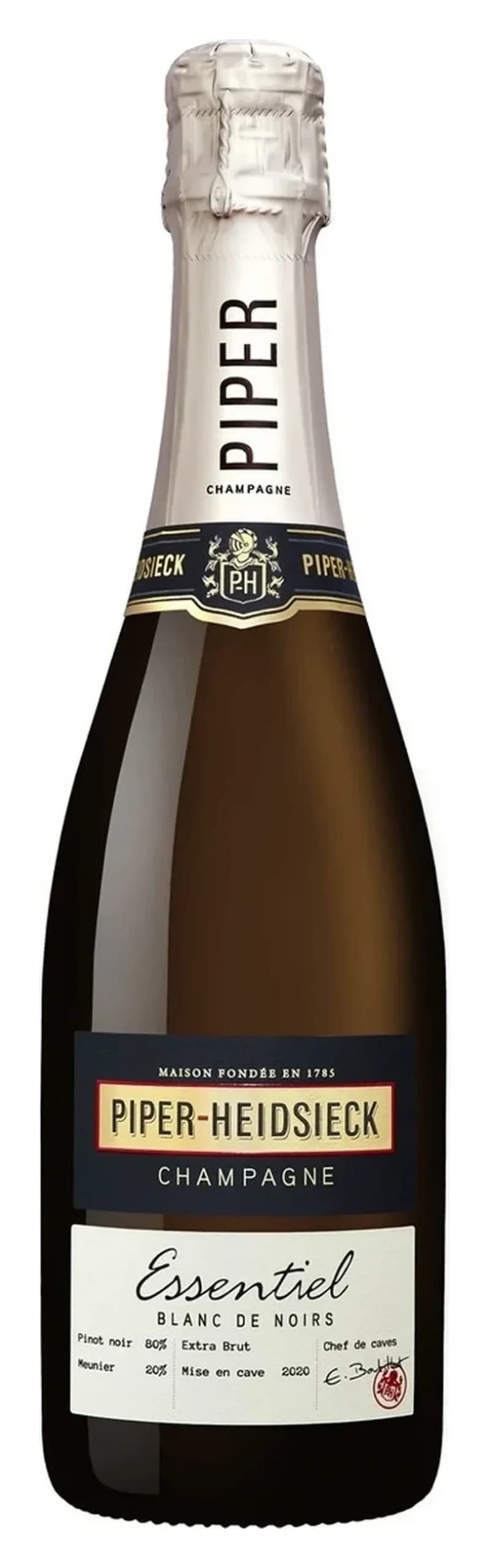
Four types, split by grape and colour. The standard blend uses all three permitted grapes together; blanc de blancs is 100% Chardonnay; blanc de noirs is 100% black grapes — Pinot Noir, Meunier, or both; and rosé is pink Champagne, usually made by blending a splash of red wine into white. Each has a geographic home turf, and that’s the bit most bottle-shop chat skips entirely.
Chardonnay rules the Côte des Blancs — think Avize, Cramant, Chouilly, Le Mesnil-sur-Oger, all grand cru villages built on chalk. Pinot Noir has its throne in the Montagne de Reims, in villages like Bouzy, Verzenay, Mailly-Champagne and Ambonnay, plus the Grande Vallée pocket around Aÿ. Meunier, the underdog of the three, does its best work lower down in the Vallée de la Marne, around villages such as Damery — it ripens later and copes better with the frost pockets there than its two more famous stablemates.
There are, incidentally, seven grape varieties legally permitted in Champagne. Three do essentially all the work; the other four are historical footnotes most producers have quietly stopped bothering with.
Rosé splits into two camps too. Most is rosé d’assemblage — red wine blended into the base before the second fermentation, the far more common route. The rarer method, rosé de saignée, lets the juice sit briefly on black grape skins to pick up colour naturally. Style-wise, blanc de blancs tends to be lean and a bit austere young, but it rewards patience — the best examples age superbly. Blanc de noirs is the opposite temperament: fuller-bodied, more immediately generous, and generally thought to mature faster in the bottle.
What are the three levels of Champagne?
Three tiers, and they’re not about snobbery — they’re about how much selection and patience went in before the cork left the cellar. Non-vintage (NV) blends multiple years to hit a consistent house style; it’s the entry point for most producers. Vintage is 100% from one named year, made only when the harvest earns it. Prestige cuvée sits above both — the most rigorously selected, and priced to match.
NV isn’t lesser by default, whatever the marketing implies. Every bottle of Champagne must spend a minimum of 12 months ageing on its lees before release, under méthode champenoise rules — that’s the dead-yeast contact that builds the brioche-and-almond character people associate with good fizz. But some growers and smaller houses hold back their sharpest parcels for an upper-tier NV that outranks their basic entry brut in everything but name. Worth asking your merchant which is which.
Vintage Champagne is trickier than the label suggests. Producers don’t declare a vintage every year — some hardly ever do, others lean into it more since the climate’s warmed up. But there are years so universally strong that almost every house in the region declares one: 2002 and 2008 are the two most often cited. If you spot either on a back label years from now, that’s not a coincidence — it’s a whole region agreeing at once.
Prestige cuvée is the category built on meticulous selection — and, it has to be said, pretty meticulous marketing too. The very first one of its kind appeared in 1936, and the tier now includes everything from vintage-dated wines to single-vineyard bottlings made from one parcel alone.
Underpinning all three tiers is the cru system — the Échelle des Crus, a ranking of villages. Grand cru on a label means every grape came from a grand cru village; premier cru means grand cru and/or premier cru villages. It’s the closest Champagne gets to Burgundy’s obsession with named plots (if you want the deep version of that comparison, our Burgundy guide covers it properly) — though Champagne’s soil and climate are less varied, so not every parcel here can stand entirely on its own the way a great Burgundy vineyard can. Reserve wines matter too: a house’s cellar might hold tanks of ten-year-old Cramant Chardonnay sitting next to Ambonnay Pinot Noir from years before — the deep well that keeps NV blends tasting the same year after year, whatever the weather did.
Reading the label: codes, crus and dosage decoded
Small print on a Champagne label carries more information than most of us take the time to read. Look for the two-letter code, usually tiny, near the bottom. NM stands for négociant manipulant — a house that buys in grapes, must or wine and makes the Champagne under its own name. Every big brand you’ve heard of falls into this bucket. The newer story in the trade is “grower Champagne” — producers who grow their own fruit and make their own wine rather than buying it in, a shift that’s changed how people talk about Champagne terroir over the past couple of decades.
Then there’s dosage — the sugar-and-wine mixture added just before the final cork goes in, and the thing that decides where a Champagne sits on the sweetness scale.
| Style | Residual sugar |
|---|---|
| Brut nature / zero dosage | 0 g/L, nothing added |
| Extra brut | 0–6 g/L |
| Brut | under 12 g/L |
| Extra dry | 12–17 g/L |
| Sec, demi-sec, doux | increasingly sweet, in that order |
Brut is, by some distance, the most popular category and the one most producers build their house style around. It’s easy to assume driest automatically means best, but dosage isn’t really a sweetness dial — it’s a balancing act. Some of Champagne’s most respected small growers barely dose anything at all; others, making equally serious wine, dose more deliberately because their base wine needs it to sing. A correctly dosed Champagne, whatever the number, should show more depth and length than an incorrectly dosed one — the number on its own tells you very little. I’ve seen an extra brut dosed at just 5 grams a litre taste richer than a clumsy brut at ten. And a well-made demi-sec isn’t a dessert wine by default — it can sit brilliantly next to a cheeseboard, better than most people expect. If proper sweet drinking is what you’re after, our fortified wine guide covers the wines actually built for that job. For more on decoding any wine label, not just Champagne’s, see how to buy wine like a merchant.
How do I know what Champagne to buy?
The trick is matching the wine to what’s actually happening at the table, rather than to the label’s reputation. A bone-dry blanc de blancs from the Côte des Blancs suits oysters or a plate of langoustines. A Pinot-heavy blend from the Montagne de Reims has the body to sit next to roast chicken or even a simple beef dish. Demi-sec wants a cheeseboard, not a dessert trolley. NV brut is your house wine — save vintage and prestige cuvée for when the occasion, not habit, is doing the ordering.
Price tends to follow the tiers fairly predictably. Entry NV sits at the accessible end; an upper-tier NV — the grower’s best-selection blend — costs a bit more and often earns it. Vintage Champagne commands premium and super-premium prices across the board, and prestige cuvée sits above that again, on the strength of the selection that went into it rather than any legal requirement.
Worth knowing, if you’re weighing up spending more right now: trade figures put worldwide Champagne shipments down 8% in volume in 2023, though exports still ran to some 172 million bottles — a market correction, not a collapse. If anything, it’s made some genuinely good vintage-dated bottles better value than they were three years ago. That’s the honest state of the Champagne market right now: prices softened a touch, quality didn’t.
One more buying tip that isn’t about price at all: if a bottle mentions “recently disgorged” or “late release,” that means it’s spent far longer than usual resting on its lees before release — worth trying at least once, purely to taste what extra ageing on lees actually does to a wine you already know.
What’s the top 5 Champagne — for a starter case?
Honestly? There’s no single ranked “top 5” bottle list that means anything, because taste in Champagne swings wildly between producers even within one village. What I can give you instead is the shape a sensible five-bottle case should take.
Start with an everyday NV brut — something with three grapes doing their job together, built to be opened without ceremony on a Friday. Add a low-dosage extra brut or brut nature, the kind that shows what a grower with confidence in their fruit can do without leaning on sugar. Bring in a blanc de blancs from the Côte des Blancs — Avize or Le Mesnil-sur-Oger if you can find the village named — for the lean, chalky end of the spectrum. A rosé earns its place too, whichever method it’s made by, because it’s the most flexible food wine of the lot. Finish with one vintage or single-village bottle from the Montagne de Reims or the Grande Vallée around Aÿ, just to taste what one specific year, in one specific place, actually does differently. That’s less a scoreboard, more a proper education in a glass.
Questions from the shop floor
Does Champagne need dosage to be good? No — some of the finest grower wines in the region are dosed very lightly or not at all, and some equally admired houses barely make a zero-dosage wine at all. It’s a stylistic choice, not a quality marker.
What’s “grower Champagne” I keep hearing about? It’s Champagne made by producers who grow their own grapes rather than buying them in from contracted growers, a trend that’s grown fast over the last twenty-odd years and shifted attention back onto individual villages and parcels.
Is single-vineyard Champagne automatically better? Not automatically. Champagne’s soil is less varied than somewhere like Burgundy, so not every parcel can stand alone as a complete wine — a great single-vineyard bottling is the exception earned by a special site, not the rule.
Why does Champagne sometimes not have a vintage on the bottle at all? Because Champagne’s climate is genuinely difficult, and consistency across a poor year needed inventing — non-vintage blending, using reserve wines from earlier harvests, was the region’s answer to weather it couldn’t control.
The merchant’s last word
I’ve sold plenty of Champagne over the years purely on the strength of the label’s gold foil, and looking back, I’d do it differently. The good stuff isn’t a mystery once you know where the grapes come from and what the numbers on the label actually mean. Work out what you’re drinking it for — Tuesday or toast — and the choice gets a lot easier. Come and browse the champagne cellar and I’ll point you at the right bottle for either.