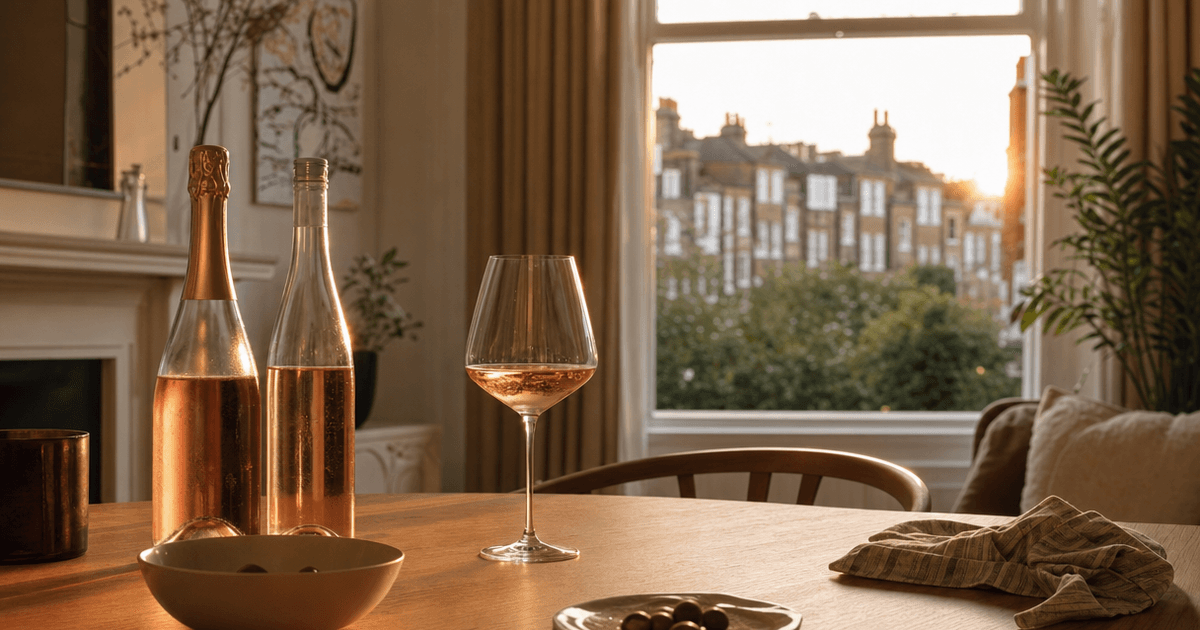
Rosé Champagne gets its colour by a route still winemakers across Europe aren’t allowed to take — blending a splash of red wine into a white base — and that fork in the method, more than the bubbles, is what truly separates the two pinks on this page. Rosé Champagne is a sparkling wine from the Champagne appellation, made in the traditional method, most often coloured by exactly that red-wine blend before the second fermentation happens in bottle. Still rosé is a flat table wine, usually coloured by brief contact between red grape skins and juice, with no bubbles involved at any stage. By the end of this you’ll know which one actually does the job you need it to — and when swapping one for the other costs you flavour, not just pocket money.
What’s the actual difference between rosé Champagne and still rosé?
The difference comes down to how the colour gets there, and what happens next. Rosé Champagne is one of only two European regions (Franciacorta is the other) legally allowed to make its pink by blending finished red wine into white wine — everywhere else in the EU, that’s banned for still production. Still rosé gets its blush from skin contact, then stops: no second fermentation, no mousse, no lees ageing.
That single rule explains most of what follows — price, flavour, occasion, all of it traces back to this fork in the road.
| Rosé Champagne | Still rosé | |
|---|---|---|
| How it gets pink | Blending red wine into white base (mostly); occasionally saignée | Short skin contact, or direct press |
| Grapes allowed | Chardonnay, Pinot Noir, Meunier | Varies hugely — Grenache, Cinsault, Sangiovese, Pinot Noir and more |
| Bubbles | Yes — bottle-fermented | No |
| Colour range | Pale salmon through to deep copper | Pale onion-skin through to deep cerise |
| Best job | Celebration, richer fish and poultry | Everyday drinking, warm-weather food |
For the fuller picture of what “rosé” covers beyond these two — Provençal pale, Tavel’s deeper stuff, the lot — the pillar guide, Rosé, seriously: a merchant’s guide beyond the pink, is worth ten minutes.
How is rosé Champagne actually made?
Most rosé Champagne comes from blending a modest proportion of still, dry red wine — grown locally from Pinot Noir or Meunier — into the white cuvée before it goes into bottle for its second fermentation. The proportion of red used shapes both the colour and how much fruit weight the finished wine carries. Saignée exists too, drawing pink juice straight off macerating skins, but it’s the minority technique here, more associated with still Champagne-region pinks than the sparkling ones.
There’s a practical reason blending wins out. Skin-contact base wine brings tannin along with the colour, and tannin complicates a second fermentation in bottle — it can aggravate gushing when the cork finally comes out. Blending sidesteps that entirely: you get colour and red-fruit character from a wine that’s already finished fermenting, calm and stable, before it ever meets the base.
Colour correction can also happen at the dosage stage, using the liqueur d’expédition to fine-tune the shade before final corking. And colour keeps moving after release — the pinkish-orange hue in an older rosé Champagne comes partly from the red wine’s own pigment and partly from compounds that form as the wine ages, which is why a rosé bottled five years ago and one bottled last month can sit at quite different points on the salmon-to-copper scale even from the same producer’s cellar. If you want the full step-by-step on what happens between harvest and disgorgement, How is Champagne actually made? The traditional method, step by step covers it properly. Tasmania, for what it’s worth, is chasing similar finesse with the same base grapes in a much younger climate — see Tasmanian sparkling wine: the southern challenger to Champagne? if that interests you.

When should you actually pour rosé Champagne instead of a still rosé?
Pour rosé Champagne when the occasion or the dish has some weight to it — smoked salmon, roast duck, a proper cheeseboard, an anniversary that deserves a bit of ceremony. Pour still rosé when the mood is looser — a barbecue, a salad in the garden, a picnic where nobody’s dressed up. Neither is “better”; they’re built for different afternoons.
Rosé Champagne’s red-wine component gives it more structure and red-fruit weight than a standard blanc de blancs or blanc de noirs, which is why it can sit next to grilled or smoked salmon, duck, quail, even veal, without disappearing. Berries and stone fruit — raspberry, cherry, peach — echo what’s already in the glass. Still rosé, lighter and usually without that same fruit concentration, does better with the informal stuff: barbecue, charcuterie, tomatoes, a sandwich on a warm day. One thing that catches people out — cream sauces and raw oysters tend to fight rosé generally, sparkling or not, so save those for a crisper white.
Why does rosé Champagne cost more than still rosé?
Rosé Champagne carries every cost of standard Champagne production — bottle-fermentation, extended lees ageing, riddling, disgorgement — plus the extra step of growing, vinifying and storing a separate batch of red wine purely for blending — the ongoing price of that unusual colouring privilege. Still rosé skips all of that; it’s pressed, fermented once, bottled, done. Trade coverage of recent Champagne competitions put well-regarded rosé bottles anywhere from around £45 up to £300, reflecting how much reserve-wine complexity and ageing sits behind the label.
Demand has pushed things too. Trade figures from the CIVC suggest rosé’s share of total Champagne output has grown steadily over the past couple of decades — from a small fraction of production to something much closer to one bottle in seven or eight today. That growth hasn’t made it cheaper; if anything, the category’s climbed toward the premium end as more houses treat their rosé as a serious cuvée rather than an afterthought. One small mercy on cost: because the red-wine addition already brings fruit and roundness, most rosé Champagne is made brut, needing less dosage sugar to balance it than you might expect.
Are there other pink wines from Champagne worth knowing about?
Champagne makes still pink wine too, and it’s worth knowing the names even if you never buy a bottle. Rosé des Riceys AOC is a tiny appellation down in the Côte des Bar, making still rosé entirely from Pinot Noir via careful saignée — rare, serious, and a genuinely different animal from the sparkling stuff carrying the same region’s name. Coteaux Champenois AOC covers red, white and rosé still wines from across the region, though in practice it’s mostly a light, high-acid, pale Pinot Noir red.
If a still, savoury, high-acid Pinot Noir sounds appealing, it’s worth knowing the grape does something quite different again once you leave France — Spätburgunder vs red Burgundy: can German Pinot Noir compete? is a good next stop.
Questions customers ask us
Is rosé Champagne always sweeter than still rosé? No — most rosé Champagne is made brut, meaning dry, and the red-wine blend actually reduces the need for sweetening dosage. Still rosé spans dry to medium-sweet depending on the region and producer, so check the label rather than assume.
Is blanc de noirs the same as rosé Champagne? No. Blanc de noirs is made entirely from red grapes (Pinot Noir, Meunier or both) but pressed and handled to stay pale — it’s a white wine from red grapes, not a pink one.
Does vintage matter more for rosé Champagne than for still rosé? Vintage Champagne, rosé or not, uses fruit entirely from one stated year and tends to show more individual character than a non-vintage blend. Still rosé is almost always drunk young and rarely carries the same vintage prestige.
Can rosé Champagne age as well as still rosé? Well-made rosé Champagne, particularly from producers who treat it as a top-tier cuvée, can develop for years in bottle. Most still rosé is built for drinking within a year or two of release, not for the cellar.
The merchant’s last word
I used to sell rosé Champagne as “posh pink fizz” and still rosé as “the summer one,” which is lazy and does both a disservice. They’re different tools — one for a moment that deserves a bit of theatre, one for an afternoon that doesn’t need any. Know which job you’re hiring the bottle for, and you’ll never bring the wrong pink to the table again. Have a look through the rosé wine cellar and see which one’s calling.



