How is Champagne made — and why does it taste so different from the Prosecco sitting next to it on the shelf? Champagne is a sparkling wine made by the traditional method: a still wine gets a second fermentation inside the very bottle that ends up on your table, and that bottle can only carry the name if the grapes were grown and made in the Champagne region of northern France, from Chardonnay, Pinot Noir or Pinot Meunier. By the end of this you’ll know what actually happens between the September harvest and the pop of the cork — and why some bottles cost three times what others do for what looks, from the outside, like the same fizz.
How is Champagne different from wine?
Champagne is wine. It’s just wine that’s been fermented twice — once like any other wine, in tank or barrel, and a second time sealed inside its own bottle, which is what traps the fizz. Ordinary still wine stops after that first fermentation. Champagne keeps going, and everything that follows — the bubbles, the biscuity smell, the price tag — comes from that second act.
There’s a geography rule too, and it’s baked into law, not a marketing line. Only wine grown within the legally defined Champagne region, made from those three permitted grapes, can use the name — everything else, however good, has to call itself something else (see our guide to Champagne, explained by a merchant: styles, houses and how to choose for how that plays out across styles). Two of those three grapes, Pinot Noir and Meunier, are black-skinned. Champagne stays pale because the grapes are pressed whole and fast, with barely any contact between juice and skin — get that pressing wrong and you’d have a pink wine on your hands by accident.
How is Champagne made, step by step?
Champagne is made by picking the grapes by hand, pressing them gently to separate the best juice, fermenting that juice into a still base wine, blending it into a house style, then triggering a second fermentation inside the bottle to create the bubbles, before ageing, riddling and finally disgorging it. Each stage is fixed by regulation, though producers still have real room to make different decisions within those rules.
- Harvest. Grapes are picked by hand — the only method allowed — usually from early September, timed by sugar and acidity rather than a fixed date.
- Pressing. A batch of 4,000kg of grapes (a marc) goes into a press. The first juice out, the cuvée, is the finest; a later, harsher fraction called the taille follows. Some of the best houses sell off the taille and keep only the cuvée for their top wines.
- First fermentation. The pressed juice settles overnight, then ferments into still base wines called vins clairs — one per plot, per grape, sometimes per press fraction.
- Blending (assemblage). Vins clairs from dozens of parcels, sometimes several vintages, are tasted and blended into the house’s signature style — this is where a grower’s single-vineyard bottle and a big house’s blend go completely different ways (our piece on Grower Champagne vs Grande Marque: what the label tells you digs into that split properly).
- Second fermentation (tirage). The blend is bottled with a dose of sugar, wine and yeast, sealed with a crown cap, and left to referment — this is what actually builds the pressure, roughly 5-6 atmospheres, that ends up in your glass.
- Lees ageing. The wine rests on its own spent yeast for months or years. Non-vintage Champagne needs a legal minimum of 15 months total, 12 of them on lees — this is where the bready, brioche character comes from.
- Riddling, disgorgement, dosage. Bottles are gradually tilted neck-down to collect the sediment, the neck is frozen and the plug of yeast is popped out (disgorgement), a small top-up dose of wine and sugar is added, and the bottle is finally corked for sale.
Why lees ageing is the bit that actually matters
If you remember one thing from this, make it this: the length of time a Champagne sits on its lees does more to shape what’s in your glass than almost any other decision.
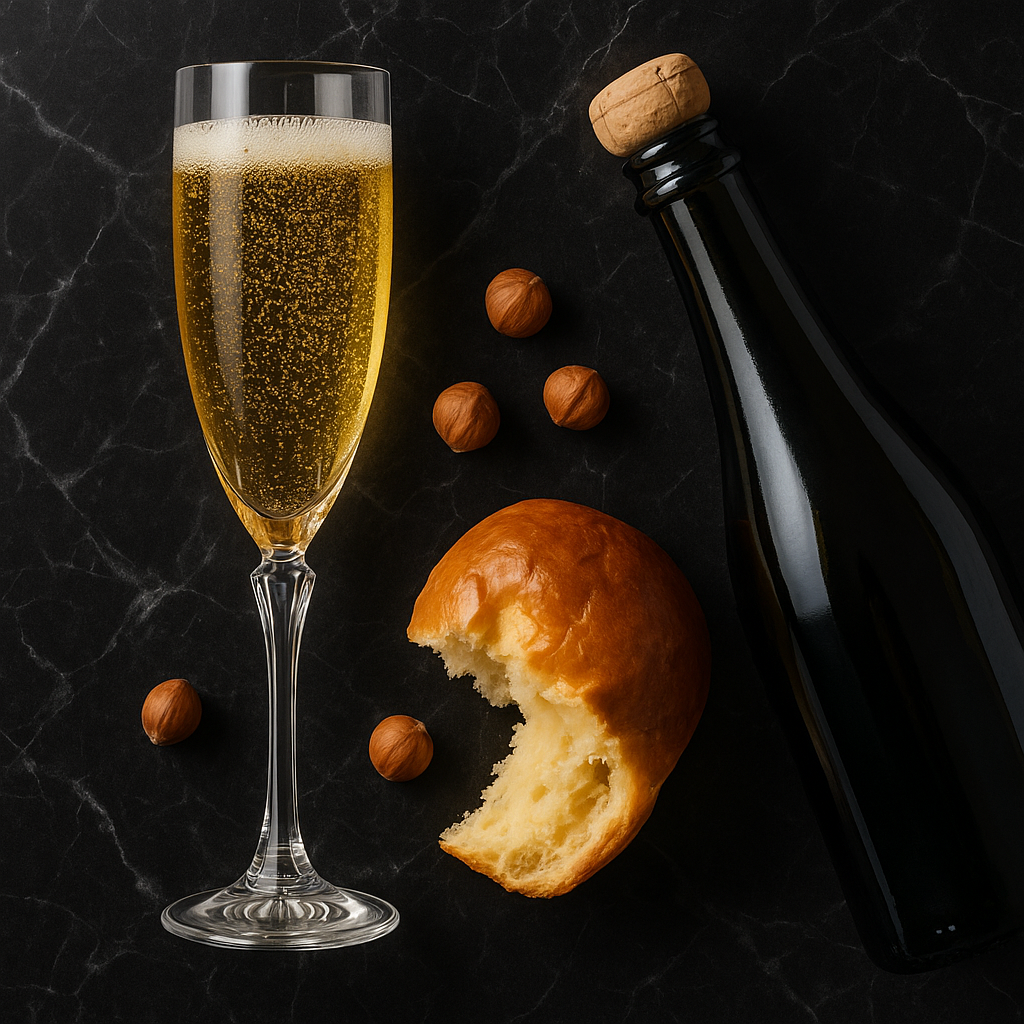
A non-vintage wine at the legal minimum — 12 months on lees — tends to taste bright, citrus-led, a little linear. Give it years instead of months and the yeast autolysis has time to build out those deeper flavours: toast, brioche, roasted almond, sometimes a whiff of something closer to fresh bread dough. Vintage wines and top-tier cuvées are usually held back far longer than the minimum precisely for this reason — the ageing isn’t for the sake of a number on the label, it’s because the flavour genuinely isn’t there yet without it.
This is worth knowing before you buy on price alone. Two bottles at wildly different price points might have gone through an identical seven-step process — the gap between them is very often just time in a cellar, not corners cut.
What is poor man’s Champagne?
“Poor man’s Champagne” usually points at Crémant — traditional-method sparkling wine made the same way, second fermentation and all, but grown in one of eight other named French regions rather than Champagne itself. It isn’t a lesser process. It’s cheaper land, often younger release, and a different postcode on the label.
Crémant follows the same traditional method — same tirage, same lees ageing principle, same idea of a second fermentation trapped in the bottle — just under a different appellation and usually a shorter minimum rest. Spain’s Cava works on the same traditional-method backbone too, and deserves a lot more credit than the bargain-bin reputation it’s saddled with (we’ve made that case properly in Cava deserves better: Spain’s traditional-method sparkling). If you want cheaper Champagne rather than a Champagne substitute, grower Champagne — small estates bottling their own fruit rather than buying it in — is usually the honest answer, and it’s still genuinely Champagne.
Disgorgement, dosage and pressure — what decides the style in your glass
By the time a bottle reaches disgorgement, the wine inside already has its bubbles and its base flavour locked in. What happens next — how it’s disgorged, how much sugar goes back in, how much pressure is left — decides the style you actually taste.
Most disgorgement today is done by machine: the neck is dipped into brine at around -27°C, which freezes the sediment into a solid plug against the crown cap, so when the cap comes off, the frozen lees pop out clean and the rest of the wine stays clear. Hand disgorgement — trickier, riskier, done without freezing — is still required for cork-sealed bottles and for large formats like jeroboams.
After disgorgement comes dosage: a small top-up of wine and sugar that fixes how the wine reads on the label, from bone-dry Brut Nature through to sweeter styles. And pressure matters more than most drinkers realise — some smaller growers deliberately bottle at lower pressure than the regional norm, arguing that fewer, finer bubbles feel more elegant on the palate than a forceful, aggressive fizz. There’s no single right answer here; it’s a genuine stylistic choice, not a shortcut.
Questions customers ask us
Is Champagne the healthiest alcohol? We won’t make health claims about any wine, Champagne included — that’s not a conversation for a merchant to have. What we will say is that drinking well is about the glass in front of you, not the bottle on the shelf, and that’s true whatever you’re pouring.
Does Champagne have to be vintage to be good? No — the vast majority of Champagne made is non-vintage, blended across several years specifically to keep a consistent house style. Vintage is a different ambition (single harvest, longer ageing), not automatically a better one.
Why does Champagne cost more than other sparkling wines? A harsh, marginal climate, strict yield limits on pressing, hand-harvesting, and lees ageing that ties up cellar space and cash for months or years — all of that adds cost before a single bottle is sold. It’s largely time and risk you’re paying for, not a label.
The merchant’s last word
I’ve sold Champagne for years telling people it was “just posh fizz” before I actually understood what those extra months on lees were doing to the wine in the glass — my mistake, not yours, if anyone’s ever made you feel silly for asking. Once you know the process, the price differences stop feeling arbitrary and start feeling honest. Come and browse the champagne cellar and I’ll happily talk you through what’s actually in each bottle.