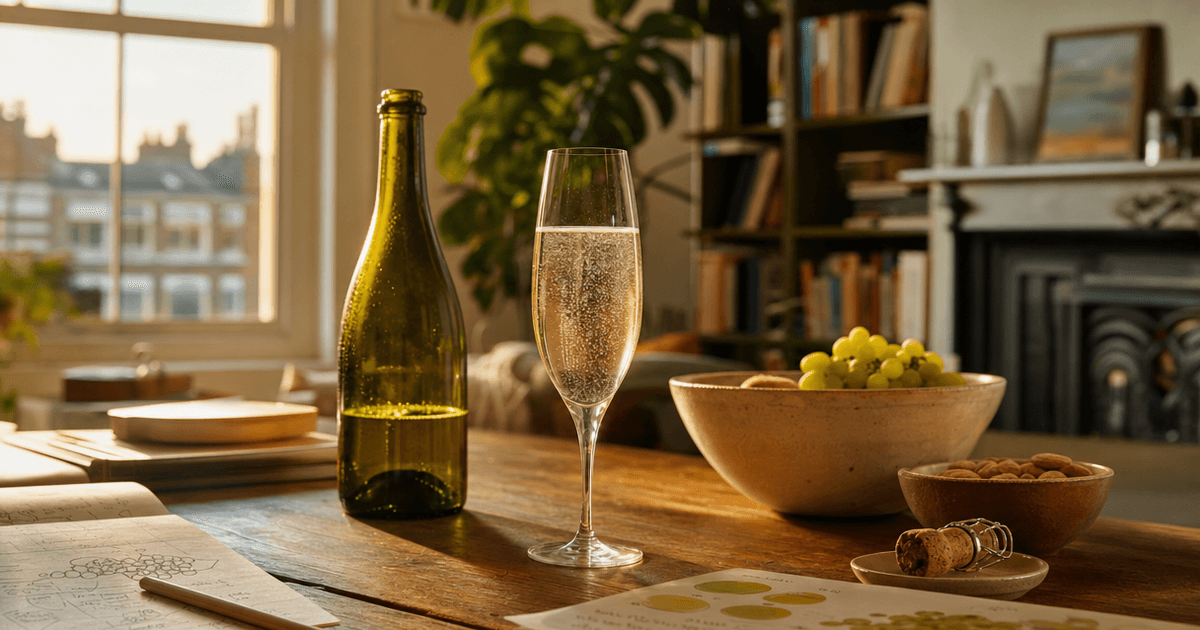
So, what is pét-nat? Short for pétillant naturel, it’s a lightly sparkling wine bottled before its first fermentation has finished, so the fizz comes from trapped carbon dioxide rather than a second fermentation added later. It’s made by the méthode ancestrale — a technique that’s genuinely older than the way Champagne is made, whatever the trendy crown cap might suggest. By the end of this you’ll know what actually makes a pét-nat a pét-nat, how it differs from Champagne in the making and in the glass, and when to reach for one over the other.
How is Pét-Nat different from Champagne?
Champagne ferments its base wine fully dry, then triggers a second fermentation in bottle by adding yeast and sugar — the traditional method, tightly controlled from start to finish. Pét-nat is bottled mid-ferment, before the first (and only) fermentation is done, so the wine finishes fizzing itself using whatever sugar and yeast were already there. No dosage, rarely any disgorgement, often no filtration at all.
I used to explain this badly, years ago — I’d just say “same idea, different method” and leave it there. It isn’t the same idea. Champagne is assembled; pét-nat is interrupted. Here’s the shape of it, side by side:
| Champagne | Pét-nat | |
|---|---|---|
| Fermentations | Two (base wine, then tirage) | One, chilled to a halt, finished in bottle |
| Added yeast/sugar | Yes, at tirage | No |
| Dosage | Usually, at disgorgement | None |
| Disgorgement | Standard | Rare |
| Clarity | Clear, filtered | Often cloudy, with sediment |
| Rules | Strict AOC | None — mostly bottled as Vin de France |
The history runs backwards from what most people assume. Méthode ancestrale was recorded in Limoux in the early 1500s, predating the Champagne method by a couple of centuries, and it’s still practised in pockets of Gaillac, Bugey, the Jura, the Loire and for Clairette de Die. Champagne didn’t invent bubbles in bottle. It refined them into an industry — grower-led estates blending across dozens of parcels, some now bottling at lower pressure specifically to soften the mousse into something that “suggests rather than imposes,” as one Champagne grower rather nicely put it to a writer I trust. Pét-nat never had that refining. It kept the rough edges.
If you want the fuller picture of how Champagne itself is built, styled and chosen, that’s laid out properly in Champagne, explained by a merchant: styles, houses and how to choose.
What does a Pét-Nat taste like?
A gentle, soft fizz rather than an aggressive mousse — think a light prickle on the tongue, not a hiss. Dry to off-dry, low to medium in alcohol, sometimes with an unconventional, faintly cider-like edge that catches people out the first time. Bottles are frequently cloudy, thanks to lees left in from a wine that was never disgorged.
Here’s the honest bit: no two pét-nats taste alike, and that’s not a caveat, it’s the whole character of the category. One Oxford reference calls it an “amorphous group of very varied” wines, and that’s exactly right — a Loire Chenin pét-nat tastes nothing like a Jura Poulsard one, which tastes nothing like a Gaillac Mauzac. White, rosé and even red pét-nat all exist. Some producers filter for a cleaner pour; plenty don’t bother, and you’ll get a bit of sediment in the glass. Neither is wrong. It’s just a wine that refuses to standardise itself, which is either charming or maddening depending on your Tuesday.
Serve it well chilled, in an ordinary wine glass rather than a flute — a flute just concentrates the cloudiness and hides what little aroma there is to find. Drink it within its first year or two. It doesn’t develop with bottle age the way Champagne does; it’s built for now, not for the cellar. If you’re choosing a first bottle, make it a white — a Loire Chenin pét-nat is about the friendliest door into the style — and save the red versions for once you know you like the genre.
Choosing a good bottle, and serving it right
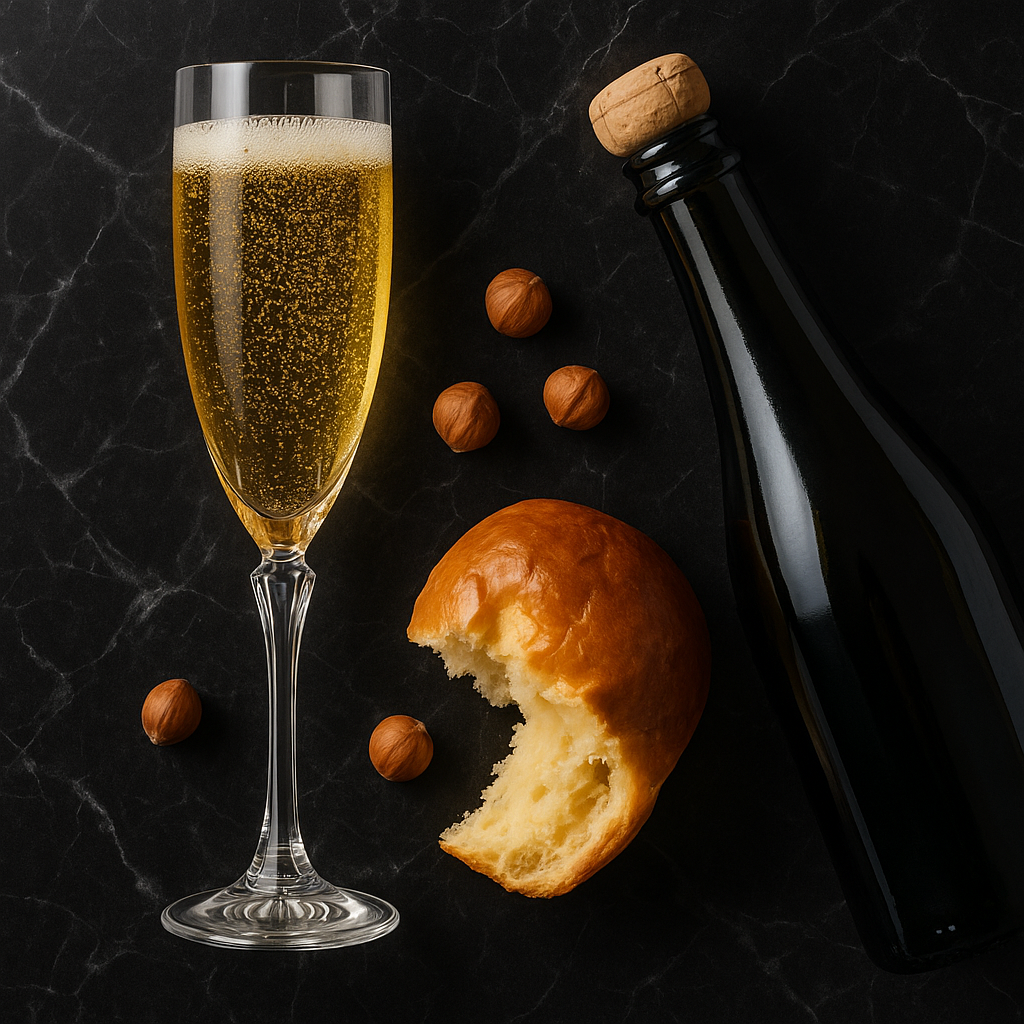
A crown cap instead of a cork, a bit of a “pssht” rather than a pop, and sometimes a small gush when you first crack it — open it over the sink the first time, just in case. Chill it properly; this is not a wine that rewards being lukewarm.
One thing worth knowing before you order it by the glass in a restaurant: pét-nat’s fizz tends to fade faster once open than a traditional-method sparkler’s does, and trade opinion increasingly treats it as a whole-bottle wine rather than a by-the-glass pour — some wine directors have quietly stopped offering it that way for exactly this reason. Buy it to share, or to finish in one sitting, not to nurse across an evening. Which tells you the occasion to buy it for: a relaxed table of two or three, not the big set-piece toast — when the room expects a pop and a mousse that outlasts the speeches, that’s the traditional method’s job.
Because there’s no fixed method behind the label, quality and style vary bottle to bottle far more than with Champagne. My rule of thumb: buy from a shop that’s actually tasted the wine, not just the name on the label, and treat the crown cap and the cloudy pour as a feature, not a fault, before you judge it.
Is Pét-Nat better for you?
No health claim to make here — for pét-nat, for Champagne, for any wine in the shop. What’s true is that pét-nat is often lower in alcohol than Champagne, and made with fewer additions — but that’s a style trait, worth knowing for how the wine drinks, not a reason to call one bottle “better” than another.
Pét-nat sits close to the natural wine movement, which favours organically grown grapes and minimal intervention — no added yeast, no filtration to speak of, sulphur kept to a minimum. Champagne, by contrast, is mostly made with cultivated yeast strains chosen for reliability, though a handful of growers experiment with wild-yeast ferments and get unpredictable, sometimes lovely results. Neither approach is more virtuous. One prioritises consistency across a century-old house style; the other prioritises whatever that particular tank of juice happened to do that particular year. If the idea of minimal-intervention winemaking interests you beyond pét-nat, What is natural wine, honestly? goes into that properly.
What it costs, and why
Because there’s no appellation policing it, pét-nat is made in small batches by growers of every size, and pricing reflects that — you’ll find real bargains and real disappointments in the same fridge shelf. Trade coverage in recent years has flagged rising prices and genuine bottle-to-bottle variability as the category has grown fast, to the point some buyers now wonder if the shelf space is getting crowded. My steer at the till: treat pét-nat as the small-batch treat rather than the house pour — one interesting bottle for the weekend, with a dependable traditional-method sparkler in the rack for everything else.
Champagne’s pricing, by contrast, sits inside a far more established industry — centuries of infrastructure, blending across vintages, a house style you can rely on bottle after bottle. If budget rather than style is driving the decision tonight, it’s also worth knowing where Prosecco sits against both of these — that comparison is laid out in Prosecco vs Champagne: different drinks, different moments.
Questions customers ask us
What defines a Pét-Nat? Method, not law — bottled before the first fermentation finishes, so it fizzes itself in bottle. No appellation controls it and no single grape or style defines it; that’s rather the point.
Is pét-nat the same as natural wine? Not identical, but heavily overlapping — most pét-nat is made in a minimal-intervention spirit, and the natural wine movement embraced the style early. Not every pét-nat is certified organic, though, so check the label if that matters to you.
Can pét-nat age like Champagne does? No — it’s built to drink young, generally within a year or two of release, and doesn’t gain the toasty, developed character that long lees ageing gives Champagne.
Does pét-nat use the same grapes as Champagne? No fixed grapes at all — Chenin Blanc in the Loire, Mauzac in Gaillac, Poulsard in the Jura, and plenty more besides, wherever a grower fancies trying the method.
The merchant’s last word
I like pét-nat for what it is — a bit rough, a bit unpredictable, honest about where it comes from. I don’t sell it as a Champagne substitute, because it isn’t trying to be one. If tonight calls for that polished, precise fizz instead, browse the champagne cellar and I’ll help you find the right bottle for the occasion, not just the nearest one.