Ask what champagne brut meaning boils down to and most people say “dry” — which is about right, but it’s the start of the conversation, not the end of it. Brut is French for “raw” or “crude,” and on a Champagne label it means the wine holds under 12 grams of sugar per litre, the driest end of a scale that runs all the way to proper sweetness. By the end of this you’ll know what each of those French words on the label promises in the glass — and which one to reach for on a Tuesday, and which to save for the pudding course.
What does “brut” mean on a Champagne label?
Brut means the wine contains less than 12 grams of residual sugar per litre — dry enough that most people taste no sweetness at all, just fruit, acidity and that chalky, mouth-watering finish Champagne does so well. That upper limit used to sit at 15 g/l; the industry tightened it over time, and today brut nature (under 3 g/l, no dosage added) sits at the driest end still.
It wasn’t always this way. Champagne started life sweet — properly sweet, the kind of thing Parisian society drank in the 1800s. The taste for bone-dry fizz is, by most trade accounts, an English habit that took hold from the 1850s onward and then spread everywhere. So if you’ve ever wondered why English-speaking markets are so wedded to brut, that’s roughly your answer: fashion, and it stuck.
The meaning of brut Champagne, in short, isn’t about quality or grape or house — it’s purely a sugar reading, taken after a small dose of wine-and-sugar (the dosage) tops up the bottle post-disgorgement.
What are the three levels of Champagne?
Most people mean three broad camps: bone-dry (brut nature, extra brut, brut), off-dry (extra sec, sec), and properly sweet (demi-sec, doux). That’s a fair simplification for shopping purposes — but the official scale has seven bands, and the boundaries matter more than you’d think once you’re standing at the shelf.
| Style | Residual sugar | What you’ll meet |
|---|---|---|
| Brut Nature / Zéro Dosage | 0–3 g/l | growers showing off, nothing added |
| Extra Brut | 0–6 g/l | sharper, more mineral, a growing trend |
| Brut | up to 12 g/l | the default — most Champagne sold today |
| Extra Dry / Extra Sec | 12–17 g/l | confusingly, slightly sweeter than brut |
| Sec | 17–32 g/l | noticeably sweet, old-fashioned style |
| Demi-Sec | 32–50 g/l | dessert wine, essentially |
| Doux | 50+ g/l | rare now, historically the original style |
There’s a built-in tolerance of about 3 g/l either side of each band, and a wine can legally qualify for more than one category at the edges — so don’t treat these as laboratory-precise walls. Extra dry, by the way, is the one that trips people up every time: it sounds drier than brut, and it’s actually sweeter. Blame the historical evolution of the terminology, not your own reading of English.
Which Champagne is better, dry or brut?
Neither wins outright — “dry” as a general word and “brut” as a legal category aren’t quite the same question, and it depends what you’re doing with the bottle. Brut carries you from apéritif through the main course; sec and demi-sec are built for fruit, cake, or a cheeseboard with something sticky on it. Pick by the meal, not by a hierarchy.
Here’s the bit that surprises people: Champagne’s acidity is naturally so high that a wine with real sugar in it can still taste closer to dry than you’d expect from the number alone. Dosage exists partly to sweeten, yes, but mostly to balance that acidity — a well-judged dosage doesn’t taste sweet, it tastes complete. That’s also why older, more mature base wines often need less dosage to feel balanced than a younger one: time does some of the softening dosage would otherwise have to do.
If someone tells you dry is “more sophisticated” than sweeter styles, I’d gently push back. A well-made demi-sec with a ripe pear tart is doing exactly its job. A thin, under-ripe brut with the same tart is not.
Is brut good Champagne?
Brut isn’t a quality mark at all, it’s a sugar reading — good and disappointing Champagne both exist at every dosage level, brut included. What separates the two is the base wine, how the dosage itself was made, and how long the bottle sat on its lees before disgorgement. The trade estimate is that the vast majority of Champagne on shelves is brut or drier, so within that huge category there’s enormous range.
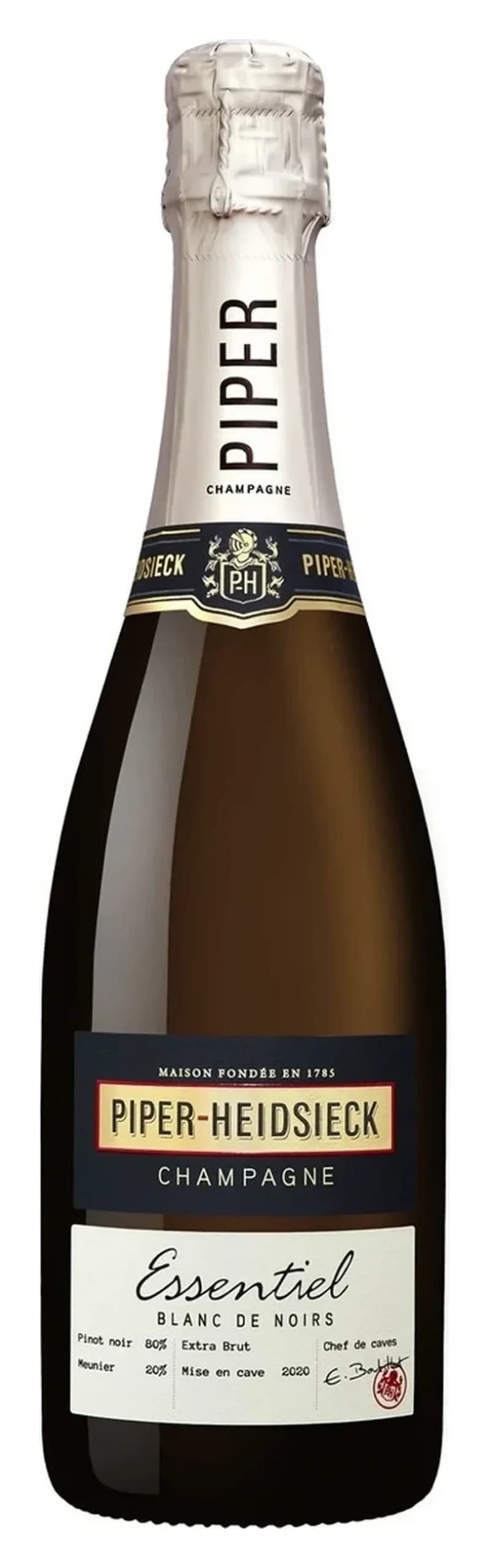
Some of the more interesting bottles I’ve poured over the years use a dosage made from a reserve wine with real character — a barrel-aged component, say — rather than a neutral sugar solution. That’s invisible on the label but it’s the difference between a brut that tastes like an afterthought and one that tastes considered. Non-vintage blends built to a house style, and single-vintage wines from a specific year, both get labelled brut identically — the word tells you nothing about which you’re holding.
The 21st-century fashion for zero or near-zero dosage (brut nature, extra brut) grew out of winemakers wanting the fruit and chalk to speak without any sugar cushion at all. Worth trying once you know you like Champagne — a rougher place to start if you don’t.
What is poor man’s Champagne?
Honestly, this phrase has nothing to do with brut or sweetness — it’s usually shorthand for an affordable traditional-method sparkling wine made outside the Champagne region, at a fraction of the price. It’s not a technical term, and I’d treat it kindly rather than dismissively; there’s proper, well-made fizz built the same way, from other places, worth its own shelf space rather than a consolation-prize label.
If you want the fuller picture of how Champagne earns its premium — the method, the region, the ageing — our pillar guide to Champagne covers that properly, and how Champagne is actually made walks through the traditional method step by step, which is where a lot of that price difference actually comes from.
Choosing by occasion, not just by label
Once you know the scale, the shopping gets easier. Brut and extra brut for anything savoury — canapés, a Sunday roast, oysters if you’re that way inclined. Sec and demi-sec belong nearer the end of the meal: a blanc de noirs at the doux end, for instance, pairs naturally with fresh fruit rather than a starter.
Grower Champagnes from villages like Le Mesnil-sur-Oger or Avize in the Côte des Blancs often lean toward the drier, more mineral end of the scale — Chardonnay-driven, chalky, built for extra brut. If you like your sweetness scales explored properly, it’s worth knowing Champagne isn’t the only region rethinking where “dry” sits — dry Tokaj tells a similar story in reverse, a region historically famous for sweetness now making some genuinely savoury wine.
And if you’re building any kind of collection rather than a single bottle, buying wine like a merchant is worth a read before you fill a case.
Questions customers ask us
What’s the difference between brut nature and zéro dosage? Officially they mean the same thing — no sugar added, under 3 g/l residual — but producers use whichever term they prefer. Some in the trade find “zéro dosage” a little misleading, since a trace of natural sugar is unavoidable in any finished wine.
Why does extra dry taste sweeter than brut? Pure historical accident of naming — the terms were fixed before today’s tastes settled toward bone-dry, so “extra dry” actually sits between 12 and 17 g/l, sweeter than brut’s under-12.
Does an older Champagne need less dosage? Generally, yes — more time on lees or in bottle tends to soften the wine’s edges, so producers can use a lighter dosage than they would on a younger base wine and still land somewhere balanced.
Is rosé Champagne sweeter than white? Not automatically — colour and sweetness are separate decisions entirely. A rosé can be brut, sec, or anything else; the pink comes from a splash of red wine or brief skin contact, not from added sugar.
The merchant’s last word
I used to hand every nervous gift-buyer a brut without asking a single question — quick, safe, rarely wrong. These days I ask what’s on the table first. A demi-sec next to a fruit tart earns its keep in a way a brut never could there, and vice versa with a plate of oysters. Know the scale, match the moment, and you’ll never hand over the wrong bottle again — browse the champagne cellar and see what I mean.