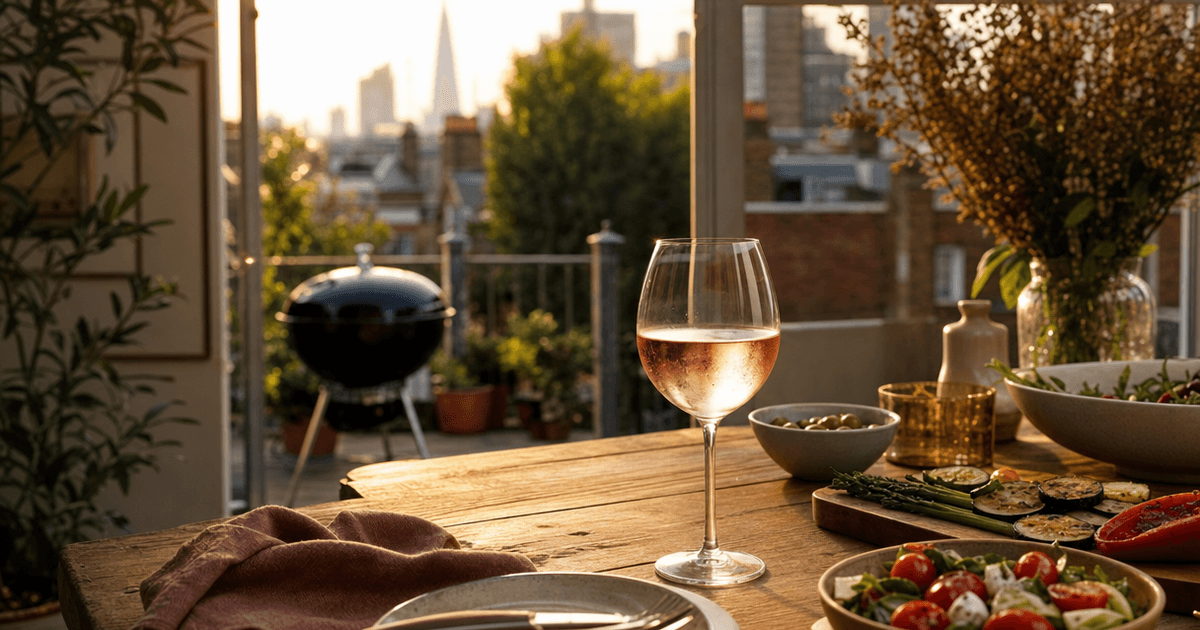
Here’s the thing about barbecue ribs wine pairing that took me years behind the counter to work out: you’re pairing the sauce, not the rack. The pork is the constant; the glaze, mop or rub is what actually touches your wine first. Barbecue, properly speaking, means slow cooking over smoke at low heat — quite different from grilling, which is fast and direct over flame — and that smoke, plus whatever’s been painted on the meat, decides what belongs in your glass more than the cut ever will. Barbecue asks two things of a wine: fruit to meet the sugar, and grip to meet the fat. By the end of this you’ll know which reds handle a sticky glaze without turning bitter, when white actually makes more sense, and how to serve a red so a hot afternoon doesn’t flatten it.
What to drink with barbecue ribs?
Reach for something with grip and a bit of sweetness of its own: young Zinfandel, Australian Shiraz, or a Rhône red handle smoke and sticky glaze without disappearing. Ribs bring char, fat, and usually a sauce with sugar in it — three things that call for a wine with fruit and tannin to keep up, not something delicate that gets flattened.
California Zinfandel is the classic here, and it’s brambly and generous enough to stand up to a sweet glaze without turning sour on the tongue. Young Shiraz from Barossa or McLaren Vale does something similar with more pepper and spice. For something more savoury, look to a Rhône red — Côtes du Rhône, or Châteauneuf-du-Pape if you’re pushing the boat out — especially with a dry-rubbed rack rather than a wet one. Cabernet Franc brings leafy, red-fruited freshness that’s lovely with fattier ribs, and Pinotage, done well in South Africa, has a smoky edge that meets the grill halfway rather than fighting it. That’s the heart of barbecue ribs wine pairing: matching fruit and tannin to fat and char, not just picking a “big red” on autopilot.
Short ribs and a rib-eye off the grill can take a step up in weight — Cabernet Sauvignon, Petite Sirah, or a Ribera del Duero — because there’s simply more meat and fat to meet. If the rack’s already on order and you only want one bottle, make it a young Zinfandel — it’s the hardest one to get wrong.
Matching the wine to the sauce, not just the meat
This is where the sauce-first rule earns its keep. A vinegar-forward sauce wants a different wine to a sweet, sticky glaze — and a dry rub with no sauce at all is a different job again.
| Sauce or rub style | What it needs from the wine | Good picks |
|---|---|---|
| Vinegar-based | Acidity to match acidity | Barbera, Chianti |
| Sweet & sticky (tomato-based) | Fruit and a little sweetness of its own | Young Zinfandel, fruity Shiraz, off-dry Riesling |
| Dry rub, no sauce | Savoury depth, moderate tannin | Rhône red, Rioja, Grenache |
| Low-and-slow smoked | A wine with its own smoky or earthy note | Pinotage, Syrah |
Grenache — Garnacha once you cross into Spain — turns up again and again on the classic barbecue lists, and it’s not hard to see why: ripe red fruit, soft tannin, enough weight to sit alongside charred meat without shouting over it. It’s also often one of the friendlier prices on the shelf, which never hurts when you’re feeding a garden full of people. If you’ve written that grape off as simple, Garnacha: the comeback grape is worth a look — it’s having a moment, and barbecue season is exactly where it earns it.

Do you drink red or white wine with pork?
Pork itself is genuinely happy with either — it’s one of the few meats that doesn’t force your hand. What decides it is the cooking method and the sauce: a sauced, smoked rack of ribs pulls you toward red, while barbecue chicken, or a barbecue pork tenderloin with a lighter glaze, opens the door to white.
Barbecue chicken and pork tenderloin are where white wine earns its place at the grill. A New World Chardonnay with a bit of oak, an off-dry German Riesling, or a Loire Chenin Blanc all handle a barbecue glaze without vanishing the way a thin white would against a rack of ribs — this is genuinely where white wine pairing for barbecue chicken works better than people expect. Gewürztraminer, with its lychee and spice, is surprisingly good with anything that leans sweet-and-spicy off the grill.
And if you can’t decide — plenty of people can’t, and that’s fine — a dry rosé is the honest compromise: enough fruit to meet the sauce, enough freshness to survive an afternoon in the sun. A darker, fuller rosé takes on the ribs themselves better than a whisper-pale one, if you can find it. If pink wine is still filed in your head under “not proper wine,” Rosé, seriously: a merchant’s guide beyond the pink is worth ten minutes of your weekend — and one cold bottle of it settles the red-or-white argument for the whole table.
What is the 20 minute rule for red wine?
The twenty-minute rule is simple: if your red has been sitting in a warm kitchen or a sunny garden, twenty minutes in the fridge brings it back down to a sensible serving temperature. Red served too warm tastes flabby and boozy; a bit of a chill sharpens it back up, which matters more at a barbecue than almost anywhere else. Honestly, twenty minutes in the fridge rescues more barbecue reds than any decanter ever will.
A garden in July does red wine no favours — the bottle warms up fast, and a wine that tasted structured at cellar temperature turns soft and jammy within the hour. Trade opinion is fairly consistent that fuller reds shouldn’t be served warmer than a cool room even in summer, and a spell in the fridge, or an ice bucket with water, is the easiest fix — my own version is a washing-up bowl of ice water by the back door, where the bottles go in the moment the coals are lit. It’s the same instinct that makes a big tannic red taste completely different depending on when you open it — if that idea interests you, When is a Barolo ready to drink? Drinking windows for Italy’s great reds gets into it properly. For now: that spell in the fridge is what keeps a Zinfandel or Shiraz tasting of fruit rather than heat.
What it costs to drink well at a barbecue
A barbecue isn’t the place for your best glassware or your smartest bottle, and that’s not a knock — it’s practical. Trade coverage has been pointing to alternative formats for exactly this reason: cans, pouches, and bag-in-box versions of the same Zinfandels, Shiraz, and rosés we’ve talked about here travel better, chill faster, and don’t end in tears if someone knocks the table.
Save the serious bottle — the Rioja Reserva, the good Châteauneuf — for the meal you sit down to properly, indoors. The garden gets the wine that can take a knock. If pairing logic like this is useful to you beyond the grill, Food and wine pairing: a merchant’s complete guide to getting it right covers the whole shop, not just the barbecue.
Questions customers ask us
What to pair barbecue ribs with? Work from the sauce table above: Barbera or Chianti for a vinegar-based sauce, young Zinfandel or fruity Shiraz for a sweet sticky glaze, a Rhône red for a dry-rubbed rack. Feeding a mixed table? Grenache is the one bottle that flexes across all three.
What wine goes with barbecued brisket? Chianti, Shiraz and Zinfandel all turn up on trade pairing lists for barbecued brisket — the smoke and fat want grip and dark fruit rather than anything delicate.
Does beer work better than wine with barbecue? Plenty of people reach for a hoppy ale or smoked lager first, and there’s history there. Wine just gives more range — a chilled rosé with chicken, a big Shiraz with brisket.
The merchant’s last word
I’ve spent enough Saturdays standing over a grill with a glass in one hand and tongs in the other to know the wine doesn’t need to be clever — it needs to survive the sauce, the sun, and the second helping. Pick something with fruit and a bit of nerve, chill it properly, and don’t overthink the rest. Sticky glaze on the ribs this weekend? Grab the Zinfandel. Dry rub? Make it a Côtes du Rhône. And if you fancy something pink and cold to keep the whole table happy, go browse the rose wine cellar.



