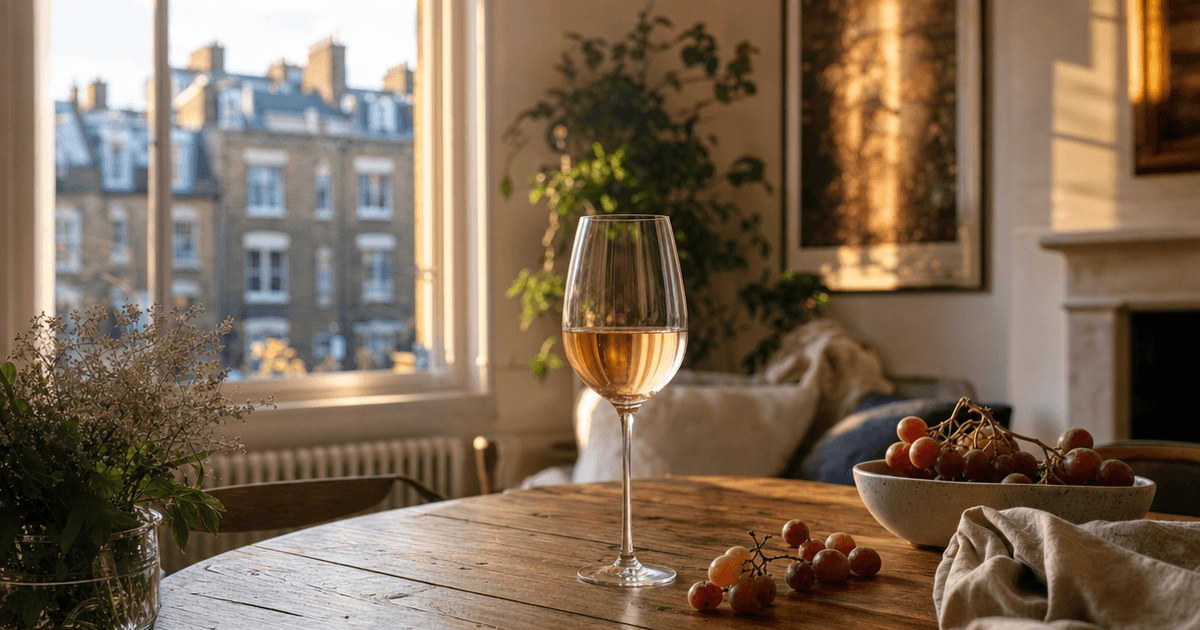
Rosé de saignée is the only pink wine that usually began life as somebody else’s red. Saignée means “bled”: winemakers crush dark grapes, let them sit briefly on the skins, then draw off a portion of pink juice and ferment it apart, white-style — and the classic reason for doing it isn’t the rosé at all, but concentrating the red wine left behind in the vat. That accident of ambition is what makes the style worth knowing: the pink that runs off carries more colour and grip than most rosé ever picks up on purpose.
By the end of this you’ll know how a saignée rosé differs from one made by direct press, why the darker glass in your hand might carry more grip than the pale one next to it, and when that extra weight is worth paying for.
What is the rosé saignée method?
Saignée is a bleeding-off technique: grapes are crushed, left on their skins for a short while, and a portion of the coloured juice is drawn away before fermentation even starts. That juice becomes rosé. What’s left behind, now more concentrated in colour and tannin, goes on to become red wine.
This is the bit that surprises people — saignée has traditionally been used more to improve the red wine than to make the pink one. In a warm, generous vintage, when the berries come in fat and juicy, red winemakers have long used this trick to tighten up the must that stays in the vat. It’s rarer now than it once was, mostly turning up when a season leaves grapes bigger than the winemaker would like.
The short skin contact is the whole hinge the method turns on. It’s a matter of hours, not the weeks a proper red would need — long enough to pull colour and a little tannin into the juice, short enough that it’s still recognisably a rosé once it’s fermented apart.
For the fuller picture of how pink wine gets made in general, our Rosé, seriously: a merchant’s guide beyond the pink is worth a browse before you go bottle-hunting.
What is the difference between rosé de saignée and rosé de maceration?
Here’s where the terminology gets genuinely confusing, and it isn’t your fault — even the trade uses “saignée” two different ways. In its classic sense, saignée is a by-product: only part of the juice is bled off, the rest stays behind to become red. A maceration rosé, by contrast, is made from grapes grown for no other purpose — all the juice goes into the pink wine, none of it becomes red.
Tavel is the cleanest example of the second kind. In that Rhône appellation, growers macerate briefly on the skins and ferment the whole lot as rosé — people sometimes still call this “saignée” out of habit, but no red wine is being concentrated alongside it. If you want the full story on an appellation that makes nothing but pink, Tavel: the Rhône appellation that only makes rosé covers it properly.
So the practical difference isn’t really about the wine in the glass — both give you deeper colour and more structure than a quick direct-press rosé. It’s about intent: was the rosé the goal from the start, or the leftovers of someone else’s red?
| Method | Skin contact | Typical colour | What’s it for |
|---|---|---|---|
| Direct press | Minutes, almost none | Palest pink, sometimes grey (vin gris) | Rosé is the only goal |
| Short maceration | Hours to a couple of days | Salmon to deep pink | Rosé is the only goal (e.g. Tavel) |
| Saignée (by-product) | Hours, before bleeding off | Medium to deep pink | Rosé is a side-effect of concentrating a red |
Worth knowing: pale, wan Provence-style pink isn’t the only game in town, and if you’ve found yourself bored of colourless rosé lately, that’s a fair instinct — a lot of the category has chased pallor over flavour in recent years, and saignée and short-maceration styles are where the pushback tends to live.

Is saignée sweet?
No. Colour and sugar are two completely different conversations, and saignée only speaks to the first one. The deeper hue and firmer texture come from longer contact with the skins pulling out more phenolics — the same compounds that give red wine its backbone — not from residual sugar. Most saignée rosé, including the darker end of Champagne rosé, is made bone dry.
This myth has real legs in Champagne specifically. A deep pomegranate-pink fizz still makes some drinkers nervous, as though colour were a proxy for sweetness, when actually it’s a proxy for extraction and structure. A Champagne rosé de saignée, drawn straight from dark-skinned Pinot Noir rather than blended in afterwards, tends to show more red-fruit depth and a firmer mid-palate than the pale, blended pink fizz most people are used to — not more sugar, just more skin contact. The darker glass tastes more like wine, less like an aperitif.
Serving it so it earns its keep
A saignée rosé with real phenolic grip wants a slightly bigger glass than you’d give a pale Provençal style, and a few degrees warmer — cellar-cool rather than fridge-cold, so the fruit and structure aren’t shut down. Think a proper white wine glass, not the little stemless tumbler.
Food-wise, this is where saignée earns its place at the table rather than just the picnic blanket. The tannin and colour that come with the method mean it can sit next to things a paler rosé would wilt against: roast chicken with the skin on, grilled lamb chops, a tomato and anchovy tart. If you want something aromatic rather than structural to go the other direction with a roast bird or spiced dish, our piece on Gewürztraminer: lychees, roses and the pairing question it answers is a useful contrast — different tool, same instinct to match weight with weight.
What it costs in shape
Because saignée is often a by-product, it can be genuinely cost-effective to produce — the winemaker isn’t planting or picking a separate crop just for pink wine, they’re diverting a portion of juice they already had. That doesn’t make it lesser. I’ve poured saignée-method rosé blind against direct-press bottles from flashier regions more times than I can count, and it holds its own more often than people expect — the “which is better” argument tends to collapse once you actually taste them side by side.
Where it gets more expensive is when saignée stops being a by-product and becomes the whole point — a deliberately picked, deliberately macerated batch, treated with the same care as the red wine it might otherwise have become. That’s most of what you’re paying the premium for in a serious Champagne rosé de saignée or a structured still rosé from somewhere like Bandol or the southern Rhône: not the bleeding technique itself, but the fact nobody’s cutting corners on it.
Questions customers ask us
Does colour always tell you how a rosé was made? Not reliably. Deep colour usually means more skin contact, but you can’t tell from hue alone whether that came from saignée, a dedicated maceration, or simply a thicker-skinned grape variety. Unless the back label spells it out, treat colour as a clue, not proof.
How do I spot saignée on a label if it isn’t stated outright? Mostly you can’t — it’s rarely stated plainly, even among people who buy wine for a living, since few producers volunteer whether a rosé was the main event or a side-effect. Region and grape can hint at it (Bordeaux Clairet and Champagne rosé de saignée are the two places you’ll see the word used most often), but otherwise it comes down to trusting the merchant who picked the bottle.
Is orange wine made the same way as saignée rosé? No — orange wine takes white grapes and macerates them on their skins for far longer, which is the opposite direction to saignée’s short, deliberate bleed. If skin-contact wines interest you generally, Orange wine explained: the fourth colour lays out how that method actually works.
The merchant’s last word
I used to wave saignée off as a technical footnote, something for the back of a wine textbook rather than the counter. I was wrong — a pink born alongside a red keeps a little of that red’s spine, and it’s the difference between a rosé that disappears in the glass and one that argues back a little, in a good way. If that sounds like the sort of rosé you’ve been missing, come and browse the rose wine cellar and I’ll point you toward the ones with a bit of spine.



