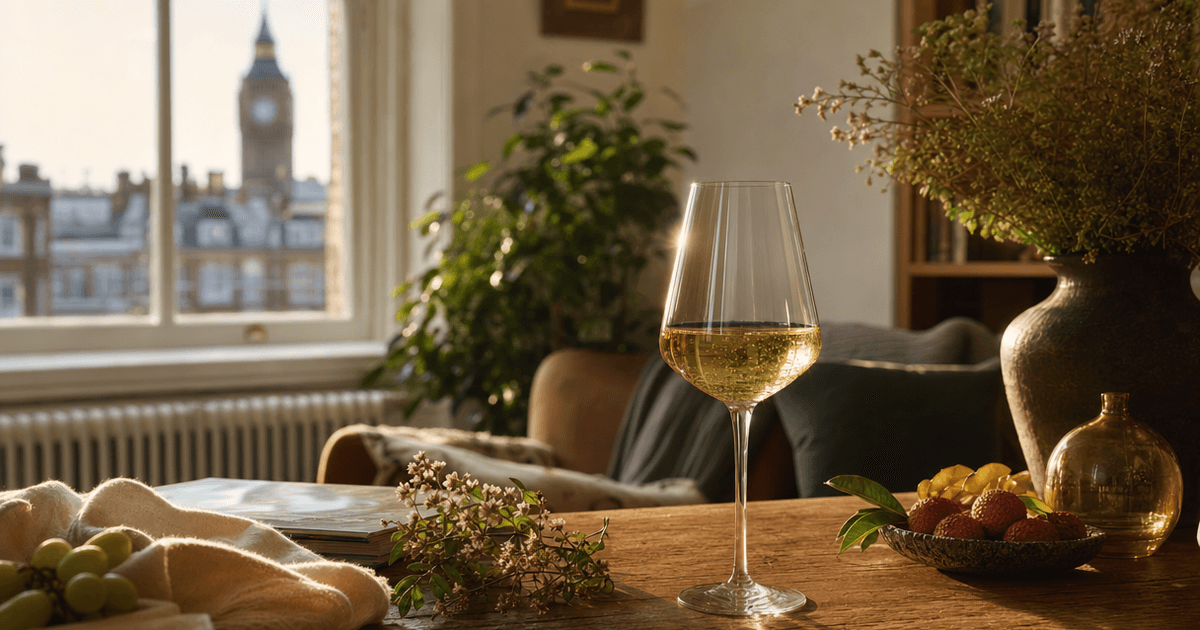
Most whites in my cellar are filed by flavour. Gewürztraminer wine is the one I file by menu — the bottle I reach for when the question isn’t “what does it taste like?” but “what on earth goes with Friday’s takeaway?”. No other white answers that question so completely: the heady rush of lychee, rose petal and spice is unmistakable from the first sniff, and it arrives welded to a soft, low-acid frame that spicy food can’t bully. Alsace is its heartland, and the style there runs from bone dry to properly, deliberately sweet. By the end of this you’ll know why the label rarely tells you which one you’re holding — and exactly what to pour alongside it, glass by glass.
Is Gewürztraminer wine dry or sweet?
Both — and that’s the honest answer, not a dodge. Most is dry to off-dry, but low acidity combined with high alcohol and glycerol often gives an impression of sweetness even when there’s barely any sugar left. Alsace also makes deliberate late-harvest styles that are genuinely sweet. Same grape, two very different glasses, and you often can’t tell which by looking at the bottle.
Here’s the bit that took me a while to explain properly to customers: Alsace growers pick Gewürztraminer late not to chase sugar (it accumulates that fast anyway) but to get the skins fully ripe, because that’s where the perfume lives. Push ripeness further, sometimes with a touch of botrytis, and you tip into Vendange Tardive — genuinely sweet, dessert-weight wine. Good producers tend to keep the sweetness level of a given cuvée fairly consistent from vintage to vintage, so once you find a style you like, the same name on the shelf next year is a safe bet.
What does Gewürztraminer wine taste like?
Lychee first, always lychee — the wine shares the same aroma compounds as the fruit itself, which is a genuinely useful party fact. Then rose petal, a dusting of Turkish delight, and a warm spiciness (the German word “Gewürz” literally means spice). Underneath sits peach, apricot, sometimes grapefruit, all carried on a medium-to-full body with a rounder, slightly oilier texture than most whites.
Colour gives it away before you’ve even smelled it — deeper, more golden than a typical white, because the grape itself has pink skin. Leave a serious Alsace bottle a few years in a cool cupboard and the fruit settles into something more savoury: bacon fat, leather, dried rose, still recognisably the same grape but grown up. The one honest criticism I’d make, and I’ve heard growers say it about their own wine, is that it can have too much of everything — pour a big, showy Gewürztraminer three nights running and you’ll tire of it faster than you would a quieter Chablis. It’s a wine for a specific mood — or, more usefully, a specific menu — not a house white you drink on autopilot.
Is Gewürztraminer the same as Riesling?
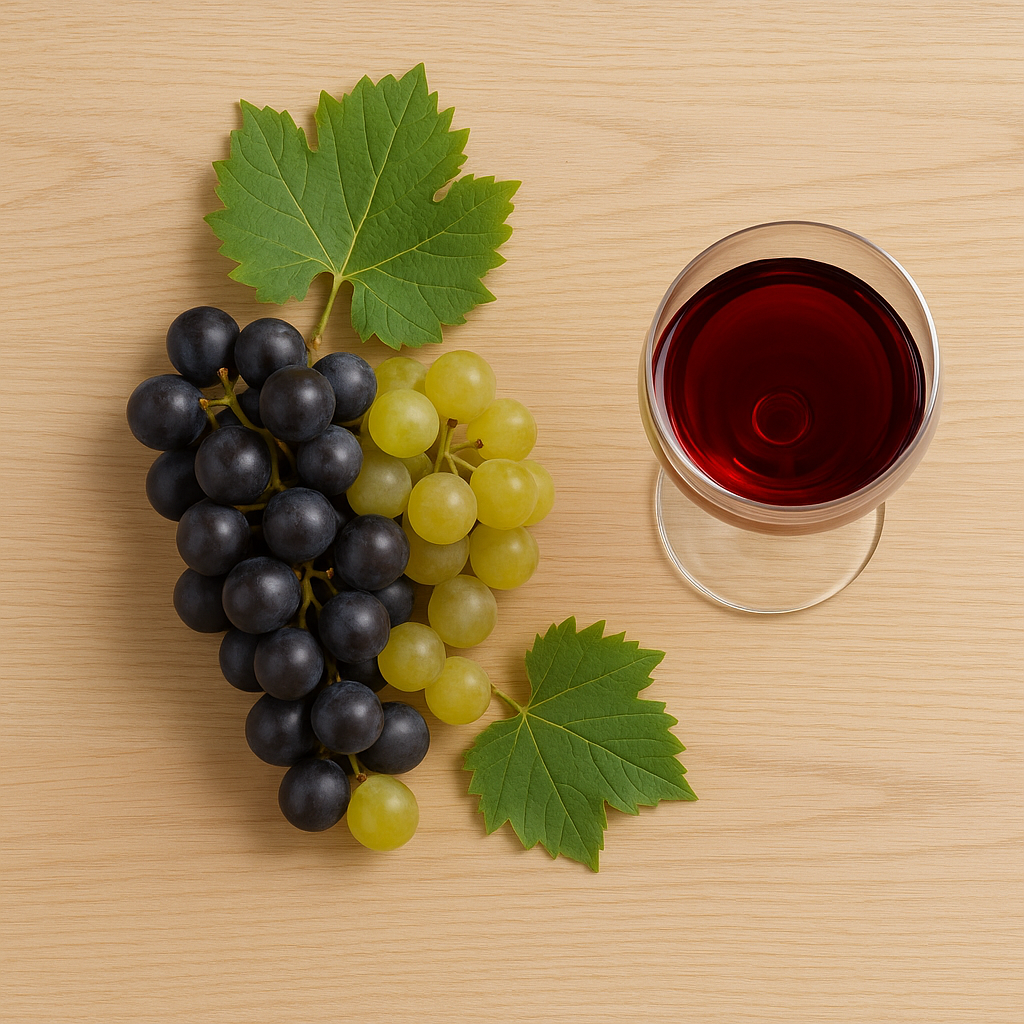
No — different grape entirely, though shops shelve them side by side because both are aromatic whites from German-speaking wine regions. Riesling runs on acidity: often bone dry, capable of ageing for decades on backbone alone. Gewürztraminer is the softer, broader, lower-acid cousin, DNA-related to Traminer and to Pinot — not to Riesling at all, whatever the label placement suggests.
| Gewürztraminer | Riesling | |
|---|---|---|
| Aroma | lychee, rose, Turkish delight, spice | citrus, orchard fruit, mineral, petrol with bottle age |
| Acidity | lower | high |
| Body | medium to full | light to medium |
| Colour | deeper, medium lemon | pale lemon to green-gold |
| Family | savagnin/traminer, kin to Pinot | separate lineage entirely |
It’s the same sort of mix-up people make assuming all Champagne comes from white grapes — it doesn’t, and if that surprises you, our guide on what is Blanc de Noirs is worth five minutes. If grape family trees genuinely interest you, the wider picture sits in The Grape Guide: how a merchant reads a wine by its grape.
Where it’s grown — and what that does to the bottle
The Haut-Rhin in Alsace holds the largest plantings anywhere, and it’s the wine most people picture when they think of Alsace Gewürztraminer: full-bodied, perfumed, warm on the finish, occasionally sweet. That’s Gewürztraminer Alsace wine at its most classic — the benchmark everything else gets measured against.
Go east into Alto Adige in northern Italy and you land near the village that gave the grape its name — Tramin, or Termeno, on the old mountain road up to the Brenner Pass. Germany grows it too, generally in a leaner, drier key. Beyond Europe, plantings thin out fast: small pockets in Chile, South Africa, Oregon, California, Australia and New Zealand, where Gisborne in particular has built something of a name for itself with the variety, off-dry to medium-dry and gently exotic. It’s chronically underrated next to Riesling from the same postcode — a bit like the logic behind second wines: how to drink a great château without the grand vin price: comparable skill and site, quieter reputation, gentler price.
The pairing question it actually answers
This is where the file-by-menu habit comes from. Gewürztraminer was built — by low acid, ripe fruit and a faint natural sweetness — to sit next to food that would flatten a leaner white. Spicy Asian cooking is the obvious match: Szechuan and Hunan dishes, Thai curries, Chinese food with a chilli kick, Indian curries and anything leaning on ginger, coriander, cinnamon or coconut. The wine doesn’t fight the spice; it cools it and matches its perfume note for note.
It’s just as at home on the cheeseboard, particularly the stronger, stinkier end — Munster, Époisses, Roquefort, ripe Camembert — and it stands up to foie gras (drier styles work best there), terrines, pâté, gravlax, roast or Peking duck, and Alsace’s own choucroute garni. On the sweeter side, an off-dry Gewürztraminer sits happily with gulab jamun or a quince dessert, and there’s a neat logic to serving it with lychees themselves — the wine already smells of the fruit, so you’re doubling down rather than fighting anything. For the full logic behind matches like these, our food and wine pairing guide goes deeper than any single grape can.
Questions customers ask us
How do you pronounce Gewürztraminer? Roughly “geh-VURTZ-trah-mee-ner.” Nobody in my shop gets it right first try, myself included for the first year or two — just ask for it by the lychee-and-rose smell if the spelling trips you up.
Can Gewürztraminer wine age? The best Alsace examples can, yes — built with enough body and structure to develop savoury bacon-fat and leather notes over years, though most bottles are made to be opened within a few of the vintage.
Is Gewürztraminer always from Alsace? No — Alsace is the benchmark and the biggest producer by far, but it’s grown across Germany, northern Italy, and in smaller pockets worldwide, each region leaning the style drier or richer.
What’s the difference between Gewürztraminer and Traminer? DNA profiling shows them to be the same grape — Gewürztraminer is simply the more aromatic, pink-skinned strain, while plain Traminer (also called Savagnin Rose in some regions) is its quieter, less perfumed sibling.
The merchant’s last word
I’ll be honest — I didn’t sell this grape well for years, tucked it at the end of the white shelf like an afterthought. Big mistake. It’s one of the few wines that turns a takeaway into an actual pairing decision — the menu-first bottle of the whole white shelf — and once you’ve had it right alongside a proper curry, quieter whites feel a bit polite by comparison. Come and browse the grape variety cellar and pick one to try against your own Tuesday night.



