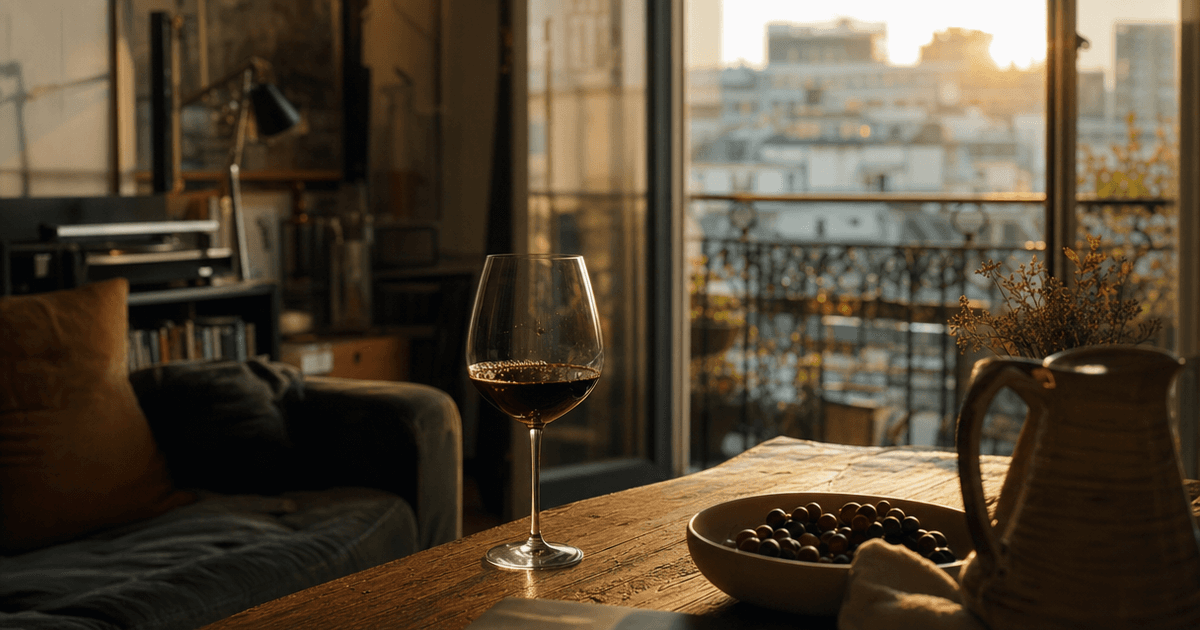
Merlot vs Cabernet Sauvignon looks like a rivalry from the shelf, but it’s really a family argument — the two grapes are half-siblings, and choosing between them is less “which is better” than “which side of the family suits tonight’s dinner”. It’s the question I get most on a Friday, usually from someone holding two bottles that look near-identical and a fridge full of dinner plans. Cabernet Sauvignon is the late-ripening, thick-skinned grape behind Bordeaux’s gravelly Left Bank and most of Napa’s big reds — high tannin, built to age. Merlot is its earlier-ripening half-sibling: softer, plummier, and actually the more widely planted of the two across Bordeaux as a whole. By the end of this you’ll know which one to open tonight, and which to leave in the rack for Sunday’s lamb.
Merlot vs Cabernet Sauvignon: same family, different characters
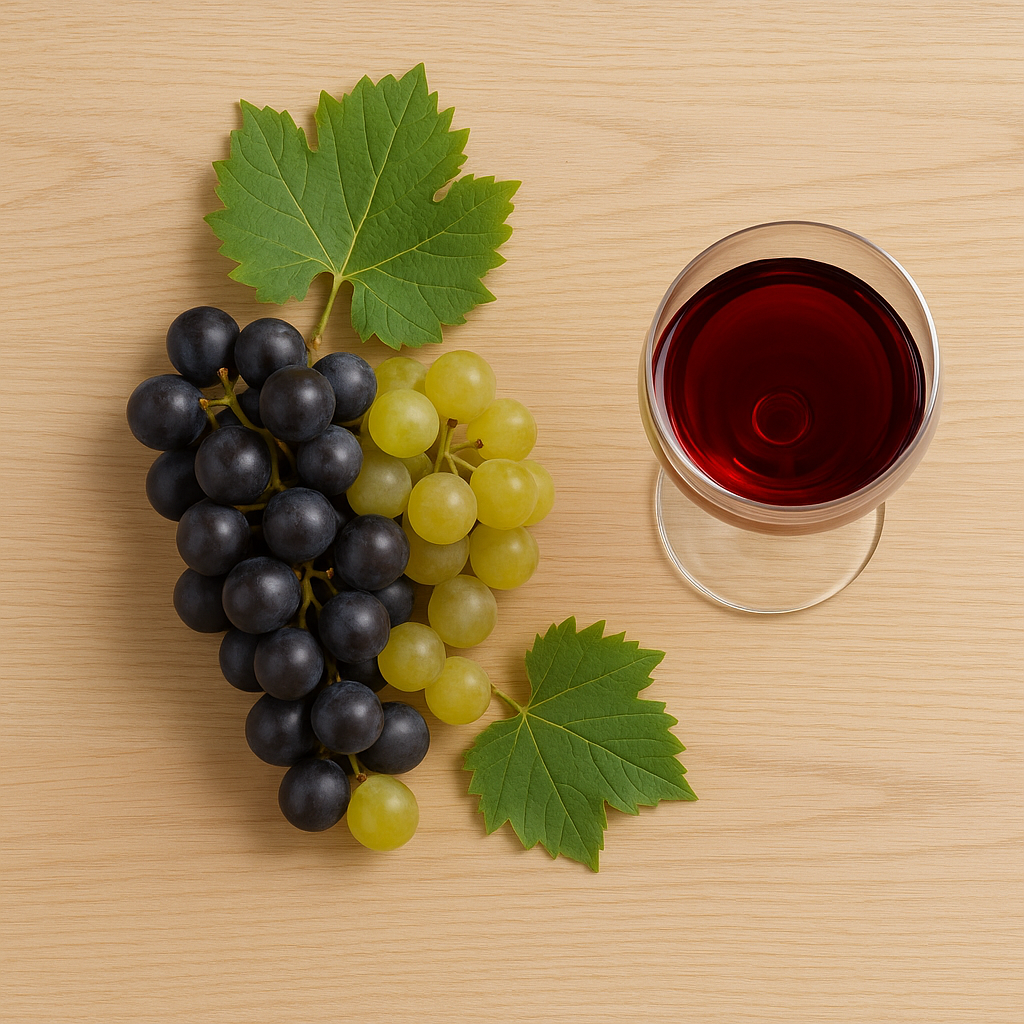
The relationship is documented, not a metaphor. Cabernet Sauvignon is the accidental cross of Cabernet Franc and Sauvignon Blanc, discovered through DNA profiling rather than any winemaker’s plan. Merlot, it turns out, shares that same Cabernet Franc parent, paired with an obscure old variety called Magdeleine Noire des Charentes — which makes Merlot and Cabernet Sauvignon half-siblings, not just neighbours on a Bordeaux label.
That family tie explains a lot. A Merlot-dominant right bank Bordeaux and a Cabernet-dominant left bank Bordeaux can taste closer than you’d expect, because underneath the fruit and tannin they’re built from the same genetic stock. Records from as early as 1868 already describe Merlot as the Médoc’s go-to partner for blending with the younger, harder-edged Cabernet Sauvignon — a habit that never really stopped. If you want the fuller picture of how one grape’s fingerprint shows up across a wine, our pillar guide on reading wine by its grape is worth a look.
Which is best, Merlot or Cabernet Sauvignon?
Neither wins outright — they do different jobs at the table. Merlot brings flesh, plum fruit and an easier drink from the day you open it; Cabernet brings backbone, tannin and the patience to improve for years in a cellar. Bordeaux blends them precisely because each one fixes what the other lacks — the family argument, settled in the bottle.
That’s not folklore, it’s viticulture. Unripe Cabernet Sauvignon can turn astringently tannic on its own — all structure, no charm — and Merlot is brought in to soften that edge with body and ripe fruit. Go looking at the map and you’ll see the split written into the soil: the clay of St-Émilion and Pomerol on the right bank favours Merlot, while the gravel of the Médoc on the left bank suits Cabernet’s deeper roots. We’ve written the whole geography of that split in Left Bank vs Right Bank: the only Bordeaux divide that matters, and it’s genuinely the most useful lens for understanding a Bordeaux label at a glance.
If you fancy trying that blending philosophy without the grand cru price tag, a château’s second wine follows the same Cabernet-plus-Merlot logic at a gentler cost — I go into that properly in second wines: how to drink a great château without the grand vin price.
Why did people stop drinking Merlot?
Merlot’s American reputation took a battering in the late 1990s and early 2000s, when a wave of thin, over-cropped, cheaply made examples flooded supermarket shelves and the grape got tarred with the “boring” brush. Trade opinion puts that down to changing fashion rather than any real fault in the grape, and it’s worth noting American plantings of Merlot never actually overtook Cabernet Sauvignon in the first place — the story was always bigger than the backlash suggested.
Meanwhile in Bordeaux, none of this mattered. Merlot has long been the most-planted red grape in France by a wide margin — considerably ahead of Cabernet Sauvignon in total hectares — and it never went anywhere. What did happen, quietly, is that serious producers kept refining it: in cooler pockets of Napa Valley such as Oak Knoll District and Coombsville, growers have been making Merlot with real acidity and tannin, more freshness and complexity than the mass-market stuff that gave it a bad name. I sold a fair bit of that cheap Merlot myself years back without knowing the difference — it took me a while to learn to ask which district a bottle came from, not just which grape was on the label.
Which is sweeter: Merlot or Cabernet?
Neither one is actually sweet — both are fermented right through to dry, with no residual sugar doing the work. What reads as “sweeter” is Merlot’s softer tannin and ripe plum fruit sitting forward on the palate, while Cabernet’s firmer structure and higher acidity can taste sterner by comparison, at least until food or a few years in bottle rounds it off.
Climate plays its part too. In New Zealand, trade opinion notes that Merlot often shows a riper, more generously fruited style than the Cabernet Sauvignon grown on the same Hawke’s Bay gravels — partly because growers there are now picking Cabernet in early April rather than late April as they once did, avoiding the green capsicum and minty edge that under-ripe fruit can bring. Get the ripeness right and that harder, herbal streak disappears; get it wrong and Cabernet can taste leaner and greener than Merlot ever will, which is where a lot of the “sweetness” comparison actually comes from.
What is the smoothest drinking red wine?
If smooth is what you’re after tonight, reach for Merlot. Its thinner skin and earlier ripening give it gentler, rounder tannin than Cabernet Sauvignon, and it doesn’t need years in a cellar to show well — open it the day you buy it and it’ll be doing its job.
Look to warmer regions for the roundest texture: Chile makes supple, plummy Merlot at genuinely good value, and Australian producers have been raising quality with better clones in recent years, giving fuller-bodied, riper examples than the old-style thin ones. Hawke’s Bay in New Zealand is another good hunting ground, where Merlot fills out the leaner, stonier character that Cabernet can sometimes show off the gravels. On the plate, this is the wine for roast chicken, mushroom dishes, a good casserole, or a wedge of Cheddar or Gouda after dinner — nothing that needs a fight, just company.
Choosing between them for tonight’s table
Think about the dish before the label. Here’s the rough split I use behind the counter:
| Occasion | Reach for | Why |
|---|---|---|
| Steak, lamb chops, hard aged cheese | Cabernet Sauvignon | Tannin needs fat and protein to soften against |
| Roast chicken, mushrooms, casseroles | Merlot | Softer tannin, plum fruit works with gentler flavours |
| Duck, grilled salmon, richer fish dishes | A Cabernet-Merlot blend | Merlot’s flesh balances Cabernet’s grip |
| Delicate fish, oysters, spicy food | Neither, frankly | Cabernet’s tannin clashes with both |
That last row matters more than people think — a big Cabernet next to oysters or a smoked fish starter is a genuinely unhappy pairing, tannin and iodine don’t get on. And if tonight’s actually a Christmas table rather than a Tuesday one, it’s worth asking whether red is even the right call before the main course — we’ve laid out that whole decision in which Champagne style suits Christmas dinner.
Questions customers ask us
Is a Cabernet Merlot blend better than either grape on its own? Not better, just different — a Cabernet Merlot blend is built to take Cabernet’s backbone and soften it with Merlot’s flesh, which is exactly why Bordeaux has done it for centuries. Whether that beats a single-varietal bottle depends entirely on what you’re eating.
Does Cabernet always age longer than Merlot? As a rule of thumb, yes — its higher tannin and phenolic concentration give it more to soften over time, which is why serious Cabernet-based wines are built for the cellar. Premium Merlot from cooler sites can age well too, just usually over a shorter window.
Are Merlot and Cabernet Sauvignon actually related? Yes — both are descendants of Cabernet Franc, making them half-siblings rather than unrelated grapes that happen to share a region. It’s part of why Bordeaux blends of the two taste so coherent rather than like two different wines fighting each other.
The merchant’s last word
I used to think this was a simple either/or question, and I gave customers a simple either/or answer for years — wrong of me, really, since the honest answer was always “what’s on the plate?” — pick your side of the family by the dinner, not the label. Ask me that instead and I’ll point you the right way in under a minute. Come and browse the grape variety cellar and we’ll find tonight’s bottle together.



