Champagne for Christmas dinner doesn’t have to mean the same glass from the doorbell ring right through to the pudding. Champagne is a traditional-method sparkling wine made in a defined region of northern France, mostly from Pinot Noir, Meunier and Chardonnay, and its natural high acidity is what makes it work at the table, not just before it. Get the style right for each course and it earns its keep all day. Get it wrong, and you’re just drinking something fizzy because it’s Christmas. By the end of this you’ll know which style to reach for at which point in the day — and when a cheaper sparkling wine does the job just as well.
What is a good champagne for Christmas?
A good champagne for Christmas is one chosen for the course, not just the label on the front. For the early stages — canapés, smoked salmon, oysters — a lean, high-acid NV Brut or a blanc de blancs does the work. For the main event, something with more body and a dosage judged for balance rather than sweetness handles turkey, ham or beef properly. For pudding, look past dry champagne altogether.
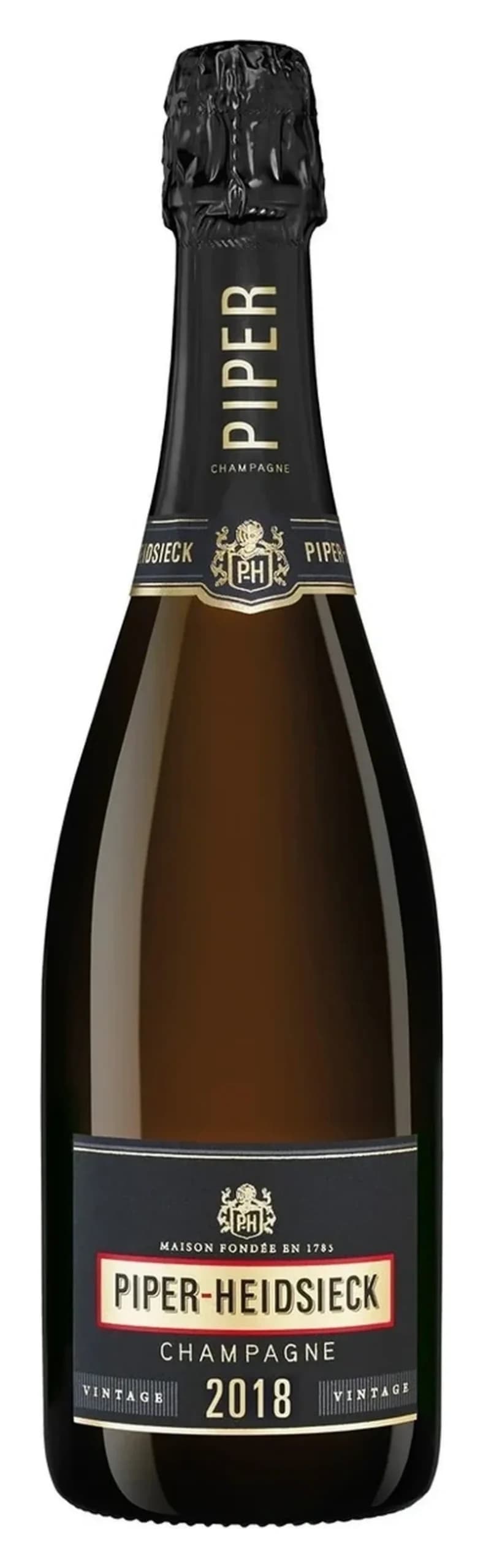
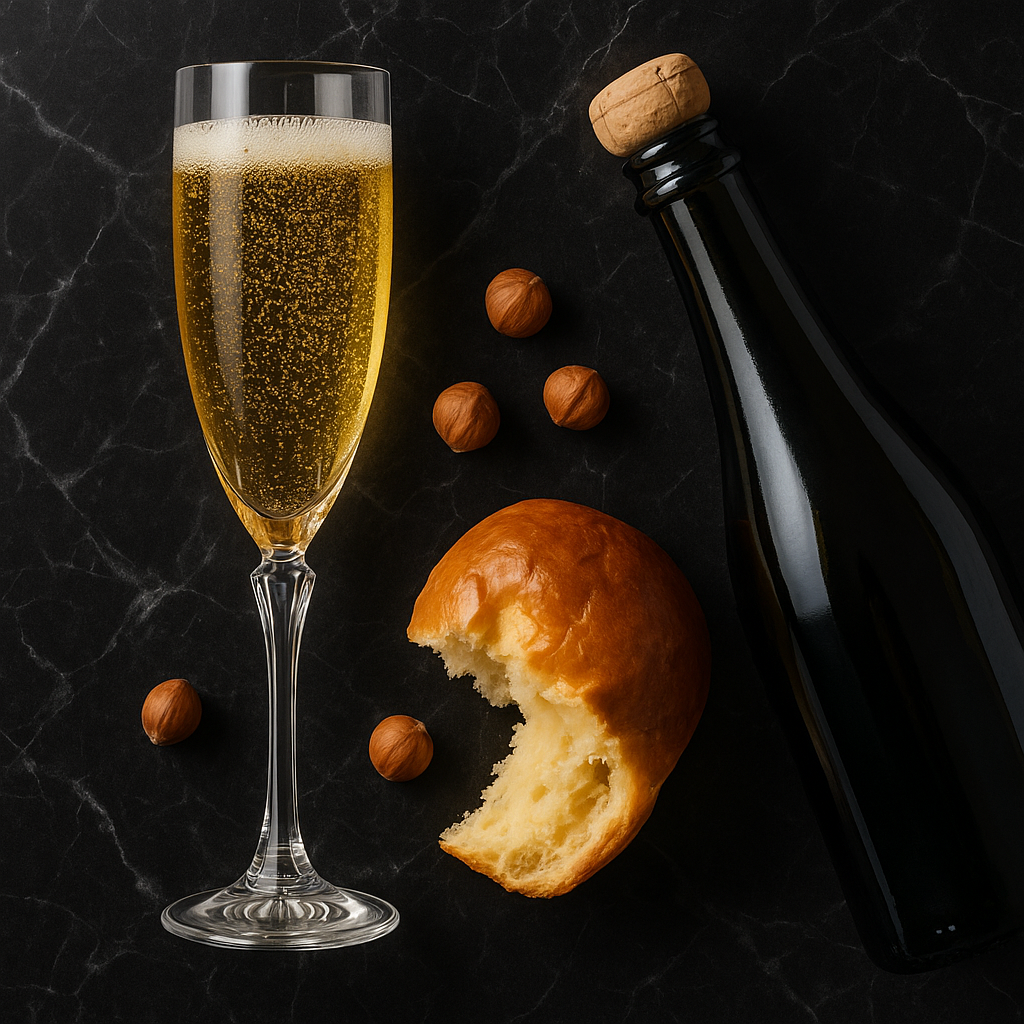
Most champagne on the shelf is non-vintage Brut: a blend of Pinot Noir, Meunier and Chardonnay, usually showing apple and lemon fruit with brioche or biscuit notes from ageing on its lees, high acidity, and medium alcohol. It’s built to be reliable, made to a consistent style year after year — which is exactly why it’s a safe first bottle for the day.
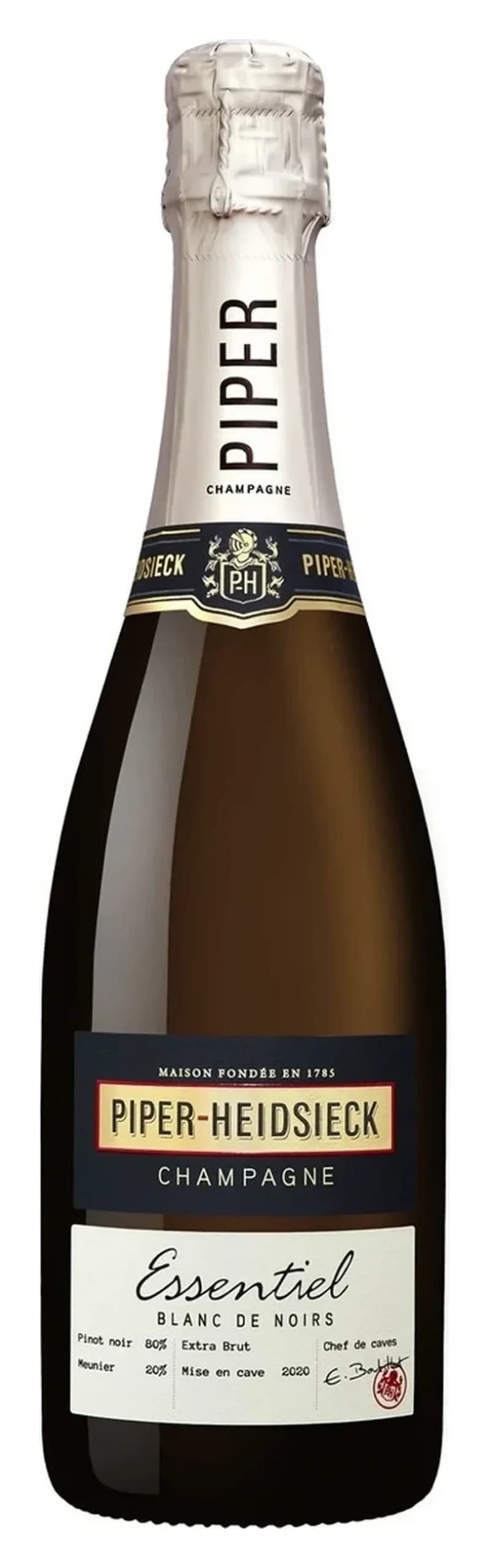
Blanc de blancs is 100% Chardonnay — that’s the working definition worth knowing (a touch of other white grapes is technically permitted in the region, but it’s rare in practice). It’s usually the most citrus-driven, chalky style, and I reach for it whenever there’s fish, shellfish or anything butter-and-lemon on the table. Blanc de noirs is the opposite number: made entirely from black grapes, fuller in body, better suited to roast poultry or a cheese board than to oysters.
Rosé champagne gets there either by blending in a small amount of red wine or, less commonly, by letting the juice sit briefly on Pinot Noir skins. It’s the most food-flexible style on the list — I’ve poured it against turkey, ham, and a bowl of raspberries at the same table without it putting a foot wrong. Vintage champagne, made only in years judged good enough to stand alone, used to be genuinely rare. It’s declared more often these days, whether that’s a stylistic choice or simply more consistent ripening from one year to the next.
One thing worth knowing before you shop by “sweetness”: dosage — the small addition made at final corking — isn’t really about how sweet a wine tastes. It’s about harmony. A correctly balanced dosage makes a champagne show more depth and length regardless of the actual grams of sugar involved, which is why a truly zero-dosage bottling is still the exception rather than the rule.
Matching bubbles to the table: which style for which course
This is the part that actually changes how the day drinks. Below is roughly how I’d talk a customer through it in the shop, course by course.
| Course | What’s on the plate | Style to pour |
|---|---|---|
| Aperitif / canapés | Cheese straws, blinis, smoked fish | NV Brut or blanc de blancs |
| Starter | Oysters, shellfish, a fish course | Blanc de blancs, or a lighter NV |
| Main — turkey/goose | Bird plus stuffing, bread sauce, cranberry | Blanc de noirs, or a fuller NV; extra brut if the trimmings run sweet |
| Main — ham or gammon | Sweet-glazed, smoky | Rosé champagne |
| Main — beef or game | Richer, fattier cuts | Full-bodied vintage champagne |
| Cheese board | Aged, hard, savoury cheeses | Fuller NV or blanc de noirs |
| Pudding / mince pies | Genuinely sweet dishes | Demi-sec or doux — not a dry style |
Full-bodied champagne with beef or game sounds like the wrong way round, but it isn’t. The wine’s acidity and savoury depth cut through the fat, and the meat’s own richness plays off the wine’s umami character rather than fighting it — the same logic that makes champagne surprisingly good with aged, hard cheeses, mushrooms, or a plate of charcuterie on Boxing Day. Champagne is also one of the few wines that handles proper fried food well, so don’t feel odd opening a bottle alongside leftover turkey croquettes or a Boxing Day fish supper.
The one mistake I see every December: a lovely dry champagne poured against Christmas pudding. Dry fizz next to a genuinely sweet dish just tastes thin and sour by comparison — if pudding’s getting fizz at all, it needs a demi-sec or doux style, not a top-up of what’s already open. For the full logic behind matching acidity, sweetness and weight across a whole meal, our food and wine pairing guide goes into more depth than one Christmas table ever will.
Do people drink champagne at Christmas?
By all accounts, champagne remains the default UK Christmas fizz, even as prosecco, cava, crémant and English sparkling wine have all grown fast as alternatives or additions to the table. Increasingly, though, people aren’t drinking one bottle all day; they’re treating champagne as one part of the day’s drinking rather than the whole of it, switching styles as the food gets richer.
A pattern that tends to work well is a gentle climb: something bright and citrus-driven at the start, moving toward fuller, richer styles as the afternoon turns into evening and the plates get heavier. It’s a nice structure to plan around if you’re hosting, and it means one bottle doesn’t have to do a job it was never built for.
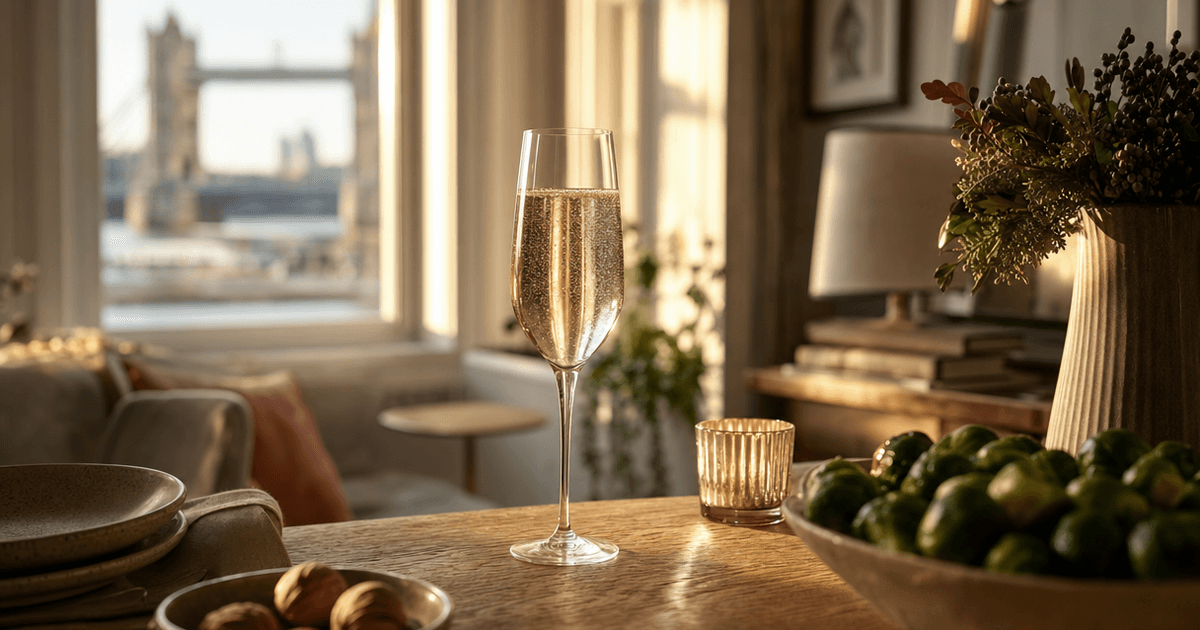
Glassware plays a bigger part in this than people expect. A narrow flute looks the part but can actually mute aroma; a wider white-wine-style glass — or even a proper champagne saucer, if you want the vintage look at a party — lets more of the wine’s character show. It’s worth pouring the same bottle into two different glass shapes once, just to see the difference for yourself; you’ll notice the fruit, the finish and even how obvious the alcohol feels can shift depending on the glass. If you’re planning drinks for more than a couple of courses, our dinner party wine planning guide covers pacing a table properly — one glass matched to the moment beats a full bottle of the same thing from start to finish.
What is the best sparkling wine for Christmas dinner?
For pure food-matching versatility, champagne remains the benchmark — its acidity and savoury depth do more heavy lifting at the table than almost any other sparkling wine. But crémant, made in the same traditional method across several named French regions outside Champagne, and English sparkling wine, made the same way from similar grapes, both offer comparable structure for meaningfully less money. Cava does the same job from Spain. Prosecco sits apart: softer, more aromatic, built for the aperitif rather than the roast.
Prosecco itself isn’t one thing, and this is where a lot of people miss a trick. Below the broad DOC zone sit two smaller DOCG areas — Asolo and Conegliano-Valdobbiadene — and within those, a classification called Rive marks out particular hillside sites generally considered more characterful than the standard bottling. If you’re a prosecco drinker who wants to trade up without leaving the category, that’s the label detail worth hunting for.
At the supermarket, own-label champagne tends to sit well below the well-known names in price while still being made in the same region under the same rules — a sensible way in if budget’s tight. South African traditional-method sparkling (labelled Cap Classique) and Australian sparkling with softer, riper red-berry fruit are both worth a look if you want something different for the aperitif hour rather than more of the same. If you’d rather serve a still white alongside the fizz for guests who want a change of pace, it’s worth knowing the two very different schools of Sauvignon Blanc — Sancerre versus Marlborough — a good stand-in for the citrus-driven start of the meal.
Serving it right: temperature, glass and timing
Decanting champagne has become fashionable for big, powerful styles that need air to open up, and I’ve never really taken to it — it tends to soften the texture in a way that loses part of the point of drinking bubbles in the first place. If a wine needs air, I’d rather just open it and let it sit a couple of hours, cork out, glass over the top. Decanting only really earns its place if you’re short on time and need a rich style to open up fast.
Timing through the day matters more than most people plan for. Open the lighter style just before guests arrive, keep the fuller style back for when plates start turning to meat, and don’t feel you need to keep a bottle open and pouring for the whole afternoon — the glass in front of you is what matters, not how much is left in the bottle. That’s really the whole approach in one line: pick the right glass for the right moment, and let the day build from there.
Questions customers ask us
Should I buy vintage champagne for Christmas dinner? Only if there’s a course worth spending it on — a beef main or a proper cheese board, say. Vintage champagne is made from a single year judged good enough to stand alone, and it’s usually fuller and more developed than NV, so it’s wasted on canapés.
Is rosé champagne good for Christmas dinner? Genuinely one of the most flexible bottles you can open on the day. It sits happily with turkey, ham, game birds and berry-based puddings alike, which makes it a sensible single bottle if you don’t want to switch styles course by course.
What’s the difference between brut and extra brut for Christmas food? It’s less about sweetness than balance — extra brut has less dosage, so it can taste sharper next to sweet trimmings like cranberry sauce, while standard brut usually has enough roundness to sit comfortably with a full roast dinner.
What is the top 5 champagne? There’s no single agreed ranking — trade lists group bottles by role rather than a ladder. Think budget NV for everyday pouring, an easy-drinking NV for guests new to champagne, blanc de blancs for food, and a vintage or prestige cuvée for the one bottle you want to make a fuss of.
The merchant’s last word
I’ve poured champagne wrong for years — same bottle, same glass, six hours straight, wondering why it felt flat by pudding. It’s the course that decides the style, not the occasion. Start light, build with the food, keep something sweeter back for the pudding, and you’ll get more out of every glass than out of any one “best” bottle. If you want a fuller run-through of styles before you buy, our Champagne guide is the next stop — or come and browse the champagne cellar and I’ll talk you through what’s actually good this year.