When someone stands at my counter describing a wine they half remember — “red, smooth, not too heavy” — the first question I ask back is never region or price. It’s grape. Grape varieties for wine making are the fastest handle a drinker can grab: a grape variety (or vine variety — the trade uses both) is a distinct type of grapevine, and different varieties produce grapes with their own sugar levels, acid, tannin and flavour. Wines made mainly from one variety are called varietal wines; wines blending several are, well, blends. This piece is the map the rest of our grape guides hang off — by the end of it you’ll be able to look at a label and have a fair idea what’s in the glass before the cork’s even out, and pick the right grape for the Tuesday you’re actually having, not the one some influencer’s holding up.
What is the best grape variety for wine?
There’s no single best grape variety for wine — I get asked this most weeks and my honest answer disappoints people for about four seconds. It depends on what’s on the plate, what you fancy tonight, and what you’re willing to spend — the same three questions I’d ask you across the counter, in that order. Cabernet Sauvignon and Chardonnay are the two grapes with genuinely international reach; nearly every warm-enough region has a go at them.
But “best” shifts with context. A hot Tuesday with grilled chicken wants something with less grip than a cold Sunday with a rib of beef. Steak leans towards Cabernet Sauvignon or Malbec, structured enough to stand up to the char. Oysters want a grape with real cut — something Chardonnay-based but unoaked, or a crisp Sauvignon Blanc. A barbecue in the garden is Garnacha weather: warm, soft, unfussy.
Budget plays its part too, and this is where grape variety and price genuinely tangle. Grape prices vary a good deal by region and reputation — fruit from a well-regarded, quality-conscious vineyard fetches a real premium over the same grape grown a few miles down the road. That’s partly why a Left Bank Bordeaux blend built on Cabernet Sauvignon from a famous commune costs what it costs, while the same grape family from a less fashionable appellation can be genuinely lovely for a fraction of the money. If you want that grand cru shape without the grand cru bill, second wines are worth knowing about — I’ve written a whole piece on how to drink a great château without the grand vin price, and it’s one of the better tricks in this trade.
What are the five main grapes for wine?
Ask five merchants and you’ll get five slightly different lists, but the trade shorthand usually settles on Cabernet Sauvignon, Merlot, Chardonnay, Pinot Noir and Sauvignon Blanc — the five grape varieties for wine that turn up on wine lists from Chile to China, planted because they ripen reliably and taste unmistakably of themselves.
Here’s the shape of each, roughly:
| Grape | Colour | Body | Classic flavour | Where it shines |
|---|---|---|---|---|
| Cabernet Sauvignon | Black | Full | Blackcurrant, cedar, firm tannin | Bordeaux’s Left Bank, Napa, Coonawarra |
| Merlot | Black | Medium–full | Plum, soft tannin | Bordeaux’s Right Bank, Pomerol, St-Émilion |
| Chardonnay | White | Light–full | Apple to peach, sometimes buttery with oak | Burgundy (Meursault, Chablis), and almost everywhere else |
| Pinot Noir | Black | Light–medium | Red cherry, earthy in cool spots | Burgundy’s Côte de Nuits, Central Otago, Oregon |
| Sauvignon Blanc | White | Light | Gooseberry, grassy, citrus | Sancerre, Marlborough |
Worth knowing: “most planted” and “most famous” aren’t the same list. Airén, a workhorse white from Spain, and Trebbiano, Italy’s bulk-wine backbone, both sit among the ten most-planted grapes on earth by some counts — you’ve almost certainly drunk them without ever seeing their name on a label, because so much of that fruit goes into everyday blends rather than single-variety bottlings.
And here’s a wrinkle that trips up a lot of customers early on: plenty of the wines you already love don’t mention their grape at all. Vouvray is Chenin Blanc. Sancerre is Sauvignon Blanc. Bourgogne Rouge is Pinot Noir. The French have built their whole labelling system around place instead of grape, on the theory that the place tells you more — which is sometimes true and sometimes just tradition talking. Chianti has to be at least 70% Sangiovese by law, with the rest usually filled out by other permitted reds. If any of this label-reading business feels like a foreign language, I put together the five things that actually matter on a wine label, and grape variety is right near the top of that list.
Which grapes are best for homemade wine?
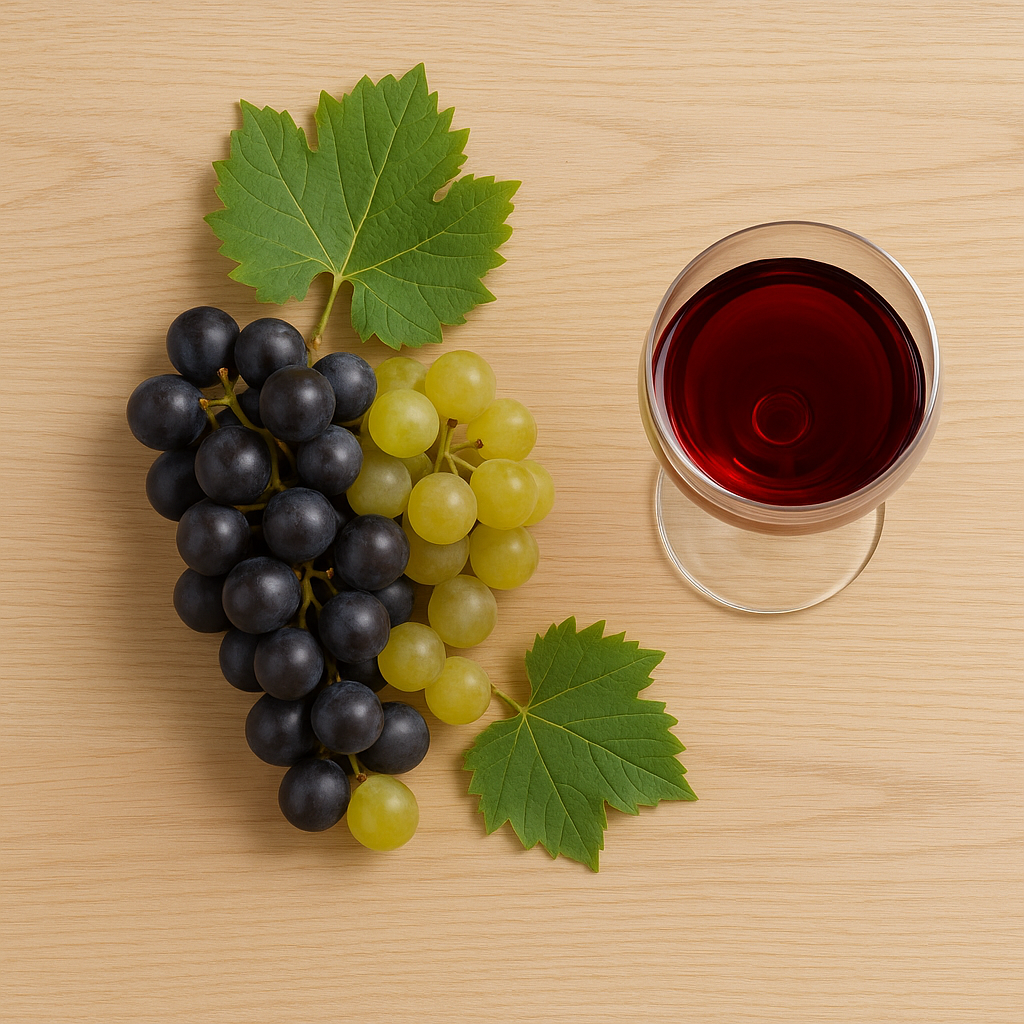
For home winemaking, you want genuine wine grapes — varieties bred and selected over centuries for making wine — rather than the grapes sitting in your fruit bowl. Table and dessert grapes tend to be low in acid, high in sugar, and often bred to be seedless and easy to eat, none of which makes a structured, age-worthy wine. True wine grapes tend to be smaller, thicker-skinned, and carry the acid a wine needs to stay lively.
This isn’t snobbery, it’s botany. The lineage that gave us most serious wine grapes — Cabernet Sauvignon, Merlot, Petit Verdot, Cabernet Franc and their relatives all trace back to the same western European grouping — was selected specifically for winemaking. A separate, older lineage of vines was bred mostly for the table: bigger, looser bunches, low acidity, high sugar, often nearly seedless, lovely to eat, hopeless in a demijohn.
If you’re growing at home in a cooler patch of the UK, vinifera can be a fight against your own climate. Vine species native to North America — the ones that also do most of the world’s rootstock work, propping up vinifera roots against pests — include some genuinely cold-hardy options that hobbyists in cooler regions (New York State is the classic example) grow and vinify directly, rather than just using as rootstock. They won’t taste like Burgundy. They’ll taste like themselves, which for a first go at home winemaking is a perfectly good place to start. It’s a nice reminder, too, that of all the grapes grown worldwide, wine only ever gets made from a small slice of them — the great majority of grape production globally still ends up as fruit for eating, not fermenting.
What grape variety does to your glass
Grape variety is, in a blind tasting, usually the easiest thing to spot — easier than the soil, easier than the winemaking — which is exactly why it’s the handle I hand people first. That’s not an accident. A grape variety’s calling card is a distinctive, recognisable flavour, and the ones that have earned international reputations tend to be the ones that keep that flavour readable wherever they’re grown.
Skin colour sets the hard limits before anything else happens in the winery: red wine can only come from dark-skinned grapes, because that colour comes from the skins during fermentation, not the juice (which is almost always pale, even in black grapes). Sparkling wine needs a grape with naturally high acid to survive the second fermentation and years on lees without turning flabby — it’s why Chardonnay and Pinot Noir do so much of the heavy lifting in Champagne and beyond. Sweet wine needs a grape that either ripens generously or takes readily to noble rot; not every variety obliges.
Tannin extraction is where the winemaker’s choices meet the grape’s own character. A moderately tannic red grape might only spend ten to fifteen days on its skins to avoid over-extracting — that’s fairly standard practice. Some producers, particularly with certain Sicilian reds off the slopes of Etna, push that skin contact out to thirty, even ninety days, chasing smoother tannins rather than more of them. Same grape, wildly different outcome, entirely down to a decision in the cellar.
None of that matters if you serve it wrong, mind. A high-tannin Cabernet Sauvignon wants a slightly cooler serve and a decent glass with room to breathe; a delicate Pinot Noir gets crushed by being served too warm, its fruit turning jammy and dull. And grape variety is really the starting gun for food pairing, not the finish line — I go into that properly in my full guide to getting food and wine pairing right, because acid and tannin decide far more of the matching than colour does.
Questions customers ask us
What type of red wine is best for diabetics? That’s a medical question, and honestly, not one I’m equipped to answer — that’s between you and your GP or dietitian. What I can tell you is that dry red wines carry very little residual sugar compared with off-dry or sweet styles, which at least gives you an informed question to take to them.
Is Pinot Noir the same everywhere it’s grown? Not remotely. Burgundy Pinot Noir tends to be earthier and more savoury, while warmer-climate Pinot Noir — California, for instance — leans into brighter, redder fruit. Same grape, genuinely different wine.
Why does one grape have so many different names? Because Europe named grapes locally for centuries before anyone compared notes. Tempranillo alone answers to Tinto Fino, Tinta del Pais, Tinta de Toro, Cencibel and several more depending which bit of Spain (or Portugal) you’re in — and Auxerrois is a name shared by at least three completely different grapes across France, which causes no end of confusion across a shop counter.
Can a wine made from several grapes still list a grape variety on the label? Usually only if one variety clearly predominates — that’s the definition of a varietal wine. Genuine blends, like a classic Bordeaux built on Cabernet Sauvignon, Merlot and a little Cabernet Franc or Petit Verdot, are usually labelled by place instead.
The merchant’s last word
I’ve poured wine across a shop counter for long enough to know that grape variety is the fastest way to stop guessing and start choosing on purpose. It won’t tell you everything — place, vintage and winemaker still matter enormously — but it’s the surest handhold you’ve got. Come and have a proper look, ask me anything daft, and when you’re ready, browse the grape variety cellar.



