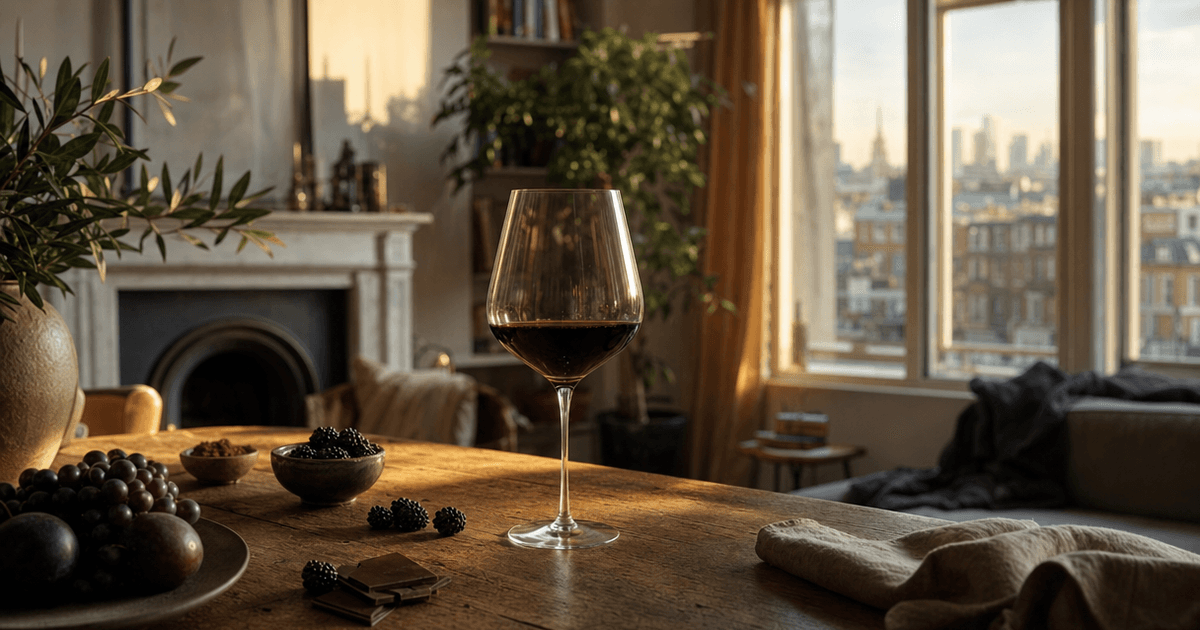
Cabernet Sauvignon is the grape I tell customers to identify with their gums rather than their nose. The question of Cabernet Sauvignon taste usually arrives with a hand hovering between a bottle from the Médoc and one from Chile, and the honest answer starts with feel: this is a thick-skinned, small-berried red grape that makes dry, full-bodied wine built more on structure than on any single flavour. The fruit changes with the postcode; the grip is the constant. By the end of this you’ll know why a Bordeaux and a Coonawarra Cabernet can taste so different yet feel like close family, whether that firm finish is bitterness or something else entirely, and how to choose between it and Merlot without guessing.
What does Cabernet Sauvignon actually taste like?
Ask ten merchants and you’ll get ten lists of fruit — blackcurrant, cassis, black cherry — before anyone mentions the thing your mouth registers first. Cabernet Sauvignon’s real signature isn’t a flavour at all. It’s structure: high tannin and decent acidity that let the wine carry oak, age for decades, and still taste unmistakably of itself whether it’s grown in the Médoc or the Yarra Valley (that idea took me years to explain properly to customers, if I’m honest).
That said, the taste of Cabernet Sauvignon is real and worth naming. Core fruit sits around blackcurrant and cassis, often with a streak of green — capsicum, or a herbal edge — when the grapes haven’t quite ripened, which happens more than you’d think even in a warm Bordeaux vintage. Let it ripen fully, as it does in Napa or Coonawarra, and that capsicum fades into darker fruit: blackberry, black cherry, sometimes a whisper of mint or eucalyptus where vineyards sit near native scrub, as they often do in South Australia. A rule worth pocketing: when Cabernet tastes green, blame the season before the grape — capsicum is the cool-year accent, cassis the warm one. Oak — and Cabernet takes to oak better than almost any grape — adds vanilla, clove, cedar, and, with bottle age, tobacco and coffee. For the bigger picture on how grape variety shapes taste generally, our Grape Guide is worth a look.
Is Cabernet Sauvignon sweet or dry?
Dry — properly dry, with next to no sugar left in the glass. Any impression of sweetness comes from ripe fruit and vanilla-toned oak on the nose, not from the palate itself, which finishes firm and savoury rather than sugary.
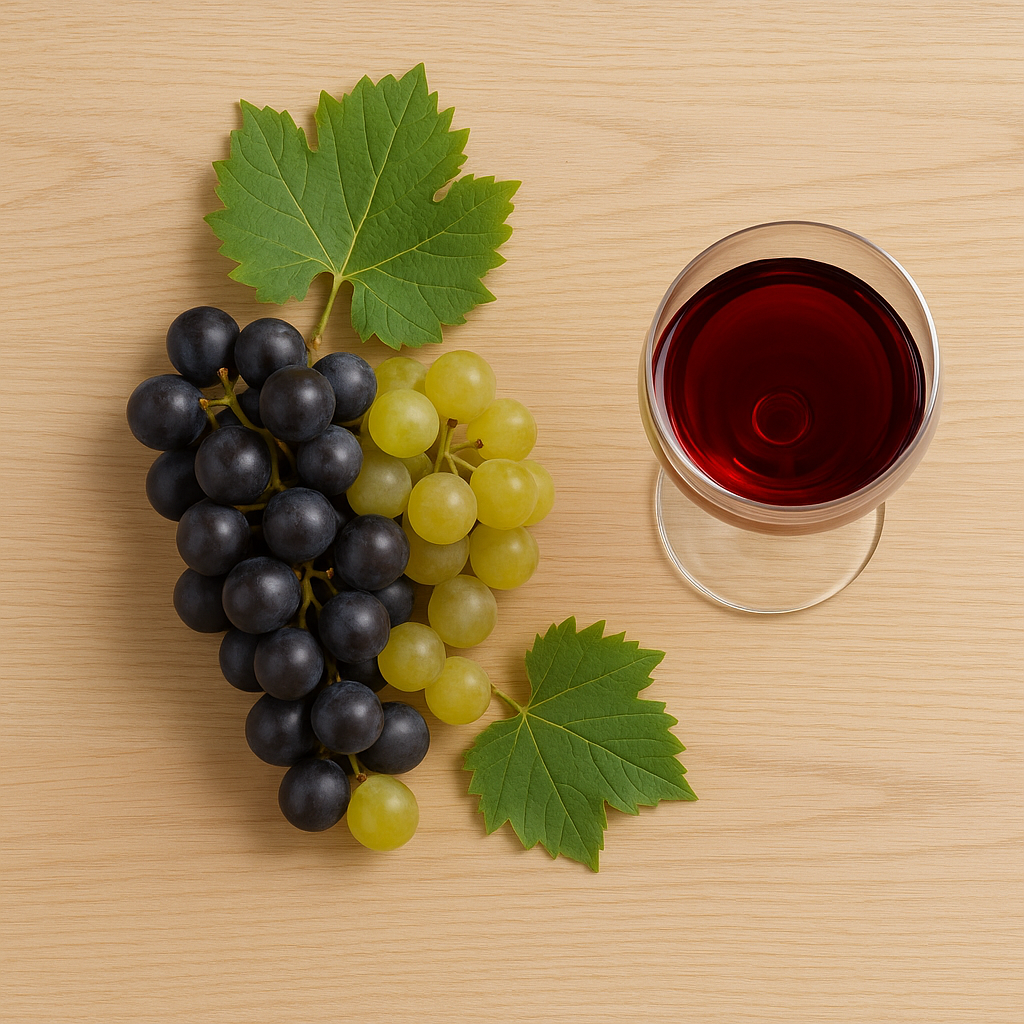
The dryness is baked into the grape. Cabernet Sauvignon has a high ratio of pip to pulp compared with a white grape like Sémillon, and thick, dark skins — both are loaded with tannin and colour compounds rather than sugar. It’s also a late-ripener, needing a properly warm season to get there at all, which is why cooler years even in the Médoc can leave a bottle leaner and greener than expected. Higher alcohol from riper fruit can trick the palate into reading “rich” as “sweet” — it isn’t the same thing. If genuinely off-dry reds are what you’re after, Cabernet isn’t your grape; if “dry yet generous” is the brief, it practically owns the category.
Is Cabernet Sauvignon a bitter wine?
Not by design. Firm tannin can feel drying or gripping on the gums, and people sometimes mistake that for bitterness — but they’re different sensations. Genuine bitterness usually points to underripe fruit (that raw capsicum edge) or oak handled too heavily, not to the grape’s natural character.
Serving temperature matters more than people realise here. Serve Cabernet too warm — properly warm, not just “room temperature” in a heated flat — and the alcohol and tannin both read as harsher than they should. Aim closer to 16–18°C and a lot of that apparent harshness softens. Decanting an hour before pouring does similar work, letting some of that grip round out before it reaches the glass — one more reason it pays to give the glass a bit of care, not just the bottle.
Where the taste changes: region by region
Site and winemaking swing Cabernet Sauvignon’s flavours more than most grapes, from lean and herbal to rich and jammy — but run your gums along any row of this table and the family grip is unmistakable.
| Region | Typical style | What you’ll taste |
|---|---|---|
| Médoc, Bordeaux | Blended, oak-aged, high acid and tannin | Blackcurrant, cedar, sometimes capsicum in leaner years |
| Napa Valley | Full-bodied, higher alcohol, new oak | Blackcurrant, black cherry, vanilla, clove |
| Coonawarra, Australia | Medium to full, firm tannin | Cassis, plum, mint, eucalyptus |
| Andes foothills, Chile | Full-bodied, ripe tannin | Blackcurrant, mint or eucalyptus, toasty oak |
| Stellenbosch, South Africa | Full, ripe | Blackcurrant, spice, occasional green edge if overcropped |
| Margaret River, Australia | Often blended with Merlot | Blackcurrant, cherry, softer herbal notes |
For what it’s worth, the bottle I take home most often from that table isn’t Napa — it’s Coonawarra. Mint over vanilla, firm over plush, and the price usually leaves change for the rest of the week. That’s an opinion, not a ranking; plenty of my regulars would swap it for a ripe Chilean Cabernet and argue the point happily.
Chasing a top Left Bank name but wary of the price tag? There’s a clever shortcut: the château’s second label. Our guide to second wines unpacks how these bottlings share the same terroir and winemaking pedigree as the flagship, just at a much friendlier price.
Which tastes better, Merlot or Cabernet Sauvignon?
Think of it less as a rivalry and more as a matter of timing. Cabernet Sauvignon asks for a decade in a quiet cellar, its firm tannins and blackcurrant depth slowly unwinding into something worth the wait. Merlot has no interest in waiting games — its plush plum character and softer tannin structure mean it’s happy to be poured tonight. That’s precisely why so many great Bordeaux blends refuse to choose sides, letting Cabernet’s backbone and Merlot’s warmth complete each other in the glass.
The merlot vs cabernet sauvignon taste question comes up constantly across the counter, and the feel test answers it faster than any flavour list: Merlot is the softer handshake, forgiving with a Tuesday-night pasta; Cabernet is the firm grip that stands up to a rib of beef and rewards patience. Winemakers in New Zealand have described Merlot as putting flesh on Cabernet’s bones — which is more or less why so many Bordeaux blends lean on both grapes together rather than picking a side. If that blending logic interests you, our guide to Bordeaux blends goes into which grapes do what. Undecided at the shelf? Buy both, pour them with the same dinner two nights running, and let your gums cast the deciding vote.
How to serve it so it tastes its best
A young, tannic Cabernet — especially from Bordeaux or Napa — benefits from an hour in a decanter, or at least a big-bowled glass and a bit of patience before the first sip. Pour it a touch cooler than “room temperature” really means indoors, and let it sit a few minutes once poured.
Food helps too: a well-marbled steak, lamb, or a hard, aged cheese all give the tannin something to grip onto, which is when Cabernet Sauvignon tastes most like itself. None of this is about drinking more of it — it’s about getting more out of the glass you’ve already poured, which is really the whole point of paying attention to a wine at all. If long-term ageing interests you generally, we’ve also looked at whether Champagne improves with age — different grape, same instinct to be patient.
Questions customers ask us
Does Cabernet Sauvignon get better with age? Often, yes — its tannin and acidity are exactly what let a well-made bottle develop tobacco, coffee and cedar notes over years rather than fading. Not every bottle is built for it, though; cheaper, fruit-forward styles are usually made to drink young.
Is Cabernet Sauvignon always blended? No, though it’s traditionally partnered with Merlot, Cabernet Franc or Petit Verdot in Bordeaux. Plenty of regions — Napa, Coonawarra, Stellenbosch — bottle it as a single varietal too.
Which wine is best for GERD? That’s a question for your doctor, not your merchant, and we won’t make health claims about any wine. What we can do is point you to gentler, lower-tannin styles if that’s what you’re after — just ask us in-store.
The merchant’s last word
I’ve sold Cabernet Sauvignon to nervous first-timers and to people who’ve had a cellar full of it for thirty years, and the honest truth is the grape rewards attention more than confidence. Get the glass right, the temperature right, and a decent bit of food alongside it, and most bottles will show you exactly what they’re made of — trust your gums as much as your nose while they do. Fancy trying a few side by side? Browse the grape variety cellar and see where you land.



