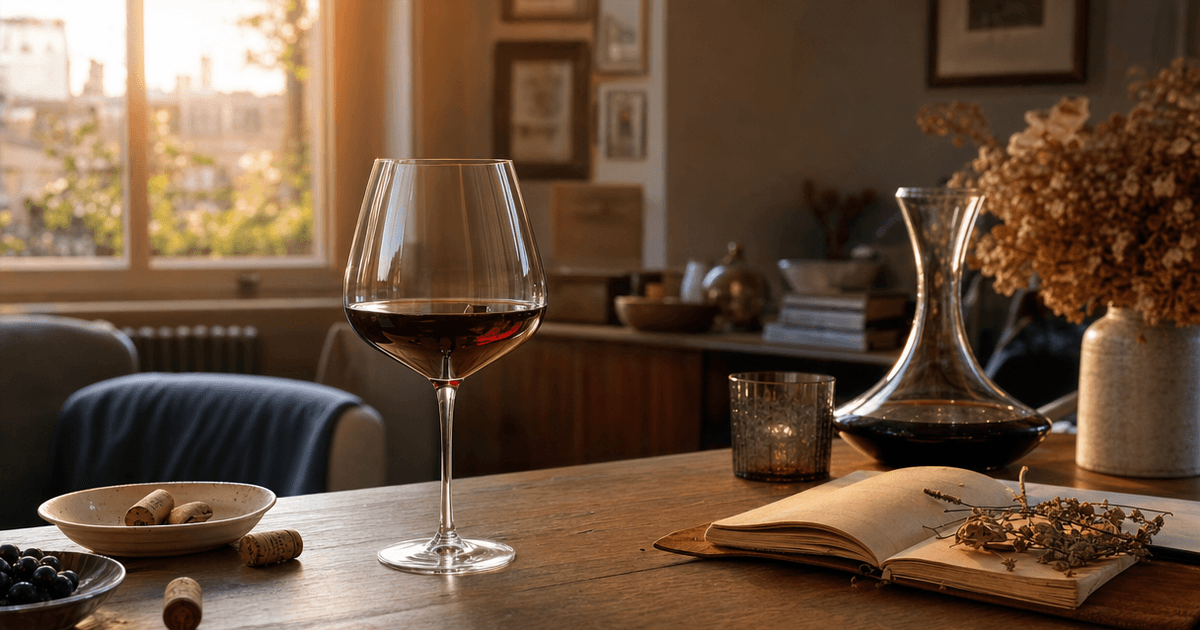
The barolo drinking window is the question I get asked more than any other over the counter — more even than which Prosecco is driest. Barolo is 100% Nebbiolo grown around eleven communes near Alba in Piedmont, aged a minimum of thirty-eight months before release (five years for Riserva), because Nebbiolo arrives loaded with tannin and acidity that only unwinds slowly in glass. By the end of this you’ll know roughly when to pull the cork on the bottle you’ve got, how long you can sit on it, and how to read a drinking window on a shelf without it feeling like a code.
How long should I wait to drink a Barolo?
For most classic-vintage Barolo, wait at least eight to ten years from the vintage before opening, with the real sweet spot often landing ten to fifteen years out. Riserva bottlings, held back longer before release, can want the same again on top. It isn’t a fixed rule — ripe, forward vintages soften quicker, austere ones need more patience — but if you’re sitting on a strong year, the wait tends to pay you back in complexity, not just in fewer rough edges.
I sold Barolo too young for years, if I’m honest. A customer would come in wanting “a big Italian red for Sunday lunch,” and I’d hand them a three-year-old Barolo without asking a single question. It took me a good while to start asking what vintage sat in their rack already, and whether they liked their reds tight and structured or soft and generous — because that changes the answer more than anything I can tell you about the appellation in general.
The tannin is the whole story here. A young Barolo can taste closed — all structure, not much give — and trade tasting notes describe this plainly: “needs time,” “still very young,” “best after 2016.” Wines can also pass through what critics call a dumb phase, where fruit retreats and the wine goes quiet for a few years before re-emerging with more depth. It isn’t faulty wine, it’s just wine having a Tuesday. Give it the years and it comes back around.
How long can I keep a bottle of Barolo?
Well-stored Barolo from a serious vintage can hold for twenty, thirty, even fifty years — Riserva bottlings from great years longer still. I’ve poured Barolo from 1958 and 1961 that were still vivid, if fading gently at the edges, well past their fiftieth birthday. The real ceiling isn’t the wine’s patience. It’s your cellar.
That contrast matters. Tasting notes on those same old vintages show it clearly — one from 1958 was “very much alive though delicate,” while its 1961 counterpart had “aged wonderfully and was still going strong.” Same cellar, same rack, different fates, three years apart. Cool, dark, still, bottle lying flat — that’s what buys you the decades, not luck.
Riserva plays by slightly different rules too. Some producers now hold their top single-vineyard Riserva for a decade before release rather than the traditional five years in wood and bottle combined, which pushes the whole window further out before you’ve even bought it. If you want the fuller picture of how a vintage on the label changes everything downstream, our piece on vintage variation: does the year on the bottle matter? goes into that properly.

What is the 20 minute rule for wine?
The 20 minute rule is trade shorthand for giving a young, tannic red some air before you serve it — pulling the cork, or better, decanting, roughly twenty minutes ahead of pouring, so the wine can breathe and those tight tannins ease off a touch. It’s a guideline, not a law, and Barolo is close to the textbook case it was invented for.
Young Barolo — anything under ten years from a structured vintage — often benefits from more than twenty minutes, sometimes an hour or two in a decanter, because the tannin needs real coaxing. Older bottles are the opposite problem: fruit that’s already fragile can fade fast once it’s exposed to air, so I’d decant those just before serving, not well ahead. If a bottle’s past twenty-five or thirty years old, treat it gently and drink it soon after opening rather than nursing it through an evening.
Vintage shapes the window more than the year on the label
This is where most of the real answer lives, and it’s worth a proper look rather than a single sentence.
| Vintage | Character | Trade-consensus drinking window |
|---|---|---|
| 2001 | Classic, balanced, complexity still building | 2014–2030 |
| 2004 | Open and fruity from the start, less austere | 2014–2030 |
| 2006 | Reticent, austere, built for the long haul | 2014–2035 |
| 2008 | Perfumed, classic structure | From 2017 |
| 1996 | Closed young, heroic structure | Best from mid-2010s, a decade or more after |
| 1998 | Most frequently cited pre-2000 vintage worth cellaring | No fixed window given, but trade regards it as age-worthy |
Barbaresco, Nebbiolo’s other great appellation, generally arrives sooner. Trade coverage of the 2008 Barbaresco vintage puts its window at 2015–2035, and the notably structured 2006 at 2015–2040 — long, but the fruit tends to soften earlier than equivalent Barolo from the same years. If Nebbiolo’s your thing more broadly, our Italy’s great reds: Barolo, Brunello and Chianti, explained pillar guide sets the whole family side by side, and what makes Brunello di Montalcino special? is worth a look if Sangiovese is on your radar too.
Global warming has nudged things along as well — riper vintages, more approachable young. But the trade view is that Barolo hasn’t lost its capacity to transform slowly; a great vintage still rewards the wait, just perhaps a fraction less brutally than it once did.
How to read a drinking window on a shelf or in a tasting note
A direct answer first: a drinking window on a label or tasting sheet (“Drink 2020–2035,” “Best from 2018”) is a critic’s or merchant’s informed opinion about when a wine will show best, not a guarantee or an expiry date. Treat the start date as “worth opening now” and the end date as “don’t push your luck,” with the middle years usually the most rewarding.
Merchants and wine clubs across the trade publish windows like this on their own tasting notes, big retail chains and small independents alike, and we do the same here — it’s fairly standard practice now, though the numbers can vary bottle to bottle depending on storage and how the critic tasted it. If you’ve got a case of the same wine, my honest advice: open one now to see where it actually sits, then hold the rest against that real information rather than the printed guess. It’s the single best trick I know for taking the guesswork out of your own cellar.
If Nebbiolo’s cellar-worthiness has got you thinking more broadly about what’s worth laying down, which Australian and New Zealand wines are worth cellaring? is a good next stop — different climate, similar principle.
Questions customers ask us
Does Barolo need decanting even if it’s ten years old? Often yes, especially from a structured vintage — give it thirty minutes to an hour and taste as it opens. Older, more fragile bottles want less time in the decanter, not more.
What about really old vintages, like 1978 or earlier? They can be extraordinary, but bottle variation is real at that age — condition depends entirely on storage history. Buy from a reputable source, and drink promptly once opened rather than holding it further.
Is a Riserva always slower to come round than the standard Barolo? Generally yes, thanks to longer ageing before release and often more structured fruit to begin with. Give it the extra years the label implies rather than treating it the same as the annata bottling.
Can I tell a Barolo’s readiness just by looking at the colour? Partly — a lot of orange or brick at the rim suggests real age and softened tannins, while deep garnet suggests youth. It’s a useful clue, not proof, so pair it with what you know of the vintage.
The merchant’s last word
I’ve learned to ask two questions before I recommend a Barolo: what vintage, and how patient are you feeling. Get those right and the wine does the rest — that’s the whole trick of a drinking window, really, just knowing roughly where in its life a bottle sits. Come and have a proper chat about what’s sitting on our shelves right now, or go and browse the italy cellar and see what takes your eye.



