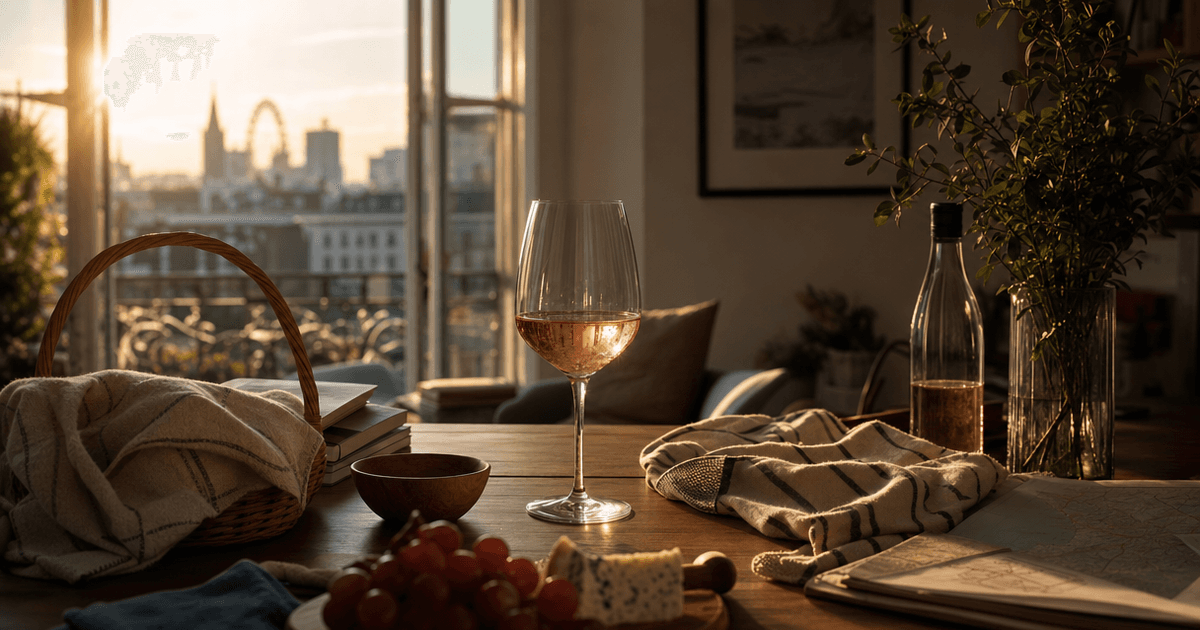
Picnic wine glasses are where I now start every picnic conversation in the shop — before the bottles, not after them — because outdoors, the vessel, the weight in your bag and the chill you packed decide more of how the afternoon tastes than the label ever will. So here’s the answer up front: a sturdy stemless tumbler or an insulated steel cup beats both fine stemware and flimsy plastic on grass, and everything after that is chill and format. A picnic wine, as I use the phrase behind this counter, is any bottle built to survive a warm afternoon, a lopsided tote bag, and being poured onto grass instead of a tablecloth. By the time you’ve finished this, you’ll know which styles hold up outdoors, which packaging actually makes it there in one piece, and whether you need proper glass at all.
What’s the best wine to take on a picnic?
For most spreads I reach for something chilled and forgiving: a dry rosé, a light Beaujolais served with a slight chill, a dry-to-off-dry Riesling, or a decent sparkling wine. None of them need decanting, none of them sulk if they warm a degree or two in the sun, and all of them cope with the scattergun food a picnic usually involves — sandwiches, whatever cheese survived the fridge, crisps if we’re honest.
Beaujolais crus like Fleurie or Morgon are built for exactly this — light-bodied, low on tannin, happier a touch cool than warm (we go into the why of that properly in the summer reds that love the fridge). Light Pinot Noir does the same job with a bit more perfume. If rosé is your instinct, dry Spanish rosado — Navarra, Rioja — has more grip and less sweetness than people expect, and I cover the whole pink spectrum in our guide beyond the pink.
Dry Riesling from the Mosel, Alsace or Clare Valley earns its keep too, especially against anything lemony or salty. And sparkling wine — Cava, Crémant, a Prosecco rosé — sits nicely with charcuterie, salad and sandwiches, the actual picnic trinity. One honest note: don’t take your best bottle. Condition outdoors is unpredictable, and inexpensive wine that’s built to be drunk young and cold is doing exactly the job it was made for. So let the forecast pick the style — rosado for full sun, a chillable Beaujolais if there’s food with backbone, Cava if there’s anything to toast — and keep the spend picnic-sized.
Which bottle format actually survives a picnic?
Glass is inert and tastes of nothing but the wine — that’s its whole advantage — but it’s heavy, fragile, and once opened the headspace fills with air fast, so a half-finished bottle won’t thank you for leaving it in the bag till teatime. PET plastic weighs a fraction of glass and suits wine meant for quick drinking. Cans chill quickly and pack flat in a cooler. Bag-in-box keeps its air out entirely as the inner bag collapses, so leftovers stay fresher for days — handy if the picnic runs long or the group’s smaller than the bottle.
| Format | Weight & breakage | Best for | Watch out for |
|---|---|---|---|
| Glass bottle | Heavy, fragile | Anything you want tasting exactly as intended | Corkscrew required; breaks |
| PET plastic | About an eighth the weight of glass, tough | Casual, one-sitting drinking | Not for ageing or long storage |
| Can | Light, robust, chills fast | Solo servings, easy carrying | Any pinhole in the lining spoils it |
| Bag-in-box / pouch | Light, no glass at all | Groups, wine you won’t finish on the day | Bulkier shape to pack |
You don’t need the grand vin for a rug on the grass, in the same way you don’t always need the flagship bottling when a second wine gives you plenty of quality without the fear of ruining something precious — we’ve written about that logic properly here. And whichever you choose, don’t forget the corkscrew — screwcap sidesteps the whole problem, deliberately or not. If the group’s big or the day’s open-ended, that’s your cue to buy the box over a second glass bottle: it travels lighter and forgives whatever’s left unfinished.

Do you need real wine glasses for a picnic?
No — but glass beats plastic if you’re happy carrying it, and cheap, thin plastic is the one genuine mistake. There’s no published evidence that a particular glass shape chemically enhances a specific wine; appearance and feel matter more to most drinkers than the geometry of the bowl. So a sturdy stemless tumbler, or a small insulated cup, does the job perfectly well outdoors. The rule I’ve settled on after years of selling both: outdoors, the chill is the glassware — hold the temperature, and almost any sturdy cup will do the wine justice.
I used to feel faintly guilty selling picnic sets with stemless tumblers instead of proper stems — as if I were letting the wine down. Took me a while to admit the wine doesn’t know the difference, and neither, honestly, does most of the rug. There’s a growing trade trend toward insulated stainless steel tumblers for exactly this reason: they keep a chilled rosé chilled rather than nudging it towards room temperature within twenty minutes, which is the real threat outdoors, not the shape of the glass. If you want the fuller picture on why temperature does so much of the work a fancy glass gets credit for, our serving temperatures cheat-sheet lays it out bottle by bottle. Pack a couple of picnic wine glasses that are hard to tip over on uneven ground and you’ve solved 90% of the problem — we keep a couple of tip-proof options by the till in summer for exactly this reason.
How do you keep the wine cold without a fridge?
Chill the bottle properly before you leave — that’s the bit people skip — then use a wine picnic cooler or a plain cool box with ice packs to hold the temperature, not create it from scratch. If you’re already out and need it colder fast, ice mixed with a bit of salt from the nearest shop works better than ice alone.
Weight trades against ice space in the same bag. A can or PET bottle weighs so much less than glass that you can fit an extra ice pack in for the same amount of ache on your shoulder by the time you reach the good spot under the tree. Light reds are worth chilling harder than you’d think before leaving the house, because in the sun they only ever warm up — there’s no cooling to be had once you’re sat down, short of the ice you brought with you. The buying lesson is simple: choose the lighter format, spend the saved shoulder-ache on ice, and pick wines that shrug off a degree or two of drift — that’s the whole shopping list. Or shorter still: pack wine you can afford to warm up and cups you can afford to lose.
Questions customers ask us
Is boxed wine actually any good these days? Genuinely, yes — trade opinion has it that quality in bag-in-box has improved enormously in recent years, and for a picnic its resistance to oxidation once opened is a real practical win, not just a cost saving.
What if someone in the group isn’t drinking wine? Iced tea, soda, lemonade or a raspberry-lemon sparkling juice all sit happily on the same rug and pair with the same picnic food — nobody needs to be left out of the spread.
Should I chill red wine for a picnic? Light-bodied reds like Beaujolais and Pinot Noir genuinely benefit from a proper chill before you travel, not just a token one — we’ve a whole piece dedicated to which reds love the fridge if you want the detail.
How many bottles should I bring for a group? More than you think you’ll need and less than you fear looks bad — pack a spread of styles (a white, a red, something sparkling) rather than doubling up on one, so everyone’s happy and nothing’s left half-drunk in the heat.
The merchant’s last word
I’ve sold picnic wine badly for years by pushing people toward whatever I was proudest of that week, when really the job is matching the bottle to the rug, the weather and the walk to get there. Get the format and the chill right and almost anything decent will taste better outdoors than it ever does at the kitchen table. If rosé’s your instinct for the next one, go and browse the rosé wine cellar — I’ll have the cool box ready.



