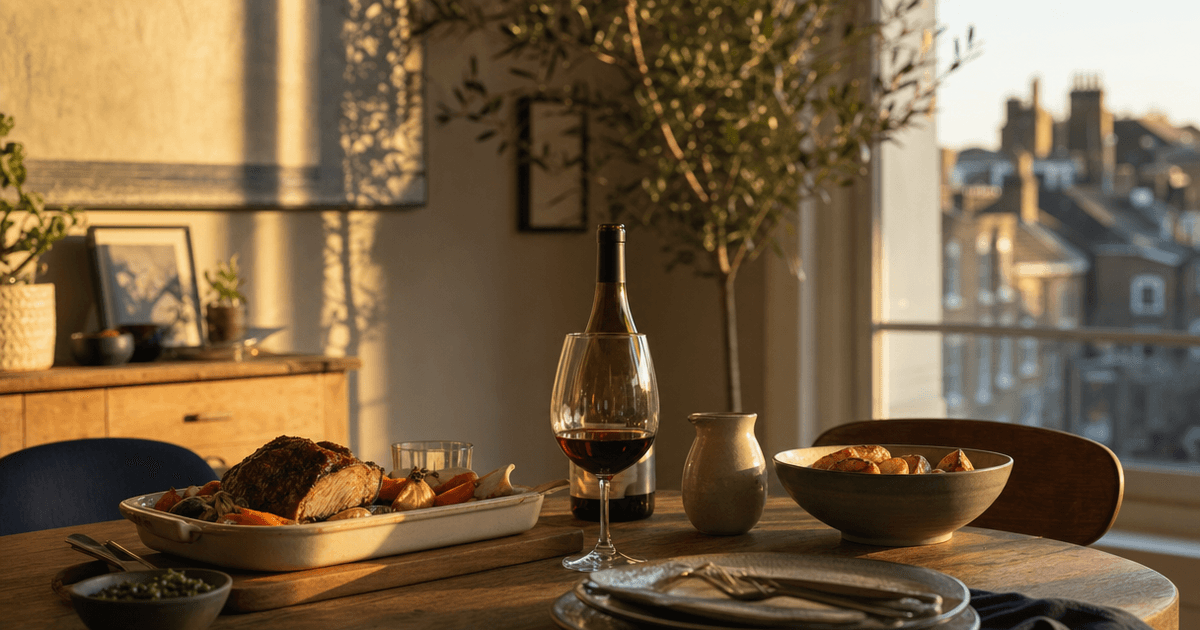
So — what wine goes best with Sunday roast? Here’s the honest complication: a roast asks one bottle to answer to a whole table at once — the joint, the gravy boat, the horseradish or mint sauce, and everyone’s second helping. The animal on the platter matters less than most people think; it’s the cut, the cooking method and what’s swimming in that gravy boat that cast the deciding votes. By the end of this you’ll know whether you want a big red, a lighter one, or — whisper it — a white, for whatever’s coming out of your oven this weekend. It isn’t one wine, it’s a short decision tree: protein first, then cut, then doneness, then sauce.
What wine goes best with Sunday roast?
For most roasts — beef, lamb, and heartier pork dishes — a medium to full-bodied red is your safest bet: Bordeaux-style Cabernet blends, Rioja, Syrah/Shiraz, or a good Pinot Noir if the meat’s on the leaner or pinker side. Chicken and lighter pork open the door to whites and even rosé. The joint is only half the story; how it’s cooked decides the rest.
Here’s the shape of it by protein:
| Roast | Reasonable starting point | Why |
|---|---|---|
| Beef (roasting joint, rib) | Bordeaux red, Cabernet Sauvignon, Malbec, Rioja Reserva | Structure and tannin match the meat’s richness |
| Beef, rare (Wellington, fillet) | Merlot-led Bordeaux (Pomerol-style), lighter Pinot Noir | Delicate cooking wants elegance, not brawn |
| Beef, slow-braised (ox cheek, pot roast) | Zinfandel, Grenache or a GSM blend | Long cooking builds richness that needs a bigger wine to match |
| Lamb | Pinot Noir (pink/young), Rioja/Tempranillo, Cabernet Sauvignon (well done) | See below — it’s genuinely cut-dependent |
| Pork with crackling & apple sauce | Riesling, Chenin Blanc (Vouvray) | Off-dry fruit cuts through the fat and sweetness |
| Pork, Italian-style with herbs and garlic | Chianti | Savoury red matches savoury seasoning |
| Chicken | New World Chardonnay (light oak), Pinot Noir, Sauvignon Blanc | Full breakdown in our roast chicken guide |
Mustard changes the calculus for any of these — a red Burgundy or Côtes du Rhône handles a mustard-crusted joint better than something fruit-forward. Wine trade coverage puts it well: it’s the cooking method, not the central ingredient, that decides your bottle. A beef Wellington and a beef stew are the same animal and completely different wine questions.
It’s also why the table above calls each pick a “reasonable starting point” rather than the answer: the joint sets the direction, but everything riding alongside it — the gravy, the condiments, the table’s own tastes — gets a vote before the cork comes out.
Is lamb better with red or white wine?
Red, nearly every time. Lamb carries real fat alongside a distinctive, sometimes gamey flavour, and it’s the fat that needs a wine with proper acid to cut through it — white wine generally can’t bring enough grip. The exception is genuinely delicate, very lightly cooked lamb, where a fuller-bodied Pinot Noir does double duty as an “almost-white” option.
Doneness matters more with lamb than with almost any other roast. Young, pink lamb — a rack or a quickly-roasted leg — sits well with Pinot Noir; its brighter fruit and lower tannin don’t fight the meat’s delicacy. Push the lamb towards medium or well-done, and you want more structure: Cabernet Sauvignon, Tempranillo-based Rioja, or a Syrah/Shiraz all bring the tannin needed to stand up to a firmer, more developed flavour. A lamb stew on a cold evening is a different job again — something hearty and warming, Grenache or Sangiovese, rather than anything delicate.
Sommeliers in the trade have made the same point: lamb’s texture is delicate but its flavour is rich and fatty, so acid structure in the wine matters more than raw power. If you’re after something with real age and pedigree for the table, our guide to choosing a Rioja Gran Reserva covers exactly when a mature bottle like that earns its place next to a lamb roast — and when a younger, fresher style serves you better.

Getting the serving right
A big red poured straight from a cold shop shelf does nobody any favours. Reds for roast dinners want to come up to a cool room temperature before they hit the table — take the bottle out an hour or so ahead if it’s been anywhere cold. Older, more structured reds (a mature Bordeaux, a serious Rioja Reserva, or anything with real tannin and age) benefit from decanting, both to soften that tannin and to let some air in; our piece on serving an aged Barolo walks through timing if you’re opening something with real years on it.
Gravy matters too, more than people credit. A rich, meat-based gravy wants a wine with body to match it — thin the gravy or lighten the sauce, and you can afford to lighten the wine as well. Horseradish with beef pushes you towards a wine with a bit more acid; mint sauce with lamb does the same. Apple sauce with pork nudges you towards something with a touch of natural sweetness, which is exactly why Riesling earns its place on that table above.
Is wine good for cardiac patients?
That’s not a question for a wine merchant to answer — it’s one for your GP or cardiologist, and we’d rather send you there than guess. We sell wine, we don’t diagnose or advise on anyone’s condition, and any health claim we made here would be worth precisely nothing coming from behind a shop counter.
What we can help with is style and strength if that’s useful information for a conversation with your doctor — dry versus off-dry, lighter versus fuller-bodied, that sort of thing. The medical judgement, though, belongs entirely with a professional who knows your history. Please do ask them before you ask us.
Choosing by what you’re prepared to spend
A roast dinner wine doesn’t need to be expensive to do its job, and a fair chunk of what makes a pairing work is simply picking the right style, not the priciest bottle on the shelf.
- Everyday roast (most Sundays): a straightforward Beaujolais, a Rioja Crianza, or a New World Merlot — light on the wallet, does the job for beef, lamb, or pork without fuss.
- Weekend treat (family round, something to make a fuss of): step up to a Rioja Reserva, a Bordeaux-style Cabernet blend, or a Crozes-Hermitage — more structure, more length, still sensible money.
- Once-a-month showstopper: trade tastings recently priced a standout Reserva-style Rioja north of £60 — that’s the kind of bottle to save for a proper occasion roast, not a Tuesday that fell on a Sunday.
For the fuller thinking behind matching wine to food in general, not just Sunday lunch, our complete guide to food and wine pairing is where I’d point you next.
Questions customers ask us
Which wine is best for diabetics? This needs a doctor, dietitian, or diabetes nurse — not a wine shop. We won’t make health claims here; what we can tell you honestly, if it helps that conversation, is which of our wines run drier and which run sweeter in style.
Is rosé any good with a Sunday roast? Dry rosé works nicely with roasted pork or a lighter chicken, and sparkling rosé — Champagne especially — is a genuinely lovely, slightly indulgent match with a roast dinner if you fancy something different.
What about roast beef specifically, not just “beef”? Roast beef on its own (rather than braised or stewed) sits particularly well with Beaujolais or a German Riesling Spätlese if you want to go against the red-only instinct — both have the fruit and freshness to work with the meat without a heavy hand.
The merchant’s last word
I’ve sold wine long enough to know most people just want a straight answer on a Sunday morning with the oven already on — so here it is: match the cut and the cooking, not the animal, and you won’t go far wrong. Get the sauce right and the wine mostly looks after itself. If you’d like a hand picking the actual bottle, browse the Italy cellar and I’ll take it from there.



