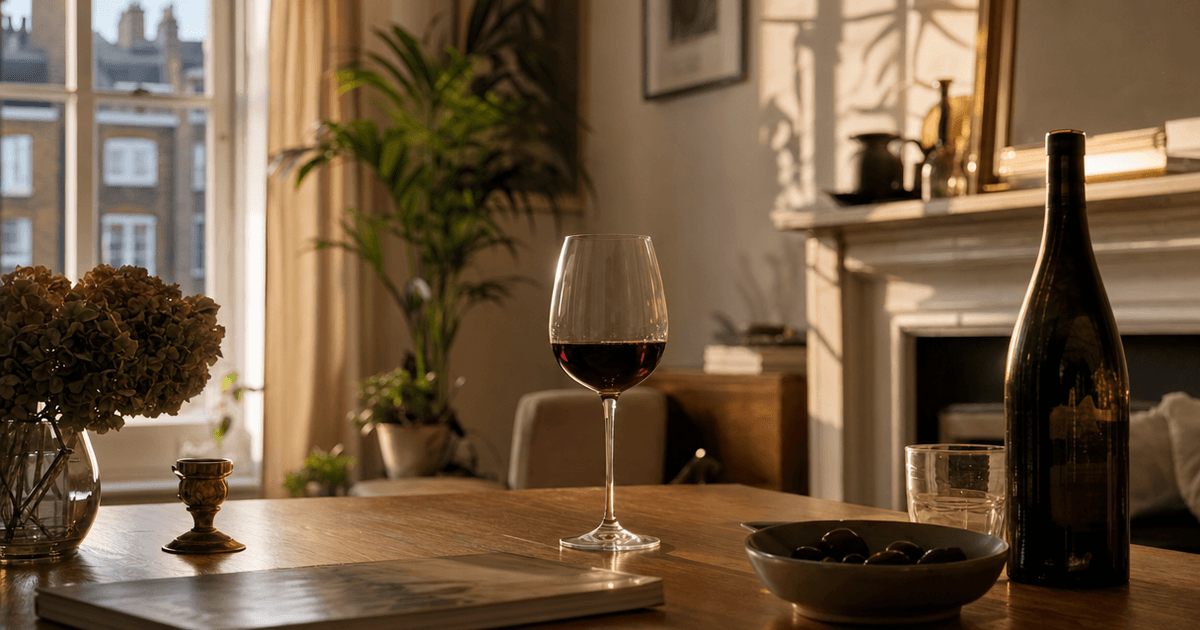
The Bordeaux wine glass most people reach for without a second thought is the tallest, most generous stem on the shelf — and there’s a reason for that shape beyond how it looks on the table. A Bordeaux glass is a tall, wide-bowled stem glass with a rim that tapers gently inward, built for full-bodied red wines with real tannin and grip. The height gives a young, gripping red room to open up; the narrowing rim steers alcohol and aroma away from the sharpest part of your nose. By the end of this you’ll know exactly which wines earn one, and whether the glasses already in your cupboard are doing the job just fine.
What wine is a Bordeaux glass for?
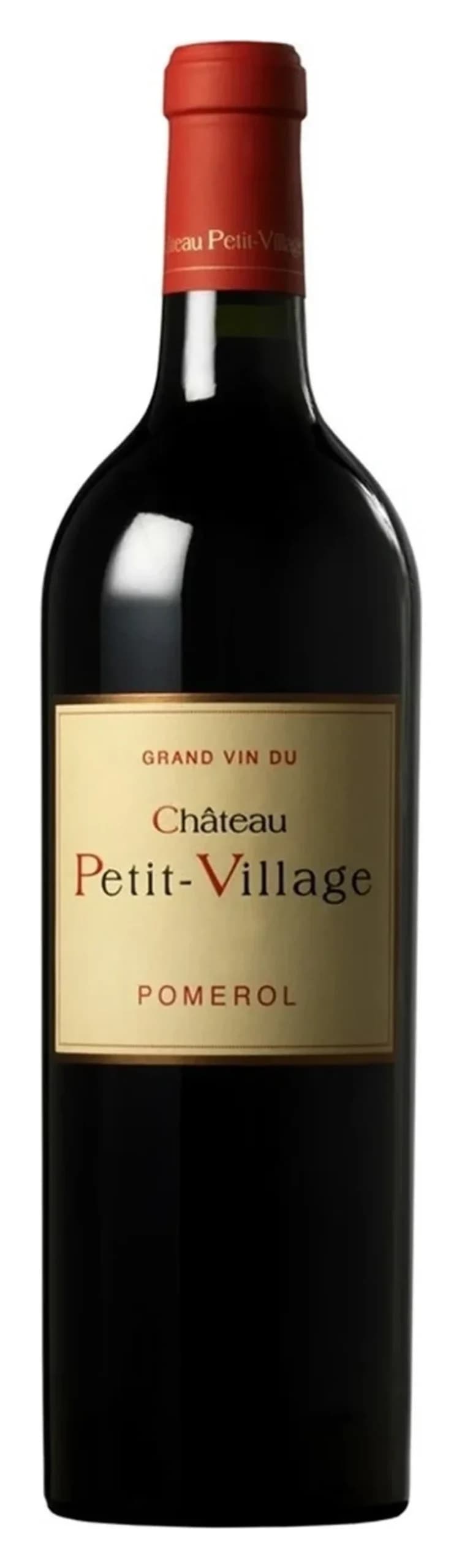
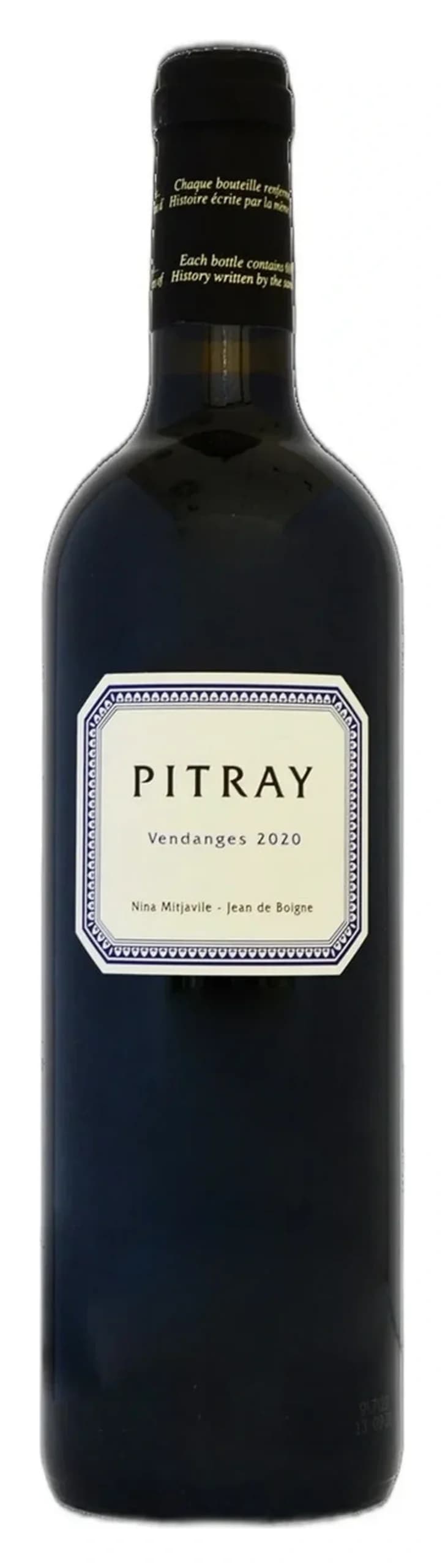
A Bordeaux glass suits full-bodied, tannic reds — the Cabernet Sauvignon and Merlot blends of the Médoc, Margaux, Saint-Émilion and Pomerol, but also Rioja Gran Reserva, structured Douro reds, and serious Syrah from anywhere at all. Trade opinion increasingly treats it as a tool for sturdy Old World-style reds in general, not a glass reserved strictly for anything labelled Bordeaux.
White Bordeaux — the dry Sauvignon Blanc and Sémillon blends, and sweet Sauternes — usually goes in a smaller, narrower white wine glass, not this one. The name describes a shape built for a certain kind of red, not a rule that anything called Bordeaux must sit inside it. The history is telling: the shape was designed decades ago and has, as winemaking moved toward riper, more concentrated, higher-alcohol styles, become more of a general-purpose tool for structured reds than a one-region specialist. There’s a neat parallel in bottles, too — some Rioja producers put their age-worthy, Tempranillo-led wines into Bordeaux-shaped bottles and their softer Garnacha blends into Burgundy-shaped ones. The trade has long matched vessel to style, not just to postcode. If you’re christening a new glass, shop the same way: a mid-priced Médoc blend, a Rioja Gran Reserva or a structured Douro red is exactly the kind of bottle the shape was built around — no need to start with anything grander.
Why are Bordeaux glasses so big?
Size does two jobs. The tall, broad bowl gives a tannic, alcohol-carrying wine enough surface area to soften as it sits in the glass — air meeting wine lets some of the sharper volatile compounds ease off — and it gives you room to swirl properly without wearing the wine down your sleeve. The tapered rim then reins that released aroma back in before it hits your nose.
Swirling is worth doing properly rather than performing. Start by rotating the base flat on the table until you’re confident, then move to a wrist-led swirl as you lift the glass — most of the movement should come from the shoulder, with the wrist mostly along for the ride. The incurved sides of a tulip-shaped bowl, which is really what a Bordeaux glass is, let you swirl with some enthusiasm while still concentrating the aroma at the narrow top rather than losing it to the room. I’ve watched a customer swirl a straight-sided tumbler with real confidence and redecorate a tablecloth doing it; a proper tapered glass forgives that kind of enthusiasm far better.
Glassmakers themselves have kept nudging the size up as wines have changed. More than one major range has added an extra-large line and a dedicated Syrah shape, specifically because modern reds carry more concentration and more alcohol than the wines the original designs were built around a few decades back. The glass has been chasing the wine, not the other way round.
What is the difference between a Burgundy wine glass and a Bordeaux wine glass?
A Bordeaux glass is tall and only moderately wide, guiding wine to the middle of your tongue where firm tannin needs meeting. A Burgundy glass is a wide, rounded balloon — sometimes enormous, close to a fishbowl in the showiest examples — built to capture and hold the far more delicate, high-toned aromatics of something like Pinot Noir or Nebbiolo before they’re lost to the air. Same job, entirely different geometry, because the wines ask for different things.
Most people, sensibly, use a reduced-scale version of that Burgundy balloon at home rather than the full competition-sized bowl. It’s also worth knowing there’s a third traditional shape in this family: Alsace and German wines are sometimes served in a Rohmer glass, often with a green or brown-tinted stem, mostly for tradition’s sake rather than any measurable performance gain. And shapes keep shifting even within a single grape — Pinot Noir producers in Oregon reportedly pushed back on a standard Burgundy-style glass because it wasn’t flattering their wines, prompting at least one rethink from a major glassmaker. The rules are a starting point, not scripture.
| Bordeaux glass | Burgundy glass | |
|---|---|---|
| Bowl shape | Tall, elongated, gently tapered | Wide, rounded, balloon-like |
| Job | Directs wine to mid-palate, tames tannin | Captures and holds a big, delicate bouquet |
| Classic wines | Cabernet/Merlot blends, Syrah, Rioja, Douro reds | Pinot Noir, Nebbiolo, some barrel-aged Chardonnay |
| Swirling | Controlled, low spill risk | Needs a steadier hand — wide bowl, easy to slosh |
Let the rack you actually keep settle the question: if it leans Pinot Noir, the balloon is the better buy; if it leans claret, Syrah and Rioja, this is the shelf your money belongs on.
Getting the pour right
Fill it less than you think. Leaving the wine below halfway gives you the swirling room the shape exists for in the first place — filling any big-bowled glass to the brim wastes the whole design and looks a bit much besides. Hold it by the stem, too: cupping the bowl in your hand, or pouring in a warm room, will nudge the wine’s temperature up faster than you’d expect, which matters more with structured reds than most people assume. Our serving temperatures cheat-sheet is worth a look if you’ve ever wondered why a Bordeaux blend tastes flabby by the second glass on a warm evening.
Smell before you swirl, then again after — the first sniff gives you the wine’s lighter, more fleeting top notes, and swirling afterward opens up what’s underneath. If the wine’s young, closed and gripping in a way that a glass alone won’t fix, decanting is the next tool, and the same swirling and airing logic applies to a big Nebbiolo just as much as a Bordeaux blend — our guide on serving aged Barolo walks through the decanting side of that in more detail. Get the pour and the temperature right and even a modest structured red drinks a class above its price — reason enough to keep one worth pouring in the rack.
Do you actually need one, or will a good all-rounder do?
Here’s where I’ll be honest with you rather than sell you a set of six. Research into glass shape has found no solid published evidence that a particular shape uniquely improves the chemistry of what’s in it — how a glass looks and feels in the hand may do more for your enjoyment than anything measurable in the wine itself. There’s also a fair bit of scepticism in the trade about how far the whole business of matching a glass to every grape has been pushed, past a few genuinely useful basics, into something closer to shelf decoration.
I used to sell starter sets of four different shapes to anyone who’d stand still long enough, and it took me longer than I’d like to admit to notice most of those glasses sat in a cupboard barely used. A good universal glass — mid-sized bowl, tapered rim — will carry you through most weeknights, reds and whites and fizz alike, without a fuss. But if Bordeaux-style reds are a regular fixture on your table, the dedicated glass earns its keep for the reasons above: the tannin, the swirl room, the rim doing its quiet work. They needn’t be grand bottles either — an everyday Saint-Émilion or a solid Douro red gains as much from the swirl room as a classed growth, so the glass starts paying for itself on Tuesday nights, not just birthdays. For more on picking a set that actually gets used, our glassware guide goes through what matters and what doesn’t, and if you’re still finding your feet with the region itself, our Bordeaux guide is the place to start.
Questions customers ask us
What size is a Bordeaux wine glass? There’s no single fixed capacity across the trade, but a Bordeaux glass is typically the tallest, largest-bowled stem in a mixed set — noticeably bigger than a standard white wine glass. Check the maker’s own specification if you’re buying a whole set to match.
Can I use a Bordeaux glass for white wine? It’ll do fine for a bigger, oak-aged white like a serious white Burgundy or an oaked Rioja Blanco. Delicate whites and sparkling wine will taste warmer and flatter without a narrower glass and a smaller pour.
Does the “right” glass actually change how a wine tastes? Research hasn’t found solid evidence that shape alters a wine’s chemistry, but how a glass looks and feels in the hand can still shape how much you enjoy drinking from it. Not magic, but not nothing either.
The merchant’s last word
I’ll sell you a Bordeaux glass happily, because for a proper Médoc or a big Rioja it does real work — but I won’t pretend your dinner’s ruined without one. Good wine, a clean glass, people you like: that’s most of it. If you fancy putting one to proper use, come and browse the bordeaux cellar — tell me what’s on the table this weekend and I’ll point you at a bottle worth swirling.