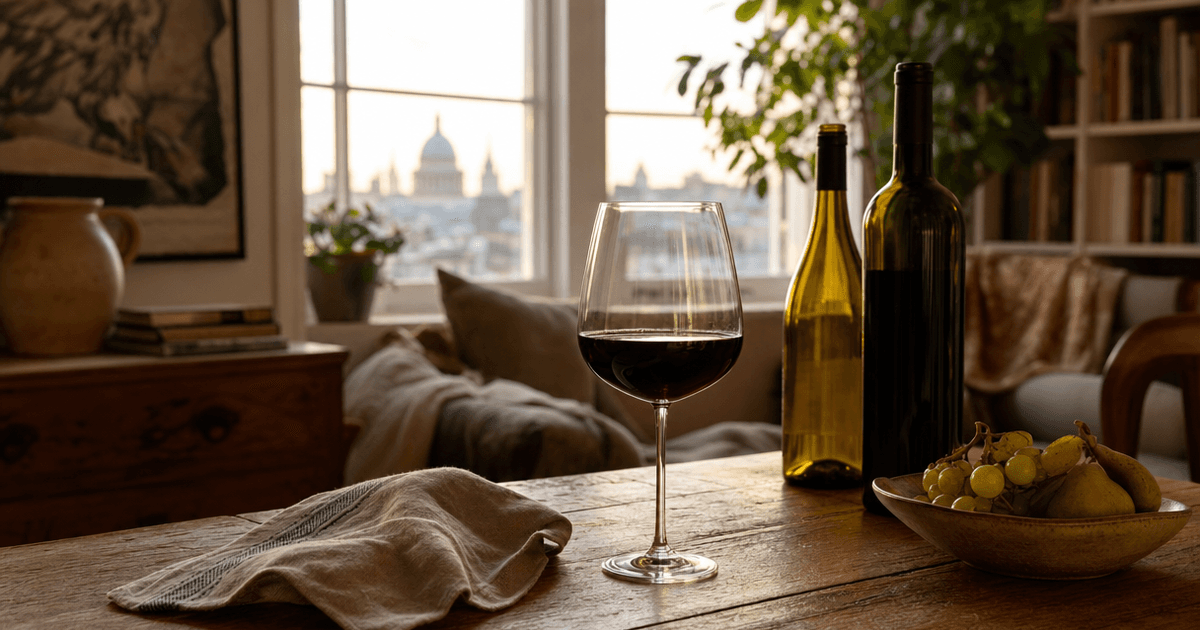
White wine Rioja is the thing half my customers don’t know exists, and the other half assume is a bit of a novelty — isn’t Rioja meant to be red? It isn’t only red, and hasn’t been for a very long time. By the end of this you’ll know what’s actually in the bottle, whether it’s worth your money, and which style to reach for on a Tuesday versus a Sunday lunch you’ve been looking forward to all week. White Rioja is any wine from the DOCa Rioja made from white grapes, chiefly Viura. It ranges from crisp, unoaked bottles for early drinking to complex, barrel-aged wines built to age for decades.
What is white Rioja wine?
White Rioja is a white wine made under Rioja’s rules, built mostly from Viura (also called Macabeo) but increasingly from a small cast of other grapes, native and otherwise. The fruit is grown right across the region’s three sub-zones — Rioja Alta, Rioja Alavesa and the warmer Rioja Oriental — and where it comes from shapes the wine almost as much as the grape does. Some bottles are made young and unoaked for freshness; others spend a year or more in oak and develop real depth and structure. It’s not one thing — it’s a family of styles under one name.
The grape line-up is more interesting than most people give it credit for, and it’s worth knowing your way round it before you buy:
- Viura — the backbone of the category, at high yields it can be fairly neutral, but careful growers are now picking later and handling it with real respect, producing textured, ageworthy whites.
- Malvasía de Rioja — known in Catalunya as Subirat Parent, distinctive for its reddish-yellow bunches, and traditionally used to add aromatic lift to Viura blends.
- Tempranillo Blanco — a genetic mutation of the red grape, first found on a single plant near Murillo del Río Leza in 1988. Late-budding but early-ripening, it gives citrus, grapefruit and pineapple notes with good acidity.
- Maturana Blanca — the oldest documented grape in Rioja, possibly referenced as far back as 1622, nearly lost to history because it’s prone to botrytis, now rescued and showing bright acidity with a bitter twist on the finish.
- Garnacha Blanca — a mutation of red Garnacha, once made into flabby, tired wines, now increasingly prized for texture and richness in small quantities.
- Turruntés de Rioja — no relation to Argentine Torrontés, closer in character to Albillo Mayor, and still something of a curiosity.
Since 2007, the rules also allow Chardonnay, Sauvignon Blanc and Verdejo into the blend, provided native grapes still make up the majority. It’s part of why the category has become so much more varied than it was even fifteen years ago. If you want the wider picture of Spanish wine beyond this one region, our guide to Rioja and beyond: Spain for people who love flavour is a good place to start.
Can you get a white Rioja wine?
Yes, and far more easily than even five years ago. Recent trade coverage suggests most decent wine merchants and several major supermarkets now list at least one rioja white wine, some as part of their own-label ranges. It’s gone from a connoisseur’s curiosity to something you can pick up on a normal Tuesday shop.
That said, the two ends of the category sit in quite different places on the shelf. Cheap, unoaked white Rioja for early drinking is widely available and inexpensive — made using protective winemaking in stainless steel, fermented cool and bottled soon after, designed to be drunk within a year or two. Mid-priced and premium oaked white Rioja is a different animal: more structured, built with age in mind, and worth seeking out from a specialist rather than grabbing off a supermarket end-cap.
If ageing is what interests you, it’s worth reading how Rioja’s classification system works for reds too — the same logic of patience and oak time applies, in its own way, to the finest whites. Our piece on Rioja Crianza, Reserva, Gran Reserva: the ageing ladder explains it properly.
Is white Rioja any good?
The best white Rioja is genuinely world class — trade tasters have compared top oaked examples to white Burgundy, and the finest can age as gracefully as good German Riesling, with bottles from the 1920s through the 1980s still drinking well by all accounts. The everyday unoaked stuff is a simpler pleasure: bright, dry, reliable, and honestly rather good value.
It wasn’t always this way, and I’ll admit I avoided the category myself for years because my early experience of it was tired, oxidised, past-its-best wine — the kind that gives a whole style a bad name. That reputation lingered a long time, and it was earned. But growers and cellars spent the last couple of decades re-learning how to handle Viura: picking later, being far more careful with oak, chasing freshness instead of hiding from it. A UK trade tasting in the last couple of years even crowned a rich, creamy-citric white Reserva its top-scoring wine overall, ahead of the reds — which would have been unthinkable when I started in this trade.
There’s also a genuine rarity factor at the top end. Long-aged white Reservas from a handful of historic cellars clustered around Haro’s old station quarter — some released with thirty years of bottle age — have helped drag the whole category’s reputation upward, proving Viura can do things few other white grapes attempt.
Choosing a style that suits your evening
Don’t buy white Rioja on autopilot — the label tells you almost everything if you know what to look for.
| Style | What to expect | Best for |
|---|---|---|
| Young, unoaked (often just “Rioja Blanco”) | Light, citrus-led, steel-fermented, drink within a year or two | Weeknight suppers, tapas, aperitivo |
| Fermented/aged in oak (Crianza, Reserva, or unlabelled premium) | Fuller body, some vanilla and toast, real structure | Roast chicken, richer fish, slow Sunday lunches |
| Old-style Gran Reserva white (rare) | Deep gold, nutty, complex, built to age decades | Special occasions, collectors, curious drinkers with patience |
If you’re drawn to that bright, zesty unoaked style, it’s worth knowing it’s not unique to Spain — our look at Coastal Chile: why cold Pacific air makes such fresh whites covers a very different route to a similarly refreshing glass.
Serving it right
Pour the young, unoaked style properly cold, straight from the fridge — it’s built for refreshment, not contemplation. The oaked styles want a little more warmth in the glass to show their texture; ten minutes out of the fridge does the job.
A white Rioja with some oak age is genuinely versatile at the table — it can do things a simple Sauvignon Blanc can’t, standing up to cream sauces, roast chicken, or aged Manchego without being bullied by them. If pairing isn’t your natural instinct yet, our Food and wine pairing: a merchant’s complete guide to getting it right will get you there faster than trial and error at the dinner table.
One glass at a time, and taste before you top up — that’s the whole trick with any wine that rewards attention.
Questions customers ask us
Which white wine is best for diabetics? That’s a question for your doctor, not your merchant — we’re not qualified to give health advice and won’t pretend otherwise. What we can tell you is which styles are bone dry with very little residual sugar, and the young, unoaked white Riojas fit that description well.
Does white Rioja need serious cellaring to be worth drinking? No — most of what’s sold is made for drinking within a couple of years, and it’s lovely that way. Only the oaked premium and rare old-style bottlings genuinely reward long-term keeping.
Is white Rioja sweet? Almost never. The overwhelming majority — young or oaked — is fermented fully dry; sweetness isn’t part of the traditional picture here.
The merchant’s last word
I sold white Rioja badly for years, tucked at the back of the Spanish shelf behind all the reds, and I regret it — it deserved better billing. It’s one of the few whites that can go from a Tuesday tapas plate to a proper Sunday roast without missing a step, and the good ones age like nothing else at the price. Come and browse the Spain cellar and let’s find the bottle that suits your week.



