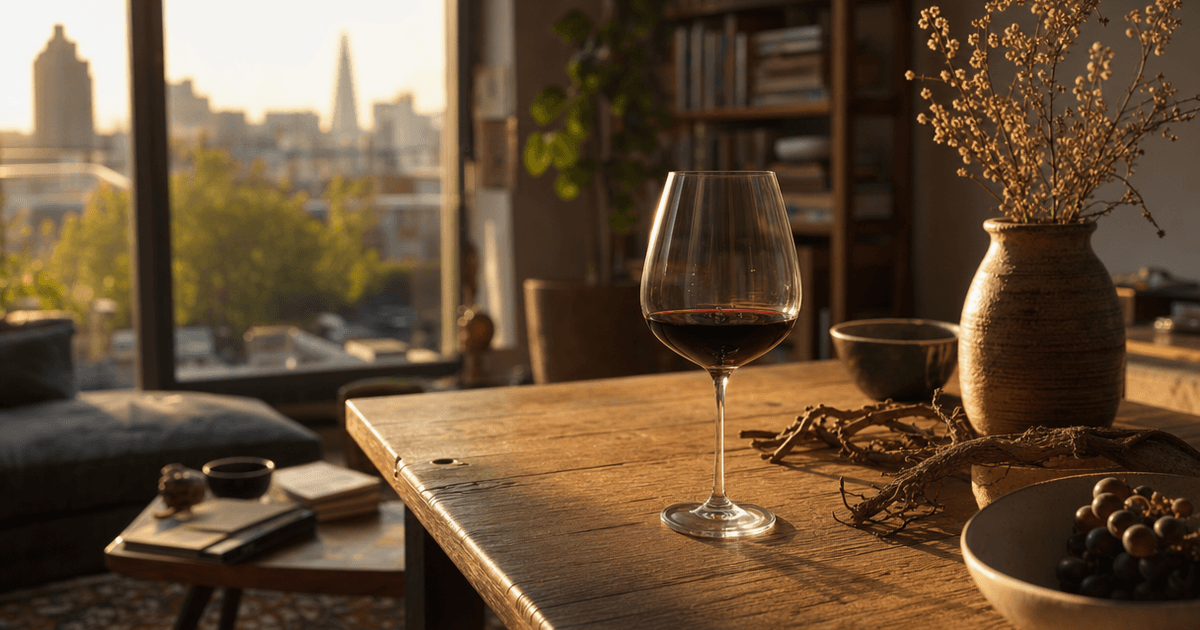
Monastrell wine is Spain’s answer to a scorching afternoon — dark, weighty, built from grapes that see more sunshine than most vines could handle. It’s a black grape grown mostly in the arid south-east of Spain, chiefly Murcia and neighbouring Castilla-La Mancha, and the wine it makes is full-bodied and dry, high in alcohol and tannin, with ripe black fruit and a savoury, sometimes gamey character. By the end of this you’ll know what to expect in the glass, what to put on the table alongside it, and which region to reach for depending on the night you’ve got ahead.
What kind of wine is a Monastrell?
It’s a full-bodied, dry red — that’s the shape of it nine times out of ten. High alcohol, high tannin, dark in colour, packed with blackberry and black cherry fruit, and carrying a savoury, leathery note when young that softens with a few years in bottle. It’s the fourth most-planted black grape in Spain, and it’s the same variety the French call Mourvèdre.
The vine itself is a stubborn thing. It buds late and ripens even later — later than Carignan, which is saying something — and it genuinely needs heat, especially in the final stretch before harvest, to get its small, thick-skinned berries properly ripe. That’s exactly why it’s found its home around Jumilla, Yecla, Alicante, Bullas and Almansa, all baking-hot corners of the south-east with barely 300mm of rain a year.
Old, low-yielding bush vines on sandy soils over limestone are common here, and they’ve become something of a badge of quality — the roots go deep, the yields are naturally small, and the fruit comes in concentrated. A lot of this region’s history was built on cheap bulk wine (a technique called doble pasta was used to bolster paler wines from elsewhere in Spain), but that’s changing fast, which I’ll get to.
What is Monastrell wine similar to?
The closest comparison is its own French alter ego — Mourvèdre, the backbone (alongside Grenache and Syrah) of GSM blends from the southern Rhône and a starring grape in Bandol on the Provençal coast, where it shows that same brambly, animal, meaty streak. If you’ve had a Bandol and liked the funk of it, Monastrell will feel familiar.
Within Spain, the nearest relative is Bobal, grown a little further north around Utiel-Requena. Both like the heat and both keep their nerve under it, but Bobal retains more acidity and comes in lower in alcohol — a gentler cousin, if you like, to Monastrell’s bigger, riper style. If you’ve been reading up on Garnacha: the comeback grape, it’s worth knowing Garnacha is one of Monastrell’s most common blending partners in these regions — it softens the tannin and lifts the fruit.
How to choose: five DOs, five different weights
This isn’t one of the original questions, but it’s the one that actually decides which bottle lands on your table — because “Monastrell” on a label from Alicante and “Monastrell” from Bullas aren’t quite the same proposition.
| Region (DO) | What’s distinctive | What to expect |
|---|---|---|
| Jumilla | Around 70% of plantings, sandy soil over limestone, extreme drought; heavily replanted with better clones after phylloxera hit in 1989 | Concentrated, often old-vine, increasingly polished |
| Yecla | Monastrell forms the majority; dominated by large co-operative production | Reliable, mid-priced, honest reds |
| Alicante | Reds must be minimum 80% Monastrell, blended with Alicante Bouschet, Garnacha or Bobal; also home to sweet Fondillón | Structured blends, plus a genuine curiosity in Fondillón |
| Bullas | Cooler mesoclimate at higher elevations in the north-west | Fresher, slightly lighter styles |
| Almansa | Sits toward Castilla-La Mancha, one of five DOs promoting the grape together | Less familiar, worth a punt |
The logic here isn’t unlike working out second wines and how to drink a great château without the grand vin price — same grape, same broad region, but the site and the ambition behind the bottle shift the weight and the price quite a lot. Entry-level Jumilla can be genuinely cheap and cheerful; old-vine examples from the same DO can be serious, structured wines worth keeping a few years.
Is Monastrell dry or sweet?
Dry, almost always — that’s the honest, everyday answer. The wine is full-bodied with ripe, sometimes jammy fruit, but there’s no sugar left in the glass; any sweetness you taste is fruit ripeness, not residual sugar.
The exception, and it’s a proper one, is Fondillón — a historic style from Alicante made from Monastrell grapes deliberately left to overripen, sometimes raisin on the vine. It’s matured for a minimum of ten years, often in a solera system blending younger and older wine, and it comes out oxidised, nutty, dried-fruit in character, naturally reaching at least 16% alcohol without any fortification. It’s rare, it’s a curiosity rather than a everyday buy, but it’s worth knowing it exists — this is not the same grape wearing a different hat, it’s Monastrell pushed to a completely different end.
A handful of DOs, notably in Catalunya, also make rosé and small amounts of white from Monastrell, so don’t assume the grape only does one thing.
Is Monastrell wine good?
Yes — and the trade has come round to that view properly in the last few years. Quality is generally good to very good, prices are mostly mid-range with some genuinely premium examples now appearing, and the improvement curve since growers replanted with better clones after phylloxera has been steep.
I’ll admit I underrated this grape for years myself — filed it mentally under “cheap Spanish red for bulk cooking wine” and moved on. That was lazy. Some producers are now deliberately aiming for fresher fruit and lower alcohol, moving away from the heavy, oaky, high-octane style that used to be the default, and the results are wines with real drinkability alongside the structure. Recent trade coverage points to growing interest from UK buyers specifically, with masterclasses built entirely around the grape’s versatility.
At the table, it’s built for food with weight — Manchego, grilled lamb, a proper meat stew, game, venison, smoked or cured meat all sit well against that tannin and dark fruit. And unlike a wine such as Barolo, where you’re often waiting years for the tannins to soften — see when is a Barolo ready to drink if you want that whole conversation — most Monastrell drinks happily on release. The top old-vine examples reward two or three years’ patience, but you’re not obliged to wait.
Questions customers ask us
Is Monastrell the same grape as Mourvèdre? Yes, genetically it’s one and the same variety — Monastrell in Spain, Mourvèdre in France, Mataro in parts of Australia and the US. The style shifts with climate, but the grape doesn’t.
What food goes well with Monastrell? Anything grilled, roasted or stewed with real flavour — lamb, steak, venison, mushrooms, a good hard cheese like Manchego. It’s not a delicate-fish wine.
Should I decant it? Younger, everyday bottles don’t need it. Older or premium old-vine examples benefit from half an hour open, mostly to soften that initial tannic grip.
The merchant’s last word
I sold Monastrell as filler wine for longer than I’d like to admit — cheap, cheerful, a bit blunt. It took me actually tasting an old-vine Jumilla against a proper meat stew to understand what the grape’s really for: sunshine in a glass, built for the table, not the show. If that sounds like your kind of Tuesday, go browse the spain cellar and let’s find your bottle. And if you want the wider picture first, Rioja and beyond: Spain for people who love flavour is the place to start.



