Almost every grape we write about gets profiled as a soloist. GSM blend wine is the one entry that’s a band — three grapes hired for three different jobs, because in the Southern Rhône’s heat not one of them can carry the stage alone. The definition itself isn’t complicated: a red wine crafted from Grenache, Syrah (or Shiraz, depending on which hemisphere you’re in) and Mourvèdre. It’s a trio Southern Rhône winemakers have leaned on for generations, refining it into their signature style. Read on and you’ll understand which job each grape turns up to do, why a bottle of Vacqueyras bears little resemblance to a Barossa Valley GSM, and whether Châteauneuf-du-Pape genuinely belongs under this label at all.
What is a GSM blend wine?
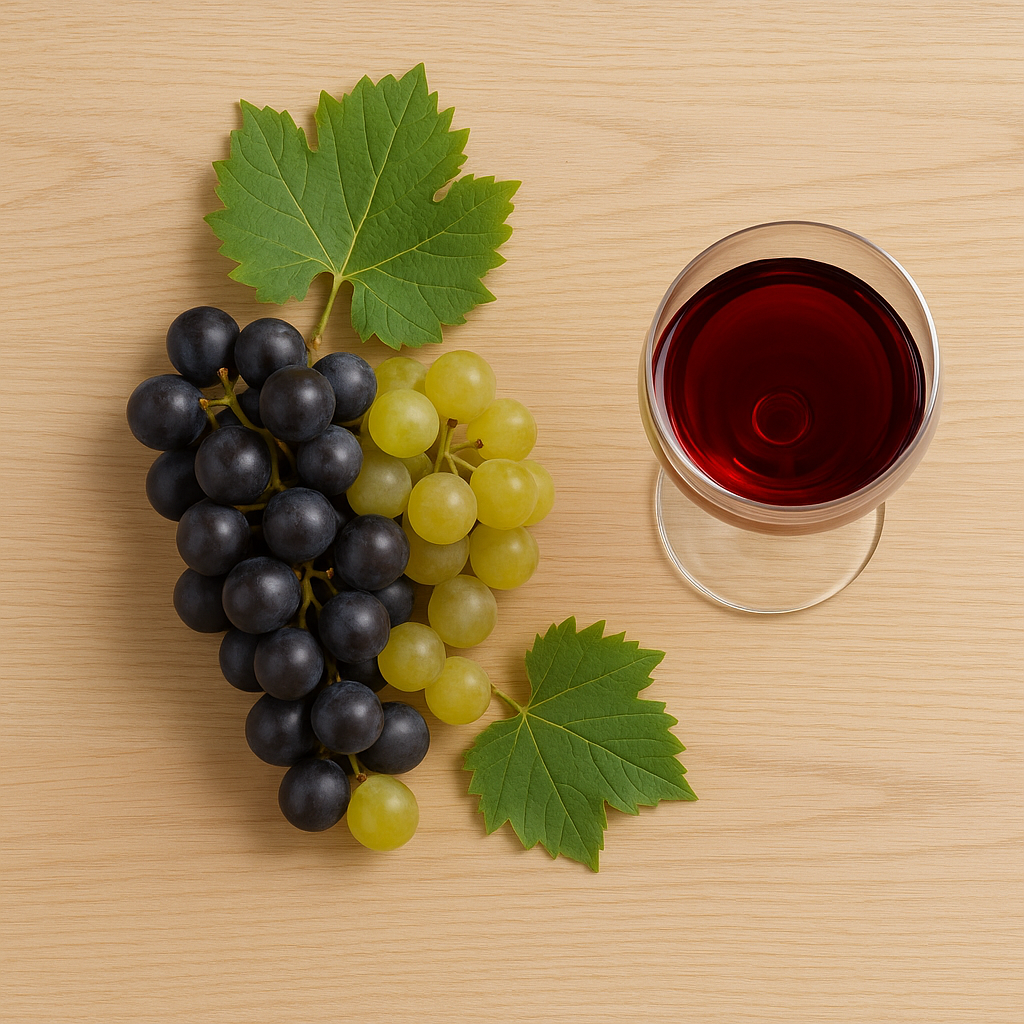
Behind the acronym sit three grapes doing three separate jobs. Grenache piles in the ripe fruit and fleshy body, Syrah deepens the colour and adds a peppery lift, and Mourvèdre supplies the tannin and grip that stop the blend going soft. No single one of them makes a great wine alone; blended, they cover each other’s weak spots. Southern France worked this out centuries ago, and winemakers in Australia, California and Washington State have since borrowed the formula, adjusting the ratios to suit their own climate and grapes.
Why does Grenache need covering for at all? Because on its own, especially in a hot year, it can end up soft, high in alcohol, a bit shapeless. Mourvèdre is the awkward hire that fixes this: a stubbornly late-ripening grape that struggles much north of the Southern Rhône, but one that reaches ripeness at lower sugar levels than Grenache — so it firms up the wine without dragging the alcohol even higher. Syrah, the third member, is the easiest of the trio to grow well and the one that gives the blend its colour and spice almost anywhere it’s planted.
The balance has shifted over the decades. Grenache used to dominate almost everything down here, then eased off a little after the millennium — trade opinion links this to warmer vintages, growers wanting less of a grape that already runs hot. On trade estimates, Syrah has grown from next to nothing in the 1960s to around a fifth of the blend today, and GSM-style wines now account for something like three-quarters of Southern Rhône production. Carignan and Cinsault, once common in the mix, have mostly fallen away.
Curious how far this grape logic stretches beyond what’s covered here? The Grape Guide: how a merchant reads a wine by its grape is where I’ve gathered the fuller picture — the patterns, quirks and shortcuts I lean on after years of fielding the same questions across the counter.
Same three grapes, very different wines by region
The letters GSM don’t guarantee a fixed recipe — the ratio changes hugely by place, and that’s most of what you need to know before buying one.
In the Southern Rhône, individual crus write their own rules. Vacqueyras insists on at least 50% Grenache Noir plus Syrah or Mourvèdre. Vinsobres, cooler and higher up, demands Grenache dominate a blend with Syrah and/or Mourvèdre. Luberon just asks for at least two of the three grapes to make up half the blend. Grignan-les-Adhémar, at the northern edge, wants a minimum 50% Grenache and Syrah combined and turns out a lighter, more affordable style than its neighbours further south.
Australia took the idea and ran a different way with it. McLaren Vale, Eden Valley and Barossa Valley built reputations on old bush-vine Grenache, traditionally blended with Shiraz and Mourvèdre (locally called Mataro) into a low-acid, high-alcohol, unashamedly rich style. The modern trend has pulled back towards freshness — higher acidity, slightly lower alcohol, sometimes whole-bunch inclusion for lift. Grenache is also increasingly bottled on its own there, not just as a blending partner.
Washington State does something else again. Recent trade tastings found the lead grape in Washington GSM wine blends often sits under 50% of the mix, and it isn’t always Grenache — plenty are Syrah-led or even Mourvèdre-led, closer in feel to a Languedoc red than to Châteauneuf-du-Pape.
| Region | Typical lead grape | Style note |
|---|---|---|
| Southern Rhône crus | Grenache | Ripe and generous, lifted by Syrah’s spice |
| Barossa / McLaren Vale, Australia | Grenache (traditionally) | Once jammy and high-alcohol; increasingly fresher |
| Washington State | Varies — often Syrah or Mourvèdre | Closer to Languedoc than to Châteauneuf-du-Pape |
For a first bottle, my steer is simple: a Vacqueyras if you want the generous, Grenache-led original; a Washington Syrah- or Mourvèdre-led blend if the savoury end appeals more. If regional character in a blend interests you, Etna does something similar with entirely different grapes — see What does Etna Rosso taste like? Sicily’s volcano wine, explained.
Is GSM wine good?
Yes, generally — panel results in both Australia and Washington State turn up plenty of well-made GSM wine, though quality tracks the site and the grower far more than it tracks the label. Grenache from gnarled old vines in McLaren Vale or Barossa, or a careful Syrah-led blend from a cooler Washington AVA, can be genuinely excellent. Cheap, high-yield versions can taste sweetish and a bit shapeless — three grapes don’t rescue a boring vineyard.
The numbers back this up without pretending it’s a guaranteed hit. A recent Decanter panel tasting of 48 Washington GSM wines rated the large majority recommended or better — a strong, dependable middle, but nothing rated exceptional or outstanding. An earlier Australian panel of 71 wines found only a handful outstanding, with Barossa Valley and McLaren Vale dominating the top of the table, almost all Grenache-led. The pattern is consistent: old-vine sites in the right hands do very well; everything else is a mixed bag, as it is with most blended styles. The buying lesson: pay for the vineyard, not the acronym.
Grenache’s own solo reputation is climbing too, on the back of recognition for what those veteran vines can do without Syrah and Mourvèdre propping them up. If you want the grape on its own terms, Garnacha: the comeback grape is worth your time.
Is Châteauneuf-du-Pape a GSM wine?
Broadly speaking, this checks out. Grenache, Syrah and Mourvèdre form the true engine room of Châteauneuf-du-Pape, and that holds despite the appellation’s official list running to thirteen varieties — fourteen, technically, if Grenache Noir and Grenache Blanc are tallied separately instead of lumped together. In practice, almost no domaine bothers planting the full roster. Grenache blankets the vineyards, leaving Syrah a distant second at around 11% and Mourvèdre trailing further still near 7% on the appellation’s planting figures. So it’s GSM by nature, though tilted far more decisively toward Grenache than the versions bottled under that same shorthand in Australia or Washington State — the same band, but here Grenache takes every solo.
More than 90% of Châteauneuf-du-Pape’s output is red, and the blend logic there has shifted over time much as it has elsewhere in the Southern Rhône: after a period when Cinsault fell out of favour, Syrah rose through the 1970s, and Mourvèdre has become increasingly popular with producers for that same sugar-and-alcohol arithmetic we met earlier — doubly useful in a warming climate. If you want the full story on what actually makes the appellation tick and whether the price tag holds up, read What makes Châteauneuf-du-Pape famous — and is it worth it?
How to serve a GSM red without fighting it
None of this needs special treatment, and that’s part of its appeal. A GSM red wine blend is generally happiest a touch below room temperature — properly cool cellar temperature rather than fridge-cold, which mutes the fruit and hardens the tannin. A glass with a bit of bowl to it helps, since these wines tend to be aromatic rather than shy.
On the table, Grenache-heavy styles from the Southern Rhône or Barossa suit a Sunday roast lamb, or anything with rosemary and garlic doing the heavy lifting. Syrah-led versions, more common from Washington or Vacqueyras, take to peppery stews and tomato-based ragù without much bother. Simple pairing, no fuss — the wine’s already done the hard work of balancing three grapes; don’t overcomplicate what goes next to it. If Sunday lamb is a fixture in your house, honestly, a Grenache-led GSM is one of the most reliable bottles you can keep in the rack for it.
What it costs, in shape
The spread here is wide, and worth knowing before you pick a bottle off the shelf. Grignan-les-Adhémar and everyday Côtes du Rhône rouge sit at the inexpensive end — lighter, earlier-drinking, still recognisably GSM in character. Step up to Vacqueyras and Vinsobres and you’re paying for concentration, structure and a cooler, more deliberate style of Grenache. Gigondas and Châteauneuf-du-Pape occupy the premium end of the Southern Rhône, where old vines and lower yields show.
New World GSM wine blends can undercut all of this at the everyday end, and Washington in particular has built a reputation for well-priced, well-made bottles that don’t try to be Châteauneuf-du-Pape and are better for it. The shape is the same everywhere, though: more concentration and older vines cost more, and a cheap GSM blend wine is rarely trying to be a serious one — nor should it. Match the bottle to the evening, not the other way round, and the whole category becomes very easy to buy well.
Questions customers ask us
What does GSM stand for in wine? Grenache, Syrah and Mourvèdre — the three red grapes blended together in this style, most associated with the Southern Rhône. You’ll sometimes see Syrah written as Shiraz and Mourvèdre called Mataro, especially on Australian and Californian labels.
Is Grenache the same as Garnacha? Yes — Grenache Noir and Garnacha Tinta are the same grape, just named differently either side of the Pyrenees. It’s the backbone of most red wines in the southernmost parts of France and a staple across Spain, including Rioja.
Is Mourvèdre the same as Mataro? Yes, in Australia and California it’s traditionally been labelled Mataro rather than Mourvèdre, though the grape is identical. It’s also the defining grape of Bandol in Provence, where it’s grown as a single variety rather than blended.
The merchant’s last word
I sold GSM as one thing for years — Grenache-heavy, Rhône-style, done — until a Washington bottle turned up on my counter that was mostly Mourvèdre and tasted nothing like Châteauneuf-du-Pape. Good wine, just not what I’d promised the customer. Ask who’s actually leading the band before you buy, not just the three letters on the label. Fancy comparing a few side by side? Browse the grape variety cellar — pick one Rhône, one Aussie, one American, and you’ll hear the difference in the first glass.



