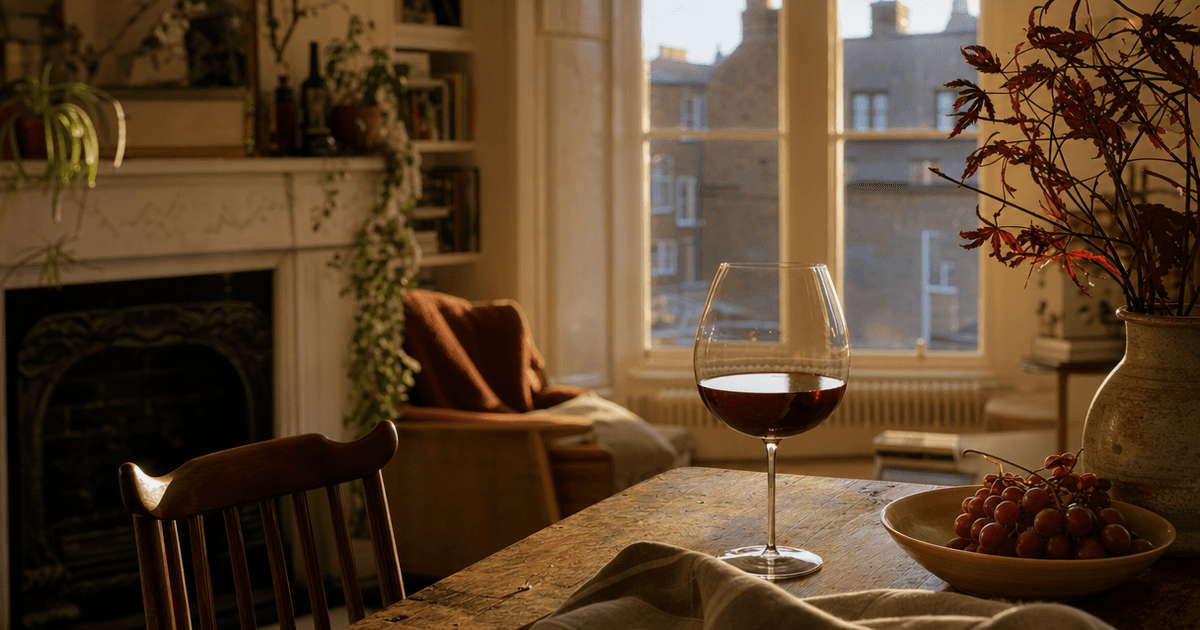
Gamay grape wine is the only bottle in my cellar with an eviction notice in its paperwork — banished from Burgundy’s Côte d’Or by ducal edict in 1395, by name, for the crime of being too generous. Five centuries on, most people still meet it by accident: a bottle of Beaujolais Nouveau pressed into their hands one November, served too cold, judged too quickly. Gamay Noir à Jus Blanc, to give it its full name, is a black grape with pale flesh, the natural offspring of Pinot Noir and the obscure white grape Gouais Blanc — and nearly everything in today’s glass traces back to that expulsion: the granite hills of Beaujolais it landed in, the low bush vines that tamed it, the bright style the region built on its back. By the end of this you’ll know what’s actually in the glass, how it stacks up against its famous half-sibling Pinot Noir, and which shelf to reach for depending on the night you’ve got planned.
What kind of wine is Gamay?
Gamay is a light to medium-bodied red, high in acid, low in tannin, usually made by carbonic or semi-carbonic maceration — whole bunches go into the tank, the fruit at the bottom gets crushed under its own weight, and the rest ferments inside its own skin under a blanket of carbon dioxide. That’s what gives gamay red wine its calling card: a bright, almost translucent purple, a rush of cherry and strawberry, sometimes a streak of banana or bubblegum, and a snap of acidity instead of a grip of tannin.
The technique is often credited to Beaujolais, but versions of carbonic maceration were being worked out through French wine research earlier in the twentieth century, long before the region made the method famous. What Beaujolais really did was popularise its own take on it — and increasingly, especially in the crus, blend it with proper barrel ageing rather than rushing the wine to market. I used to pour every Gamay stone cold and call it a job done. Took me longer than I’d like to admit to learn the better crus want a slightly higher temperature and a bit of air, same as you’d give a young Burgundy.
Are Beaujolais and Gamay the same?
No — Beaujolais is the place, Gamay is the grape. The great majority of the Beaujolais vineyard is planted to Gamay Noir à Jus Blanc, with most of the small remainder Chardonnay. Beaujolais is where the grape reaches its fullest, most complete expression, but Gamay grows well beyond that fence line — in the Loire, Switzerland, Oregon, and increasingly Canada.
That eviction notice has a name on it: Philip the Bold, who in 1395 banned Gamay from the Côte d’Or proper, judging it an inferior, over-generous vine unfit to sit alongside a duke’s Pinot Noir. Gamay simply moved south and found granite soils in Beaujolais that suited it perfectly, trained low as bush vines (gobelet) to keep its natural over-generosity in check.
Administratively, Beaujolais still gets filed under greater Burgundy, mostly for reasons of old trade politics rather than shared character — the soils, climate and grape are genuinely their own thing. Similar old vineyards turn up in less obvious corners too: the Coteaux du Lyonnais, and the Côte Roannaise further up the Loire, both once bigger than people now remember, both still working the same grape on the same kind of rough granite. If you want the fuller picture of how Burgundy’s villages and crus earn their prices, Burgundy, decoded: villages, crus and why it costs what it costs is worth a read alongside this.
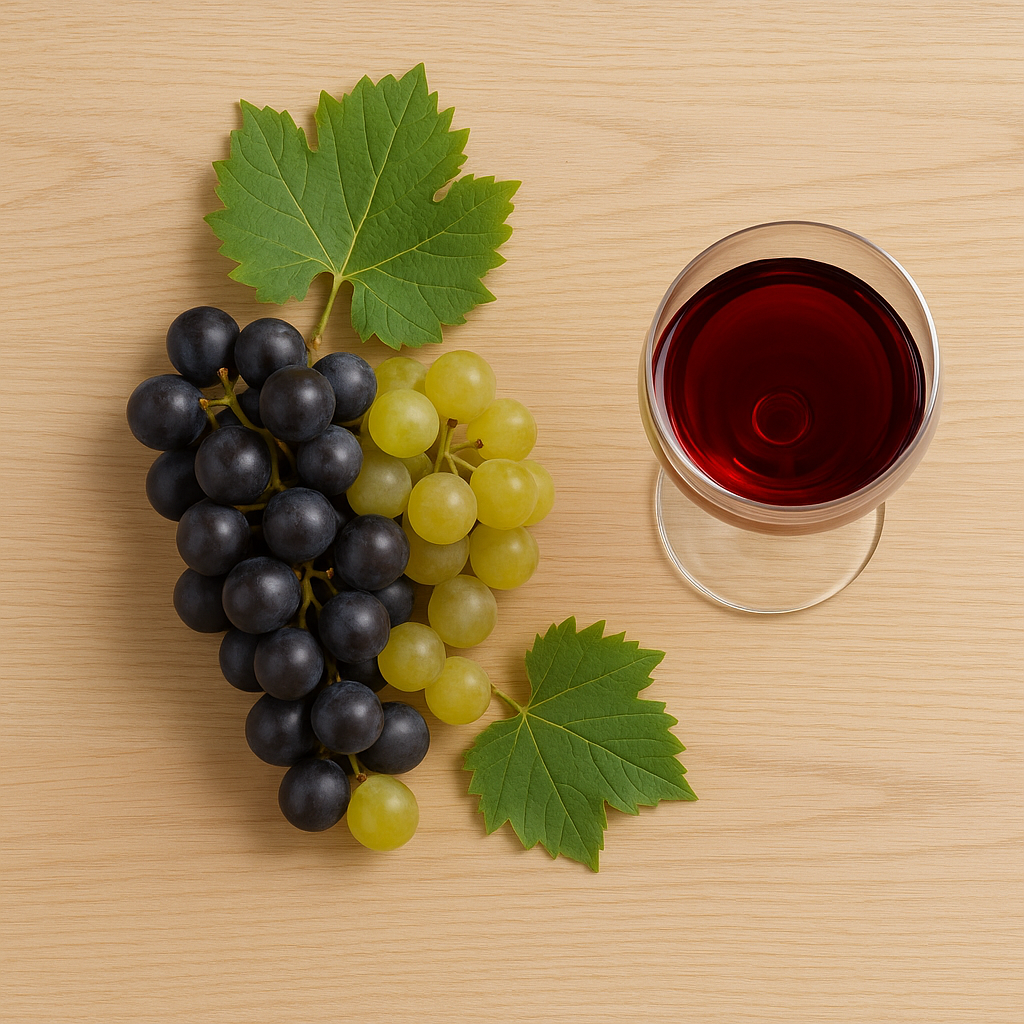
What is Gamay grape similar to?
Genetically, Gamay is a half-sibling of Chardonnay, Aligoté and Melon de Bourgogne — all children of the same prolific white grape, Gouais Blanc, crossed with Pinot. In the glass it sits closest to other light, fresh reds: a well-made Dolcetto from Piedmont, or a Loire Cabernet Franc with its cool, leafy snap — nothing broad-shouldered, nothing that needs decanting for an hour.
There are curiosities worth knowing before you buy. Red-fleshed “teinturier” versions of Gamay exist — old colour-bearing crossings identified in Burgundy generations back — historically used to bolster colour in thin blends, and still planted in small pockets of the Mâconnais and Touraine. In Burgundy, Gamay also turns up blended with Pinot Noir in Bourgogne Passetoutgrains, a rustic, savoury everyday red made under its own appellation rules, that mellows nicely with a year or two in bottle.
And a word of warning if you’re shopping further afield: some Californian plantings labelled “Gamay Beaujolais” turn out on closer inspection to be a clone of Pinot Noir, and “Napa Gamay” is often the grape Valdiguié — neither one the grape you think you’re buying. If you want the wider grape family tree laid out properly, The Grape Guide: how a merchant reads a wine by its grape is the place to go next.
Is Gamay wine like Pinot Noir?
Related, yes — Gamay is literally Pinot Noir’s own offspring — but it isn’t a stand-in for it. Standard Beaujolais is paler, brighter and built for drinking within a couple of years. The ten Beaujolais crus, made more like red Burgundy with proper barrel ageing, can show a genuinely Pinot-like savoury depth and the patience to age for years, not months.
| Beaujolais (AOC/Villages) | Beaujolais Cru | Red Burgundy (Pinot Noir) | |
|---|---|---|---|
| Body | light | medium | light-medium to full |
| Tannin | low | medium | medium to firm when young |
| Best drunk | within 1-2 years | 5-10+ years | often decades, top wines |
| Price shape | inexpensive | mid-priced | mid to very high |
That price gap is the real story for a shopper. A cru Beaujolais can offer a fair slice of what red Burgundy delivers — structure, ageing, a savoury finish — without the Côte d’Or price tag. It’s the same trick, in principle, that makes a château’s second label worth seeking out; if that idea interests you, Second wines: how to drink a great château without the grand vin price makes the case in more detail.
Picking your bottle: from everyday Gamay to the ten crus
Three tiers, roughly, and it pays to know which one you’re holding. Beaujolais AOC is the largest, lightest tier — an easy, chillable gamay wine for a Tuesday with not much fuss attached. Beaujolais-Villages, from the granite communes in the north of the region, tends to show riper fruit and a touch more structure, often with that kirsch lift you get from semi-carbonic maceration.
Then come the ten crus — Morgon, Fleurie, Moulin-à-Vent, Brouilly, Chénas and the rest — each a single named appellation with its own character, generally the wines built with real ageing in mind. Not bad for a grape once marched out of Burgundy by decree: the evicted vine ended up with ten named appellations of its own. That’s the shape of gamay grape wine as most people actually meet it in a shop: three tiers, three different Tuesdays.
Serve it a shade cooler than a typical red — somewhere around 13-14°C, not fridge-cold — and it does real work at the table. A roast chicken, a board of charcuterie, a bowl of lentils on a cold night: Gamay’s acidity was built for exactly this kind of everyday cooking, not a special-occasion roast.
Questions customers ask us
Is Gamay a red or white wine? Almost always red — the “jus blanc” in its full name refers to the pale juice inside black skins, not a white wine. A handful of rare red-fleshed teinturier versions exist but you’re unlikely to meet one on a shop shelf.
Does Gamay wine age well? Most doesn’t need to and isn’t meant to — Beaujolais AOC and Villages are built for drinking young. The ten crus are the exception, ageing comfortably for five to ten years and sometimes longer.
Is Beaujolais Nouveau bad wine? Not bad, just a different job — a quick, cheerful wine rushed to market the same November it’s picked. It’s simply not built to represent what Gamay can do further up the quality ladder.
Which Beaujolais cru should I try first? Fleurie is the easiest introduction — perfumed, silky, not too serious. Morgon shows more grip and is worth trying once you know you like the style.
The merchant’s last word
I’ve sold Gamay wrong for years — poured it too cold, filed it under “cheerful but simple” and left it there. Six centuries after the duke’s edict it’s still being underestimated; it deserved better shelf space than that, and so, probably, do you. Give the crus a proper look before you decide what Gamay is capable of. Come and browse the grape variety cellar and see where you land.



