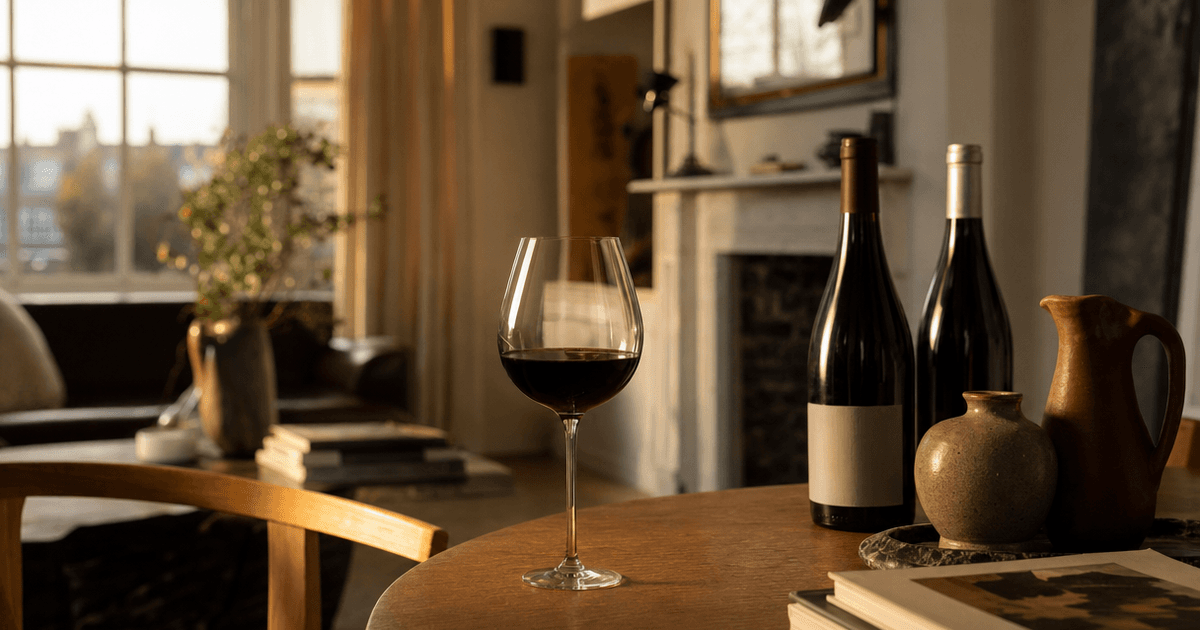
Rioja splits, roughly, into two camps that can taste like they’ve come from different countries even though both carry the same DOCa label. One camp ages a long time in American oak and ends up soft, dried-fruit, almost savoury. The other picks riper, uses French oak, and gets the wine into your glass much sooner. By the end of this you’ll know which one wants Tuesday’s hake supper and which one earns its place next to Sunday’s slow-roast lamb — and why the label alone won’t always tell you which camp you’re drinking.
What is the difference between traditional and modern Rioja?
The old style spends years in American oak before it’s even released, and that time shows up as dried fruit, cured meat, mushroom, a streak of vanilla, all sitting on a lighter frame with modest alcohol. The newer style does the opposite on every count: riper grapes, French oak, less time in barrel, bottled younger so the dark fruit and firmer tannin stay intact. One tends to follow the Crianza/Reserva/Gran Reserva ageing ladder; the other often skips ageing categories altogether and just calls itself vino de autor — “wine by the author,” more or less, a way of saying this bottle answers to nobody’s rulebook.
There’s a rough date you can hang this on. By the late 1970s, the aged, vanilla-scented style was simply what “Rioja” meant to most drinkers outside Spain — nobody needed to call it traditional, because there wasn’t yet anything to distinguish it from. Then Ribera del Duero, further south, started turning heads in the late 1990s with darker, richer reds, and a good number of Rioja winemakers answered back: riper fruit, French barrels, wine on shelves faster. Two schools hardened, and neither has gone away.
A third strand has grown up more recently, and it’s less about oak and more about place — smaller sites, lighter wood, earlier bottling to keep things fresh, and a real swell of interest in single-variety Garnacha. Some in the trade call it post-modern Rioja. I’d just call it Rioja getting curious about where the fruit actually grows, rather than only how it’s blended and aged afterwards. There’s a live argument buzzing around this — whether chasing single vineyards risks turning a region built on blending across villages into something closer to Burgundy, obsessed with the individual plot. It isn’t settled, and I’m not sure it needs to be. Most bottles on shelves today land somewhere between the old poles anyway, not fully one thing or the other.
What style of wine is Rioja?
Red dominates, but Rioja also makes white and rosé wine, and Tempranillo is the backbone of almost everything red. Body swings from light, fresh joven reds all the way to dense, structured Gran Reservas, with whites (mostly Viura) and pale rosados sitting alongside as smaller but genuine categories in their own right. It’s a family of styles, not one flavour you can pin down in a sentence.
Geographically, the region breaks into three subzones — Rioja Alta, Rioja Alavesa and Rioja Oriental (the area used to be called Rioja Baja) — and grapes have long moved between them, with cooler-zone producers reaching into the warmer Oriental villages for the Garnacha they can’t easily grow at home. Reds typically blend Tempranillo with some mix of Garnacha, Graciano and Mazuelo, and a splash of Cabernet Sauvignon shows up now and then in more modern bottlings. Whites traditionally blended Viura with Malvasía and a touch of Garnacha Blanca; today’s white Rioja leans closer to pure Viura, fermented cool in steel, though a handful of producers never stopped making oak-aged whites, and by the mid-1990s barrel fermentation was coming back into fashion more broadly. There’s a sparkling category too — Espumoso de Calidad de Rioja, made by the traditional method since 2017 — and rosado is worth a proper look: a growing group of pale, Provençal-style wines now sits at the premium end, a real shift from the deeper pink rosados the region used to be known for.
If you want the wider map — Albariño, Ribera del Duero, sherry and the rest — the Rioja and beyond: Spain for people who love flavour guide is the place to start.
How to spot the style before you pour
Labels help, but not as much as you’d hope — plenty of modern bottles skip the ageing category entirely. Here’s the shape of it:
| Trait | Traditional style | Modern style |
|---|---|---|
| Oak | American, often well past the legal minimum | French, newer barrels, less time |
| Label | Crianza / Reserva / Gran Reserva | Often unclassified — “vino de autor” |
| Aroma | Dried fruit, cured meat, mushroom, vanilla, coconut | Dark fruit, riper tannin, spice, less vanilla |
| Colour & body | Lighter, brick at the edges with age | Darker, denser, more concentrated |
| Release | Later — years in barrel and bottle before sale | Earlier — sometimes within a year or two of harvest |
Neither column is “better.” I sold the old style for years assuming everyone wanted soft and cigar-boxy, and missed the customers who just fancied a proper mouthful of dark fruit on a Friday night. Ask what the wine’s going next to at the table, and the answer usually sorts itself out — which is exactly what the next bit is for. If ageing categories are still fuzzy ground for you, Rioja Crianza, Reserva, Gran Reserva: the ageing ladder walks through what each tier legally requires.
What is Rioja style food?
Most Rioja gets drunk in Spain, and most of that in bars and restaurants rather than someone’s front room — this is a wine built for the table, not the tasting bench. Fresher, less oaky bottles want lighter, punchier dishes; long-aged traditional Reservas want something slower and richer sitting next to them.
Start at the bar: a plate of jamón, a few olives, and a young joven or lighter Crianza doing the work — bright, unfussy, built for standing up and chatting rather than being studied. Move on to hake with peppers and a bit of spice, and you want acidity and a light touch, not something sweet and heavily oaked flattening it. Push further — roast lamb, game, a properly aged Manchego — and that’s where a Gran Reserva, gentled by years of American oak, earns its keep. The dried-fruit and cured-meat character of the old style genuinely echoes what’s on the plate, and that’s not an accident. It’s decades of Spanish bars quietly working out what goes with what.
If you’re planning to open something with real age on it — a twenty-year-old Gran Reserva, say — the mechanics of decanting and timing matter more than people expect, and How do you serve an aged Barolo? Decanting, glasses and timing covers ground that applies here too, sediment and all.
Questions customers ask us
Is Rioja always red? No — it’s mostly red, but proper white and rosé versions exist and are worth seeking out, especially the old-style oxidative whites a handful of traditional producers have kept alive.
Which style ages better in my own cellar? A traditional Gran Reserva is usually released close to its drinking window already; the fresher, modern style is generally built for earlier drinking rather than decades in a rack.
Does “modern” mean cheaper? Not necessarily — some vino de autor wines, made from low yields and new French oak, sit at the premium end, sometimes above classic Gran Reserva pricing.
Is there a Rioja for someone who loves lighter, more elegant reds? Look toward the fresher, site-focused wines coming out of the region now, or step sideways into Oregon Pinot Noir: Burgundy’s American cousin? for a similar lightness of touch from an entirely different grape.
The merchant’s last word
I keep a traditional Gran Reserva and a modern, French-oaked bottle on the same shelf on purpose. Customers taste them side by side and the penny drops faster than any explanation of mine ever manages. Neither is the “correct” Rioja — pick whichever suits Tuesday’s dinner, not whichever sounds more impressive at the till. Come and browse the spain cellar and I’ll point you toward both.



