How to serve Port wine properly isn’t complicated, but nobody quite teaches you — you just watch someone’s uncle do it wrong at Christmas and copy him. Port is a fortified wine from the Douro valley in northern Portugal, made in styles running from young, fruity ruby through to decades-old tawny and long-lived vintage bottlings. Get the temperature, the glass and the timing right and even a modest bottle sings. By the end of this you’ll know which styles need decanting, what temperature suits which, and what actually works on the cheeseboard.
What is the proper way to drink Port wine?
There isn’t one single proper way — the styles differ, and the handling differs with them. Broadly: check whether the bottle needs standing upright first, pick a decent glass rather than a thimble, serve at the right temperature for that style, and pour a modest measure. Port is a wine for sipping after the meal, not glugging through it.
Wood-matured styles — ruby, tawny, white, most LBV — are bottled ready to drink and stored upright on the shelf. Bottle-matured styles — vintage, crusted, some LBV — throw sediment and are stored on their side, label up, until you’re ready to decant. Once opened, ruby and filtered LBV hold their freshness for a couple of weeks; aged tawny and Colheita, having already spent years oxidising gently in cask, last rather longer — I’ve kept an opened tawny on the go in the fridge for a fair while with no complaints. Vintage Port, once decanted, is a different story and is best drunk within days.
Why is Port served in a small glass?
Port is served in a smaller glass mostly because you drink less of it in one sitting, not because it needs squeezing into a thimble. The glass should still be a proper tulip-shaped bowl, filled only two-thirds full, leaving room to swirl and get your nose in.
I’ve seen vintage Port poured at a smart do, into glasses filled right to the brim — no room to swirl, no aroma, just a very well-dressed mistake. There is an official-style Port glass, apparently designed some years back by a Portuguese architect with a square stem and a thumb-mark for where to hold it, though I’ve never felt short-changed using an ordinary wine glass instead. You don’t need the fancy one. You do need a glass with a proper bowl, and restraint on the pour — swirling in a glass filled to the brim just ends in a soaked tablecloth.
Is Port wine supposed to be served chilled?
Some styles, yes; most, no. White Port wants a proper chill straight from the fridge. Tawny and Colheita are best “cellar cool”, roughly 10-12°C. Ruby, vintage and crusted Ports should sit on the cooler side of room temperature — not chilled at all. Over-chill any of them and you mask the aroma rather than sharpen it.
Here’s the shape of it by style:
| Style | Serving temperature | Note |
|---|---|---|
| White Port | Straight from the fridge | Good with tonic as an aperitif |
| Ruby / Reserve | Cool side of room temp | Don’t chill |
| Tawny NV / Colheita | Cellar cool, ~10-12°C | Colder in summer |
| Aged Tawny (10/20/30/40-yr) | Cellar cool | An hour or two in the fridge is plenty |
| Vintage / Crusted / unfiltered LBV | Cool side of room temp | Decant first |
Bear in mind that “room temperature” was set long before central heating — a modern sitting room can run several degrees warmer than the dining rooms the old rule was written for, and a Port served too warm shows more spirit than fruit on the nose. There’s an old Douro habit of taking a small glass of chilled tawny well before evening — worth remembering that a chilled tawny is a proper, sanctioned pleasure, not a shortcut.
Decanting Port: what needs it, what doesn’t
Vintage Port, crusted Port and unfiltered LBV all form a crust of sediment in bottle and need decanting — no way round it, and it’s genuinely straightforward once you’ve done it once. Ruby, tawny, Colheita, white and filtered LBV are fined and filtered before bottling and don’t need decanting at all, though a tawny does look rather handsome in a clear decanter if you fancy the theatre.
For the wines that do need it: stand the bottle upright for a couple of hours beforehand so any disturbed sediment settles. Use a corkscrew with a sharp point and an open helix — a cheap solid worm will shred a soft, aged cork, and old corks often come out in more than one piece anyway, which is exactly why a funnel with a fine mesh, or a clean nylon stocking, earns its place in the kit. If there’s a wax capsule, a sharp tap with the corkscrew handle cracks it away.
Pour steadily, keeping the label or whitewash mark uppermost, against a good light so you can watch the sediment collect in the shoulder of the bottle — stop the moment it starts sliding towards the neck. A candle behind the bottle looks romantic but does little, since vintage Port is bottled in dark glass precisely to keep light out; good light behind the decanter’s neck as you pour matters more. Skip the theatrical stuff, too — red-hot tongs and ornamental cradle-decanters are mostly museum pieces now. A steady hand is genuinely the safest tool you own. If you want the fuller technique on judging when a wine needs the ritual at all, our guide on decanting at home: what needs it, what doesn’t covers the wider picture, and decanting Bordeaux: how long, and does it really matter? is useful if you’re weighing up a still red for the same dinner.
The cheese question
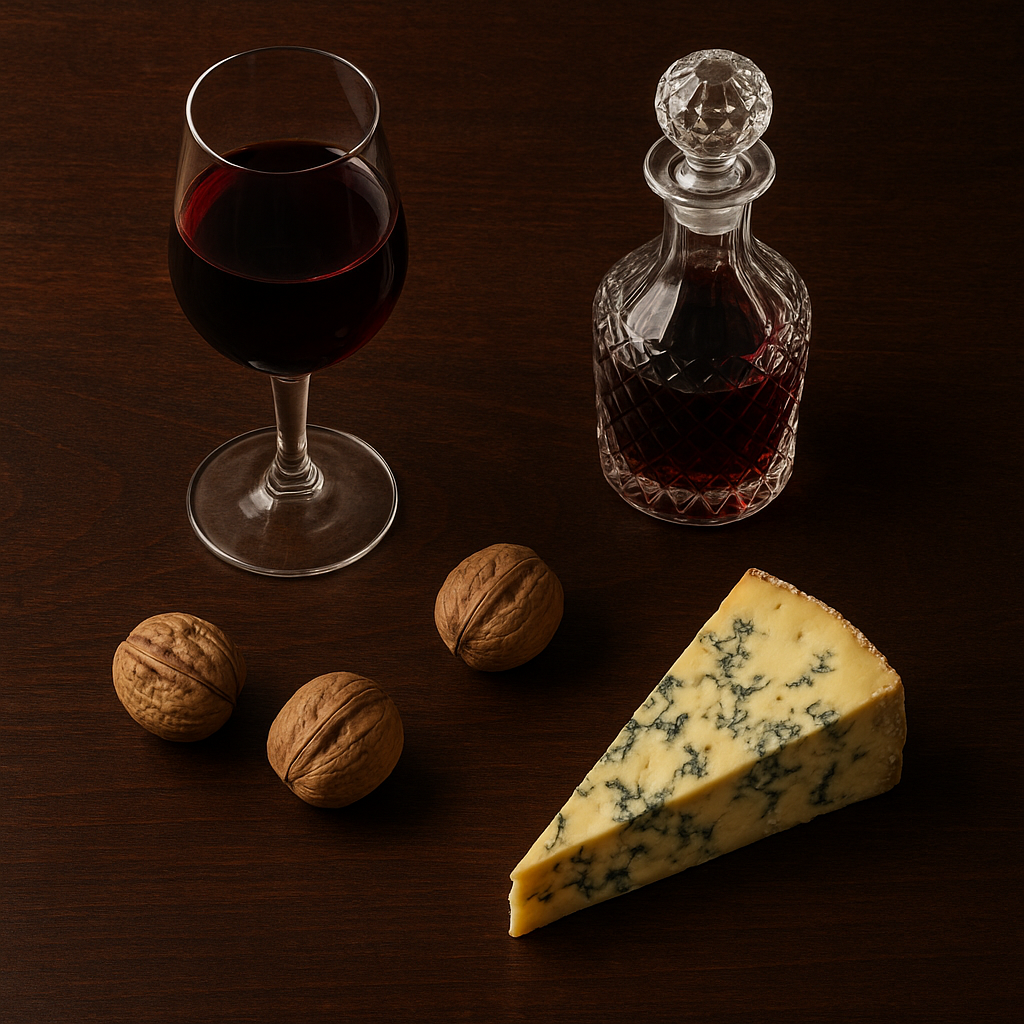
Stilton and vintage Port is the pairing everyone knows, and it earns its reputation — blue cheeses generally, plus dark chocolate and walnuts, suit the fruit and structure of ruby and vintage styles. But it isn’t the only route, and treating it as the default sells the other styles short.
Aged tawny, with its nutty, caramel character, sits happily with aged Cheddar or Pecorino, dried fruit, or a bowl of walnuts rather than blue cheese specifically. White Port, served chilled, works better as a pre-dinner glass with almonds or apples than anywhere near a cheeseboard at all. It’s worth matching the style of Port to the cheese rather than reaching for Stilton by default every time.
Questions customers ask us
What is the etiquette for drinking Port? At a formal table the decanter is passed to the left; if it stalls, tradition has someone ask whether their neighbour knows the Bishop of Norwich, as a polite nudge to keep it moving. It’s served after the meal, not alongside it.
How do I serve white Port wine? Straight from the fridge, in a decent-sized glass — treat it more as a chilled aperitif, perhaps with tonic, than a match for the cheeseboard.
Do I need a special Port glass? Not essential. A proper tulip-shaped bowl filled two-thirds does the job; a specially designed Port glass exists and is lovely, but your everyday wine glass will serve you just as well.
How long does an opened bottle keep? Ruby and filtered LBV hold up for a couple of weeks; aged tawny and Colheita rather longer; vintage, once decanted, is best finished within a few days.
The merchant’s last word
I’ve poured Port badly for years without realising it — too small a glass, too warm a room, Stilton on autopilot every single time. None of it’s hard once you know the shape of it: right style, right temperature, decant when the wine actually needs it. For the wider picture on Sherry and Madeira alongside it, have a look at Port, Sherry, Madeira: the wines time forgot (your gain), or go and browse the fortified wine cellar and pick a bottle to try it on properly.