How long to decant Bordeaux wine is the rare claret question where the bottle’s age outranks its address. Bank, commune, classification — the things every other Bordeaux conversation turns on — tell the decanter less than one number: how many years the wine has already had. If you only remember one line from this page, make it this: decant by age, not address — under ten years, think hours; past twenty-five, think minutes. Decanting simply means pouring wine out of its original bottle into another vessel, usually to leave sediment behind and give the wine proper contact with air. It’s a working job, not just theatre with a nice glass jug. By the end of this you’ll know roughly how long to give a young claret versus an old one, what the “20 minute rule” is actually good for, and when three hours in the decanter does more harm than good.
How long to let bordeaux wine breathe?
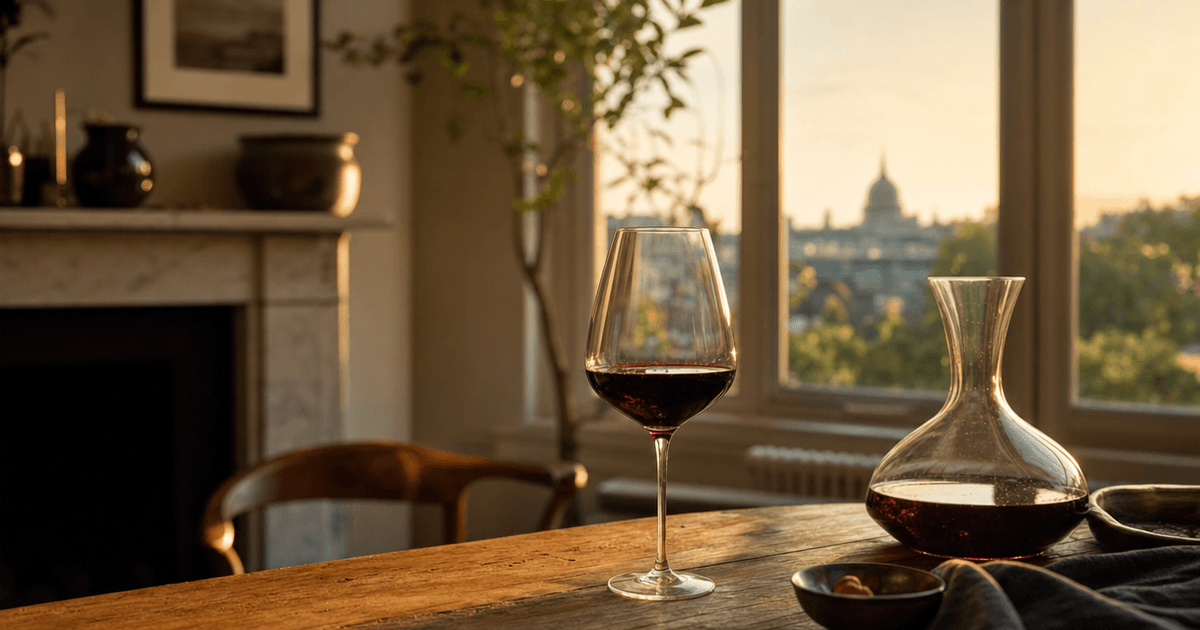
For most Bordeaux worth decanting, an hour to two hours does the job nicely. A young, tannic Left Bank blend — heavy on Cabernet Sauvignon — often wants nearer two to four hours to soften its grip. An older claret, past twenty years or so, needs far less: fifteen to thirty minutes is usually plenty, sometimes just enough time to let the sediment settle out.
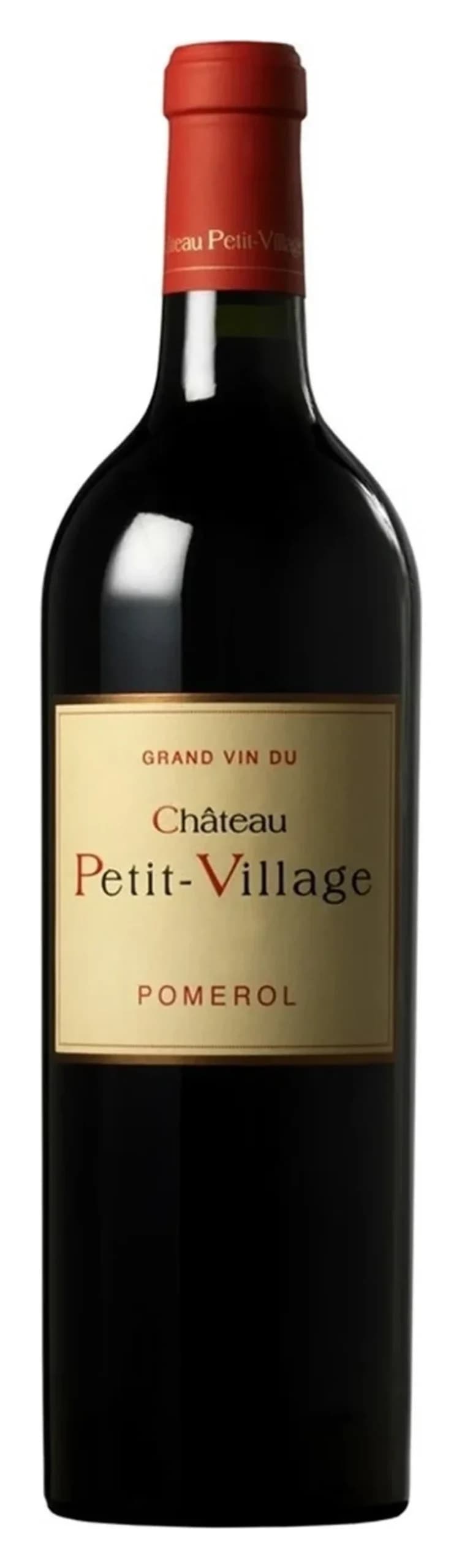
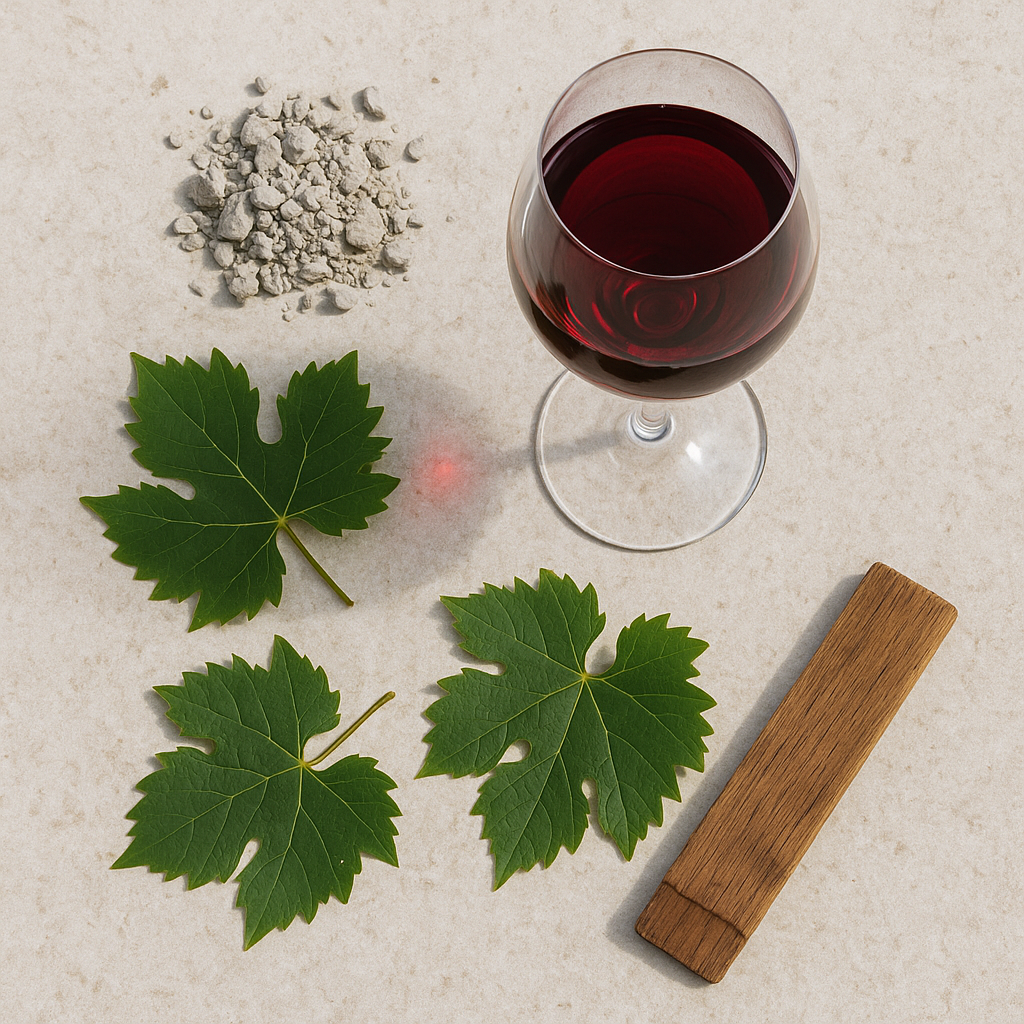
Left Bank Bordeaux — the Médoc and its neighbours — leans on Cabernet Sauvignon for its backbone, and that grape brings a good deal of tannin and colour with it from the skins. That’s rather the point: structure built to soften over decades in the bottle, not the first evening. A bottle opened young is still wearing its armour, and air helps loosen it faster than time alone would in the glass. A Merlot-led right-bank claret — a Pomerol or a St-Émilion — starts life in softer armour, so it generally wants less time in the jug than its Médoc cousin of the same age; useful to know if you’re buying this afternoon for this evening.
Take a well-known, powerful vintage now into its second decade — the kind the trade still talks about for density and grip. Decanted in its youth, it might have wanted a good three hours to unwind. Twenty years further on, thirty to sixty minutes is more sensible; push it further and you risk chasing off the very perfume you decanted it to release in the first place. How long to decant a young Bordeaux and how long to decant that same bottle at twenty-five years aren’t quite the same question — the wine keeps moving, even if the label doesn’t. Which is also a quiet argument for buying two when you find a claret you love: one for tonight’s long decant, one to ask a shorter question of in a decade.
What is the 20 minute wine rule?
You’ll often hear people cite a flat twenty minutes as the answer to breathing time — open or decant the bottle, wait, pour, done. As a rough rule of thumb for a straightforward midweek red, that’s not bad advice at all. But treat it as a minimum, not a formula: a young, tightly wound Bordeaux with real structure needs considerably longer than a lighter, softer red to show what it’s actually got.
Worth knowing why: simply pulling the cork and letting the bottle stand open for twenty minutes barely changes anything at all. The neck of a bottle is a tiny window onto the air, and any shift is close to imperceptible. Real aeration happens once you pour into a decanter with a proper surface area exposed to air — that’s when the balance between the wine and the air above it genuinely shifts, releasing aromatics that had been sitting quiet in the bottle.
So the 20 minute rule works fine as “open it now so it’s ready to pour” for a Tuesday bottle. It does very little for a proper claret carrying fifteen years and a fair bit of tannin still ahead of it — and if your cellar is mostly Tuesday bottles, that’s no bad thing; it just means your money is better spent on the wine than on the glassware.
Is 3 hours too long to decant wine?
For a young, powerful Bordeaux — most well-structured Left Bank vintages under about fifteen years old — three hours is well within reason, even something to aim for. For anything older than roughly twenty-five years, three hours risks stripping the wine of the fruit and perfume you decanted it to show off. Age decides this, not the clock on the wall.
There’s a well-known account in wine writing of a mature large-format bottle where the main reason to decant was sediment removal rather than opening the wine up — a delicate, decades-old aromatic structure can be lost if you leave it too long in the jug. Yet the same tasting noted that a richly tannic wine, even with three decades on it, held onto its fruit and power over several hours — bigger formats age more slowly, and tannic structure buys you time.
Trade opinion elsewhere suggests mature, light-bodied wines can open up in ten to fifteen minutes but start fading within about an hour, so three hours would be well past that wine’s best moment. A young, full-bodied, tannic bottle, on the other hand, might need over an hour and comfortably tolerate up to four. The same three hours is generous and safe for a ten-year-old claret, and something of a gamble for a wine from the mid-1980s. If you’re choosing between two bottles for a dinner that starts in an hour, that’s the tiebreaker: take the one whose age fits the time you actually have.
How to decant a bottle of Bordeaux properly
Stand the bottle upright for a few hours before opening if there’s noticeable sediment, especially with older wines, so it settles at the base rather than clouding your pour. If the bottle’s been jostled recently — moved from a rack, just delivered — give it that standing time regardless of age.
Decant with light behind the bottle so you can spot sediment reaching the shoulder and stop pouring in time. For the full method, including how to avoid blaming an innocent cork, see How to Decant Wine: What Needs It, What Doesn’t.
Older corks, particularly anything past twenty years, can crumble on the way out. A small funnel fitted with a fine mesh screen catches the fragments so they don’t end up floating in the glass. None of this needs to be fussy — a jug and a torch on the kitchen counter does the job as well as any crystal decanter. For the fuller picture on what actually needs this treatment and what doesn’t, our decanting at home guide covers the wider territory.
Vintage Port is a different animal entirely — it always needs decanting, sediment or no argument about it — and the timing works quite differently again; that’s one for our guide to serving Port.
What decanting Bordeaux costs you in time and risk
| Style / age | What’s happening in the glass | Suggested decant time | Risk of overdoing it |
|---|---|---|---|
| Young Left Bank claret, under 10 years | Heavy tannin, needs air to soften | 2-4 hours | Low — these wines are built to take it |
| Mid-weight claret, 10-20 years | Softening already, moderate sediment | 30-60 minutes, taste as you go | Moderate — watch for fruit fading |
| Mature Bordeaux, 20-40+ years | Fragile aromatics, sediment removal is the priority | 15-30 minutes, just before serving | High — perfume can vanish fast |
| Everyday claret, filtered | Little to no sediment, minimal aeration benefit | Little or none needed | Negligible either way |
The table isn’t a set of laws — bottles vary, and the only real test is tasting as it goes. It’s also a decent shopping guide read backwards: if you know you’ll never plan a dinner four hours ahead, buy from the middle rows and the wine will meet you where you live.
Questions customers ask us
How long should you cellar Bordeaux? That’s a different question from decanting time, and worth its own answer: everyday claret is made to drink young, while classified growths often want a decade or more before they’re singing. Our Bordeaux guide walks through that map region by region.
Do I need a proper glass decanter? No — any clean, inert jug with room to spare for a full bottle will do the job. The point is surface area and cleanliness, not the crystal.
Should I decant a young Bordeaux the night before a dinner? There’s little to suggest overnight helps much beyond a few hours, and no real downside to opening it earlier in the day if that suits your schedule better. Just don’t expect it to outperform three or four hours by much.
Does it matter if there’s no sediment at all? Less so — if a wine’s been well filtered, decanting becomes mostly about aeration rather than necessity, and plenty of good judges are happy serving straight from the bottle in that case.
The merchant’s last word
I decanted everything for years out of habit, old and young alike, and flattened more than one lovely old claret doing it. These days I ask the bottle’s age before its commune or its classification — it’s the better question, and it took me a while to learn to ask it. Get that right and the rest is just a jug, a light, and a bit of patience. Go on and browse the bordeaux cellar — tell me when the dinner is, and I’ll help you pick a bottle whose timing suits the evening, not the other way round.