How to serve champagne properly is one of those things everyone assumes they’ve got sorted, right up until the cork’s stuck halfway and the bottle’s dripping onto the good tablecloth. Champagne is a traditional-method sparkling wine — the second fermentation happens inside the bottle, which is where the bubbles come from, along with a fair bit of the flavour. Serve it too cold and you mute all that; serve it warm and it turns into a foaming mess on the carpet. By the end of this you’ll know the right chill for the bottle you’ve actually got, which glass earns its keep, and how to get the cork out without anyone ducking.
What temperature should you actually serve champagne at?
Most champagne gets served far too cold — it’s the mistake I see most often, and an easy one to make, even after years behind a wine counter. A simple, youthful non-vintage is happy around 6-8°C — a couple of hours in the fridge, not the freezer. A mature vintage — a decade or more old, properly complex — wants to be nearer 10-13°C, or all you’ll taste is bubbles and acid with nothing behind them.
There’s a rule worth remembering here: the more complex the wine, the less you should chill it. Icing a good vintage champagne down hard is like listening to a record through a wall. If a wine tastes sweeter than you’d like, though, chilling it further genuinely helps — sugar reads as less sweet when it’s colder.
The reference books put the general bracket for sparkling wine somewhere between 6°C and 13°C, and there’s honest disagreement even among the experts about where in that range is “best.” Start a touch cooler than you want, because the glass warms fast in your hand and faster still in a warm room. This, incidentally, is exactly what’s going on when you order champagne in a restaurant and the waiter makes a small performance of presenting the bottle before opening it — partly ceremony, but partly so you can feel that it’s actually at the right temperature before anyone touches the cage.
If you’re choosing a style in the first place rather than just chilling what’s in the fridge, our Champagne, explained by a merchant guide covers the difference between a bright non-vintage and something with real bottle age worth waiting for.
Do you refrigerate champagne?
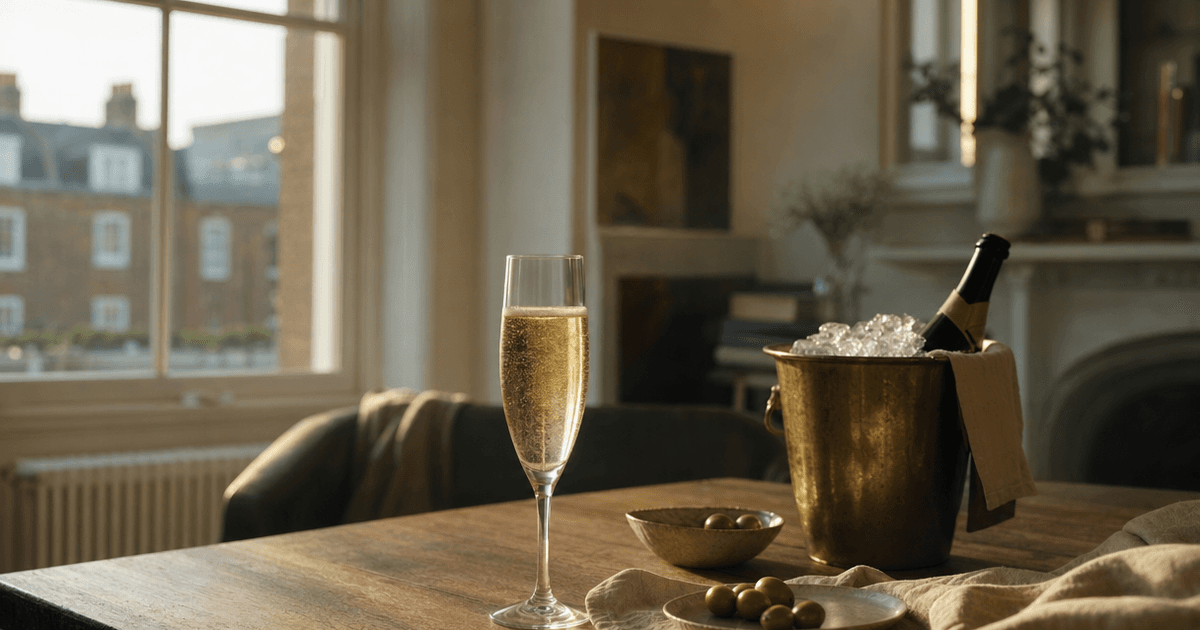
For today’s bottle, yes — an hour or two in the fridge, or twenty minutes in an ice bucket packed with water and ice together (water conducts cold far faster than ice alone). For weeks or months of storage, no. The fridge is a dry environment, and a dry environment eventually shrinks a cork, lets air creep in, and oxidises the wine — plus every time the door opens, light gets at the bottle, which does it no favours either.
Keep spare bottles somewhere cool, dark and reasonably stable instead — under the stairs beats the kitchen worktop every time. Some cellar masters store bottles lying flat to keep the cork in contact with the wine and stop it drying out; not essential for a bottle you’ll drink this month, but worth doing if you’re holding onto something for longer.
Once it’s open, don’t panic about finishing it in one sitting. A proper champagne stopper gives an airtight seal, and stoppered in the fridge a bottle keeps for a couple of days — some younger champagnes actually show better on day two, once they’ve settled down a bit.
Glasses: flute, coupe, or something more sensible?
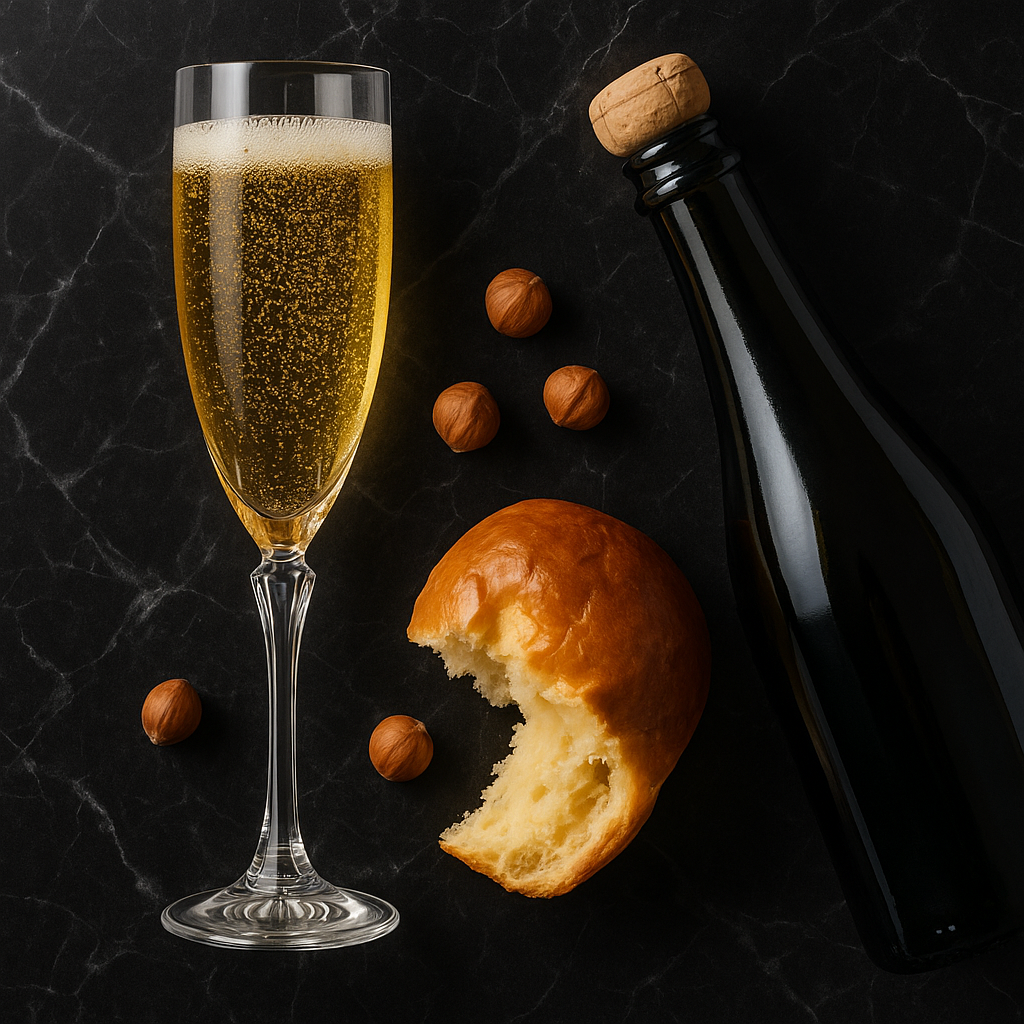
Here’s an unpopular opinion from behind the counter: the flute is overrated, and the coupe is worse. A flute shows off the bubbles beautifully but its narrow rim traps the aroma down near the base, so you smell less than you should. The coupe — all shallow bowl and wide surface — looks glamorous and loses its fizz within minutes. A plain white wine glass, tulip-shaped, does the actual job better on most champagne worth drinking.
| Glass | Good for | The catch |
|---|---|---|
| Flute | Watching the bubbles rise, cheap fizz at a party | Aroma stays trapped low in the glass |
| Coupe | Looking the part, pouring at a big event | Loses effervescence fastest, tips over easily |
| White wine glass | Aged, complex champagne with real aroma to show | Looks less “special” if that matters to you |
The reason a plain glass wins on flavour: bready, brioche-y notes from long lees ageing need room to open up, and a wider bowl gives them that room. Professionals also prefer clear, thin-rimmed, stemmed glass generally — the stem keeps your hand off the bowl so you’re not warming the wine, and clear glass lets you actually see what’s in front of you.
One habit worth stealing from proper wine service, champagne included: don’t fill the glass past a third or half full. It looks stingier than you’d like, but it leaves room for the aroma to collect and for you to give it the odd gentle swirl. Our glassware that matters piece goes further into which shapes are worth the cupboard space and which aren’t.
How to open a bottle of champagne without a scene
Take the foil off, keeping a thumb over the cage and cork the whole time — under pressure, a cork can genuinely fly. Loosen the wire cage but don’t remove it fully until you’re ready. Hold the bottle at an angle, around 45 degrees, and turn the bottle rather than the cork. Ease it out slowly until you feel it start to give, and you want a soft sigh, not a bang — that’s actually the sign of better control, not a lesser wine.
You’ll sometimes get a little cloud of vapour as the cork comes free — “champagne smoke,” as it’s been nicknamed. That’s the sudden pressure release freezing water vapour for a moment; the pressure inside a champagne bottle is genuinely comparable to a lorry tyre. A well-chilled bottle tends to give you more of that visible cloud; a bottle that’s been sitting warm on the counter is more likely to gush wine everywhere instead of smoking politely, so keep it cold until the moment you open it.
On decanting: it’s become a bit fashionable for big, powerful vintage champagne, but I’m not sold — decanting changes the texture, and not for the better in my view. If a rich vintage feels tightly wound, just open it and let it sit a couple of hours to loosen up on its own; the only time I’d reach for a decanter is when time’s genuinely short, say at a restaurant table where everyone’s waiting. And if a sommelier offers you the cork to smell — it’s a nice gesture, but no real guide to whether the wine’s sound or not.
What are the best nibbles to serve with champagne?
Salty, fatty, savoury things are your friend here — they cut against champagne’s acidity rather than fighting it. Good bread with proper butter, an aged hard cheese, smoked fish, or the classic pairing everyone name-checks for a reason: caviar with champagne, where salt and fat meet all that bright acid head-on. Skip anything sweet; it’ll make even a good champagne taste sharp and thin by comparison.
Match the style if you can be bothered. A blanc de blancs — that’s champagne made entirely from Chardonnay, often from chalky sites around the Côte des Blancs like Avize or Le Mesnil-sur-Oger — has the citrus and mineral edge to sit well with oysters or simple seafood. A rosé champagne, with more red-fruit weight, handles richer canapés and charcuterie better than a delicate blanc de blancs would. A straightforward non-vintage brut is the one that goes with everything on the table, from vol-au-vents to good crisps, which is exactly why it’s the one people buy for parties. If rosé’s your thing, our piece on serving rosé and how cold is too cold is worth a look too.
Worth knowing if you’re hosting a bigger do: a magnum isn’t just for show. Champagne genuinely ages a little more gracefully in a larger format, partly because there’s proportionally less air trapped under the cork, and it’s undeniably a better centrepiece on a table than three standard bottles lined up.
Questions from the shop floor
Should you swirl champagne like a still wine? A gentle swirl is fine and can open the aroma up a bit, especially in a proper glass rather than a flute. Just don’t go at it hard — you’ll knock the fizz out faster than you’d like.
Should you chill the glasses too? No — condensation off a cold glass dilutes the first pour and knocks the fizz down before you’ve even started. Rinse them, dry them properly, and let the wine itself do the chilling.
Is a spoon in the neck a myth? Pretty much, yes. There’s an old bit of kitchen lore that a teaspoon handle down the neck keeps the bubbles in overnight — it doesn’t, or not meaningfully. A proper stopper does the job; the spoon’s just superstition with good marketing.
Can you serve champagne with a main course? You can, though it works better as a starter or right through a meal than as a partner for something heavy like a stew or a steak. A blanc de blancs alongside simple roast chicken or a fish course holds its own fine — it’s rich, fatty, long-cooked dishes where the acidity starts to feel thin.
The merchant’s last word
I sold champagne over-chilled and in the wrong glass for years before anyone told me better — old habits, mostly copied from other shops rather than thought through. Get the temperature right for what’s actually in the bottle, use a glass that shows it off rather than hides it, and the rest is just confidence with the cork. If you want something worth doing all that for, browse the champagne cellar.