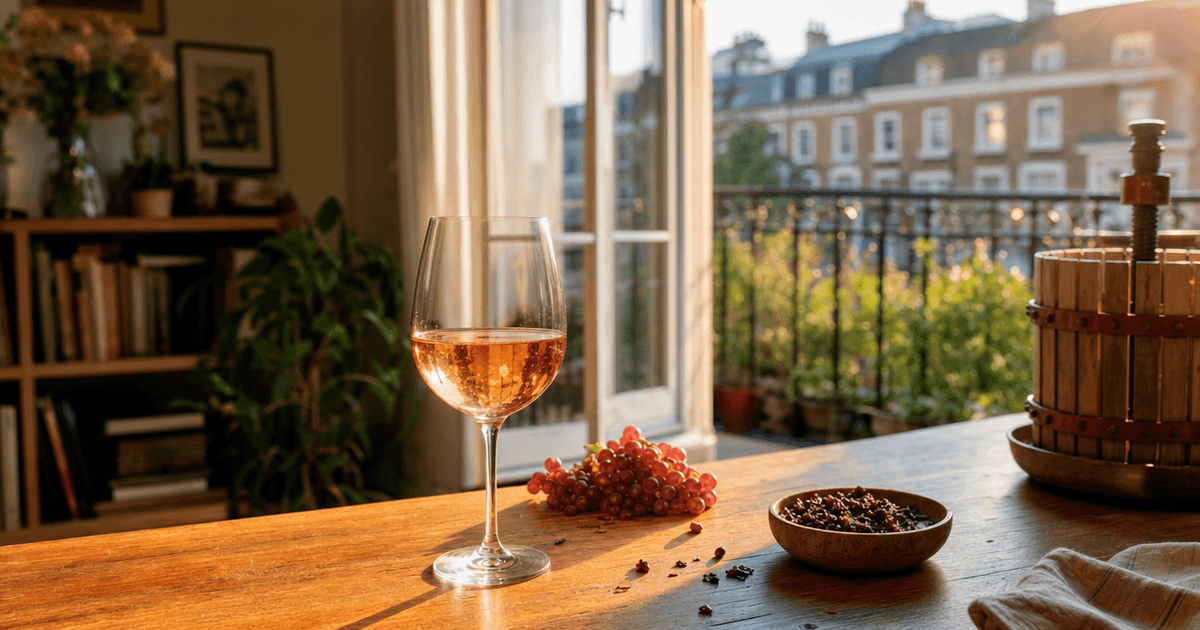
How is rosé wine made? Faster than almost any other decision in winemaking — everything that matters about a pink wine is settled in one narrow window at the crusher, often just a few hours long, before fermentation has even begun. Black grapes get a brief, deliberate brush against their own skins — hours, not weeks — before the juice is pulled away and fermented like a white wine; the colour comes from that controlled contact, not from mixing red and white wine together. Every question you’ll ever ask about rosé — why one is barely blushing and another looks nearly claret — traces back to that short window. By the end of this you’ll know the three routes winemakers take through it, and which style belongs on your table this weekend.
The three ways a winemaker actually makes it
I used to think there was one “proper” method and everything else was a shortcut. Wrong — there are three routes in regular use, and quality producers pick deliberately, not by accident.
- Direct pressing — black grapes go straight to the press, whole or lightly crushed, with almost no time to bleed colour. This gives the palest wines, sometimes called vin gris, and is the standard route in much of Provence today.
- Short maceration — grapes are crushed and left sitting with their skins for anywhere from a few hours to a few days, then drained off and fermented white-style. Longer contact means deeper colour and more flavour; this is the method behind most of the world’s serious rosé.
- Saignée (“bleeding”) — some juice is drawn off early during a red wine fermentation, which concentrates what’s left for the red and gives you rosé as a by-product. It’s cost-effective, though the grapes were grown with red wine in mind, not rosé.
| Method | Skin contact | Typical result |
|---|---|---|
| Direct pressing | Minutes | Palest, vin gris style |
| Short maceration | Hours to days | Most common, wide style range |
| Saignée | Brief, incidental | Often deeper, by-product of red |
Blending finished red wine into white to fake a pink colour does happen, mostly for cheap fizz, but it’s frowned on for still wine and banned in most serious European appellations. Worth knowing, if only so you can raise an eyebrow when someone claims their rosé is “just mixed.”
Is rosé watered down red wine?
No — and this is the one I get asked most, often by someone half-expecting to be told off for not knowing. Rosé isn’t diluted red wine at all. It comes from a completely different decision made at the crusher: how long to leave the juice with the skins, not how much water to add afterwards.
Where the confusion creeps in is saignée, because the rosé really is bled off a red wine tank. But nothing’s watered — it’s simply juice that spent hours, not weeks, in contact with skin. Bordeaux still makes a deeper style called Clairet this way, alongside a paler modern rosé made by direct pressing. Same cellar, two different pink wines, neither one weaker than it should be.

Is Rosé wine made from white grapes?
No, almost always from black grapes — the pink comes from the skins, not the flesh, which is colourless in nearly every grape variety, red or white. That’s also why pressed-off red grape juice on its own looks pale gold, not pink: no skin contact, no colour.
There are exceptions worth knowing rather than memorising. Provence rules allow up to a fifth white grapes in the blend, often Rolle (the local name for Vermentino), mainly to lift acidity and pale the colour slightly. Rosé Port is made from red grapes with minimal skin contact rather than any white fruit. And in parts of Germany, red and white grapes are picked and fermented together from the same vineyard — Schillerwein — which is a genuinely different trick to anything discussed here, closer in spirit to how orange wine is made than to standard rosé (more on that contrast below).
What makes rosé different from white wine?
The grape and the contact time. White wine typically comes from white-skinned grapes pressed straight off, no skin time needed because there’s little colour to extract anyway. Rosé takes black grapes and deliberately allows a short soak before pressing — the whole method exists because of that one extra step.
After that, the two paths run parallel. Both ferment cool, both usually skip malolactic conversion to keep things fresh rather than buttery, and both can spend time on lees or in old oak if the winemaker wants extra texture. It’s worth setting rosé against its cousin at the other extreme too — where rosé takes black grapes for a short dip, orange wine takes white grapes and leaves them on skins for weeks, the reverse manoeuvre. If that comparison interests you, I’ve written more on Orange wine explained: the fourth colour.
Sparkling rosé plays by different rules
Pink Champagne breaks the “no blending” convention on purpose, and this caught me out for years — I assumed all rosé followed the still-wine rulebook. In Champagne, red wine (usually a still Pinot Noir) is blended into the base wine before the second fermentation, typically around 15% by trade convention. Saignée is used there too, run the same way as for still rosé elsewhere.
It’s one of the only corners of serious winemaking where mixing red and white is entirely standard practice, precisely because the region’s own rules permit it. Worth remembering next time someone insists blending is always a shortcut.
What the colour in the glass tells you
Pale doesn’t automatically mean better, and deep doesn’t automatically mean sweet — though plenty of shoppers still buy on colour alone, and I don’t blame them; the label rarely says which method was used. Trade opinion has been pushing back lately against the idea that palest-equals-finest, and there’s a fair argument that some very pale, very neutral styles have become the pinot grigio of the pink world — technically fine, forgettable to drink.
Grape variety matters more than people think. Grenache, Cinsaut and Tibouren all carry naturally low colour, so even a longer soak stays fairly pale — that’s the Provence look. Cabernet Sauvignon and Merlot, used around Bordeaux, or the tannic, structured grapes behind Bandol and much of Spain’s rosado, give you something with real weight and often a faint grip of tannin. Cooler sites, higher yields and earlier picking all keep acidity fresh regardless of shade. None of that is visible from the bottle, so if pale, weightless rosé hasn’t been doing it for you, look towards Bandol or a Spanish rosado rather than assuming rosé as a whole isn’t your thing.
Questions customers ask us
Why are so many rosés sold in clear glass? Because colour sells the bottle. Producers know shoppers judge rosé by shade before they’ve tasted a drop, so clear glass shows it off — pale for expected dryness, deeper for expected sweetness, though that assumption doesn’t always hold true.
Does rosé always taste dry? No. Most is dry, but some is made off-dry or medium by stopping fermentation early or blending in a touch of sweetness afterwards. Colour is a poor guide to sugar level, whatever the clear bottle seems to promise.
Is vin gris the same as rosé? It’s a rosé made with essentially no maceration at all, just a very light pressing of black grapes straight to juice. Expect the palest, most delicate end of the spectrum, sometimes almost grey-pink rather than salmon.
The merchant’s last word
I sold rosé by colour alone for longer than I’d like to admit, pointing customers to the palest bottle and calling it “safe.” These days I ask what they’re eating and how much flavour they actually want, then match the grape and the length of that skin-contact window to it, not the shade in the glass. If you’d like the fuller picture — styles, regions, food pairing — my Rosé, seriously: a merchant’s guide beyond the pink covers more ground, and this piece on how rosé is actually made is worth bookmarking too. Otherwise, come and browse the rose wine cellar and let’s find your bottle.



