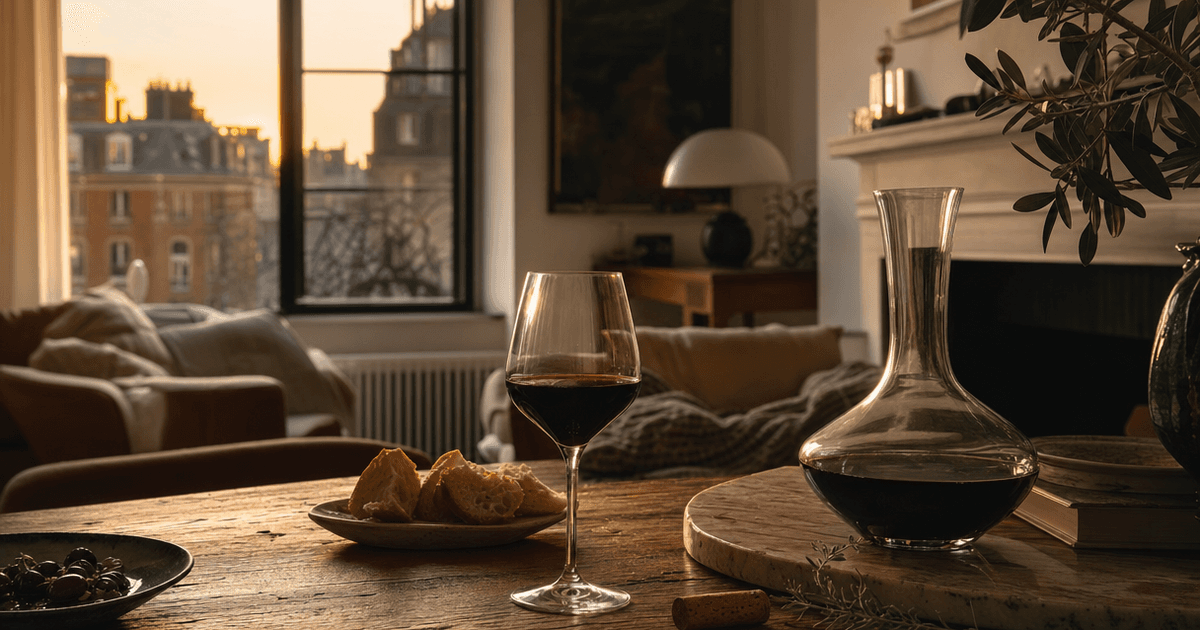
A GSM blend wine is really a harvest calendar in a bottle: Grenache, Syrah and Mourvèdre — three red grapes that lean on each other’s weaknesses — ripen one after another through the autumn, Grenache’s warmth arriving first, then Syrah’s colour and spice, and finally Mourvèdre’s tannin and grip. That staggered ripening, not romance, is what has kept the three planted side by side from the southern Rhône to Barossa. Grenache’s own half of the story — how one grape came to anchor the whole arrangement — has its own piece in What Is a GSM Blend Wine? Grenache’s Rhône Role; this page is about how the blend actually works, whether Châteauneuf-du-Pape counts, and how differently the recipe comes out depending on where it’s made.
What is a GSM blend wine?
A GSM blend wine is a red made from Grenache, Syrah and Mourvèdre in whatever proportion the producer fancies that vintage — no fixed formula, just the classic southern Rhône cast. (The anchor grape’s deeper history is covered in What Is a GSM Blend Wine? Grenache’s Rhône Role.)
Walk that harvest calendar one grape at a time and the blend explains itself. Grenache ripens early and generously — pale ruby, soft acidity, lots of alcohol, strawberry and red plum fruit, not much tannin to speak of. Syrah comes next, contributing the colour Grenache lacks, plus black pepper spice and real structure. Mourvèdre ripens last of all (it’s genuinely fussy about heat, which is why you don’t find it much north of the southern Rhône), and it’s the one doing the heavy lifting on tannin and backbone — fleshier than Syrah, tauter than Grenache, the grape that stops the blend going soft and jammy.
If you want the whole thing in one sentence: Grenache brings the warmth, Syrah the colour and spice, Mourvèdre the grip — three grapes making one wine none of them could manage alone. If you want the fuller regional picture — Côte-Rôtie down to the Mediterranean coast — our Rhône and the French South merchant’s guide walks through the whole neighbourhood, and it’s the natural next read before you start pulling corks.
How a GSM blend wine changes shape around the world
This is where people get caught out, because “GSM” on a Barossa shelf and “GSM” on a Washington State shelf can mean genuinely different wines. The ripening order never changes — but the pecking order does.
| Region | Usual lead grape | What to expect |
|---|---|---|
| Southern Rhône (Gigondas, Vacqueyras, Rasteau) | Grenache, by rule at least 50% | Ripe, full-bodied, Grenache-driven with Syrah or Mourvèdre for grip |
| Châteauneuf-du-Pape | Grenache, informally | Richer, more variable — see below |
| Barossa & McLaren Vale, Australia | Grenache, historically, from old bush vines | Warm, generous fruit, Mourvèdre (often still called Mataro) for lift |
| Washington State | No fixed leader — often under 50% | Can be Syrah-led or even Mourvèdre-led, closer in feel to a Languedoc blend |
| California (Rhône Rangers) | Varies by producer | Small-scale, experimental, Syrah or Grenache led |
In the southern Rhône, Grenache became the dominant grape through the late twentieth century before easing back a little as vintages warmed up — meanwhile Syrah has grown from almost nothing in the 1960s to around a fifth of the blend today, and by the trade’s own reckoning GSM-style wines now account for roughly three-quarters of southern Rhône production. Australia went through its own upheaval: a vine-pull scheme in the late 1980s ripped out old Grenache and Mourvèdre before anyone quite realised what they had, and it’s taken since the 1990s to rebuild the old-vine GSM category that Barossa and McLaren Vale are now known for.
Washington is the interesting outlier. A recent Decanter panel tasting of 48 Washington GSMs found wines led by Syrah and even by Mourvèdre as often as by Grenache — 21 came back highly recommended, 25 recommended, none scored poorly. That’s not a small sample telling you Washington is doing something different; that’s a genuine style split from the Rhône original.
If you’re the kind of drinker who likes seeing how the same logic plays out with different grapes, our Bordeaux blend guide covers Cabernet and Merlot doing a similar dance with each other.
Is GSM wine good?
Yes, as a style it’s reliably good — trade panel tastings of both Washington and Australian GSMs have come back overwhelmingly positive, with the majority of bottles rated recommended or better and very few, if any, marked poor. Part of that reliability is the calendar itself: three harvest windows spread the vintage’s risk, so a difficult year for one grape rarely sinks all three. Quality here isn’t really the question; fit is. A GSM can be an easy Tuesday red or a serious, cellar-worthy bottle, and the price tag usually tells you which.
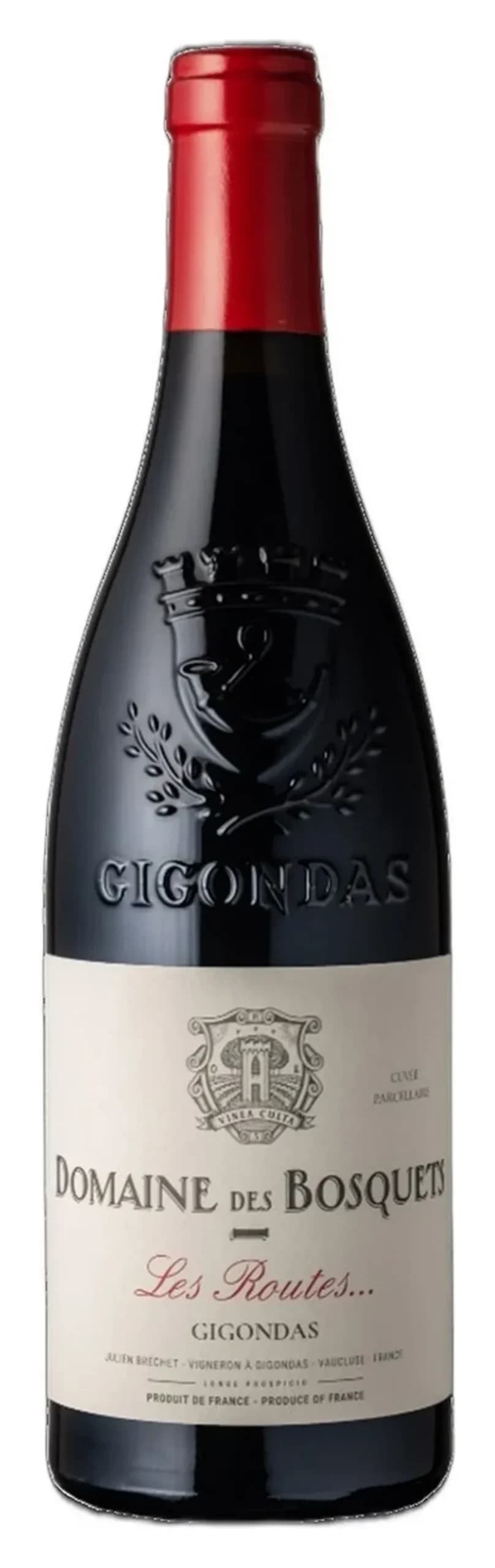
At the everyday end, Côtes du Rhône-level GSMs (often Syrah-led rather than Grenache-heavy, which surprises people) deliver a lot of character for not much outlay — bright red fruit, a bit of pepper, soft tannins, nothing to think too hard about. Step up to Vacqueyras or Rasteau and you’re in wines the trade describes as good to very good, mid to premium priced, built around at least half Grenache with Syrah or Mourvèdre filling in. Gigondas sits a notch above again, its cooler, higher vineyards under the Dentelles de Montmirail helping tame the alcohol that warming vintages have pushed up in straight Grenache — and it’s the bottle I pour blind for anyone who tells me Châteauneuf is the only serious wine in the south. It wins that argument more often than they’d like.
The mistake I made for years was assuming “GSM” meant one fixed quality tier. It doesn’t. It’s a family, not a rank. So climb it like one: start at Côtes du Rhône level, move up to Vacqueyras or Rasteau when you want more muscle, and save Gigondas for the evening that’s earned it.
Is Châteauneuf-du-Pape a GSM wine?
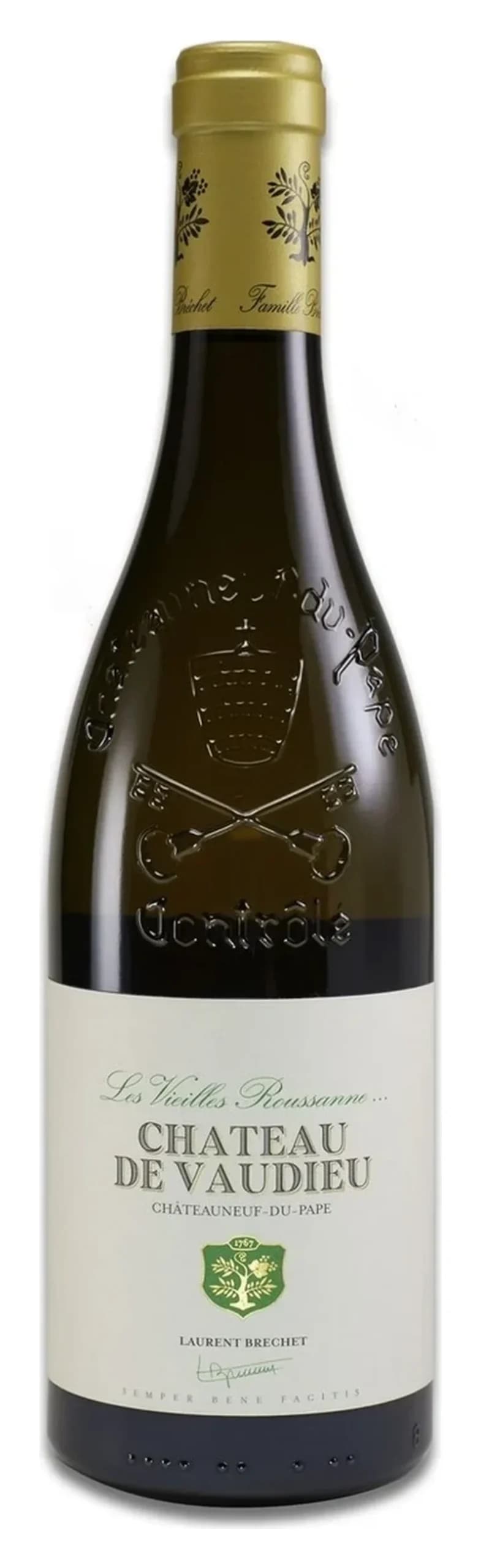
Often, yes, in practice — though not by strict rule. Châteauneuf-du-Pape permits thirteen varieties by the usual count (the arithmetic shifts depending on whether colour variants of the same grape, like Grenache Noir and Grenache Blanc, are tallied together or apart), but modern producers rarely use them all. Most build the wine around Grenache, with Syrah as the second most-planted variety and Mourvèdre third, so it functions as a GSM in all but name.
Recent trade figures put Syrah at around 11% of Châteauneuf-du-Pape’s plantings and Mourvèdre at about 7% — small numbers next to Grenache’s dominance, but decisive ones. Mourvèdre in particular has become more fashionable there recently precisely because it ripens at lower sugar levels than Grenache, which helps rein in alcohol as vintages get warmer — the late-ripening grape earning its keep again. Not every estate agrees on approach: a handful still insist on including a small amount of every permitted grape as a genuine field blend, harvested very late so the slow-ripening Mourvèdre gets there in time — while others lean almost entirely on Grenache and treat Syrah and Mourvèdre as seasoning rather than structure.
Compare that with Gigondas, Vacqueyras and Rasteau, where the rule is written down: at least 50% Grenache Noir, plus at least one of Syrah or Mourvèdre. Châteauneuf has no such minimum — it’s convention, not law, which is exactly why bottles from the same appellation can taste so different from each other. For the full story on why this particular patch of stony vineyard commands the prices and reputation it does, our piece on what makes Châteauneuf-du-Pape famous is worth a look — and worth the detour before you spend Châteauneuf money.
Serving and pairing a GSM blend without overthinking it
Fuller-bodied GSMs — a rich Barossa bottling, a serious Châteauneuf, a top-end Gigondas — benefit from a bit of air; give them half an hour open, or a splash into a decanter, before you pour. Lighter, Syrah-led Côtes du Rhône-style GSMs don’t need the fuss. Pour, drink, enjoy the Tuesday.
Food-wise, the blend’s natural partner is anything with a bit of fat and a bit of spice to meet the peppery Syrah note and Mourvèdre’s savoury edge — a lamb burger with tzatziki and feta is the sort of pairing that turns up again and again in tasting notes, and it works because the gaminess of the lamb meets the wine’s darker fruit halfway. A big glass helps (these are aromatic wines, they like room), and there’s nothing wrong with serving them a shade cooler than room temperature in summer. If there’s lamb or anything off the grill on this week’s menu, that’s your cue to have one of these open.
Questions customers ask us
What does GSM stand for in wine? GSM stands for Grenache, Syrah and Mourvèdre — the three grapes in the blend, listed in the order the initials are usually said aloud, though that says nothing about which grape actually dominates the bottle.
Is Grenache the same as Garnacha? Yes — Grenache and Garnacha are the same grape, French and Spanish names for it. Our Garnacha guide covers its comeback as a single-varietal wine in its own right, rather than just a blending partner.
Is Mourvèdre the same as Mataro? Yes, and also the same as Monastrell in Spain, where the grape originates. Australia and California traditionally called it Mataro; it’s the same grape doing the same job under three different names.
Which grape usually leads a GSM blend? Grenache, most often — it’s the default lead in the southern Rhône and traditional Australian GSMs. But it’s not universal: Washington State GSMs are frequently led by Syrah or even Mourvèdre instead.
The merchant’s last word
I used to sell GSM as one thing, a single style, because that’s how it’s often talked about. It isn’t — it’s a family of wines held together by three grapes that happen to ripen in a useful order. Some bottles are Tuesday-night easy, some are worth the wait in a decanter. Both are honest GSMs. If you want to taste the range for yourself, browse the Rhône Valley cellar — start at the everyday end and let the family introduce itself.