Here’s the fact that settles most northern vs southern Rhône arguments before they start: the two halves don’t even touch. Between roughly Valence and Montélimar runs a 50-kilometre stretch of valley with barely a notable vineyard in it, and either side of that empty gap sit what are really two separate wine regions sharing one river and one name — a cool, narrow north built on Syrah, and a much larger, warmer south built on Grenache blends. Everything else in this piece hangs off that gap, so keep it in view: it’s why the two halves taste different, price differently, and even train their vines differently. Small wonder customers stand at my counter convinced Châteauneuf-du-Pape must be “the northern one” simply because it’s famous. By the end of this you’ll know exactly where Châteauneuf sits, what to expect in the glass from each end, and what to reach for instead on a normal Tuesday.
Is Châteauneuf-du-Pape north or south Rhône?
Châteauneuf-du-Pape is southern Rhône — full stop. It sits near Avignon, well south of that empty dividing stretch trade writing treats as the border between the two zones, and it’s the oldest, most famous of the southern crus.
The confusion usually comes from the name doing too much work. “Châteauneuf” sounds grand and old, and people assume grand and old means northern — Hermitage, Côte-Rôtie, that sort of vintage prestige. But grandeur runs both ways here; the south just does it with warmth and blending rather than a single cool-climate grape.
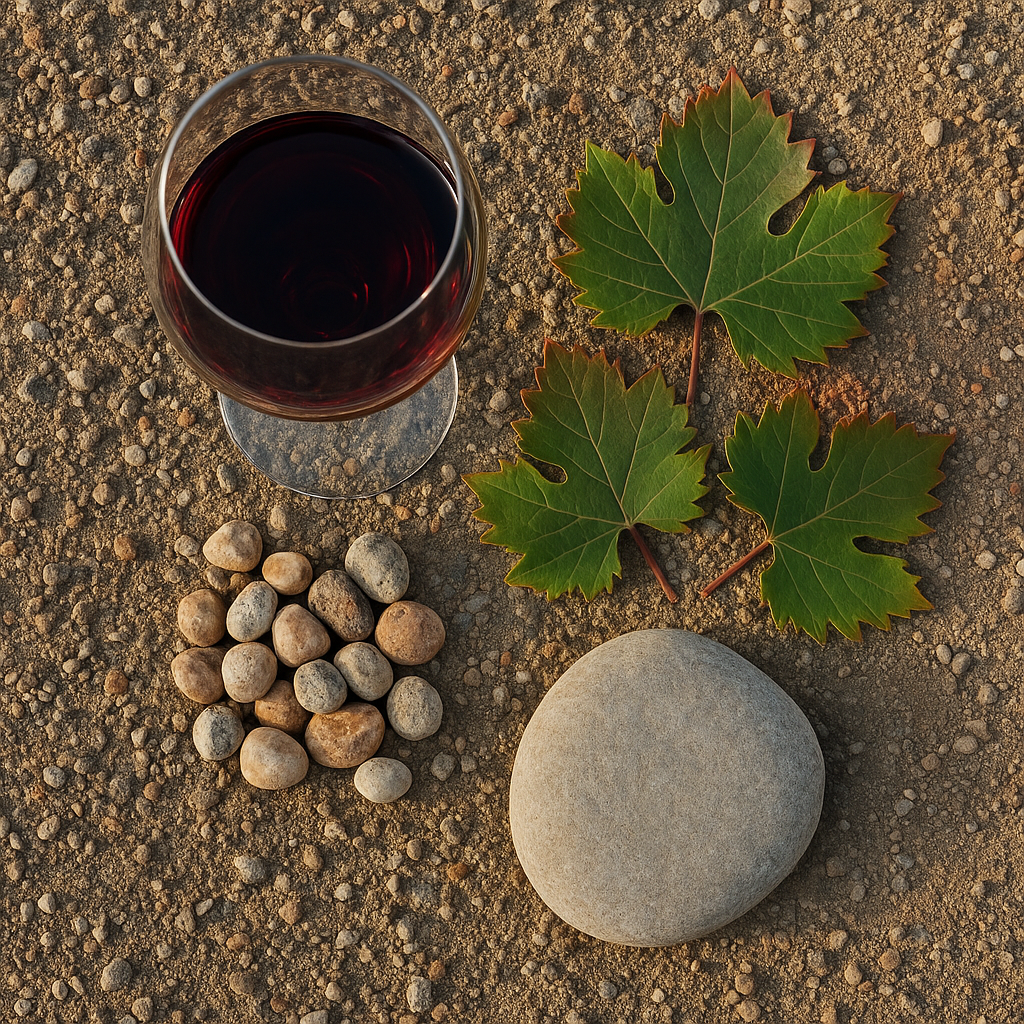
What makes Châteauneuf distinctive within the south is the terroir: those rounded galet stones that store daytime heat and release it overnight, plus a permitted blend that can run to well over a dozen varieties, though in practice Grenache leads, with Syrah and Mourvèdre doing support work. It’s the flagship of a southern Rhône that’s vastly bigger in area than the north — trade estimates put the north at somewhere around 5-6% of total Rhône production, the south accounting for almost everything else. Once you know which side of the gap a bottle comes from, you already know half of what it’ll taste like — which is most of the work of choosing one.
What does Northern Rhône taste like?
Expect something leaner and more upright than you might picture when someone says “Rhône red.” Northern reds are Syrah, usually on its own, grown on granite and schist slopes — think structured tannin, dark fruit, black pepper, a violet lift, sometimes a savoury, almost bacon-fat edge as they age. Whites from Viognier, Marsanne and Roussanne run richer: stone fruit, honeysuckle, a waxy texture that surprises people expecting something crisp.
I used to sell northern Rhône as “Syrah with a French accent” and honestly undersold it for years. It’s closer to a second Burgundy in spirit than a cousin of the south — a continental climate not far off Burgundy’s own, single-vineyard thinking, terroir doing the talking rather than a blend of grapes covering for each other. Appellations like Côte-Rôtie even split internally: Côte Brune gives you the harder, schisty, tannic style, Côte Blonde the softer granite-driven elegance, and producers there have long blended the two on purpose for complexity.
Crozes-Hermitage tells a similar story in miniature — the granite villages near Hermitage itself give taut, structured wine, while the flatter Chassis plain to the south of the appellation (still northern Rhône, don’t let the word “south” confuse you here) gives simpler, fruitier stuff. Distance from the original village, more or less, tracks with quality.
Serve northern reds a shade cooler than you would a big southern blend, and give the whites — Condrieu especially — a proper glass. They’re not simple sipping wines; they reward a bit of attention. If that sounds like your kind of evening, a Saint-Joseph is the fairest-priced way to find out.
Is Syrah North or South Rhône?
Syrah is both, but it wears two different hats — and this is the line to remember across the whole valley: the north is a soloist, the south is an ensemble. In the north, Syrah is usually the only black grape permitted — Hermitage, Côte-Rôtie, Cornas, Saint-Joseph are built entirely around it, so the wine shows you the terroir with nothing else in the way. In the south, Syrah is a supporting player: it adds colour, structure and fruit to Grenache-led blends, rarely standing alone.
That difference in role matters more than people think when they’re choosing a bottle. A northern Syrah is a solo performance — you’re tasting one grape’s honest response to granite, schist, and a cool river valley. A southern wine with Syrah in it is an ensemble piece, where Grenache usually carries the tune (ripe red fruit, higher alcohol, softer tannin) and Syrah is brought in for backbone and colour, sometimes alongside Mourvèdre and Cinsaut too.
Training methods differ as well — northern Syrah is typically trained on poles or wires, densely planted with individual supporting stakes; in the south, vines (Grenache especially) are more often bush-trained, low and sprawling against the mistral wind, though Syrah there tends to get wires too. Even the vineyards, in other words, dress for different weather on either side of the gap — so decide whether you’re in a soloist or an ensemble mood, and the shelf sorts itself.
What is better than Châteauneuf-du-Pape?
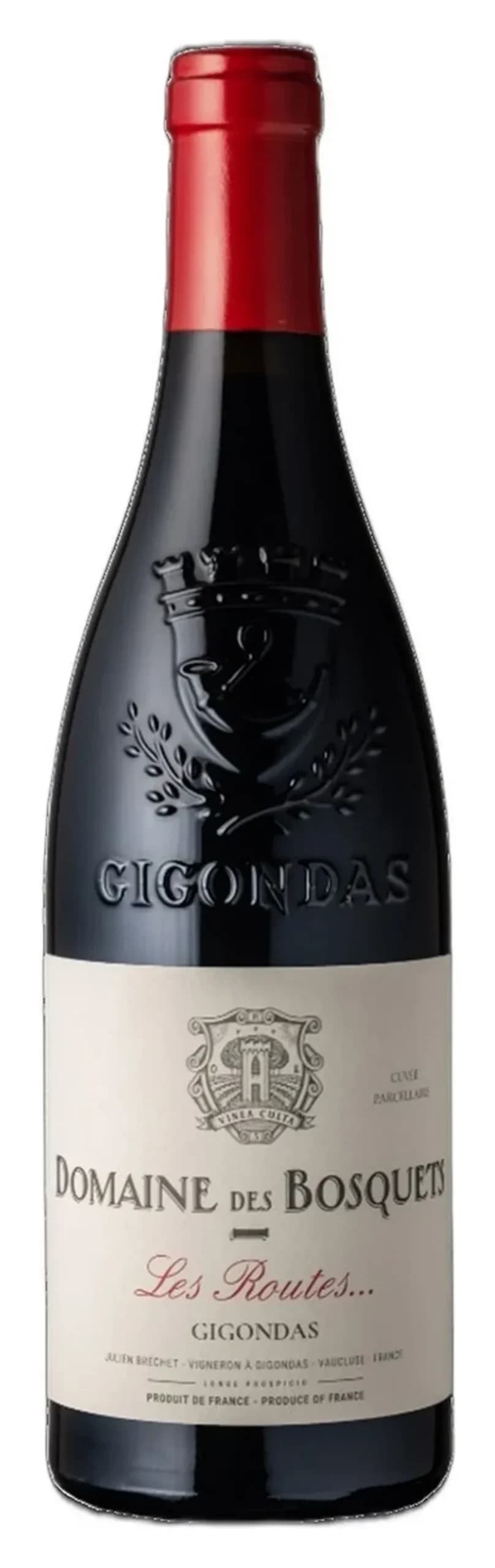
Nothing is “better” in any absolute sense, but there’s genuinely good reason to look sideways before you reach for Châteauneuf out of habit. Gigondas and Vacqueyras sit close by, share the same Grenache-Syrah-Mourvèdre backbone, and cost less — good value southern crus that behave similarly at the table. Rasteau and Vinsobres are worth knowing too; Vinsobres in particular sits at a cooler, higher elevation on the northern edge of the southern zone, giving a fresher, more structured take on Grenache than you might expect from the south.
If you fancy a genuinely different experience rather than a cheaper version of the same one, that’s when I’d point you across the gap instead — a Saint-Joseph or a well-chosen Crozes-Hermitage gives you all-Syrah structure and peppery lift for a fraction of what a top Côte-Rôtie or Hermitage costs, and nothing like Châteauneuf’s warmth and weight. Either way you win: sideways for value in the same style, northwards for a different wine altogether.
Choosing a bottle: how the two Rhônes actually differ
| Northern Rhône | Southern Rhône | |
|---|---|---|
| Climate | Continental, closer to Burgundy | Mediterranean, distinctly warm |
| Chaptalisation | Permitted | Forbidden |
| Main soils | Granite, schist | Sand, limestone, clay, galets |
| Red grapes | Syrah, essentially alone | Grenache, Syrah, Mourvèdre, Cinsaut, more |
| White grapes | Viognier, Marsanne, Roussanne | Grenache Blanc-based blends |
| Area under vine | A narrow 50-mile band, Vienne to Valence | Vastly larger area around Côtes du Rhône AOP |
| Typical style | Structured, peppery, higher acid | Riper, rounder, higher alcohol |
Worth noting: the Côtes du Rhône AOP itself is the second-largest appellation in France after generic Bordeaux, and it covers both a modest slice of the north and a much larger chunk of the south — so seeing “Côtes du Rhône” on a label doesn’t actually tell you which side of the gap the grapes came from. For everyday money, a southern Villages bottle is the reliable workhorse; when you’re ready to spend a little more deliberately, that’s the moment to cross the gap north.
Questions customers ask us
Why is there a 50km gap between the two regions at all? The stretch between roughly Valence and Montélimar is sparsely planted — not much changes about the land itself, but trade and appellation history simply drew the two zones on either side of it, so the gap has become the accepted dividing line.
Do northern and southern Rhône vintages track together? Not reliably. Conditions in a given year can favour one region distinctly over the other — a hot year might suit the south and overwhelm the north, or the reverse, so it’s worth checking vintage notes for each half separately rather than assuming “good Rhône year” means both.
Is southern Rhône always cheaper than northern Rhône? Broadly yes at the everyday end — Côtes du Rhône and village-level southern wines are some of the best-value reds around — but top southern crus like Châteauneuf can cost as much as northern cru wines, so “southern” doesn’t automatically mean “budget.”
Are there white wines from both regions? Yes, though white is a minority everywhere in the Rhône. Northern whites (Viognier, Marsanne, Roussanne) tend toward richer, waxier styles; southern whites lean on Grenache Blanc blends and are generally fresher and simpler.
For the fuller lay of the land, including how the Rhône fits alongside the rest of France’s south, it’s worth a look at The Rhône and the French South: a merchant’s guide from Côte-Rôtie to the Med. And if this kind of regional split appeals, the same logic applies to Left Bank vs Right Bank: the only Bordeaux divide that matters, or further afield to fortified wine in Should you cellar Port? Which styles age in bottle and which don’t and What is the solera system? How Sherry blends time itself.
The merchant’s last word
I still catch myself, twenty-odd years in, reaching for a southern blend on a Tuesday and a northern Syrah on a Sunday when someone’s actually cooking. That’s the real difference — not better or worse, just two different jobs done by one river, with a 50-kilometre pause between them. Come and taste both sides for yourself; browse the Rhône Valley cellar and I’ll point you to whichever end suits what’s on your stove tonight.