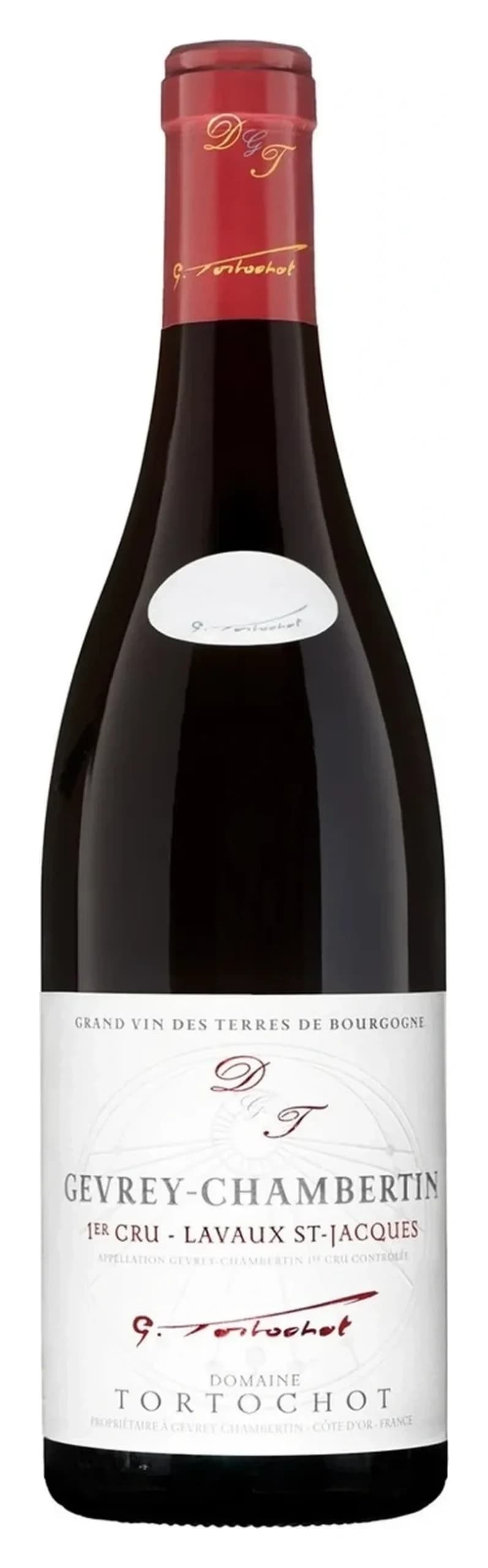
If I could teach you to recognise just one Burgundy village blind, it would be Gevrey-Chambertin — not because it’s the prettiest, but because it’s the most reliable fingerprint on the Côte: that firm, dark-cherry grip announces itself before the perfumed villages have finished saying hello. Gevrey-Chambertin wine is a red-only village appellation in the Côte de Nuits, made entirely from Pinot Noir across roughly 400 hectares, the largest village vineyard in the Côte d’Or. Within its boundary sit nine grand cru vineyards, Chambertin itself among them.
By the end of this you’ll be able to pick a glass of Gevrey-Chambertin out from its two most talked-about neighbours by taste alone, and understand roughly what you’re paying for as the label climbs from village to grand cru.
What type of wine is Gevrey-Chambertin?
It’s a village appellation for red wine only, 100% Pinot Noir, sitting in the northern half of the Côte de Nuits. It’s the biggest village vineyard on the whole Côte d’Or, spilling over into neighbouring Brochon, which has no appellation of its own to claim it. Within the boundary you’ll find village-level wine, a good stretch of premiers crus, and nine grand crus.
The village didn’t start out grand. It annexed the name of its finest vineyard, Chambertin, in 1847 — a bit of branding, if we’re honest, though a fair one. Chambertin had earned its reputation the hard way; it was reportedly Napoleon’s favourite wine, and got saddled with the rather grand nickname “wine of kings, king of wines,” which tells you more about Victorian marketing than about the wine itself.
The appellation boundary was actually tightened in the late 1990s, cutting out some flatter, less favoured land down towards the plain. That’s worth knowing, because it means today’s Gevrey-Chambertin AOC is a stricter, more concentrated idea of the village than it might once have been. The nine grand crus — Chambertin, Chambertin-Clos de Bèze, Charmes, Mazis, Latricières, Ruchottes, Griotte, Chapelle and Mazoyères-Chambertin — sit on about 80 hectares between them, a fifth of the whole appellation. All of which matters at the till: the word that follows “Gevrey-Chambertin” on the label — nothing, a premier cru name, or one of those nine — is precisely what you’re paying for.
What does Gevrey-Chambertin wine taste like?
Expect deep colour, a firm edge of tannin, and dark cherry fruit rather than the lighter, more scented style you’ll find elsewhere in the Côte de Nuits. It’s built with structure in mind — this isn’t a wine that’s trying to charm you on day one. Good examples reward patience, opening out over years into something layered and quite complete.
Trade tasters keep landing on the same words for young Gevrey: bright, forward cherry fruit, sitting alongside a firm tannic backbone that needs time to knit together. That firmness is the fingerprint I promised you. I once poured a blind pair behind the counter for a sceptical regular — a Gevrey against a Chambolle — and he picked the Gevrey by grip alone, before his first sip was finished. Put a glass next to a Chambolle-Musigny or a Vosne-Romanée and the Gevrey will usually feel the most serious, the most in need of a decant, the least immediately pretty.
Here’s a fact that surprised me the first time I heard it: even seasoned professionals, tasting Chambertin against Chambertin-Clos de Bèze blind, often can’t reliably tell which is which. Both sit at the same altitude on the same slope, separated mostly by a track. It’s a good reminder that “Gevrey style” is a real, identifiable thing even among wines competing for the same crown. So buy it with patience in mind — if you want to know when to actually pull the cork on one, our guide to ageing Pinot Noir goes into that properly.
What does burgundian style wine mean?
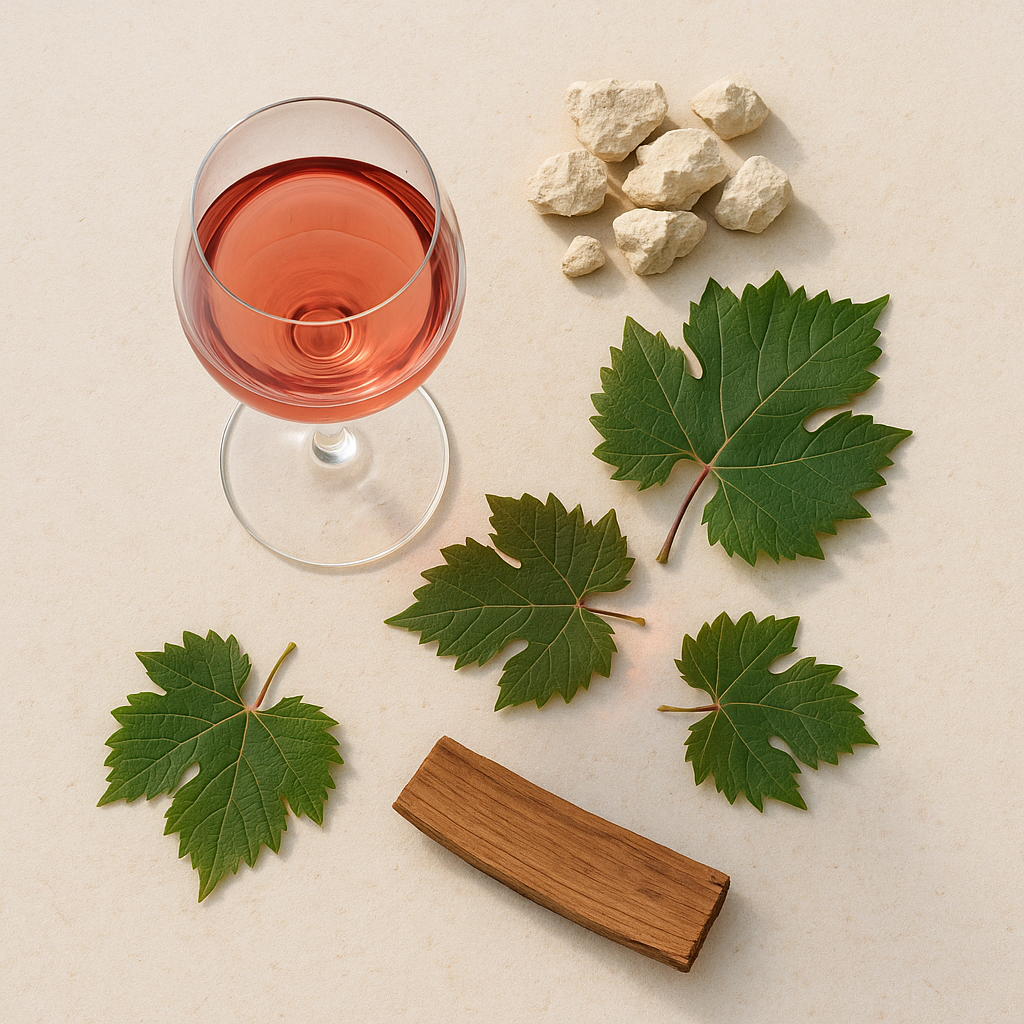
It means the village name is doing real work, not just decoration. Because of subtle shifts in soil, slope angle and exposure to wind, wines from Volnay taste reliably different from wines grown a few miles away in Pommard — even when the grape, the producer’s philosophy and the vintage are identical. Burgundians (and the merchants who love them) talk in village shorthand because the shorthand is usually accurate. Gevrey’s line in that shorthand is the easiest of all to learn by mouth: it’s the firm one.
It’s the kind of thing that any decent village wine society tasting sets out to prove, lining up five or six communes side by side so you can taste the pattern for yourself rather than take anyone’s word for it. Here’s the shape of it, north to south through the Côte de Nuits and into the Côte de Beaune:
| Village | Typical character |
|---|---|
| Chambolle-Musigny | Perfumed, silky, red-fruited — finesse over force |
| Gevrey-Chambertin | Deep colour, firm tannin, dark cherry, built to age |
| Vosne-Romanée | Richness and perfume together, remarkable length |
| Volnay | Fragrant and fruity, lighter-framed reds |
| Pommard | Fuller-bodied, more overtly tannic |
| Meursault (white) | Full-bodied, powerful |
| Puligny-Montrachet (white) | Floral, more linear and concentrated |
Nobody’s fully cracked why these differences exist so consistently — the books are honest about that. But winemaking choices (new oak, whole-bunch fermentation, how hard the lees get worked) can push a wine one way or another within its village character, so treat the table as a strong tendency, not a law. It’s also the cheapest wine education going: one honest village bottle per commune, tasted over a few months, and you’ve taught yourself the Côte.
What is the difference between Gevrey-Chambertin and Chambolle Musigny?
Gevrey is built on power; Chambolle is built on perfume. Gevrey gives you deeper colour and firmer tannin from the start, a wine that asks for a few years in a cool cupboard before it shows its best. Chambolle, even at grand cru level in Musigny or Bonnes Mares, tends towards a velvety, fine-boned elegance — the same grape behaving like a different person entirely.
Some of that comes down to shelter. The Côte de Nuits gets steadily better protection from cold west winds as you move south from Gevrey towards Nuits-Saint-Georges, which nudges ripeness and alcohol up slightly through that stretch — Gevrey sits right at the point where that protection starts to bite.
Geologically the two villages share more than you’d guess. The same limestone seam runs underground from the Combe de Lavaux in Gevrey, through Morey-St-Denis, to the Combe d’Antin in Chambolle — which is why Morey, caught in the middle, has historically been described as a lighter Gevrey on one side and a firmer Chambolle on the other, and why some of its wine was once sold under its neighbours’ names entirely. If you’ve ever wondered what a walled single-vineyard “Clos” actually signals on a label from this stretch, our piece on what ‘clos’ means is worth five minutes.
Choosing your bottle: what the ladder actually gets you
Village, premier cru, grand cru — the climb isn’t just about prestige, it’s about where on the slope the fruit was grown. Better drainage, more direct sun, and you move up the ladder. A well-regarded domaine’s plain village-level Gevrey can, in a good year, out-price another producer’s premier cru from the same commune — the name on the label matters as much as the tier.
That leads to my honest steer for a first bottle: take a village-level wine from a serious grower over a premier cru from an anonymous one — the grower’s name earns its keep faster than the vineyard’s does. Recent trade tastings of solid, unfussy Gevrey vintages have scored comfortably into the low 90s for straightforward village wine, climbing higher still for premiers crus and named grand crus — that’s the general shape of quality-versus-price you’re buying into, not a promise about any specific bottle. At the top, a great grand cru year is a genuinely commanding wine, dense and long, worth the wait it demands. At village level you’re buying the same DNA in a lighter frame — honestly the better everyday choice for most Tuesday nights, and the tier I’d point you to first unless there’s a birthday involved.
Serving Gevrey-Chambertin well
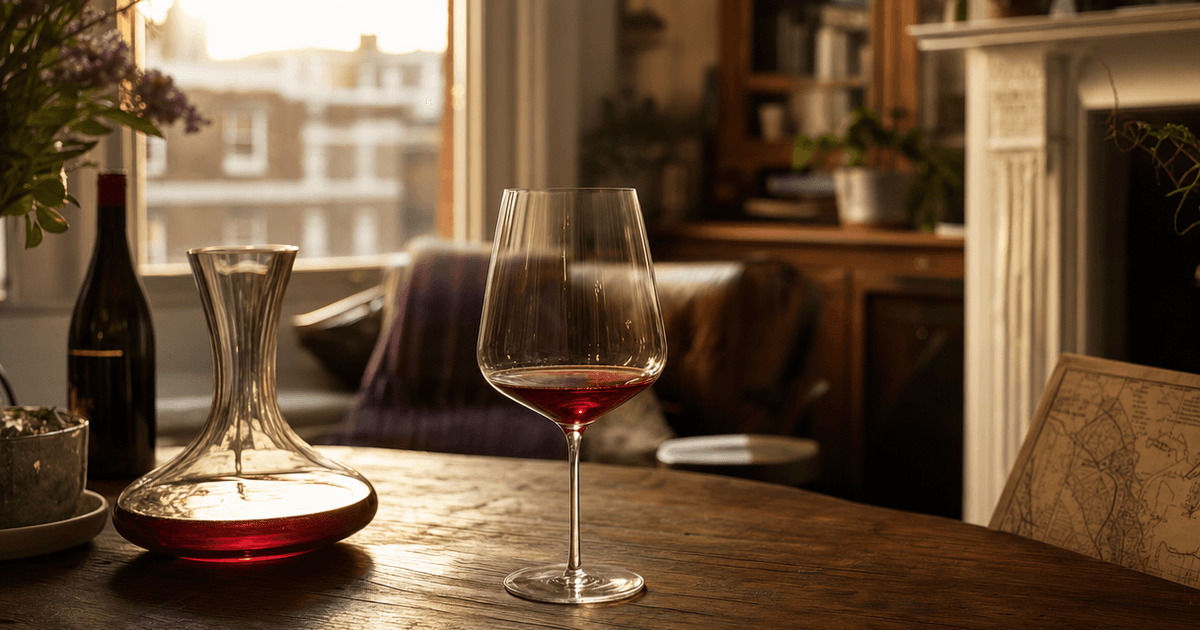
A young Gevrey benefits from a decant — an hour, maybe two, to soften that tannic edge and let the cherry fruit come forward. Serve it a touch cooler than room temperature, around 16–18°C; too warm and the alcohol and tannin start to dominate. A big-bowled glass helps, giving the wine room to open.
On the plate, this is duck, coq au vin, a slow-cooked beef stew with the lid left slightly ajar so the sauce reduces properly — anything with enough fat and savour to meet that structure halfway. Plan the bottle around that kind of dinner and it will repay you twice over. For the fuller picture on how this village sits against its Côte de Beaune cousins, our Côte de Nuits vs Côte de Beaune guide lays out the bigger map.
Questions customers ask us
Is Chambertin the same as Gevrey-Chambertin? No — Chambertin is one specific grand cru vineyard inside the Gevrey-Chambertin appellation. All Chambertin is Gevrey-Chambertin, but very little Gevrey-Chambertin is Chambertin.
How long should I keep a bottle before opening it? Village-level Gevrey is often approachable within five years; premiers and grands crus usually want a decade or more to show their best. Good vintages reward real patience here.
Is Gevrey-Chambertin always expensive? Not at village level — that’s where the everyday value sits. It’s the named premiers crus and especially the grands crus where prices climb sharply.
What’s it like compared to a simple Bourgogne Rouge? Same grape, much less concentration and structure — a Bourgogne Rouge is the light, easy cousin, while Gevrey is the serious, structured one from the same family.
For the full map of villages, crus and why the price climbs the way it does, our Burgundy pillar guide is the place to start.
The merchant’s last word
I’ve poured Gevrey-Chambertin for customers who wanted something impressive and customers who just wanted Tuesday’s stew improved, and it’s done both jobs well every time. It’s not the prettiest glass in Burgundy — that’s Chambolle’s job — but it’s the one I trust most to still taste like something in ten years, and the one you’ll learn to spot blind fastest. Go and browse the burgundy cellar and I’ll talk you through which bottle suits which night.