Serving temperature for pinot noir is decided in the last twenty minutes before the wine hits the glass — in your kitchen, nowhere else — and I’d wager warm British sitting rooms have flattened more good Pinot Noir than any poor vintage ever did. Vineyard, producer, price: all settled long before you got involved. The chill is the one part of the bottle’s story that’s entirely yours, and it’s the part most often fumbled. Pinot Noir is thin-skinned and aromatically generous, far more sensitive to heat than a big, tannic Cabernet or Shiraz — warm it a few degrees too much and it falls apart in the glass, whether it hails from the Côte de Nuits, Central Otago, the Sonoma Coast or the Yarra Valley. By the end you’ll know the right chill for your bottle, the glass that earns its keep, and whether decanting’s worth the faff.
Do I serve Pinot Noir cold or room temperature?
Neither, really — not as “room temperature” is actually lived in most British homes. Aim for 14-16°C for village-level red Burgundy or a mid-weight New World Pinot Noir from somewhere like the Sonoma Coast, and 16-18°C for something with real structure — a good premier or grand cru, or a serious bottle from the Willamette Valley or Central Otago. Lighter, fruit-driven styles, including plenty of Pinot Noir from cooler pockets of the Yarra Valley or Marlborough, are happier with a light chill, down towards 12-13°C.
“Room temperature” as a serving instruction dates from houses that didn’t have central heating — stone floors, thick walls, rooms that sat closer to 15 or 16°C most of the year. The French even have a word for deliberately warming wine to match the room: chambré. Trouble is, most rooms nowadays run at 18-20°C or higher, and thermostats vary wildly house to house.
There’s a second trap. Wine warms up fast once it’s out of the bottle: poured into a glass, cupped in a warm hand, sat near a radiator, it can climb several degrees in minutes. That’s why the trade habit is to serve a shade cooler than the ideal — the glass and your palm will do the rest of the warming for you. Go too warm and the alcohol starts to dominate, flattening the fruit and making a wine that should sing feel clumsy and hot. I served reds at proper “room temperature” for years before I twigged this — the wine wasn’t the problem, my radiator was.
Why the glass shape matters as much as the thermometer
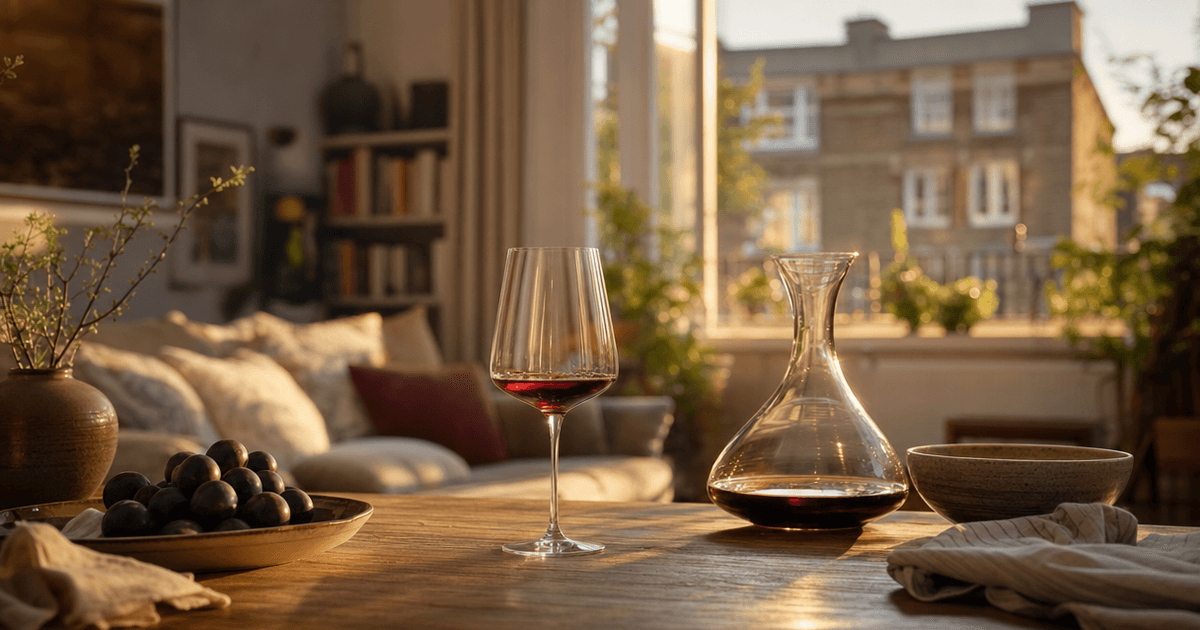
Pinot Noir, from Burgundy’s big glass balloons to a simple stemmed glass at home, wants a wide bowl, full stop. The wide bowl exists for one reason: Pinot Noir throws a genuinely complex range of aromas, and a big surface area gives them room to lift out of the glass and reach your nose before you’ve even taken a sip.
Fill it only a third to half full. That’s not stinginess — it leaves headspace to swirl the wine and let the aroma collect above the liquid, which is where most of the pleasure actually happens. Pour it to the brim and you’ve built yourself a glass you can’t swirl and can’t smell properly.
If you’re planning a dinner and working out how many glasses a bottle will actually stretch to at that fill level, we’ve done that maths properly in How many glasses in a bottle of wine? Planning pours for a table — worth a look before you buy for six.
What is the 20 minute rule for red wine?
There isn’t an official rule, but the working version goes like this: give a bottle around 20 minutes out of the fridge (or the cellar) before you pour, so it climbs towards proper serving temperature rather than hitting the glass too cold — those last twenty minutes, again, doing more for the wine than anything printed on its label. The same span works in reverse for an already-open glass — give it 20 minutes to breathe and open up before deciding what you think of it.
Why does Pinot Noir need that time at all? Many red Burgundy producers ferment with a portion of whole bunches, which can add fine, perfumed tannin — lovely, but a touch closed when the bottle’s first opened. Others use a cold soak before fermentation to pull colour out of Pinot Noir’s naturally pale skins, which builds structure that also wants a little air to soften. The same logic holds for New World Pinot Noir made in a similar style: whole-bunch fermentation is increasingly common in Oregon and Central Otago too, so a young, ambitious bottle from either place rewards the same twenty minutes’ patience as its Burgundian cousin.
Young, simple Bourgogne Rouge needs less patience than a structured Côte de Nuits premier cru — the simpler wine is ready almost as soon as it’s poured, while the more serious bottle keeps changing in the glass for the best part of an hour. If you’re not sure which camp your bottle sits in, our guide on When to open Burgundy: ageing Pinot Noir walks through how to tell.
Decanting Pinot Noir: young, old, and the truth about breathing
A young, structured village or premier cru red Burgundy can genuinely benefit from a jug decant — not for hours, just twenty minutes to half an hour, enough to soften that whole-bunch grip without losing the perfume that makes Pinot Noir worth drinking in the first place. The same holds for a young, weighty New World Pinot Noir — a Sonoma Coast or Central Otago bottle can take the same short, gentle decant. Pour it too early and let it sit for two hours, though, and you risk the opposite problem: the fruit fades and the wine goes flat and tired.
Aged Pinot Noir, from any region, is a different animal entirely, and this is where I’ve watched people do real damage with good intentions. An older bottle’s aromatics are fragile — delicate, faded-rose, forest-floor notes that a vigorous splash decant will simply blow off into the air before you get a glass in hand. If there’s sediment, a gentle pour off the lees is enough; violent aeration is not the same job here as it is for a big, tannic, young Barolo, which genuinely wants hours of air to unclench. We’ve written that comparison up properly in How do you serve an aged Barolo? Decanting, glasses and timing, and it’s worth reading if you’re weighing up two very different bottles for the same dinner.
How long a wine should be allowed to age before you even reach for the corkscrew is genuinely a matter of taste — trade opinion differs on this more than you’d think, with British and French critics historically pulling in different directions on when a Bordeaux or Burgundy is “ready”. There’s no single correct answer, only the one that suits what you like in the glass.
A quick reference for the glass in your hand
| Style of Pinot Noir | Suggested temperature | Comparable New World example | Notes |
|---|---|---|---|
| Light, fruit-driven | 12-14°C | Central Otago, cooler Yarra Valley sites | Take a light chill; drink young |
| Village-level | 14-16°C | Sonoma Coast, Russian River Valley | The everyday sweet spot |
| Premier cru, structured | 16-17°C | Willamette Valley | A little air first helps |
| Grand cru, mature | 16-18°C | Rare aged bottlings from any region | Handle gently; skip the vigorous decant |
Questions customers ask us
Should I put ice in my glass of Pinot Noir? I wouldn’t, no — that’s more of a rescue tactic for a white or rosé that’s been served too warm. If your bottle’s too warm, the better fix is ten minutes in an ice bucket, not dilution.
My bottle’s too cold straight from the cellar — what do I do? Cup the glass in your hands for a minute or two, or stand the bottle somewhere warm for a short while; avoid hot water baths unless you’re being very careful, as it’s easy to overshoot.
Does Pinot Noir need a different temperature to Shiraz or Cabernet? Yes — Pinot Noir is lighter-bodied and lower in tannin than most Shiraz or Cabernet, so it’s generally served a few degrees cooler, closer to the 14-16°C mark rather than 16-18°C or above.
What wine is best for GERD? That’s genuinely a question for your GP, not your merchant. If you’re after something gentler in body, ask for a lighter-bodied, lower-tannin style of Pinot Noir and we’ll steer by weight and structure, not by health claim.
Is Pinot Noir okay for diabetics? Not one we’re qualified to answer — that needs a proper conversation with a doctor or diabetes nurse who knows your situation. Come to us for the wine side: style, structure, what to expect in the glass.
The merchant’s last word
I get asked about temperature more than almost anything else, and it’s usually the one thing people never think to adjust — they’ll agonise over the vintage for a week, then hand the wine’s final twenty minutes to a warm shelf and a hot room. Get the chill right for whichever Pinot Noir you’ve got, whether that’s a village Burgundy or a bottle from Central Otago, use a glass with room to breathe, and a fair few bottles will taste better than you paid for. Fancy putting that to the test? Browse the burgundy cellar.