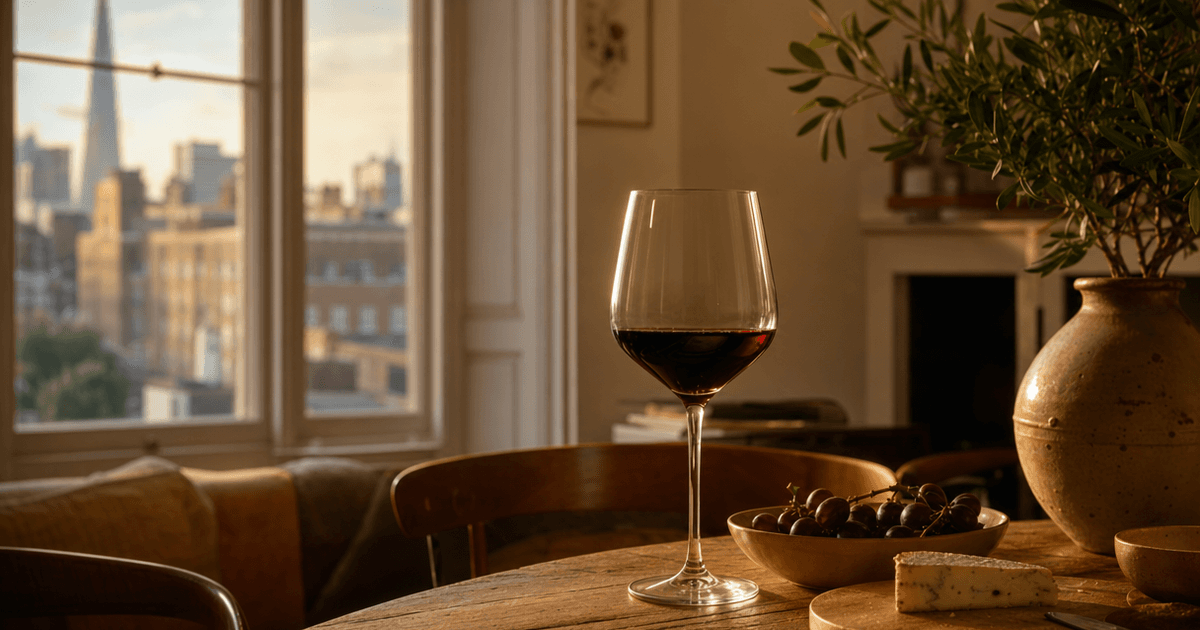
Varietal vs blend is the question I get asked more than almost any other, usually with two bottles in hand and a hopeful look my way. Here’s the short version: a varietal wine is named after, and dominated by, a single grape. A blend is deliberately made from two or more grapes, mixed on purpose. Neither is automatically the better bottle — they’re different tools, built for different jobs. By the end of this you’ll know which to reach for on a Tuesday, which one earns its place in the cellar, and why the very same grape, Chardonnay, manages to be both.
If you’re newer to all this and want the fundamentals in one place first, our pillar guide to wine basics is worth a look before you carry on.
What is the difference between blends and varietals?
A varietal wine puts one grape front and centre — Sauvignon Blanc, Pinot Noir, Sangiovese — and the label says so. A blend combines two or more grapes on purpose, usually to build something no single variety could give alone: more colour, softer tannin, brighter acidity, a rounder middle. Neither route is a shortcut to quality. It’s a decision made by style and place, not a badge of rank.
Winemakers blend for reasons that are mostly practical. Balance is the big one — a batch from a warm year or a warm plot gets blended with something cooler and leaner to even things out. House style is another: a Port or a Sherry needs to taste the same, vintage after vintage, and blending across lots is how that consistency happens. Bordeaux allows up to five red varieties in the mix; Châteauneuf-du-Pape allows thirteen. That’s not indecision, it’s insurance — different grapes ripen differently, so if one variety has a poor year, others carry the wine.
But some grapes don’t want company. Sauvignon Blanc and Riesling have such a loud, specific aroma that blending them with anything else risks muffling exactly what you bought them for. That’s part of why so many of the world’s great aromatic whites are bottled alone, and why “single vineyard” on a label is as much about protecting a distinctive site’s character as it is a marketing flourish (though it’s certainly that too). If Bordeaux’s approach to blending has ever confused you, our piece on Bordeaux blend grapes unpicks exactly what’s in the glass and why.
What does varietal mean?
Varietal is an adjective — it describes a wine named after the single grape that dominates it. Say “Malbec” and you’re using it correctly as an adjective for the wine style; say “I love this varietal” and you’re using it (very commonly, and I did it myself for years before someone at a trade tasting gently corrected me) where you actually mean the grape variety itself.
The idea has a specific birthplace. It was nurtured by Maynard Amerine at UC Davis in the years after Prohibition, as a way to encourage American growers to plant vines worth the effort, and pushed hard by the writer Frank Schoonmaker through the 1950s. That’s why varietal labelling is so strongly a New World habit — most European wines are named after where they’re from instead (Chablis, Rioja, Chianti), not what’s in the bottle. When you spot “Chablis” used loosely to mean any old dry white outside its actual region, that’s a generic name doing a job it was never built for.
Legal thresholds matter here too, and they’re not the same everywhere. In California, a wine can carry a single grape’s name on the label while legally containing up to a quarter of other grapes — recent trade coverage puts this at 75% minimum for the named variety. In the EU, a Protected Designation of Origin wine must come entirely from its stated area, though variety rules vary region by region: Brunello di Montalcino must be 100% Sangiovese, while next door in Chianti Classico, Sangiovese can share the blend with other permitted grapes. If label small print like this makes your eyes glaze over, reading a wine label walks through the five things actually worth checking.

Is chardonnay blend or varietal?
Chardonnay is, in the overwhelming majority of what you’ll find on a shop shelf or in a specialist merchant’s list, a varietal wine — Chablis, Meursault, Puligny-Montrachet and most New World bottlings are 100% Chardonnay, full stop, even where the label only names the village. But take the same grape into sparkling wine and it does a second job entirely: blending.
In Champagne, Chardonnay is typically one of three grapes assembled together with Pinot Noir and Pinot Meunier, and non-vintage house styles depend on that blend, plus reserve wines from previous years, to taste consistent bottle after bottle. That assembly work starts small — bench blending trials with measuring cylinders and modest volumes, testing proportions before anything is scaled up to the full batch.
Chardonnay also stands entirely alone in blanc de blancs, meaning “white from whites” — 100% Chardonnay, no other grape involved, often from Côte des Blancs villages like Avize, Cramant and Le Mesnil-sur-Oger. If you want to see the flip side of that coin, what is Blanc de Noirs covers white Champagne made entirely from black grapes instead.
What is a varietal blend?
A varietal blend is a wine made deliberately from more than one named grape variety — each one capable of standing alone as its own varietal wine — combined for complexity and balance. Think Cabernet Sauvignon, Merlot and Cabernet Franc making up a Bordeaux blend, or Grenache, Syrah and Mourvèdre building a Rhône-style GSM. The named grapes are the whole point; you can usually find the exact proportions on a technical sheet even where the label doesn’t spell it out.
There’s a distinct cousin worth knowing: the field blend. A conventional blend takes separate plots of single varieties, ferments them apart, then blends the finished wines. A field blend skips that separation entirely — different varieties are planted in the same block, picked together, and fermented together, ripening times and all. It’s rarer today, but it survives in older vineyards across Spain, Portugal, California and South Africa, where mixed planting once acted as insurance against a bad year hitting one variety hard. Greece’s Rapsani PDO still requires it by law: equal parts Xinomavro, Krassato and Stavroto, co-vinified, a tradition running over two centuries.
Which one to reach for, and when
| Varietal wine | Blend | |
|---|---|---|
| What’s in the glass | One grape doing (almost) all the talking | Two or more grapes working as a team |
| Where it’s strongest | Aromatic grapes with a signature scent — Sauvignon Blanc, Riesling, Viognier | Building balance — colour, tannin, acidity and body from different sources |
| Classic examples | Chablis (Chardonnay), Barolo (Nebbiolo), Brunello di Montalcino (Sangiovese) | Bordeaux (up to five varieties), Châteauneuf-du-Pape (up to thirteen), Chianti Classico |
| Consistency across vintages | Shows more year-to-year variation | Blending across lots smooths it out — used deliberately in Port, Sherry, NV Champagne |
| Good instinct for tonight | Pick a grape whose flavour you already trust | Pick a blend if you want texture and roundness over one loud note |
Questions customers ask us
Is a red blend a specific style? Not really, and that trips people up. “Red blend” only tells you it’s red and it’s more than one grape — it says nothing about which grapes, so two bottles both labelled that way can taste completely different.
Does grape variety really matter that much to flavour? It’s one of the easiest things to spot blind, more so than soil or climate in most cases. A grape capable of producing a genuinely distinctive flavour, recognisable across regions, is itself considered a mark of quality in that variety.
Can a wine be a blend of the same grape from different places? Yes — even a bottle labelled with just one grape, like Pinot Noir, may well combine fruit from several vineyards or parcels. That’s still a varietal wine; it’s just not a single-vineyard one.
Is blending a sign of a cheaper wine? Not at all — some of the most expensive bottles on earth are blends (fine Bordeaux, vintage Port, top Champagne). Blending is a technique, not a shortcut, chosen for the style it delivers.
The merchant’s last word
I used to think reaching for a varietal wine was the “safer” choice and a blend was for showing off. Years on the shop floor cured me of that — plenty of blends are simple, honest, everyday drinking, and plenty of single-grape wines are anything but simple. Know what you fancy tonight — one loud grape, or a team effort — and go from there. Have a look through the Red cellar and see which one calls to you.



