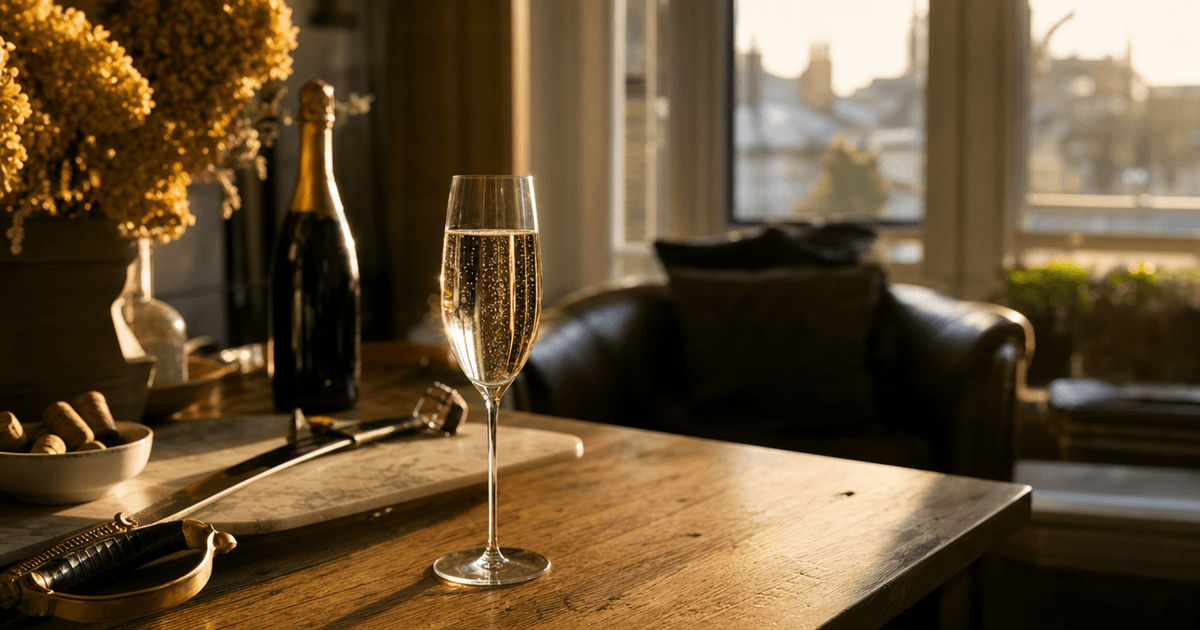
Every New Year’s Eve, someone in the shop asks me how to sabre champagne, usually about ten minutes after they’ve watched a video of somebody doing it in a dinner jacket and making it look effortless. Sabrage is the trick of knocking the top clean off a champagne bottle with the blunt spine of a blade, instead of pulling the cork out the ordinary way. Done properly, it’s controlled theatre — the pressure inside the bottle does the work, not your arm.
By the end of this you’ll know whether it’s actually safe, how much of the difficulty is real versus YouTube nerves, and which bottles in your rack are worth risking it on.
Is it safe to sabre champagne?
Yes — sabring champagne is safe, provided you do it the right way round. You use the blunt spine of the blade, never the sharp edge, and you let the bottle’s own pressure knock the lip off rather than trying to hack through anything. The real danger, trade reporting suggests, isn’t shattered glass at all — it’s the cork and cage leaving the neck at speed, so you handle it exactly like any other pressurised bottle.
Champagne carries a fair bit of force behind that cork — trade coverage has put the pressure at somewhere around 90 pounds per square inch, more than you’d find in a car tyre. That’s precisely why the bottles are made the way they are: thick, heavy glass, moulded specifically to survive that kind of internal pressure for months in a cellar. It’s built to take a knock. What it isn’t built to take is a sharp blade dragged across it, which can shatter the glass into shards rather than releasing a clean disc at the seam.
The sharp-edge mistake is the one that sends people to hospital, and it’s avoidable entirely: use the spine, not the blade. I’ve cut my thumb on a foil cutter more times than I’ve ever seen anyone hurt by a sabre, for what that’s worth. Keep the bottle pointed away from faces — yours and everyone else’s — and you’re doing 90% of the job right before you’ve even lifted the blade. If that settles the nerves enough to try it, let it settle the buying too: choose a bottle you’d be happy drinking however it ends up opened.
How to sabre a champagne bottle, step by step
Here’s the shape of it, without the pretending-it’s-harder-than-it-is theatre some videos go in for:
- Chill it properly. A bottle that’s sat out on a warm windowsill behaves differently under the blade than one that’s been resting in the fridge or an ice bucket — you want it properly cold, not lukewarm and forgotten about.
- Cut the foil cleanly, just below the lip. A plain knife blade or a foil cutter does this neatly, and it’s worth wiping away any residue so nothing from the foil ends up near the opening.
- Find the seam. Champagne bottles have a raised glass seam running up toward the lip — that’s the bottle’s weakest point, and it’s what you’re aiming for, not the cork itself.
- Run the spine, not the edge, firmly along the neck toward the lip. One confident motion, enough force to pop the top cleanly — no sawing, no hesitation halfway through.
- Pour without delay. The bottle’s now wide open with nothing holding the fizz in check, so get it into glasses rather than leaving it standing about.
That’s genuinely most of it. Nobody needs a ceremonial sword from a museum — a decent kitchen knife’s spine does the job the vast majority of sabreurs actually use. The one piece of shopping this trick genuinely asks of you is the bottle itself, picked with a cool head before the theatrics start.
Is champagne sabering difficult?
It isn’t difficult exactly, but it isn’t intuitive either — most first attempts go wrong not because the technique fails, but because people flinch, hit the same spot over and over, or hold the bottle awkwardly and lose their grip. Confidence in one clean stroke matters more than strength. Treat your first go as practice, ideally on a bottle you won’t mourn if it doesn’t work.
The failures that make it onto video tend to follow a pattern. One widely shared clip shows someone striking the neck repeatedly with no luck, then losing his grip entirely — the bottle slips, hits the floor, and smashes, champagne everywhere and the man laughing it off. Another shows a first attempt that didn’t land, followed by a second try with too much force, and the bottle simply exploding over him. There’s even a case involving an oversized bottle and what one report dryly called “questionable technique,” ending in the bottle destroyed rather than opened.
What links these isn’t bad luck — it’s rushing, or escalating force after a miss instead of resetting and finding the seam again properly. A single deliberate stroke, done calmly, beats three increasingly panicked ones every time.
There’s a buying answer hidden in that, too: get two bottles in. Make the rehearsal a modestly priced traditional-method sparkler in a proper heavy champagne-shaped bottle — the pressure and the seam work exactly the same — and keep the champagne you actually care about for the moment the room’s watching.
What is the point of sabering champagne?
The point was never really about opening a bottle faster than a corkscrew would — it’s spectacle, and it’s tradition dressed up as one. The story most often told involves French cavalry officers, celebrating a victory (or, in the gloomier version, drowning a defeat) by sabring the tops off bottles rather than bothering with cage and foil. Napoleon himself is credited with the line that champagne is deserved in victory and needed in defeat — whether he actually said it is another matter, but it’s stuck around for two centuries, which tells you something.
A more romantic strand of the story ties the same cavalry officers to a young widow who’d taken over her late husband’s Champagne house after the Revolution and kept it running through some genuinely difficult years for the region. True or embellished, it’s part of why sabrage still feels theatrical rather than practical.
That theatre is formalised today by a society called the Confrérie du Sabre d’Or — the closest thing sabring has to an actual governing body. It runs on ranks: your first bottle makes you a sabreur, a magnum promotes you to chevalier, a jeroboam to officier, and a rehoboam (six bottles’ worth) to commandeur. The ultimate test is a methuselah, opened standing upright on a tripod stand because by that size nobody’s holding the bottle in one hand. Trade reporting suggests the UK has only a handful of Grand Commandeurs, which gives you a sense of how far most of us have no business going. Happily, the entry requirement is the same as it’s always been: one good bottle and an occasion worth the theatre.
Which bottles are worth sabring — and which aren’t
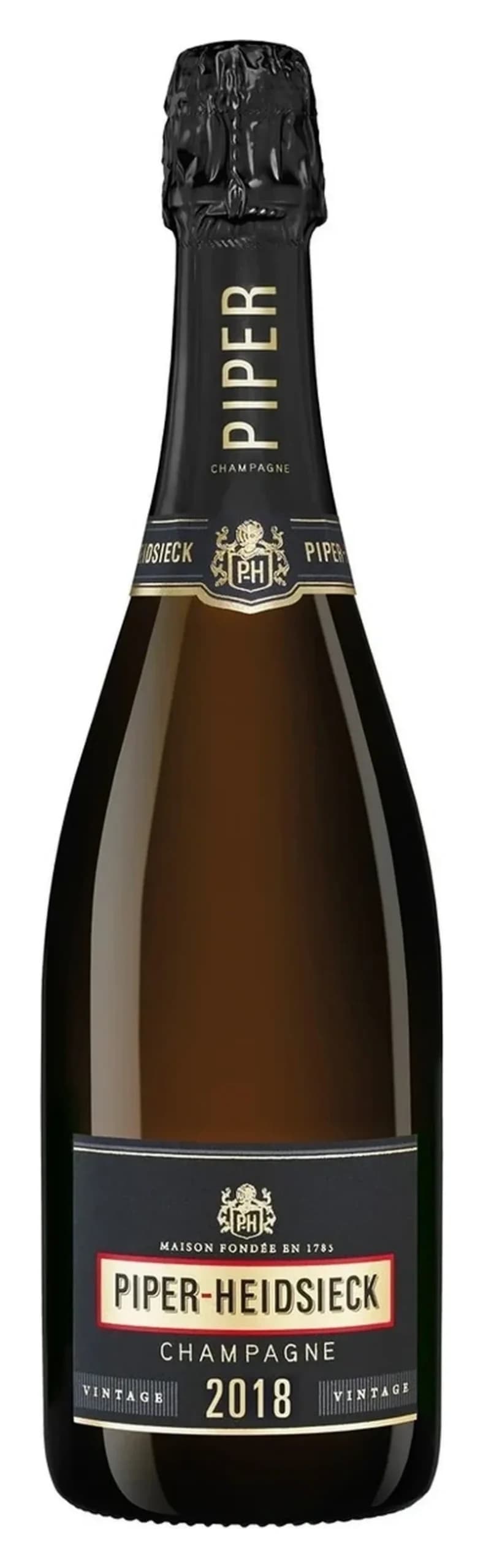
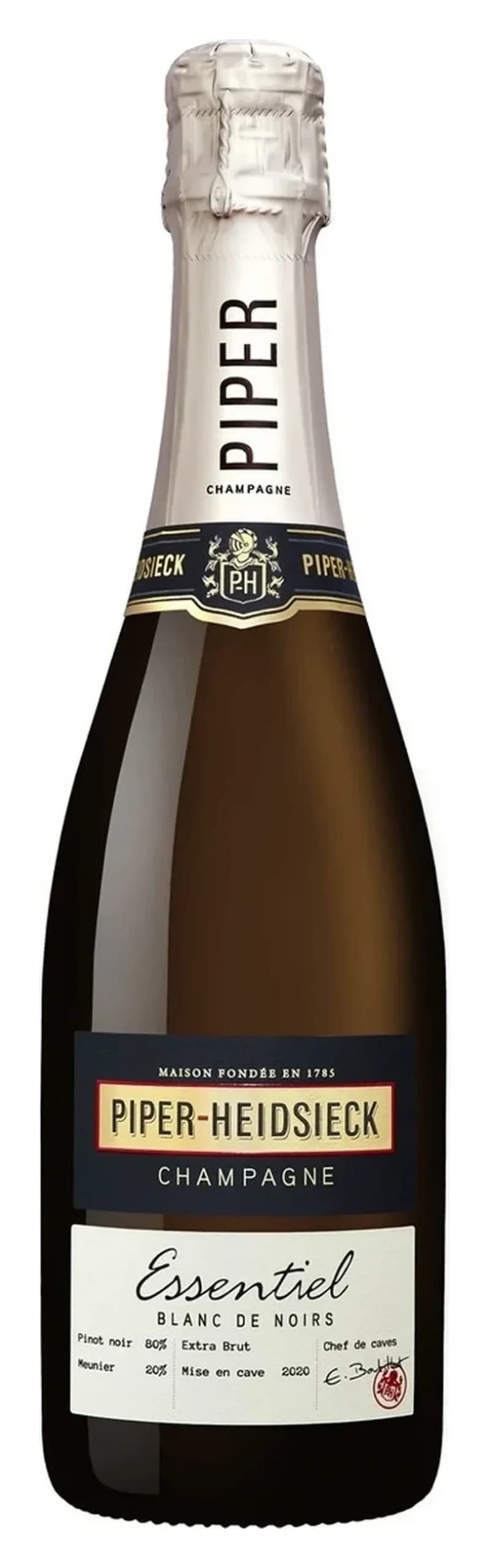
Sabrage suits standard bottles and magnums best; that’s where most people get their footing, and it’s genuinely satisfying once you’ve landed it. If you’re choosing what to buy for a first go, that means the celebration bottle you’d be getting anyway, in standard size. Bigger formats need real practice and often a stand rather than steady hands, and they’re best treated as a party piece for a big occasion rather than something you attempt cold in front of guests.
If the bottle’s an older or rarer vintage, I’d reach for a corkscrew instead. Sabring is final — once that top’s gone, there’s no controlling the pour, and no option to let the wine sit and open up in the glass first the way you might with a richer, more mature style. If you want the fuller shape of what’s worth ageing versus drinking young, our guide to Champagne, explained by a merchant: styles, houses and how to choose walks through that properly. And if you’re curious why that pressure’s in the bottle in the first place, How is Champagne actually made? The traditional method, step by step covers the mechanics.
Save the sabre for the celebration bottle, not the Tuesday-night one. If you’re planning an evening around it properly, our piece on hosting a cheese and wine night is worth a look for what to pour once the top’s actually off.
Questions customers ask us
Do you need a sharp knife to saber champagne? No — a sharp edge is exactly what you don’t want here. The blunt spine, the flat back of the blade, is what pops the top cleanly; a sharp edge risks shattering the bottle instead.
Does sabring waste much champagne? Not really, if you pour promptly. You lose a touch to the initial rush of pressure escaping, but nothing dramatic if you’ve got glasses ready and waiting.
Can you sabre any sparkling wine, or just champagne? The principle works on any traditional-method sparkling wine in a proper heavy champagne-shaped bottle — the glass needs to be built for that pressure, which rules out lighter, thinner bottles used for less pressurised styles.
What happens to the little glass ring afterwards? The lip comes away in one disc, cage and cork still attached to it — it’s sharp at the edges, so it’s one for the bin, not the table.
The merchant’s last word
I’ll sabre a bottle at a party, happily, but I don’t pretend it’s the better way to open champagne — it’s the more fun way, on the right occasion, with the right bottle. Get the spine right, keep it pointed away from people, and it’s genuinely no harder than carving a Sunday roast. For the everyday bottle, though, a corkscrew’s still my honest answer. Come and browse the champagne cellar and I’ll tell you which ones I’d actually risk a blade on.