Port got forgotten. Sherry got misunderstood. Marsala suffered a stranger fate: it got demoted from wine to ingredient. It turns up in exactly one place for most people — a hot pan, a chicken breast, a splash before the cream goes in. Fair enough; it’s very good at that job. But Marsala is a proper fortified wine, made in the hills around its own home town in western Sicily, aged in cask from a young, everyday style right through to a bone-dry, decade-old rarity that has nothing to do with the bottle by your hob. By the end of this you’ll know what’s actually in your glass, which style to buy for sipping rather than sautéing, and what to reach for if Marsala isn’t on the shelf.
What exactly is Marsala wine?
Marsala is a fortified wine from Trapani, the far-western tip of Sicily — wine boosted with grape spirit, the way port is with brandy, then aged in cask. It runs from dry to sweet, pale gold through to deep amber, and its story starts with an Englishman with a taste for sherry and port who spotted something in the local cellars in 1770.
That Englishman was John Woodhouse. He noticed the local wines, aged in a single-cask solera, tasted uncannily like the fortified wines of Spain and Portugal he already knew — but weren’t fortified at all. So in 1773 he added grape spirit to them (about 8 litres to every 400-litre barrel) and shipped the result home. He opened a proper warehouse and cellars in the town in 1796, and the victualling of Nelson’s fleet in 1798 did the name no harm at all. Another Englishman, Benjamin Ingham, founded a second Marsala house in 1812; by the trade’s own account, the largest of the old cellars eventually ran along a full kilometre of the seafront.
Modern Marsala was codified as a DOC in 1969, and today it’s fortified only with grape spirit — never with a spirit-fortified wine as it once might have been. Alcohol also gets a nudge from mistella or sifone, the must of late-picked, overripe grapes with fermentation stopped by a hit of pure alcohol. Along the way, the traditional bush-trained vines gave ground to wires, and the classic grapes of the zone — grillo and inzolia — have partly lost acreage to the higher-yielding catarratto. More yield, less sugar, and a wine that (as the trade quietly admits) has spent a few decades coasting on reputation rather than quality. Which is, in fairness, exactly what makes the current revival worth paying attention to.
The styles: how to pick the right bottle
Every Marsala label carries a classification word, and it tells you almost everything you need before you even open it.
| Style | Minimum alcohol | Minimum cask age | What’s added | What you get |
|---|---|---|---|---|
| Fine | 17.5% | 1 year | spirit, mistella, mosto cotto | the everyday, youngest style |
| I.P. / L.P. (Italia Particolare) | 17% | 1 year | as Fine, sweeter profile | a softer, sweeter entry point |
| Superiore (S.O.M.) | 18% | 2 years | spirit and mistella only | more depth, less rustic |
| Superiore Riserva | 18% | 4 years | as Superiore | rounder, more oxidative character |
| Vergine / Soleras | — | 5 years in solera | grape spirit only | always dry, no exceptions |
| Riserva / Stravecchio (Vergine) | — | 10 years | grape spirit only | the deepest, driest expression |
There’s a useful comparison here with any fine wine estate that also bottles a lighter, earlier-drinking second wine — you don’t need the rarest, longest-aged bottle to understand the house style. Our piece on second wines and why they’re worth a look covers the same idea from the Bordeaux side. For Marsala, a young Fine gives you the honest, everyday shape; save a Vergine Riserva for when you actually want the full performance, ten years in cask and all — that’s the bottle that never deserved to be anywhere near a saucepan.
Can you drink Marsala wine or is it just for cooking?
Yes — Marsala is a proper drinking wine. Dry styles work as a savoury aperitif, sweet styles as a proper dessert wine, and it’s the cheap, flavoured stuff sold in supermarket “cooking Marsala” bottles that’s given the whole category its unfair reputation.
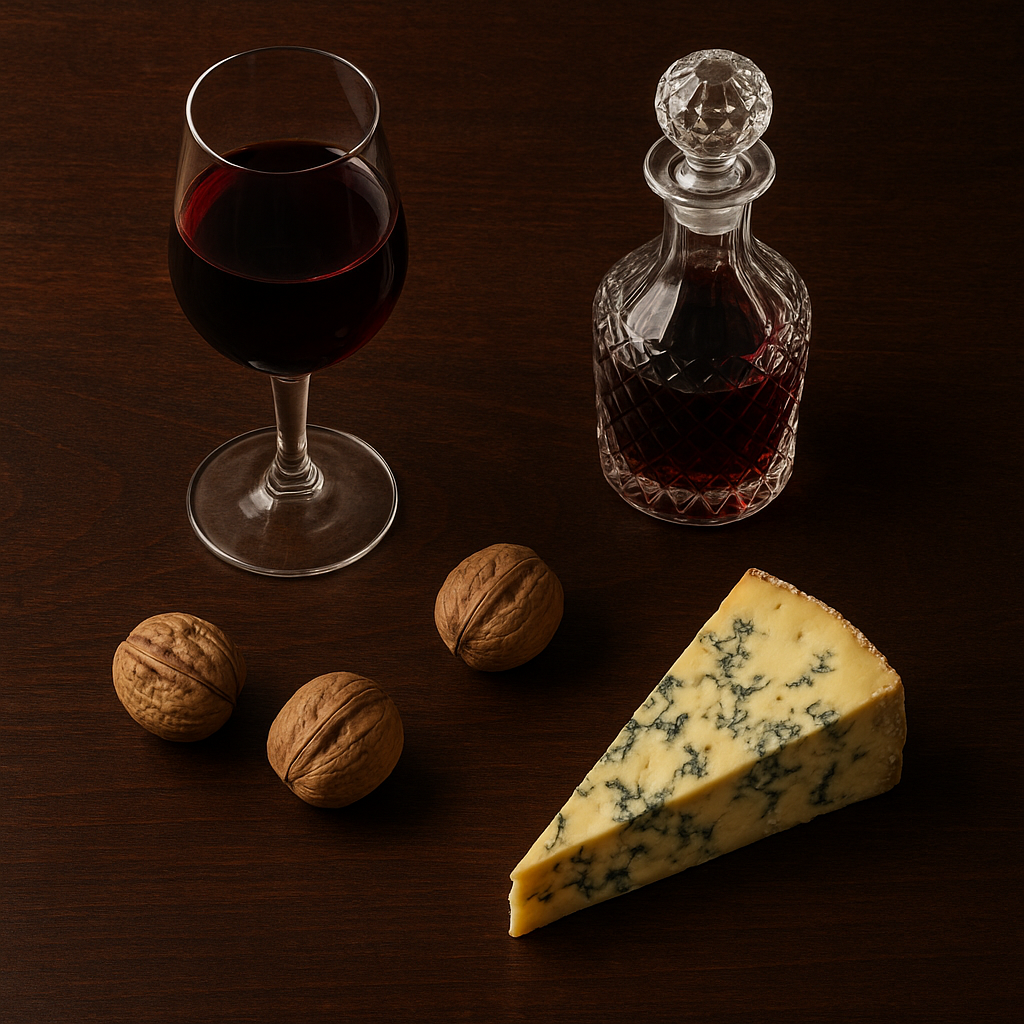
Dry Marsala sits well with anchovies, olives, nuts, smoked meats and a tomato-heavy seafood stew — pecorino or a bit of goat’s cheese alongside is a genuinely good combination, not a stretch. Sweet Marsala is built for zabaglione (it’s the wine in it, traditionally), tiramisu, biscotti, cake, chocolate. Chicken Marsala — the dish that made the name a household one across America — did the reputation no favours by reducing it to an ingredient rather than a wine in its own right. Trade voices are dubious, and rightly so, about the value bottles labelled for cooking; they bear little resemblance to a real DOC Marsala. If you’ve only ever met it through a fork in a chicken marsala sauce, a cold-ish glass of dry Fine or Superiore next to some pecorino is a different drink entirely. And if you do open a bottle for the pan, don’t tip the rest away — there’s more use in it than you’d think; see our notes on what to do with the wine left over from cooking.
What is equivalent to Marsala wine?
Marsala’s closest relatives are the other great fortified wines of southern Europe: sherry from Jerez, port from the Douro, madeira from its namesake island. All are fortified with spirit, all aged oxidatively, all built to last far longer once opened than an ordinary table wine.
The difference between them is less what’s in the bottle than what happened to their reputations: port and sherry drifted out of fashion but stayed wines, while Marsala alone drifted into the larder. If a shop’s out of it, a dry oloroso sherry or a bual madeira does a similar savoury, nutty job at the table. For the full family tree — sherry’s dry-to-sweet spectrum, port’s various styles, madeira’s near-indestructible shelf life — our guide to port, sherry and madeira covers the lot.
Worth knowing too: Sicily has a sweet alternative that isn’t fortified at all. Moscato di Pantelleria, from the volcanic island south of the mainland, is made from zibibbo (muscat of alexandria) and has been a respected dessert wine since the 1880s. If it’s the dessert-wine side of Marsala that’s caught your eye rather than the savoury one, our guide to sweet wines is worth a read.
The quiet revival — why Marsala’s having a moment
The name itself comes from the Arabic Marsa Allah, “harbour of God,” and the town has never quite sat still — limestone plateaus over pockets of rainwater, the odd tremor from the tectonic tension running under western Sicily. Marsala the wine has followed a similarly restless path: built into a global name by the British in the 19th century, then allowed to slide through the second half of the 20th, when cheap, flavoured versions became fashionable and finished the slide from cellar to kitchen cupboard, doing lasting damage to how the category was seen.
What’s changed is a newer generation of growers treating it as a wine worth making properly again, rather than a cooking ingredient with a Sicilian postcode. Grillo sits at the centre of this — a natural cross of catarratto and zibibbo, prized long before DNA testing confirmed its parentage, and it’s the grape most trade opinion credits with the best Marsala ever made. Plantings have grown substantially, reportedly past 8,000 hectares on the island by 2020. In the cellar, growers talk about a broader, more Italian idea of terroir — one that includes culture and human choice, not just soil — and about cask geography mattering as much as the vineyard: how close to the sea a barrel sits changes how it ages and how much is lost to evaporation. Before it becomes Marsala proper, the base wine passes through a stage called Alto Grado, pressed at pressures reportedly up to 60 bar — around twenty times a standard pneumatic press — to pull every bit of structure from the skins. It’s an oxidative, hard-edged process, by design. Beyond the classic fortified styles, the current renaissance has stretched to still wines, cocktails, and bottles carrying far more detail than Marsala labels ever used to.
Questions customers ask us
Is Marsala the same as the “cooking Marsala” sold in supermarkets? No, and it’s worth knowing the difference. Genuine Marsala DOC is cask-aged and classified by sweetness and age; the cheap cooking versions blamed for the category’s reputation bear little resemblance to it.
What grapes go into Marsala? Mainly catarratto, grillo and inzolia, sometimes blended with each other or with chardonnay in the base wines. Grillo is the one most trade opinion rates for the finest examples.
What’s “Alto Grado”? It’s the base wine’s first stage, before fortification and classification turn it into Marsala proper — pressed hard, fermented, then blocked and fortified.
Does Marsala only come sweet? No — Vergine and Soleras styles are always dry by definition, since mistella and mosto cotto (the sweetening agents) are forbidden in their production.
The merchant’s last word
I sold Marsala for years as a two-quid splash for the Friday-night chicken and nothing else — my own mistake, not yours, if you’ve done the same. A proper cask-aged bottle, sipped cold with a hard cheese, changes the conversation entirely. Worth having one in the rack for reasons that have nothing to do with a frying pan. Have a look and browse the fortified wine cellar when you’ve a minute.