Commandaria wine has carried the same name since the Crusades — which quietly makes it the elder of everything else on the fortified shelf, port and sherry included. It’s still being bottled today, in the same hills where the Knights of St John once kept court: a deep amber, fortified sweet wine made in the Troodos foothills of Cyprus from partially sun-dried grapes, mostly the white Xynisteri. It sits around 15% alcohol and tastes of orange peel, walnut, and raisin, roughly in that order. Everything below hangs off that seniority: what eight centuries of one name actually means in the glass, how it stacks up against a port you might already love, and how to serve it so it earns its place at your table.
What kind of wine is Commandaria?
It’s a fortified sweet wine, made mainly from Xynisteri — Cyprus’s most planted white grape — with the dark-skinned Mavro sometimes blended in. The grapes are laid out and left to partly dry in the sun before pressing, an old, unhurried way of concentrating sugar rather than a shortcut with machinery. What comes out is that same amber, orange-peel-and-walnut wine — its concentration earned the slow way, from sunshine rather than the winery.
The vineyards sit high in the Troodos Mountains, some as far up as 1,500 metres, where summer temperatures can swing by more than 12°C between low and high sites. Cyprus has never been touched by phylloxera, so a lot of these vines are ungrafted — properly old-school. Holdings are small and fragmented, drip irrigation is rare because water is scarce, and most of it is still farmed the hard way, by hand, on slopes.
Xynisteri now does most of the work here, having overtaken Mavro as the preferred grape for Commandaria in recent decades — a quiet shift toward the grape that keeps freshness under all that sweetness. If you like tracing how a region’s native grapes get rediscovered, it’s worth a look at Greek wine now: Assyrtiko and friends too — Assyrtiko has only recently started turning up on Cyprus as growers experiment with what else might work at altitude.
Is Commandaria the oldest wine in the world?
Guinness World Records recognises it as the oldest named wine still in production, and the history holds up. Cyprus was making sweet wine — called Nama then — centuries before the Knights of St John made the island their headquarters in 1281. The name Commandaria itself comes from their commanderies, the estate units of a strict military hierarchy, not from any place.
Winemaking on Cyprus itself goes back further still — 5,500 to 6,000 years, with Bronze Age evidence of press bases and vats. That’s the deep root. What makes Commandaria specifically remarkable is that the name has stuck, more or less unbroken, since the Crusades. Richard I took Cyprus in 1191, and the wine was said to have been poured at his wedding. It later turned up, by most trade accounts, among the entries at the 1224 “Battle of the Wines” — a real event, staged by French King Philip Augustus, where an English priest judged over seventy wines pass or fail and got steadily drunker as the poem describing it goes on. Cyprus’s wine, by trade accounts, came through it well.
In 1993 Commandaria became the first Cypriot wine granted full legal protection for both its name and its origin — a formal nod to something the island had already been doing, on and off, for the better part of a millennium.
What is the difference between port and Commandaria?
Port is fortified partway through fermentation — the winemaker adds grape spirit while there’s still natural sugar left, which stops the yeast and locks in sweetness. Commandaria takes a different road: the grapes are dried in the sun first to concentrate sugar, and fortification comes after. Different grapes, different route, similarly rich destination.
| Port | Commandaria | |
|---|---|---|
| Home | Douro Valley, Portugal | Troodos foothills, Cyprus |
| Main grapes | Indigenous Portuguese reds | Xynisteri (white), sometimes Mavro |
| How the sweetness is made | Fermentation stopped early with spirit | Grapes sun-dried before pressing, then fortified |
| Flavour signature | Dark fruit, spice (style-dependent) | Orange peel, walnut, raisin |
| Typical strength | Higher, fortified | Around 15% |
I’ll admit I sold Commandaria wrong for years — filing it mentally next to port because both are amber-ish and sweet, and leaving it at that. It undersells both — and it gets the seniority backwards: Commandaria isn’t Cyprus’s answer to port; it’s the older name by some distance. If you want the fuller picture of how fortified styles diverge — sherry included — the Port, Sherry, Madeira: the wines time forgot (your gain) guide lays it out properly.
One bit of history worth knowing if you’re old enough, or your parents are: post-war Cyprus also exported a “sherry”-style fortified wine to Britain in huge volumes, medium to medium-sweet. That’s a different product entirely from Commandaria — cheaper, more industrial, made for a very different table. Customers occasionally ask if this is “that Cyprus sherry” their nan used to have. It isn’t, though I understand why the memory lingers.
Choosing a bottle: villages, sweetness and vintage
Commandaria comes from just fourteen named villages high in the Troodos foothills, part of a protected zone that’s been legally defined since 1993. It’s a small patch of vineyard by any standard — Cyprus’s entire wine area was down to around 7,613 hectares by 2020, a fraction of what a single decent-sized French appellation might cover.
Quality has moved a good deal since the 1990s, and EU accession in 2004 pushed things further — investment in winemaking technique, tighter appellation rules, less emphasis on sheer volume. Trade coverage over the last decade or so has been consistently upbeat about the direction of travel for Cypriot wine generally, Commandaria included.
What to look for on a label, practically:
1. The word Commandaria itself and the PDO mark, confirming it’s from the fourteen villages, not a generic Cyprus dessert wine.
2. Xynisteri as the lead grape, generally the more refined route these days.
3. A producer note on sun-drying duration, if given — longer drying tends to mean more concentration, though styles vary bottle to bottle, so don’t treat it as gospel.
It’s a bit like hunting out a good second wine from a grand estate — you’re looking for craft and pedigree without needing the flashiest label. If that idea appeals, Second wines: how to drink a great château without the grand vin price runs the same logic in Bordeaux terms.
How do you drink Commandaria wine?
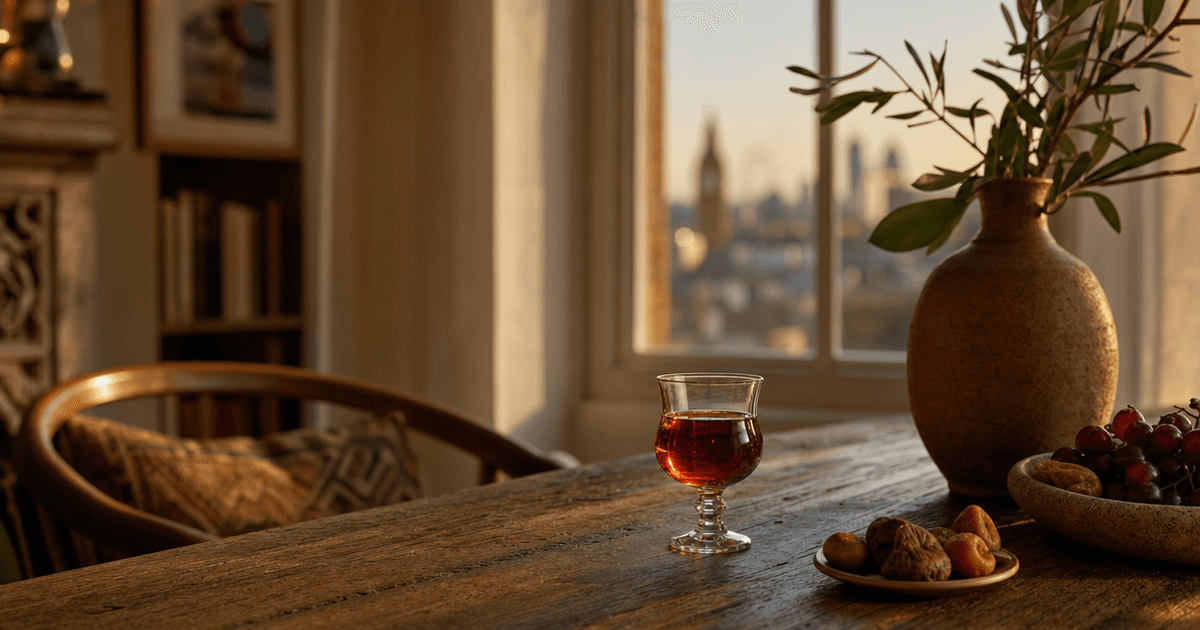
Serve it cool rather than fridge-cold, in a small glass — a sherry copita or a small port glass does the job. It’s concentrated and sweet, so this is a wine measured in a few centilitres, not a tumbler. That’s not a rule for its own sake; it’s just how a wine like this is built to be enjoyed, the glass doing the work rather than the bottle.
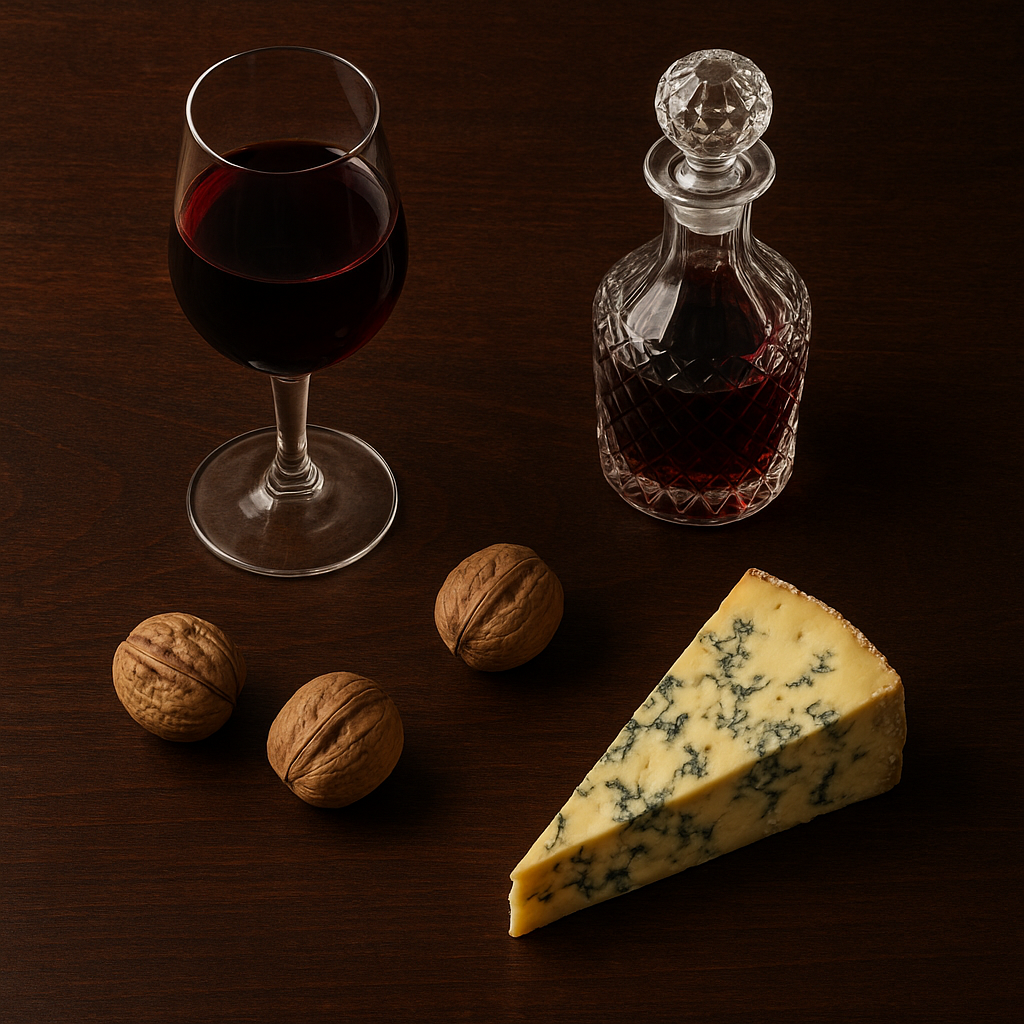
Food-wise, it plays to its own flavours: hard cheese (a good aged cheddar or a blue), walnuts or almonds, dark chocolate, or an orange-based pudding like a clementine cake. Think Sunday lunch, the cheeseboard stage, not the middle of a meal. Once opened, keep it in the fridge — it’ll hold its character for some weeks, much like an opened sherry or tawny port, so there’s no rush to finish the bottle in one sitting.
If sweet wine generally makes you wary, Commandaria is a decent one to test that instinct on — it’s got enough orange-peel bitterness and walnut dryness at the finish to stop it feeling cloying. There’s more on this exact question in Sweet wines for people who think they hate sweet wines.
Questions customers ask us
Is Commandaria always sweet? Yes — by definition and by tradition, it’s a dessert-style wine, made from partially dried grapes to concentrate sugar. You won’t find a dry Commandaria; that’s not what the appellation is for.
Does it need decanting? Not really. It’s fortified and stable, so it doesn’t throw the kind of sediment a vintage port might. A pour straight from the bottle is fine.
Is it a blend or a single grape? It can be either — traditionally a blend of Xynisteri and Mavro, though modern producers increasingly lean on Xynisteri alone, or nearly so, for a fresher style.
Where does the name actually come from? From the Knights of St John’s commanderies — their estate headquarters on Cyprus — not from any town or region. The wine took its name from the landlord, not the land.
The merchant’s last word
I keep a bottle of Commandaria open behind the counter more often than I probably should — it’s the sort of thing that turns a slow Tuesday afternoon into something worth pausing over. Amber, a little wild with age, and it’s been made on that island since before most of Europe’s famous wines existed. Worth a proper taste, not just a mention. Have a look in the fortified wine cellar and see what’s in stock.